
eBook - ePub
Tourism, Performance, and Place
A Geographic Perspective
- 196 pages
- English
- ePUB (mobile friendly)
- Available on iOS & Android
eBook - ePub
Tourism, Performance, and Place
A Geographic Perspective
About this book
Drawing upon theories of landscape and performance, this work weaves together existing tourism literature with new scholarship to forge a geographically informed theory of tourism. Such a theory integrates the ways in which places are co-produced, circulated, interpreted, experienced, and performed for and by tourists, tourism boards, and even as everyday spaces. Bringing together theories of ritual, Peircean semiotics, ideology, and performance, the authors blend the often separate literatures of tourism sites and touristic practices. Whereas most tourism texts focus on a part of the 'tourism equation'-the tourism site, or the tourist experience-a geographic theory of tourism brings these constituent parts together in thinking about notions of place. Place processes are central to geography as well as tourism studies because tourism facilitates encounters with distinct locations. As this book argues, considering tourism as performative draws disparate areas of tourism theory together to better understand the ways tourism happens in and across places.
Chapter 1
Introduction: Landscape Perspectives on Tourism Places
Tourism Theories
Tourism is not a discipline, but a field of study. As such, scholars approach tourism from diverse perspectives, honing in on particular relations. Despite the greater attention paid to tourism across the academy in recent decades, we argue an inherent problem remains. Tourism researchers tend to narrow their focus, concentrating on either the tourist experience or the dynamics of the tourism site. Indeed, it is rare when a study is able to maintain an investigation of both aspects within the same framework. Further, we suggest geographers and geographic perspectives are particularly attuned to consider a holistic analysis of tourism. Tourism is a place-based endeavor. It occurs in particular localities, which are also set within broader geographic scales and networks of which tourist flows are just one of the many relations weaving through and connecting places. As such, we suggest, tourism performances do not begin and end in places, but through tourism, place is performed. Tourism fosters relations to and across places; it transforms places, engaging bodies, imaginations, and ideologies, well before and long after travel has occurred.
Looking at the tourism studies literature, one finds a number of edited volumes that have been able to speak across the tourist experience and the tourism site by fostering conversations among the numerous authors’ research agendas (see Rojek and Urry, 1997; Coleman and Crang, 2002; Cartier and Lew, 2005; Minca and Oakes, 2006; and Knudsen et al, 2008). Yet, few monographs can be found that hold the two areas of tourism studies, site and experience, together while also moving theoretical discussions forward. Dean MacCannell (1976; 1989; 1999) was among the first to attempt this with The Tourist: A New Theory of the Leisure Class, the impacts of which are immeasurable in tourism studies. Significantly, he was among a group of tourism scholars readjusting perspectives on tourists by situating himself among those he studied. As opposed to some of the earlier tourism theorists, namely Boorstin (1961), MacCannell attested to the fact that scholars, too, are tourists. We do not simply sit in our ivory towers, studying the masses touring predetermined destinations, but we are active in this social process. Indeed this focus on tourists rather than tourism is of import. Engaging the theories of Marx, Levi-Strauss, and Goffman, MacCannell’s work is particularly focused on the social structures that motivate and inform touristic experience. While he offers insights to the social processes of tourism sites—the ways in which destinations become attractions, the semiotics of sightseeing, and the staging of authenticity—his foregrounding of the tourist moves across the tourism site/tourist experience divide by following the tourist from home through the practice of sightseeing. His more recent book, The Ethics of Sightseeing (2011), further challenges the relations of tourists to attractions by calling into question the ethics and morality of tourism motivation and the social obligations that encourage travel.
Using the language of production and consumption of tourism, John Urry’s (1990; 2002) The Tourist Gaze also holds the tourist experience and the site in tandem under a single theoretical framework. Complementary to MacCannell’s work, this text pays greater attention to the economics of the tourism industry, including resort development, labor market and working conditions, and notions of spatial fixity. Urry works from the idea that tourism is about extraordinary experiences, that it is about being away from our everyday lives and encountering the “other.” Inspired by the work of Foucault, this text extends the concept of the gaze to tourism, illuminating the power relations of tourist/site interactions. Urry’s contention is that tourism is a primarily visual enterprise in which the gaze, a discursive relationship between viewer and object, informs both the production and consumption of tourism experiences. As such, he identifies a number of gazes—romantic, collective, anthropological, environmental, and others. So while Urry is able to theorize across the tourist experience and the tourism site, the main criticism of his text has been that it is too visually oriented, and as a result, it does not attend to the agency of locals, the subjectivity of being a tourist, and embodied practices of tourism. As such, it is important to note that the latest edition of The Tourist Gaze (2011), co-authored with Jonas Larsen, attends to such criticisms and more fully embraces a performative understanding of tourist practices, particularly photography.
A geographically diverse text, Edward Bruner’s (2005) Culture on Tour: Ethnographies of Travel takes the reader through more than 20 years of his research. He shares a similar research agenda to MacCannell: to conduct an ethnography of tourism and touristic practices. Yet, as an anthropologist engaging a constructivist approach, Bruner “analyzes tourist performances not as representations, metaphors, texts or simulacra of something located elsewhere, but as social practice to be studied in its own right” (p. 7). This text is concerned with cultural tourism, focusing on the tourism performances that local/tourist/practitioner interactions yield, and giving particular attention to encounters, contestation, and narrative construction. This text moves across the tourist experience/tourism site divide of tourism studies by situating itself at the point of encounter. It is richly place-based in that regard.
Complementing these foundational works with a geographic perspective to both the tourism site and the tourist experience, we argue, will better account for the ways in which tourism spaces become places. While space is produced through practices, place is space made meaningful; it is more than functional, it is emotive and affective. For tourism, this means attending to the ways tourism spaces are socially produced but also the ways that tourism places become personal, embodied, and contested. Drawing together prominent theoretical themes of tourism research—ritual, semiotics, ideology, and performance—this text aims to hold together the tourist experience and tourism site dynamics as set in place. Indeed, Baerenholdt, Haldrup, Larsen, and Urry (2004) make important strides towards a geographic perspective in their text, Performing Tourist Places. Baerenholdt et al. state, “tourism is a way of being in the world” (p. 2). We must move beyond reading tourism landscapes to interrogate the touristic practices that continually (re)produce place. Their text provides engaging critiques that weave together theory and empirics as they investigate tourism performances. Thus, the emphasis on the performance of tourism underpins the ways in which these various theoretical perspectives (ritual, semiotics, and ideology) can be brought together. In this regard, we are referring to “performance” most generally, as the enactment of contexts and situations, events and moments.
Yet, a geographic approach to considering tourism destinations as places also necessitates a landscape perspective. Landscape, as a concept, allows for investigations of the social and cultural processes that shape and are shaped by place. It offers both outsider and insider perspectives, and incorporates various scales of interaction from the body to institutional structures of power. Indeed, it is for these reasons that Cartier and Lew (2005) have developed the concept of “touristed landscapes” as a means to account for the potential of understanding place as both toured and lived in. Tourism destinations are comprised of landscapes produced by and for tourism (see Aitchison, Mcleod, and Shaw, 2000; and Cartier and Lew, 2005). From the materiality of landscape to the imaginative, landscape is the medium with which tourists interact as they perform place. Further, it is landscape that tourism practitioners use in the marketing of tourism places. We see this text as working from and weaving together the rigorous and enduring theories of tourism, with other theoretical notes on tourism as well as those from outside of the field, by continually attending to the performative enactments of tourism places. This text, thus, works on various scales, moving back and forth from broader theoretical constructs (ritual, semiotics, ideology, and performance) to more specific relations grounded in tourism places.
Tourism Geographies: A Landscape Perspective
Landscape is a central concept in geography. As a discipline that includes both human and physical geography, landscape is a medium that holds the two in concert. While landscape may be examined as material culture, or what Carl Sauer (1925) stated as evidence of human agency on the natural landscape, Peirce Lewis (1979) suggests landscape is also our unwitting autobiography, a repository of social values and ideals. Denis Cosgrove (1984), however, asserts landscape is much more; it is a way of seeing. Perspective is essential to the understanding of landscape—insider and outsider—as landscape is a medium through which societies represent themselves to the world. Landscapes share but also extend the meaning of “area” or “region” by way of unifying the human subject and the material world. But landscapes not only reveal unities, they hide tensions (see Cosgrove, 1984; and Wylie, 2007).
Landscape as a construction, as a composition of the world, is also an artistic medium that employs single-point perspective to convey social relations. In graphic arts, perspective is used to portray distance on a flat surface, so that figures that would be further away from the viewer are smaller and those in the foreground, closer to the viewer, are larger. Perspective implies control, order, and distance, thereby locating the subject outside of the landscape, which representations of landscape then reflect back to the viewer. Thus, the study of landscape, in geography and elsewhere, has maintained a visual bias, a disinterested and supposedly objective stance with formal rules of investigation, which value outsider perspectives over insider experience by breaking the perceived unity of landscape into constituent parts of analysis. Such approaches to landscape study underwrite the very ideological position that landscape proclaims (Cosgrove, 1984). A humanistic approach to landscape, however, contends this is merely a surface-level investigation, below which lies much deeper meanings and tensions. To begin to recover the geographic imagination that inspires landscape construction and interpretation, we should also consider landscape as a literary device. As a text, landscape is a palimpsest, a layered record of social contests composed by a series of authors whose intertextuality conveys disparate meanings given particular readers (Duncan and Duncan, 1988). Indeed, Ponte Vecchio, Florence, Italy (Figure 1.1) illustrates landscape as a palimpsest in which multiple authors over time are manifest in present performances of place.
Landscape geographers have long danced around the issue of where meaning comes from in the landscape. Early comparisons of landscapes to texts suggested they might be read seemingly without problem, in a similar way to how one might read the words on a laundry list (Lewis, 1979). This critique is a false one since reading is always a more complexly negotiated task, engaging both one’s ability to literally read the configuration of letters and requiring a far more nuanced ordering of information so as to actually understand what has been read. Just because one might be familiar with the Greek alphabet such that s/he can recite a sentence in Greek does not ensure that actual understanding has occurred. Similar to learning versus comprehending a language and, then, understanding the culture from which it has developed, landscape reading is fine-tuned over time. Yet, it is something we all do, that we must do, to navigate our daily lives, let alone when we are in unfamiliar environs. Surprisingly few are self-aware of their abilities to read landscapes, as such reading happens intuitively in most instances. Indeed, in concluding an essay in which he offered axioms for reading the landscape, Lewis (1979, p. 26) noted, “It is remarkable how many intelligent perceptive people have never asked questions of the landscape, simply because nobody ever suggested they do it.”
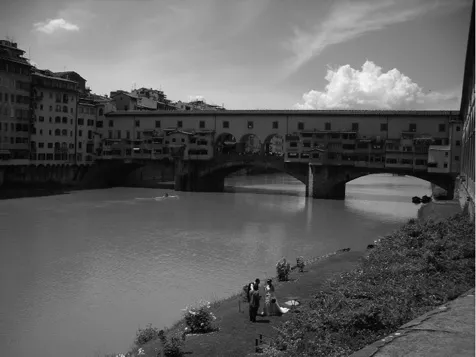
Figure 1.1 Ponte Vecchio, Florence, Italy: Landscape as Palimpsest
In developing a critical perspective, the landscape-as-text approach in geography has focused on reading ideology and power relations in the (re)production of landscape. However, it has taken only minor account of pressing literary theory debates about the role of the text, the author, and the reader. In particular, Formalism and New Criticism have made little dent, as has the reaction to those schools of thought, Reader Response Theory (Eagleton, 1996). Nevertheless, some geographers have given more thought to the ways in which literary theory, generally, can be applied. Engaging Saussure and Barthes towards a post-structuralist approach to landscape as text, Duncan and Duncan (1988) argue landscapes are composed of signs working referentially. Yet, what landscapes reference is not always obvious to the reader, thus putting into practice the infinite deferral of the signified. As such, they suggest a landscape-as-text approach denies the authority of the author, and should attend to the intertextuality of landscape by focusing as much attention on the silences and absences as to what is revealed. While we agree with the premise and the potential of examining landscapes as texts, we have found a Saussurian approach to be limiting. In Chapter 3 we lend support to a Peircean semiotic approach to reading landscapes that accounts for the materiality of landscape, as well as the cognitive/imaginary aspects. Further, the Peircean approach to tourism landscapes offers a more open framework for considering the impact of guidebooks, promotional devices, and interpretative materials on the dynamics of tourist meaning-making before, during, and after touring.
Landscapes produced by and for tourism, perhaps more than our everyday spaces, work within the concept of genre. As Tzvetan Todorov (1990, p. 10) in writing about discourse argues, “literary genres, indeed, are nothing but such choices among discursive possibilities, choices that a given society has made conventional. […] But there is no reason to limit this notion of genre to literature alone; outside of literature the situation is no different.” Thus, consider the differences among the landscapes of adventure tourism, resort tourism, and urban tourism. Genres are established by constraints, by parameters that inform (re)production, reception, and understanding. They are embedded in larger webs of critique and historical context. In the case of tourism landscapes, they too are texts set within particular genres by the very fact that these landscapes are imagined, constructed, shaped, and manipulated to meet particular expectations of the audience and to support particular interpretations. More importantly, genres are not set in a vacuum but change over time, and thus, the landscapes of tourism genres also succumb to social and ideological changes.
Considering genre and landscape, (re)production moves the conversation importantly towards the role of discourse(s). The landscape-as-text approach outlined thus far, however, emphasizes an outsider’s reading of landscape. While there is room for an insider perspective, interpretations and critiques continue to be made from a distance. And, indeed, while this orientation may be appropriate considering tourism landscapes are (for the most part) other-directed, we suggest acknowledging the scaling of landscape and utilizing both outsider and insider perspectives to attend to multiple scales of agency in landscape change and experience. In this vein, Richard Schein (1997) proposes landscape be approached as discourse materialized. He states, landscape is “a reflection of the people who created it, but as discourse(s) materialized, it also is implicated in the lives of those people and others in ways not accessible through such a traditional description” (1997, p. 666). By engaging the work of Foucault, Bourdieu, and de Certeau, Schein is able to articulate the ways in which the landscape holds different and competing meanings simultaneously, as well as how the “capillaries of power” that run through and circulate within landscape must be accepted, challenged, and/or modified through everyday practice. Such a conceptual framework acknowledges that landscapes are always in the process of becoming, and in so doing, provides a vision of landscape change that highlights the agency of the individual. Schein (1997, p. 676) suggests landscape interpretation should be about situating interpreters in place and broader geographic contexts: “the act of interpretation […] should be processual and reflexive, open to the challenge of new information and alternative interpretations.” Thus, in the case of tourism landscapes, attention to the discourses materialized highlights the multiple actors involved in landscape (re)production—locals, tourists, and tourism practitioners—and how discourses are both set in local contexts and informed by broader, global scales of power (see also Aitchison, Mcleod, and Shaw, 2000). As such, a “landscape as discourse materialized” approach is particularly applicable to investigations of tourism site dynamics.
Considering these developments for tourism studies, however, we are confronted with the fact that, as tourists, we do not simply look at and read landscapes from afar (Figure 1.2). We enter into them, we stroll, we lounge, we dine and chat with others, we absorb the sounds, smells, and sensations that surround us. As such, we also need a perspective that approaches landscapes from the most grounded level; that speaks to the experience of being in landscapes. Ingold (1993) argues a “dwelling perspective,” informed by the works of Durkheim, Heidegger, and Merleau-Ponty, does just that. Ingold rejects the idea of landscape as a cultural image, arguing that it necessitates the division of inner and outer worlds, and instead, asserts landscape is the “domain of our dwelling” (p. 154). That is, landscape is constituted through continual acts of dwelling, always becoming, so that the body and landscape are complementary terms: each implies the other. Foregrounding agency and embodiment, a dwelling perspective, therefore, moves inward, providing an insider perspective to landscape so that there is no clear separation of self from scene. Agency, in a Latorian sense, means the ability to change a set of conditions; it is a capacity to act. There may be human or non-human agents, but in either case, agency presupposes reciprocity, that one moves with landscape, not across or through it. For tourism studies, a dwelling perspective offers a means to explore landscape/body relations, those moments of being a tourist (see Pons, 2003), in which embodied practices are the means through which one enacts place and self.
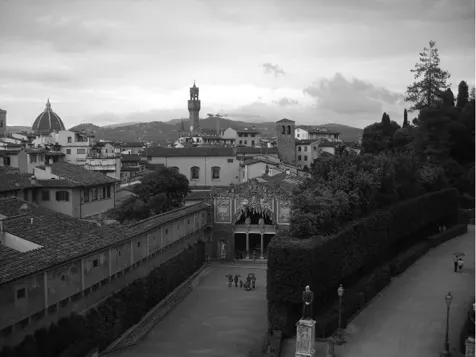
Figure 1.2 Florence, Italy: Landscape Perspective, Tourists on the Ground
By surveying these various approaches to landscape, we do not wish to suggest one is better than the others. Rather, our aim here is to elucidate the limitations of each approach. Each holds particular potentialities for the study of tourism. Further, considering multiple perspectives allows for a more robust accounting of the processes that drive, and are driven by, the (re)produc...
Table of contents
- Cover Page
- Half Title page
- Series Page
- Title Page
- Copyright Page
- Contents
- List of Figures
- List of Tables
- About the Authors
- Acknowledgments
- Preface
- 1 Introduction: Landscape Perspectives on Tourism Places
- Part 1 Theoretical Frameworks
- 2 Rituals of Tourism
- 3 Semiotics and Tourist Meaning-Making
- 4 Ideology and Tourism Sites
- 5 Performing Tourism Places
- Part 2 Tourism Performances
- 6 Performing Tourist Ideologies: Israeli Birthright Tourism
- 7 Marketing “Danishness”
- 8 Touring Florence
- 9 Lifestyle Rock Climbers: Mobile Performances of Home
- 10 Conclusion: Expanding Tourism Geographies
- Bibliography
- Index
Trusted by 375,005 students
Access to over 1.5 million titles for a fair monthly price.
Study more efficiently using our study tools.
Frequently asked questions
Yes, you can cancel anytime from the Subscription tab in your account settings on the Perlego website. Your subscription will stay active until the end of your current billing period. Learn how to cancel your subscription
No, books cannot be downloaded as external files, such as PDFs, for use outside of Perlego. However, you can download books within the Perlego app for offline reading on mobile or tablet. Learn how to download books offline
Perlego offers two plans: Essential and Complete
- Essential is ideal for learners and professionals who enjoy exploring a wide range of subjects. Access the Essential Library with 800,000+ trusted titles and best-sellers across business, personal growth, and the humanities. Includes unlimited reading time and Standard Read Aloud voice.
- Complete: Perfect for advanced learners and researchers needing full, unrestricted access. Unlock 1.5M+ books across hundreds of subjects, including academic and specialized titles. The Complete Plan also includes advanced features like Premium Read Aloud and Research Assistant.
We are an online textbook subscription service, where you can get access to an entire online library for less than the price of a single book per month. With over 1.5 million books across 990+ topics, we’ve got you covered! Learn about our mission
Look out for the read-aloud symbol on your next book to see if you can listen to it. The read-aloud tool reads text aloud for you, highlighting the text as it is being read. You can pause it, speed it up and slow it down. Learn more about Read Aloud
Yes! You can use the Perlego app on both iOS and Android devices to read anytime, anywhere — even offline. Perfect for commutes or when you’re on the go.
Please note we cannot support devices running on iOS 13 and Android 7 or earlier. Learn more about using the app
Please note we cannot support devices running on iOS 13 and Android 7 or earlier. Learn more about using the app
Yes, you can access Tourism, Performance, and Place by Jillian M. Rickly-Boyd,Daniel C. Knudsen,Lisa C. Braverman in PDF and/or ePUB format, as well as other popular books in Business & Hospitality, Travel & Tourism Industry. We have over 1.5 million books available in our catalogue for you to explore.