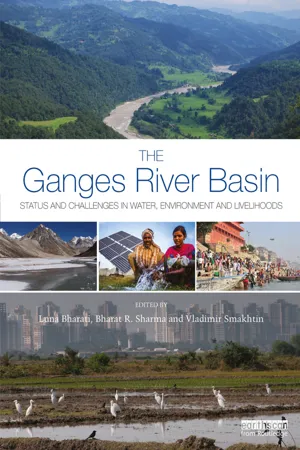
The Ganges is one of the most complex yet fascinating river systems in the world. The basin is characterized by a high degree of heterogeneity from climatic, hydrological, geomorphological, cultural, environmental and socio-economic perspectives. More than 500 million people are directly or indirectly dependent upon the Ganges River Basin, which spans China, Nepal, India and Bangladesh. While there are many books covering one aspect of the Ganges, ranging from hydrology to cultural significance, this book is unique in presenting a comprehensive inter-disciplinary overview of the key issues and challenges facing the region.
Contributors from the three main riparian nations assess the status and trends of water resources, including the Himalayas, groundwater, pollution, floods, drought and climate change. They describe livelihood systems in the basin, and the social, economic, geopolitical and institutional constraints, including transboundary disputes, to achieving productive, sustainable and equitable water access. Management of the main water-use sectors and their inter-linkages are reviewed, as well as the sustainability and trade-offs in conservation of natural systems and resource development such as for hydropower or agriculture.
The Ganges or Ganga, as it is known to most South Asians, and its tributaries have diverse meaning to the basin inhabitants, incorporating the mundane to the most profound. For farmers, it is a source of irrigation, for cities, it is a source of domestic and industrial water as well as hydropower. The river system is also a drainage for waste. The basin supports rich aquatic and terrestrial ecosystems, with rare and endemic species and fascinating landscapes. Furthermore, according to ancient scriptures, the river descends when King Bhagiratha summons a goddess to wash away the sins of his ancestors, which is still being followed by millions of Hindus who bathe in the holy waters and immerse the ashes of their dead for the river to carry them to heaven. In this book, we have made an attempt to comprehensively cover the various aspects of the Ganges/Ganga Basin from these vast and different perspectives. The Ganges is a transboundary basin shared among primarily Nepal, India and Bangladesh, with an estimated 4 per cent of the catchment area in China.
In an average hydrological year, around 1,200 billion m3 of precipitation falls in the basin. Of this, over 500 billion m3 becomes streamflow with the rest directly recharging groundwater or returned to the atmosphere through evapotranspiration. Availability of abundant water resources and fertile valleys and plains in the Ganges Basin supported a large agriculture-based civilization in India, Nepal and Bangladesh. With a catchment area of nearly 1.1 million km2, the basin is the most populated in the world, being a home to over 500 million people. Yet, despite the relative abundance of natural resources, the basin still faces acute poverty, with average GDP per capita under US$2 per day and poverty rates around 30 per cent. The hydrology of the basin is primarily monsoon-driven and about 85 per cent of rainfall falls during the months of June–September. The temporal variability of rainfall and runoff is hence very high, and the problem of excess water during the monsoon, and water scarcity during the dry season, affects all aspects of life throughout the basin. Spatially, it is very heterogeneous in terms of geography, availability and access to resources including land, water and energy, and levels of socio-economic development. Large differences in the above are seen between its hills/mountains, plains and delta areas.
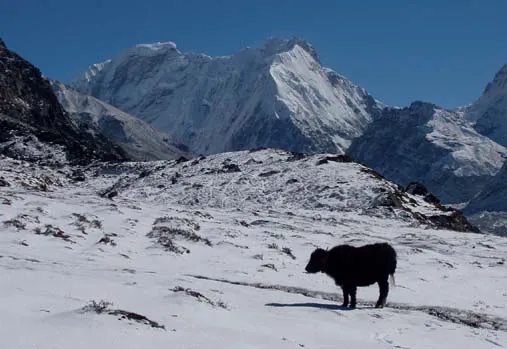
The potential of the hills/mountains in terms of water, energy and agriculture have not yet been sufficiently developed. Water availability in the mountains is the highest in the basin. Nepal alone has an estimated mean annual runoff of 224 billion m3, and per capita water availability of 9,000 m3. Yet, water infrastructure to store and manage the monsoon water for irrigation as well as hydropower is underdeveloped. Most of the hill and mountain systems in the basin are still practising low productive rain-fed subsistence farming. The green revolution, which brought change in the plains was not able to penetrate the hills and mountains because high input technologies were not as feasible here. The green revolution also mainly focused on rice, wheat and maize and overlooked many of the existing cropping systems in the hills, which could have benefited from research leading to increases in efficiency and productivity. On the other hand, the hills and mountain systems, which encompass forests, grasslands, wetlands and high-value horticulture, are also providing ecosystem services to low-land areas through freshwater that is captured, stored and purified in mountain regions. Mountain regions are hotspots of biodiversity; and from a societal point of view, mountains are of global significance as key destinations for tourist, spiritual and recreation activities. Therefore, the challenge is to identify areas where traditional subsistence systems can be transformed into market-oriented agricultural ones through diversification with high-value crops (vegetables, flowers, fruits) and agro-forestry systems – to make hills and mountains eventually more productive, profitable, resilient and attractive to out-migrating youth. Similarly, the mountains could also power the much needed economic growth in the basin through exporting hydropower. At the same time, the challenge is also to manage these upland systems without drastically impacting the ecological services that they provide.
The most profound use of water happens for agriculture, industry, domestic supplies and other livelihood options in the vast plains of the Ganges. The region is extensively cultivated with rice, wheat, maize and millets, sugarcane, pulses, oilseeds and a variety of flowers, vegetables and fruits; along with fisheries, agro-forestry systems and livestock. With small pockets of high productivity in the north-west region, the plains may generally be described as a low productivity-high potential region, where with small interventions, primary productivity of several commodities and enterprises can be substantially improved to alleviate the pervasive rural poverty. Underdeveloped water infrastructure and poor water and benefit-sharing mechanisms among the riparian countries make the poor population excessively vulnerable to natural water-related disasters, such as recurrent, often catastrophic, floods and extensive and often extreme droughts. In spite of the large hydropower potential in the hills and mountains, the plains region is seriously deficient in affordable energy. The prolific groundwater aquifers, which can potentially kick-start the second green revolution in the eastern Gangetic Plains and terai, remain unexploited. And yet, arsenic presence in groundwater threatens the health and life of the poor. With appropriate scientific backstopping, efficient energy policies including use of solar and bio-energy, agricultural productivity can be significantly improved through integrated options along with crop diversification with a focus on high value crops. Coupled with proper attention to governance and social equity issues, this can help the poor to profit from the region’s fertile alluvial soils and generous water endowments. Alarmingly poor water quality in large stretches of the main river and its tributaries, due to unregulated and largely untreated domestic and industrial effluents from large cities, towns and villages discharging directly into streams, is a matter of serious concern. Large recent initiatives like the National Mission for Clean Ganga and the Namami Gange have been initiated by India and the World Bank to restore the rivers’ quality. But overall, the matter needs much more attention throughout the basin.
The Ganges delta, shared by India and Bangladesh and also known as the Sundarbans, is the most active, fragile and the world’s largest and most densely populated deltaic system. The region witnesses strong and complex freshwater–sea brackish water interface modified by the construction of numerous embankments to create favourable conditions for cultivation and habitation in the form of small island polders. Unfortunately, these are frequently invaded by surges and storms in the form of cyclones and climate change-induced rise in sea levels threatening the very existence of the coastal regions. As such man and nature remain in perpetual struggle to retain dominance. There is a continuing conflict among the freshwater rice/crop farmers versus the more lucrative brackish water aquaculture farmers. The farming system is characterized by two key trends that serve to undermine significantly the resilience of farmers and the area’s agro-ecosystems. The first is frequent flooding, with well-publicized devastating consequences; while the second is saline intrusion, which can cause widespread crop damage, and contaminate groundwater supplies for both drinking and agricultural use. Farmers’ ingenuity to support year-round cultivation of rice and other crops in ultra-small farm plots with the support of science in developing flood and salinity-resistant rice varieties has helped in improving the productivity and livelihoods. Commercialization and global demand for the brackish and freshwater prawn culture has provided new opportunities to the fish farmers, but with larger and sometimes irretrievable environmental consequences. Lower riparians also complain about the existing transboundary water-sharing mechanisms and declining freshwater flows posing additional challenges, and call for robust treaties and innovative and sustainable production systems to enhance the resilience and improved livelihoods in the delta.
As clear from the above, many serious challenges face the basin. Thousands of pages have been written about various aspects of water resources and overall natural resources management in the basin, and billions of USD invested to resolve them. And yet, challenges remain, and some get worse. This book is an attempt to start a basin-wide dialogue between policy makers, scientists and practitioners from three riparian countries, and to take stock of what we know about some of these challenges. It is also an attempt to solicit views, and sometimes quite contrasting views, on how to resolve these challenges. In the book, in order to achieve a balanced view, most chapters have been jointly written by authors from Nepal, India and Bangladesh or by international experts who have experience of or worked in all three countries. Most of the existing literature does not offer this sort of multi-country and multidisciplinary approach to highlight the strengths and understand the fine nuances of the problems facing the basin and explore potential solutions. The 17 chapters cover bio-physical, socio-economic and environmental aspects of the basin, each chapter providing several key messages that, we hope, will facilitate future discussions on how the basin should be developed in the decades to come. Some main messages from the book are:
• The annual surface water availability in the Ganges Basin is high, but there is tremendous variability in the spatial and temporal distribution of water supplies. The temporal variability is increasing as we speak, with changing climate. Future climate projections are still uncertain, making adaptation planning difficult. High levels of poverty and lack of infrastructure make the basin vulnerable to changing climate. The latter affects all sectors and aspects of life in basin countries – whether it is hills/mountains, plains or delta. Climate change affects the main biophysical characteristic feature of the basin – the monsoon regime – and leads to increasingly frequent and more extreme floods and droughts that cause massive human and economic losses. Managing this variability by a variety of institutional, political and structural solutions will be the major area of investment for riparian governments and development donors.
• Groundwater plays a critical role in supporting the lives and livelihoods of both rural and urban populations in the Ganges Basin. Technical support systems and regulatory frameworks to enable sustainable allocation and use of the groundwater resource and accounting for ecosystem service requirements are largely in place in India and Bangladesh. However, implementation of these policies and regulations to manage the resources sustainably remains a major long-term challenge. In Nepal, except in urban centres, groundwater is an underutilized resource. In the mountain areas, spring sources are key to providing water during the dry season but are not adequately understood or managed. Growing water scarcity requires more attention to accelerated recharge technologies – beyond natural rates – in order to capture part of the monsoon and provide more water for irrigation from aquifers. The concept of a Ganges Water Machine, although not a panacea to basin problems, is probably more relevant now than in the past and needs to be explored in detail and invested into in certain parts of the basin.
• Although agriculture is highly varied between hills, plains and delta, the agricultural productivity is low-to-medium throughout the basin. It is estimated that around 25 per cent of the basin population is income poor, but 75 per cent are multidimensional poor, i.e....
Table of contents
Cover
Half Title
Title Page
Copyright Page
Table of Contents
Notes on authors
Cover and chapter photos
Foreword: the Ganga – between faith and reality
Acknowledgements
Acronyms and abbreviations
Part I Resources and uses
Part II Environment
Part III Governance and livelihoods
Index
Trusted by 375,005 students
Access to over 1.5 million titles for a fair monthly price.
Study more efficiently using our study tools.
Frequently asked questions
Yes, you can cancel anytime from the Subscription tab in your account settings on the Perlego website. Your subscription will stay active until the end of your current billing period. Learn how to cancel your subscription
No, books cannot be downloaded as external files, such as PDFs, for use outside of Perlego. However, you can download books within the Perlego app for offline reading on mobile or tablet. Learn how to download books offline
Perlego offers two plans: Essential and Complete
Essential is ideal for learners and professionals who enjoy exploring a wide range of subjects. Access the Essential Library with 800,000+ trusted titles and best-sellers across business, personal growth, and the humanities. Includes unlimited reading time and Standard Read Aloud voice.
Complete: Perfect for advanced learners and researchers needing full, unrestricted access. Unlock 1.5M+ books across hundreds of subjects, including academic and specialized titles. The Complete Plan also includes advanced features like Premium Read Aloud and Research Assistant.
Both plans are available with monthly, semester, or annual billing cycles.
We are an online textbook subscription service, where you can get access to an entire online library for less than the price of a single book per month. With over 1.5 million books across 990+ topics, we’ve got you covered! Learn about our mission
Look out for the read-aloud symbol on your next book to see if you can listen to it. The read-aloud tool reads text aloud for you, highlighting the text as it is being read. You can pause it, speed it up and slow it down. Learn more about Read Aloud
Yes! You can use the Perlego app on both iOS and Android devices to read anytime, anywhere — even offline. Perfect for commutes or when you’re on the go. Please note we cannot support devices running on iOS 13 and Android 7 or earlier. Learn more about using the app
Yes, you can access The Ganges River Basin by Luna Bharati, Bharat R. Sharma, Vladimir Smakhtin, Luna Bharati,Bharat R. Sharma,Vladimir Smakhtin in PDF and/or ePUB format, as well as other popular books in Biological Sciences & Sustainable Development. We have over 1.5 million books available in our catalogue for you to explore.