It is not surprising that visitors to Blake's cosmology – the most elaborate in the history of British text and design – often demand a map in the form of a reference book. The entries in this volume benefit from the wide range of historical information made available in recent decades regarding the relationship between Blake's text and design and his biographical, political, social, and religious contexts. Of particular importance, the entries take account of the re-interpretations of Blake with respect to race, gender, and empire in scholarship influenced by the groundbreaking theories that have arisen since the first half of the twentieth century. The intricate fluidity of Blake's anti-Newtonian universe eludes the fixity of definitions and schema. Central to this guide to Blake's work and ideas is Kathryn S. Freeman's acknowledgment of the paradox of providing orientation in Blake's universe without disrupting its inherent disorientation of the traditions whereby readers still come to it. In this innovative work, Freeman aligns herself with Blake's demand that we play an active role in challenging our own readerly habits of passivity as we experience his created and corporeal worlds.
- 240 pages
- English
- ePUB (mobile friendly)
- Available on iOS & Android
eBook - ePub
A Guide to the Cosmology of William Blake
About this book
Information
Entries
Abolition
The subjective gaze with which Blake represents slaves in both text and design has been the focus of a range of scholarship since David Erdman’s groundbreaking work in the field. Blake’s compelling vision has been described as both influenced by and influencing the watershed historical moment of the abolitionist movement.
Blake’s participation in the abolitionist movement appears most directly in his illustrations to Stedman’s Narrative of a Five Years’ Expedition against the Revolted Negroes of Surinam. The designs for Stedman’s Narrative have been important for study of the transatlantic link between Blake and the abolitionist movement in the 1860s and 1870s; that they were pirated is proof for Dent and Whittaker of Blake’s reception in nineteenth-century America through the Swedenborgian Society (99). Observing that Blake’s engravings influenced Stedman’s narrative as much as Stedman influenced Blake, Rubenstein and Townsend note that “slavery concerned Blake far more than most topics he was called upon to illustrate…. In his poetry he returned to the issue many times and … was well informed” (288).
Stedman’s narrative may in turn have influenced Blake’s Visions of the Daughters of Albion, a poem that decries slavery through the many-layered allegory of Bromion’s rape of Oothoon (62). Erdman suggests that her name itself, with its double o’s, is an Africanized version of the Gaelic original story of Oithona who is also raped but whose fiancé, by contrast to Theotormon, rescues her; as “the soft soul of America,” by contrast to Oithona, Oothoon is the female slave abused not only by her white owner but by the hypocritical piety of the Englishman who has bought into the myth of British imperialism that supported the slave trade.
Blake’s poem “The Little Black Boy” in Songs of Innocence represents Blake’s commitment to the abolitionist movement, as scholars such as Lauren Henry have observed, in particular through the influence of Phillis Wheatley on Blake. This poem presents the racial binary that the child has imbibed from the hypocritical piety of his white, Christian owners. His assimilation of the Christian promise of eternal salvation for the slaves who have suffered on earth is further complicated by the boy’s memory of his mother’s early teaching of an African nondual divinity, her voice subsumed both in the poem and through the child’s conflation, by the whites’ religious justification of slavery. The differences in the illuminations of the final plate (Figures 19 and 20) underscore the contrasting perception – one naïve, one bitterly aware of the hypocrisy – of the Christian promise that race will be eradicated in heaven.
From the earliest lyric poems to the Prophetic Books, Blake insists that such emancipation can only come about when each individual casts off the “mind-forg’d manacles” (“London,” Erdman 27, l. 8). Blake’s most moving and subtle depiction of an emancipated slave can be found at the culmination of Vala, or The Four Zoas, in which Albion as the spiritually sleeping England awakens in an apocalypse that is celebrated by a song “Composed by an African Black from the little Earth of Sotha/Aha Aha how came I here so soon in my sweet native land” (Erdman 403, p. 134, ll. 34–5). Here, at the heart of Blake’s most complex depiction of his cosmology, that a freed African slave is the harbinger of the spiritual freedom of humanity stands as powerful testimony to the importance of abolition for Blake.
Bibliography
Adams, Hazard. William Blake: A Reading of the Shorter Poems. Seattle, WA: University of Washington Press, 1963. Print.
Bentley, G. E., ed. Blake Records. 2nd Edition. New Haven, CT: Yale UP, 2004. Print.
Bindman, David. “Blake’s Vision of Slavery Revisited.” Huntington Library Quarterly 58, nos. 3 & 4 (1995): 373–82. Print.
Dent, Shirley and Jason Whittaker. Radical Blake: Afterlife and Influence from 1827. New York: Palgrave Macmillan, 2003. Print.
Di Salvo, Jackie. Blake, Politics, and History. New York: Garland, 1998. Print.
Erdman, David. Blake: Prophet against Empire. New York: Dover, 1991. Print.
Henry, Lauren. “Sunshine and Shady Groves: What Blake’s ‘Little Black Boy’ Learned from African Writers.” Blake/An Illustrated Quarterly (Summer 1995): 4–11. Print.
Kitson, Peter J. “Romanticism and Colonialism: Races, Places, People, 1785–1800.” Romanticism and Colonialism: Writing and Empire, 1780–1830. Eds. Tim Fulford and Peter Kitson. Cambridge: Cambridge University Press, 1998. 13–34. Print.
Richardson, Alan and Hofkosh, Sonia, eds. Romanticism, Race, and Imperial Culture. Indianapolis, IN: Indiana UP, 1996. Print.
Rubenstein, Anne and Camilla Townsend. “Revolted Negroes and the Devilish Principle: William Blake and the Conflicting Visions of Boni’s Wars in Surinam, 1772–1796.” Blake, Politics, and History. Eds. Di Salvo, et al. 1998. 273–98. Print.
Abraham and Isaac
Blake ostensibly based this tempera, painted for Thomas Butts, on the biblical story of Abraham’s compliance with Jehovah’s demand that he sacrifice his son, Isaac, as a test of his devotion (Genesis 22). However, Blake’s narrative in the painting departs radically not only from the biblical story, but from traditional artistic depictions of the scene of sacrifice in which Isaac humbly awaits his death at the altar. In Blake’s rendering, by contrast, Isaac does not passively await his sacrifice at the altar (at the right in Blake’s painting, Figure 1). Instead, Isaac’s energy is vibrant as he appears to pull away towards the left; naked, he removes himself from Abraham’s arm that bears the knife. Isaac points to a ram at the left of the painting in a gesture that, contrary to the biblical story, suggests it is Isaac rather than a literalized Jehovah who instructs Abraham to offer the ram instead.
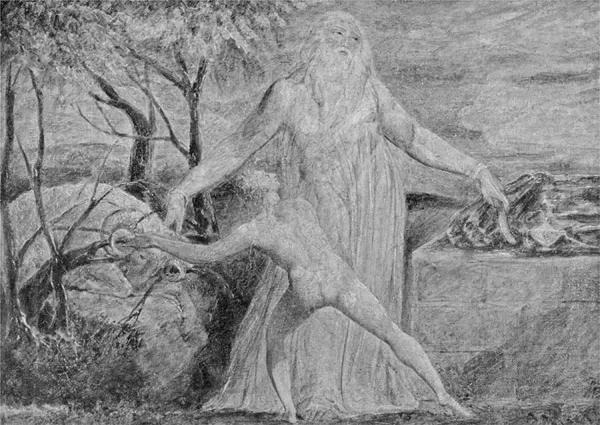
Figure 1 Abraham and Isaac (1799–1800), water-based tempera, Yale Center for British Art
Blake’s Abraham has been described as one of the last of the Druids, in which case Isaac represents the new generation’s demand that the Druid sacrifice of humans be substituted by animal sacrifice, the painting thus representing the story as “a significant stage in man’s spiritual development” (Lister). Not necessarily excluding this interpretation, however, a yet more subversive reading gives deeper implications for Blake’s challenge to the dualistic orthodoxy of the Judeo-Christian separation of the human and divine: the stony, white-bearded Abraham, who resembles Blake’s depictions of other oppressive patriarchal figures including Nobodaddy, the Ancient of Days, and Urizen, looks up as though to an illusory paternal Jehovah rather than down to Isaac who is a variant of the Orc figure in Blake’s mythos, the revolutionary as a perpetual teenage boy locked in struggle against the oppression of his father, Los. The painting would then suggest that Abraham has made the paternalistic God in his image, looking to him for authority rather than being willing to concede that it is Isaac who offers the ram as a substitute. The red sky thus reflects Blake’s “infernal” challenge to the heaven/hell binary of the Bible and its consequent history of oppression and cruelty.
Bibliography
Bentley, G. E. Blake Records. New Haven, CT: Yale UP, 2004. Print.
Bindman, David. Blake as an Artist. New York: E. P. Dutton, 1977. Print.
Eaves, Morris. William Blake’s Theory of Art. Princeton, NJ: Princeton UP, 1982. Print.
Heppner, Christopher. Reading Blake’s Designs. New York: Cambridge UP, 1995. Print.
Lister, Raymond. Infernal Methods: A Study of William Blake’s Art Techniques. London: G. Bell & Sons Ltd., 1975. Print.
The Abstract: see Allegory
Adam
Among the errors Blake found in Milton’s representation of Genesis is Milton’s belief that sexuality was an outcome of the Fall. Having questioned Blake about this claim, his friend Henry Crabb Robinson writes that for Blake, the Fall “produced only generation & death”; for Blake, Adam was androgynous in prelapserian Eden, as Robinson notes: “And then he went off upon a rambling state of a Union of Sexes in Man as in God – an androgynous state in which I could not follow him” (quoted in Bentley 427–8).
In a popular story, long taken as true and perpetuated by Alexander Gilchrist’s biography of Blake, Thomas Butts happened upon William and Catherine Blake in their garden at Felpham reciting Paradise Lost “freed from ‘those troublesome disguises’ which prevailed since the Fall” (xxvi). Although the story of a naked Blake reciting Milton in his garden seemed evidence enough of his madness for Royal Academy students as early as 1815, the story was apparently recognized even then as apocryphal, according to Bentley. Nevertheless, the power of the story is in its metaphor for Blake’s recurring idea of Eden as a paradisiacal state we can return to at any time as it is outside of time and space.
Adam appears in the Argument of The Marriage of Heaven and Hell as “Red clay,” the literal meaning of “Adam” in Hebrew. Taking Adam out of the creation story of Genesis, Blake tells instead a nonlinear creation story in which Adam is “brought forth” after the “perilous path was planted,” on “bleached bones,” suggesting that each human is potentially originary (Erdman 33, Plate 2, ll. 9–13). That the Argument is framed with Rintrah, the figure of righteous indignation, who “roars & shakes his fires in the burdend air,” suggests the cyclicality of Adam’s transmutations through fallenness and redemption (Erdman 33, Plate 2, ll. 1 and 21).
In his earliest linking of his figures and those of the Bible, such as in The Book of Urizen, Blake associates Los with Adam; as Tannenbaum has observed, “God pities Adam because Adam is alone, and Los pities Urizen because Urizen has successfully effected his own isolation from Eternity with Los’s help” (206–7). As Blake’s cosmology expands and complicates in the Prophetic Books, however, Adam becomes a son of Los and Enitharmon (Four Zoas viii, 115). Blake complicates the biblical Adam by portraying him as the Limit of Contraction that Jesus set to buffer the Fall. In his eponymous Prophetic Book, Milton reaches a significant level of spiritual growth when he understands that Adam and Satan are states rather than individuals (Erdman 132, Plate 32, l. 25).
Bibliography
Bentley, G. E. Blake Records. 2nd Edition. New Haven, CT: Yale UP, 2004. Print.
Damon, S. Foster. A Blake Dictionary: The Ideas and Symbols of William Blake. Providence,...
Table of contents
- Cover
- Title
- Copyright
- Contents
- List of entries
- List of figures
- Acknowledgments
- Introduction
- Entries
- A William Blake chronology
- General bibliography
Trusted by 375,005 students
Access to over 1.5 million titles for a fair monthly price.
Study more efficiently using our study tools.
Frequently asked questions
Yes, you can cancel anytime from the Subscription tab in your account settings on the Perlego website. Your subscription will stay active until the end of your current billing period. Learn how to cancel your subscription
No, books cannot be downloaded as external files, such as PDFs, for use outside of Perlego. However, you can download books within the Perlego app for offline reading on mobile or tablet. Learn how to download books offline
Perlego offers two plans: Essential and Complete
- Essential is ideal for learners and professionals who enjoy exploring a wide range of subjects. Access the Essential Library with 800,000+ trusted titles and best-sellers across business, personal growth, and the humanities. Includes unlimited reading time and Standard Read Aloud voice.
- Complete: Perfect for advanced learners and researchers needing full, unrestricted access. Unlock 1.5M+ books across hundreds of subjects, including academic and specialized titles. The Complete Plan also includes advanced features like Premium Read Aloud and Research Assistant.
We are an online textbook subscription service, where you can get access to an entire online library for less than the price of a single book per month. With over 1.5 million books across 990+ topics, we’ve got you covered! Learn about our mission
Look out for the read-aloud symbol on your next book to see if you can listen to it. The read-aloud tool reads text aloud for you, highlighting the text as it is being read. You can pause it, speed it up and slow it down. Learn more about Read Aloud
Yes! You can use the Perlego app on both iOS and Android devices to read anytime, anywhere — even offline. Perfect for commutes or when you’re on the go.
Please note we cannot support devices running on iOS 13 and Android 7 or earlier. Learn more about using the app
Please note we cannot support devices running on iOS 13 and Android 7 or earlier. Learn more about using the app
Yes, you can access A Guide to the Cosmology of William Blake by Kathryn S. Freeman,Kathryn Freeman in PDF and/or ePUB format, as well as other popular books in Literature & English Literary Criticism. We have over 1.5 million books available in our catalogue for you to explore.