- 696 pages
- English
- ePUB (mobile friendly)
- Available on iOS & Android
eBook - ePub
Organizational Sociology
About this book
The readings collected in Organizational Sociology are organized so as to direct attention to the six major theoretical traditions which have emerged since the 1960s to guide research and interpretation of organizational structure and performance. The traditions reviewed are: Contingency theory, Resource dependence. Population and Community ecology, Transactions costs economics, Neo-Marxist theory and Institutional Theory. Major statements of each theory are presented together with examples of related empirical research. A concluding section provides examples of recent attempts to combine and integrate two or more of these theories, as analysts attempt to account for some aspects of organization. Rather than pitting one perspective against another, contemporary analysts are more likely to selectively combine elements from several theories in order to better understand the phenomenon of interest.
Information
Part I
Contingency Theory
[1]
Organization Design: an Information Processing View
JAY R. GALBRAITH
European Institute for Advanced Studies JAY R. GALBRAITH is currently serving as Professor of Organizational Behavior at the European Institute for Advanced Studies in Management. Formerly, he was affiliated with the Sloan School of Management, M.I.T. Professor Galbraith is interested in the design of organization structures and his most recent work is Designing Complex Organizations (Addison-Wesley, 1973).
European Institute for Advanced Studies JAY R. GALBRAITH is currently serving as Professor of Organizational Behavior at the European Institute for Advanced Studies in Management. Formerly, he was affiliated with the Sloan School of Management, M.I.T. Professor Galbraith is interested in the design of organization structures and his most recent work is Designing Complex Organizations (Addison-Wesley, 1973).
The Information Processing Model
A basic proposition is that the greater the uncertainty of the task, the greater the amount of information that has to be processed between decision makers during the execution of the task. If the task is well understood prior to performing it, much of the activity can be preplanned. If it is not understood, then during the actual task execution more knowledge is acquired which leads to changes in resource allocations, schedules, and priorities. All these changes require information processing during task performance. Therefore the greater the task uncertainty, the greater the amount of information that must be processed among decision makers during task execution in order to achieve a given level of performance. The basic effect of uncertainty is to limit the ability of the organization to preplan or to make decisions about activities in advance of their execution. Therefore it is hypothesized that the observed variations in organizational forms are variations in the strategies of organizations to 1) increase their ability to preplan, 2) increase their flexibility to adapt to their inability to preplan, or, 3) to decrease the level of performance required for continued viability. Which strategy is chosen depends on the relative costs of the strategies. The function of the framework is to identify these strategies and their costs.
The Mechanistic Model
This framework is best developed by keeping in mind a hypothetical organization. Assume it is large and employs a number of specialist groups and resources in providing the output. After the task has been divided into specialist substasks, the problem is to integrate the subtasks around the completion of the global task. This is the problem of organization design. The behaviors that occur in one subtask cannot be judged as good or bad per se. The behaviors are more effective or ineffective depending upon the behaviors of the other subtask performers. There is a design problem because the executors of the behaviors cannot communicate with all the roles with whom they are interdependent. Therefore the design problem is to create mechanisms that permit coordinated action across large numbers of interdependent roles. Each of these mechanisms, however, has a limited range over which it is effective at handling the information requirements necessary to coordinate the interdependent roles. As the amount of uncertainty increases, and therefore information processing increases, the organization must adopt integrating mechanisms which increase its information processing capabilities.
1. Coordination by Rules or Programs
For routine predictable tasks March and Simon have identified the use of rules or programs to coordinate behavior between interdependent subtasks [March and Simon, 1958, Chap. 6]. To the extent that job related situations can be predicted in advance, and behaviors specified for these situations, programs allow an interdependent set of activities to be performed without the need for inter-unit communication. Each role occupant simply executes the behavior which is appropriate for the task related situation with which he is faced.
2. Hierarchy
As the organization faces greater uncertainty its participants face situations for which they have no rules. At this point the hierarchy is employed on an exception basis. The recurring job situations are programmed with rules while infrequent situations are referred to that level in the hierarchy where a global perspective exists for all affected subunits. However, the hierarchy also has a limited range. As uncertainty increases the number of exceptions increases until the hierarchy becomes overloaded.
3. Coordination by Targets or Goals
As the uncertainty of the organization's task increases. coordination increasingly takes place by specifying outputs, goals or targets [March and Simon, 1958, p. 145]. Instead of specifying specific behaviors to be enacted, the organization undertakes processes to set goals to be achieved and the employees select the behaviors which lead to goal accomplishment. Planning reduces the amount of information processing in the hierarchy by increasing the amount of discretion exercised at lower levels. Like the use of rules, planning achieves integrated action and also eliminates the need for continuous communication among interdependent subunits as long as task performance stays within the planned task specifications, budget limits and within targeted completion dates. If it does not, the hierarchy is again employed on an exception basis.
The ability of an organization to coordinate interdependent tasks depends on its ability to compute meaningful subgoals to guide subunit action. When uncertainty increases because of introducing new products, entering new markets, or employing new technologies these subgoals are incorrect. The result is more exceptions, more information processing, and an overloaded hierarchy.
Design Strategies
The ability of an organization to successfully utilize coordination by goal setting, hierarchy, and rules depends on the combination of the frequency of exceptions and the capacity of the hierarchy to handle them. As the task uncertainty increases the organization must again take organization design action. It can proceed in either of two general ways. First, it can act in two ways to reduce the amount of information that is processed. And second, the organization can act in two ways to increase its capacity to handle more information. The two methods for reducing the need for information and the two methods for increasing processing capacity are shown schematically in Figure 1. The effect of all these actions is to reduce the number of exceptional cases referred upward into the organization through hierarchical channels. The assumption is that the critical limiting factor of an organizational form is its ability to handle the non-routine, consequential events that cannot be anticipated and planned for in advanced. The non-programmed events place the greatest communication load on the organization.
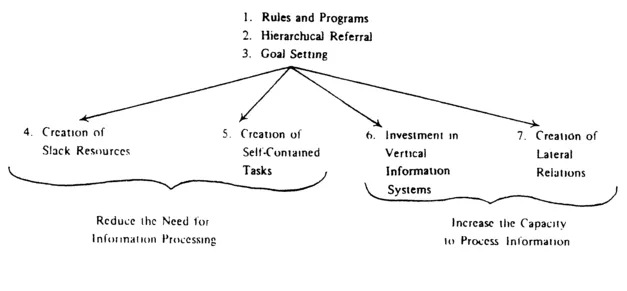
FIGURE I. Organization Design Strategies
1. Creation of Slack Resources
As the number of exceptions begin to overload the hierarchy, one response is to increase the planning targets so that fewer exceptions occur. For example, completion dates can be extended until the number of exceptions that occur are within the existing information processing capacity of the organization. This has been the practice in solving job shop scheduling problems [Pounds, 1963]. Job shops quote delivery times that are long enough to keep the scheduling problem within the computational and information processing limits of the organization. Since every job shop has the same problem standard lead times evolve in the industry. Similarly budget targets could be raised, buffer inventories employed, etc. The greater the uncertainty, the greater the magnitude of the inventory, lead time or budget needed to reduce an overload.
All of these examples have a similar effect. They represent the use of slack resources to reduce the amount of interdependence between subunits [March and Simon, 1958, Cyert and March, 1963]. This keeps the required amount of information within the capacity of the organization to process it. Information processing is reduced because an exception is less likely to occur and reduced interdependence means that fewer factors need to be considered simultaneously when an exception does occur.
The strategy of using slack resources has its costs. Relaxing budget targets has the obvious cost of requiring more budget. Increasing the time to completion date has the effect of delaying the customer. Inventories require the investment of capital funds which could be used elsewhere. Reduction of design optimization reduces the performance of the article being designed. Whether slack resources are used to reduce information or not depends on the relative cost of the other alternatives.
The design choices are: 1) among which f...
Table of contents
- Cover
- Half Title
- Title
- Copyright
- Contents
- Acknowledgements
- Series Preface
- Introduction
- PART I CONTINGENCY THEORY
- PART II RESOURCE DEPENDENCE THEORY
- PART III POPULATION AND COMMUNITY ECOLOGY
- PART IV TRANSACTIONS COSTS THEORY
- PART V NEO-MARXIST THEORY
- PART VI INSTITUTIONAL THEORY
- PART VII ATTEMPTS AT INTEGRATION
- Name Index
Trusted by 375,005 students
Access to over 1.5 million titles for a fair monthly price.
Study more efficiently using our study tools.
Frequently asked questions
Yes, you can cancel anytime from the Subscription tab in your account settings on the Perlego website. Your subscription will stay active until the end of your current billing period. Learn how to cancel your subscription
No, books cannot be downloaded as external files, such as PDFs, for use outside of Perlego. However, you can download books within the Perlego app for offline reading on mobile or tablet. Learn how to download books offline
Perlego offers two plans: Essential and Complete
- Essential is ideal for learners and professionals who enjoy exploring a wide range of subjects. Access the Essential Library with 800,000+ trusted titles and best-sellers across business, personal growth, and the humanities. Includes unlimited reading time and Standard Read Aloud voice.
- Complete: Perfect for advanced learners and researchers needing full, unrestricted access. Unlock 1.5M+ books across hundreds of subjects, including academic and specialized titles. The Complete Plan also includes advanced features like Premium Read Aloud and Research Assistant.
We are an online textbook subscription service, where you can get access to an entire online library for less than the price of a single book per month. With over 1.5 million books across 990+ topics, we’ve got you covered! Learn about our mission
Look out for the read-aloud symbol on your next book to see if you can listen to it. The read-aloud tool reads text aloud for you, highlighting the text as it is being read. You can pause it, speed it up and slow it down. Learn more about Read Aloud
Yes! You can use the Perlego app on both iOS and Android devices to read anytime, anywhere — even offline. Perfect for commutes or when you’re on the go.
Please note we cannot support devices running on iOS 13 and Android 7 or earlier. Learn more about using the app
Please note we cannot support devices running on iOS 13 and Android 7 or earlier. Learn more about using the app
Yes, you can access Organizational Sociology by W. Richard Scott in PDF and/or ePUB format, as well as other popular books in Social Sciences & Sociology. We have over 1.5 million books available in our catalogue for you to explore.