eBook - ePub
The Symbolic Representation of Gender
A Discursive Approach
- 224 pages
- English
- ePUB (mobile friendly)
- Available on iOS & Android
eBook - ePub
About this book
What is symbolic representation? Since Hanna Pitkin's seminal The Concept of Representation, the symbolic has been the least studied dimension of political representation. Innovatively adopting a discursive approach, this book - the first full-length treatment of symbolic representation - focuses on gender issues to tackle important questions such as: What are women and men symbols of, and how is gender constructed in policy discourse? It studies what functions symbolic representation fulfils in the construction of gender, what social roles get legitimized in policy discourse, and how this affects power constellations, ultimately revealing much about the relation between symbolic, descriptive, and substantive representation. Emanuela Lombardo and Petra Meier draw on theories of symbolic representation and gender, as well as rich primary material about political debates on labour and care issues, partnership and reproductive rights, gender violence, and quotas. Using this original data, the authors show that reconsidering symbolic representation from a discursive perspective makes explicit issues of (in)equality embedded within particular constructions, as well as their consequences for political representation and gender equality. This important exploration raises relevant new questions regarding the representation of gender that form valuable contributions to the fields of political science, political theory, sociology, and gender studies.
Information
Chapter 1
The Symbolic Representation of Gender: An Introduction

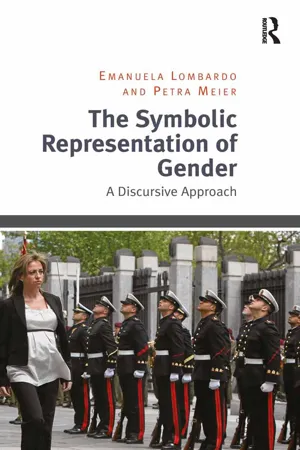
Figure 1.1 Defence Minister Carme Chacón inspecting the troops, Spain.
Source: El Mundo.
On 14 April 2008, a seven-months-pregnant Minister of Defence inspected Spanish troops for the first time. This was not only the first time for her, but it was also a first for Spanish women and for the Spanish army. Carme Chacón – the first woman to have inspected the troops in Spain – was appointed minister within the Spanish socialist cabinet of President Rodríguez Zapatero in 2008. The sight of Minister Chacón inspecting the troops on her first day in office, her rounded belly covered by a white maternity blouse, is an image that Spaniards will not easily forget. It is an image that was on the front page of several national and international newspapers. It was an image worth a thousand words.
Why is this image so powerful, and why did it attract such media attention? At first glance, the picture on the one hand uncharacteristically shows a mother-to-be, a symbol of womanhood, in a position of leadership and command, and on the other hand just as uncharacteristically shows the army, a symbol of masculinity as associated with physical strength and defence, in a state of subordination and obedience towards a woman in a position of supreme authority. The pregnant minister is invading a space (Puwar 2004) that tends to be associated with men. The image’s attraction could also be due to its suggested clash between life as symbolised by maternity and death as symbolised by the army. The image turned socially ingrained expectations about the role of women and men upside down and it did the same with the hierarchy between the sexes that is still very much present and being perpetuated through dominant cultural codes.
A second look at the picture opens up many more meanings that vary depending on the spectator’s perspective. Some feminist political actors interpreted the image as a symbol that women are starting to break through the glass ceiling, setting foot into typically masculine political institutions. The Minister’s pregnant body symbolises the female sex’s entry in a political environment that has typically been an exclusively male territory, such as the Ministry of Defence. This image powerfully renders visible women’s presence in male-dominated political areas and, what is more, it shows a woman in a leading position. Therefore, it ‘is an important image precisely because it conveys normality’, as the president of the Spanish feminist organisation Fundación Mujeres Marisa Soleto said. ‘It serves a pedagogic function: it shows that women can be and are everywhere’ (Abend 2008). Moreover, the picture challenges the traditionally ingrained idea that women and defence are a contradiction in terms, as protecting the country has culturally been considered to be a man’s task and masculinity mainly associated with strength, and – metonymically – with defence. Finally, the image of a pregnant minister inspecting the troops can also symbolise the changing role of the army, which now not only includes military combat but also humanitarian and peacekeeping operations, roles here associated with women. Former Secretary of State for Equality Maribel Montaño suggests this latter meaning when she says that the image of the pregnant Minister of Defence ‘shows that the army does not just have to fulfil this masculine role of force, it can be more feminine, more humanitarian’ (Abend 2008).
From the perspective of more conservative political actors, the image of a pregnant Minister of Defence raised all sorts of concerns. Newspapers such as El Mundo expressed scepticism about the capacity of a pregnant minister – soon to be a mother – to manage the portfolio of defence, and questioned whether she should take the full 16-week maternity leave guaranteed by Spanish law or shorten the leave given her new political responsibilities (García 2008). Right-wing newspapers such as ABC and La Razón worried that, due to the socialist Prime Minister Zapatero’s ‘political correctness’ in appointing women, many talented men would be excluded from top jobs in Spanish public administration to the benefit of incompetent female politicians (Sanz 2008; J.A. 2008). To these conservative voices the image of the pregnant minister inspecting the troops was a symbol of her incompetence and incapacity to deal with the political task that awaited her. The minister’s critics also feared she might redirect the army to aid missions rather than military duties because of the supposedly pacifist ideas that her pregnancy symbolised. In this respect, the critics’ concern is not only related to the fact that she is a woman, but also to the fact that she is pregnant, which might entail that she has pacifist ideas supposedly not to be associated with the tasks of a minister of defence.
What does this closer glance at the image of the Spanish pregnant minister inspecting the troops tell us? First, the picture is political. What we are discussing here is an issue of representation in politics in general, and of symbolic representation in particular. Second, the debate over the picture’s meaning reminds us that there are different interpretations of just what a political image symbolises. A symbol’s meaning is contested in political discourses and can mean different things to different people. And third, the image is a gendered symbol. It suggests meanings and beliefs that are associated with women and men, the roles that society has attributed to them, and their socially constructed relationship. Each of these three statements – about the political, contested, and gendered character of the picture – leads us into the theme of this book, the symbolic representation of gender.
In this introductory chapter we define what we mean by symbolic representation and do so in relation to Hanna Pitkin’s (1967) definition of political representation. We first clarify our position with respect to Pitkin, and draw up the borders of ‘symbolic representation’, a concept that is at the same time broad and understudied by scholars in gender and politics, and in politics more broadly speaking. In Section 2 we then discuss who or what is the agent of symbolic representation in this book, the one representing. We thereby introduce a discursive turn in the analysis of symbolic representation within the gender and politics literature. In Section 3 we argue that gender is the principal – the group or matter being represented – in our definition of symbolic representation. We then clarify how this choice of the principal differs from Pitkin’s, and refer to feminist studies on gender and nations that have specifically discussed the symbolic construction of women and men. The final section introduces the different chapters of this book.
Symbolic Representation
Pitkin’s Definition
Political representation is about making sure citizens or, more specifically, different groups of citizens are ‘present’ in political discussions for which they are not physically present. In her seminal work on the concept, Pitkin (1967) distinguished four dimensions: formalistic, symbolic, descriptive, and substantive representation. While the first dimension merely deals with the formal rules of representation, symbolic and descriptive representation both focus on the ‘who’ is represented in the issue of representation, describing the ways in which agents (those doing the representing) ‘stand for’ principals (those being represented), either symbolically or literally. Descriptive representation more precisely refers to the physical presence of an actor as ‘standing for’ the represented through a resemblance to the represented. Substantive representation refers to the representative as ‘acting for’ the represented in a manner responsive to them (for a more in-depth discussion of these dimensions see Chapters 7 and 8 respectively). Pitkin herself was most charmed by substantive representation, since it focuses on the act of representation itself, on what the agent does in order to represent the principal. According to Pitkin, we can only speak of representing as substantive activity when such actions are involved.
Pitkin defined the symbolic dimension of representation as the representation of a group, nation, or state through an object to which a certain representative meaning is attributed. Or, put in terms of agents and principals: symbolic representation is the representation of the principal through an agent to which a certain representative meaning is attributed. Agents or objects generating symbolic representation include, for instance, national flags or anthems (Cerulo 1993), public buildings and institutions (Edelman 1964), statues, and the design of public spaces and capitals (Parkinson 2009; Sonne 2003).
A symbol is commonly defined as an image or object that suggests or refers to something else, and symbolic representation is indeed a process in which something by association or convention represents something else; much as Marianne symbolically represents France and the circle of 12 golden stars on a blue background represents the European Union (EU). Thus, the particularity of symbolic representation resides in the capacity of the symbol, the agent, to evoke or suggest a meaning, belief, feeling, and value related and appropriate to the principal (Childs 2008; Northcutt 1991; Parel 1969). These symbols themselves ‘make no allegations about what they symbolise, but rather suggest or express it’ (Pitkin 1972, 94).
We stand with Pitkin in the aspect of her definition of symbolic representation that points out the evocative (but not necessarily explicit) function of symbols as recipients of feelings, as made up of ‘beliefs, attitudes, assumptions of people’ (Pitkin 1967, 99–100). This includes Pitkin’s argument that the link between symbol and principal is arbitrary and relies on people’s emotional responses ‘rather than on rationally justifiable criteria’ (Pitkin 1967, 100). Thus, an important part of Pitkin’s definition of symbolic representation we draw from is that the response to the symbol depends on training people and on forming their habits so that certain meanings are associated with a particular symbol and end up generating particular responses towards symbols, as Pitkin’s example of showing national pride by not letting the flag touch the ground shows (Pitkin 1967, 100–101).
The connection between symbol and response is a matter of habit and social practice ingrained in norms and values. In Pitkin’s example, a political leader such as a king or queen is accepted as a symbolic representative as long as people believe in the leader, and to make people believe in their symbolic representative, particular habits and social practices have to be formed. We have seen that the image of the pregnant Spanish minister is out of place as a symbolic representative, at least according to the various different responses it sparked; habits and social practices question the appropriateness for a minister of defence to be pregnant or even female. Due to ingrained beliefs and attitudes, and due to norms and values about what the appropriate roles for women and men are in our society, the image evoked particularly contested meanings and feelings. We will come back to other aspects of both Pitkin’s and our own definition of symbolic representation after a brief overview of how the study of gender and political representation has evolved in gender and politics research.
The Cinderella of Pitkin’s Dimensions of Political Representation
Out of the four different dimensions of political representation theorised by Pitkin (1967), symbolic representation has long remained neglected in the literature on gender and politics. Scholars in this field have mainly focused on descriptive representation, and more recently also on substantive representation. Pitkin’s work has been an important touchstone in this, as Karen Celis and Amy Mazur (2012) underline in their introduction to a series of Critical Perspectives on Gender and Politics. Since the early 1990s, a growing body of literature has focused on the imbalance of men and women in politics, the causes of this imbalance and the means to overcome such inequality. At the outset, much of this work was normative and attempted to construct a theoretical argument for why more women were needed in politics. Looking into existing theories on representation and citizenship, it argued why these approaches were wrong and what was needed – a politics of presence or parity democracy – to redress the gender imbalance (Phillips 1995; Mossuz Lavau 1998). In the shadow of this body of thinking, more empirically oriented researchers broke open political systems, unravelling electoral systems and procedures of candidate recruitment, selection, and election. They pointed out the gender bias inherent in institutional structures, rules, and procedures (Rule and Zimmerman 1994; Tremblay 2008). This was the point when gender quotas made it to the political agenda (Dahlerup 2006; Krook 2006; Marques Pereira and Nolasco 2001), first in Argentina, France, and Belgium, and now all around the world.
This focus on women’s underrepresentation in politics and the argumentation for an increased or equal number of women in politics led feminist scholars to the question of what exactly is the added value to politics of women and quotas. The argument about the added value of women to politics generated an impressive body of research linking descriptive and substantive representation, and exploring what difference women make in politics and to what extent and under what conditions they are better able to represent women citizens than their male colleagues would (for an overview see Childs and Krook 2008). The results in these scholarly works on the substantive representation of women were mixed, ranging from, ‘yes, women definitely make a huge difference’, to the argument for ‘more feminists, not more women’ (Tremblay and Pelletier 2000), which implied that feminists could also be male and that men could hence substantially represent women. Studies on substantive representation such as those by Celis (2009) and by Celis et al. (2008) problematised the idea of women’s interests, challenging their unitary character, and discussed the role of ‘critical individuals’ as being more crucial than ‘critical mass’ in influencing women’s substantive representation.
In the wake of this feminist interest, a broader renewed interest in the concept of representation arose, leading to discussions about political representation as a construction (Squires 2008), or as an issue of making claims on behalf of others (Saward 2006; 2010), and about the fact that the principal might not even have elected the one claiming to represent her or him (Saward 2009). The search for a greater quality of democracy, then, not only includes electoral representation as legitimate within a democratic community, but also non-electoral representation such as exercised by NGOs or interest groups. This scholarly interest in a broader concept of political representation that goes ‘beyond the electoral game’ (Stoffel 2008, 144; 2011; Rehfeld 2006) also opens the door to reflections on the overlooked ‘Cinderella’ of Pitkin’s political representation dimensions, the symbolic one.
Pitkin’s symbolic representation has received little attention so far. The few works on symbolic representation within the literature on gender and politics have discussed symbolic representation in relation to descriptive representation. Its appearance in these works is more about what descriptive representation generates at the level of symbolic representation. Leslie Schwindt-Bayer (2010, 6), for instance, refers to symbolic representation in terms of ‘what the symbolic consequences of women’s election to office are for the electorate’. The way Schwindt-Bayer and others (Childs 2008; Franceschet, Krook, and Piscopo 2012; Stokes-Brown and Dolan 2010; Zetterberg 2009; 2012) operationalise symbolic representation is by looking at the effect of women’s presence in politics on public opinion by using surveys and opinion polls, and by studying changes in political attitudes, such as a more positive attitude towards politics or an increase of the perceived legitimacy of political institutions (see also Sawer, Tremblay, and Trimble 2006, 17). This research on symbolic representation looks at the broader effects of women’s descriptive representation, relating women’s presence in politics to attitudinal or normative changes and vice versa. The focus is thereby mainly on a broader audience of citizens rather than on the direct relation between the agent and the principal.
This Book’s Approach to Symbolic Representation
In this book, we stick close to Pitkin’s understanding of symbolic representation concerning the agent as ‘standing for’ a principal, while at the same time adopting the more recent idea of political representation as a construction. As the example of the Spanish Minister of Defence has shown, we consider that ‘women’ and ‘men’ are both relevant political symbols. As a (pregnant) woman, Carme Chacón stands for something, much the same as a row of soldiers does; and as we saw earlier, the two symbols do not necessarily match. The main way we approach symbolic representation in this book, therefore, is by analysing the symbolic representation of gender through the construction of women and men as political symbols, as we will explain in the next two sections.
As we saw, symbolic representation has so far almost exclusively been studied in relation to descriptive representation. Schwindt-Bayer (2010, 7), who also developed an integrated model of women’s representation with William Mishler (Schwindt-Bayer and Mishler 2005), reminds us that – according to Pitkin – representation cannot be disaggregated into its dimensions and rather needs to be considered as a whole. Now while we are interested in how the different dimensions of representation relate to each other, we nonetheless deem it necessary to first look at symbolic representation in itself in order to come to a fuller understanding of its scope and impact.
Indeed, the picture of the Spanish pregnant Minister of Defence inspecting the troops touches on issues related to descriptive, symbolic, and substantive representation. By being a woman, she mirrors the existing female constituency, in this respect reflecting an improvement in descriptive political representation – as we saw from Soleto’s statement that the image symbolises the normality of women’s physical presence in all political domains. Especially through her pregnant body, the minister evokes a shift in symbolic representation, as the typical characteristic that society has attributed to military leaders is being male. This change at the symbolic level is advocated by actors defending gender equality and contested by actors defending the maintenance of traditional gender images and roles in political institutions. From the perspective of substantive representation, the image of a pregnant minister of defence has been interpreted as a symbol of pacifism, which is then positively or negatively assessed depending on the actors’ ideology. The extent to which the minister pursued a more peaceful approach or acted for women would need to be investigated empirically. What however can be said for certain is that Chacón was one out of eight female ministers within the first parity government in Spanish history, which was a symbolic act with both descriptive and substantive implications for political representation. It not only mirrored the gender constituency of a society half composed of women and half of men but was also presented as a first step in the representation of gender equality issues as a priority on the new government’s agenda.
...Table of contents
- Cover
- Half Title
- Dedication
- Title Page
- Copyright Page
- Table of Contents
- List of Figures, Tables and Annexes
- About the Authors
- Acknowledgements
- List of Abbreviations
- 1 The Symbolic Representation of Gender: An Introduction
- 2 Theorising Symbolic Representation
- 3 A Discursive Approach to Symbolic Representation
- 4 Symbolic Representation and the Construction of Identity
- 5 Symbolic Representation and Legitimacy
- 6 Symbolic Representation and Political Control
- 7 The Relation between Descriptive and Symbolic Representation
- 8 The Relation between Substantive and Symbolic Representation
- 9 Power at Work in the Symbolic Representation of Gender
- 10 Conclusions
- Bibliography
- Index
Trusted by 375,005 students
Access to over 1.5 million titles for a fair monthly price.
Study more efficiently using our study tools.
Frequently asked questions
Yes, you can cancel anytime from the Subscription tab in your account settings on the Perlego website. Your subscription will stay active until the end of your current billing period. Learn how to cancel your subscription
No, books cannot be downloaded as external files, such as PDFs, for use outside of Perlego. However, you can download books within the Perlego app for offline reading on mobile or tablet. Learn how to download books offline
Perlego offers two plans: Essential and Complete
- Essential is ideal for learners and professionals who enjoy exploring a wide range of subjects. Access the Essential Library with 800,000+ trusted titles and best-sellers across business, personal growth, and the humanities. Includes unlimited reading time and Standard Read Aloud voice.
- Complete: Perfect for advanced learners and researchers needing full, unrestricted access. Unlock 1.5M+ books across hundreds of subjects, including academic and specialized titles. The Complete Plan also includes advanced features like Premium Read Aloud and Research Assistant.
We are an online textbook subscription service, where you can get access to an entire online library for less than the price of a single book per month. With over 1.5 million books across 990+ topics, we’ve got you covered! Learn about our mission
Look out for the read-aloud symbol on your next book to see if you can listen to it. The read-aloud tool reads text aloud for you, highlighting the text as it is being read. You can pause it, speed it up and slow it down. Learn more about Read Aloud
Yes! You can use the Perlego app on both iOS and Android devices to read anytime, anywhere — even offline. Perfect for commutes or when you’re on the go.
Please note we cannot support devices running on iOS 13 and Android 7 or earlier. Learn more about using the app
Please note we cannot support devices running on iOS 13 and Android 7 or earlier. Learn more about using the app
Yes, you can access The Symbolic Representation of Gender by Emanuela Lombardo,Petra Meier in PDF and/or ePUB format, as well as other popular books in Politics & International Relations & Local & Regional Planning Public Policy. We have over 1.5 million books available in our catalogue for you to explore.