eBook - ePub
Migrating Heritage
Experiences of Cultural Networks and Cultural Dialogue in Europe
- 332 pages
- English
- ePUB (mobile friendly)
- Available on iOS & Android
eBook - ePub
About this book
Bringing together an international forum of experts, this book looks at how museums, libraries and further public cultural institutions respond to the effects of globalisation, mobility and migration across Europe. It puts forward examples of innovative practice and policies that reflect these challenges, looking at issues such as how cultural institutions present themselves to and interact with multicultural audiences, how to support networking across European institutions, and share practice in core activities such as archiving interpreting and exhibiting artefacts. Academics, practitioners from museums and public institutions and policymakers explore theoretical and practical approaches from a range of different disciplines such as museum and cultural heritage studies, cultural memory studies, social anthropology, sociology of organizations, cultural heritage management and cultural heritage informatics.
Information
Chapter 1
‘Remapping Europe – A Remix’: A Case Study in International and Inter-institutional Collaboration and Networking
Introduction
Collaboration across Europe benefits from some key ingredients, which need to be at the root of our working processes. We must cross and indeed break down borders on many physical and metaphysical levels. Collaboration enhances the ‘spaces in between’, the intersections between, people, organisations and ideas.
In our complicated (but very rich) twenty-first century, the intersections are not of two spheres converging, but of many – layered, interconnected – and made even more complex by the digital opportunities that envelop us. This chapter considers a thought-provoking project through several lenses, through several intersections. The two-year experimental project ‘Remapping Europe – a Remix’ was initiated by the Doc Next Network,1 a network instigated by the Youth and Media Programme of the European Cultural Foundation. The project launched in De Balie, Amsterdam in October 2012 with a live cinema performance, ‘European Souvenirs’, given by five young multimedia artists from different corners of Europe (Figure 1.1 below).2 The intersections reflected on here are:
• international
• intercultural
• intersectoral
• interdisciplinary
• intergenerational, and
• inter-experiential.
All of these intersections require us to step out of our comfort zones and engage in silo-busting. This is critical in our current context and with the overwhelming challenges that we face. Boundaries between disciplines within the cultural sphere and sectors beyond it are no longer relevant, especially in view of the digital shift and the changes that this has brought about in cultural and media practice. The ‘prosumer’ has appeared, that is, people who are not solely consumers, but also producers of content (artistic, journalistic, and so on), as well as distributors.
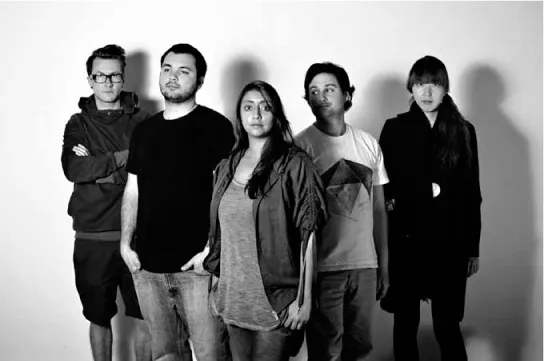
Figure 1.1 The artists of ‘European Souvenirs’
Note: (from left to right) Karol Rakowski (Poland), Bariş Gürsel (Turkey), Farah Rahman (the Netherlands), Malaventura (Spain), Noriko Okaku (Japan/UK).
Source: Photographer Ricardo Barquín Molero (CC BY-NC-SA 2.0).
This shift has provoked significant changes in our organisations, in our consideration of ‘quality’, often related to the professional field, and in our attempts to be inclusive and participatory in our processes.
‘Remapping Europe – a Remix’ is both a collaborative action and a network. It is an ongoing ‘work in progress’ – a process-oriented project that dives into the different intersections mentioned above. The project (and process) as such offers a thorough reflection on the challenges and opportunities faced by collaborations across Europe. Rather than waiting until a project is finished, it is important to face up to necessary changes, results, ambitions and networking in the course of action and to make them at the appropriate time in the life of a project.
Multiple intersections undeniably raise multiple challenges. One of the lessons learned throughout the course of the project has been how crucial it is to invest in the creation of a ‘shared lexicon’. A first step in this is a mutual understanding of the different contexts, prejudices and values that shape the collaboration. How many different meanings are there of words and concepts used in an inter-national, intergenerational, intercultural, intersectoral and inter-experiential project? Words such as ‘immigrant’, ‘migrant’ and ‘remix’ have different connotations in different contexts: what is considered a rather neutral term in Poland (‘immigrant’), given the country’s relatively small immigration history, is a term loaded with negative connotations in many other European countries. So, in any collaborative project, what is our agreed level of understanding and what words do we use?
The European Cultural Foundation
The European Cultural Foundation (ECF) was founded in Geneva in 1954 by key European thinkers like Denis de Rougemont and Robert Schumann, who believed that Europe was more than coal and steel and that culture was vital to building the European project. In 1960, the foundation moved to Amsterdam on the invitation of Prince Bernhard of the Netherlands, who also established the funding model for the foundation that continues to this day. Through a long-standing partnership, 25 per cent of the lottery funds that are granted to the Prins Bernhard Cultuurfonds are passed on to ECF. Its mission has also remained consistent for nearly sixty years: that culture is a key contributor to the building of open, inclusive and democratic communities in Europe. Now, ECF continues with the same mission, in a very different context, however. Nevertheless, both Europe and culture remain the pillars upon which our work is anchored.
The ECF does not support culture simply because it happens in Europe, but instead for what it contributes to Europe and how culture can bring us closer together as Europeans. The ECF is a hybrid foundation – both grant-making and programming. Its grant-making supports cultural collaboration, exchange and travel between European countries, with a special interest in the connections between the EU and our European neighbours. Its programmes focus on two themes: the European Neighbourhood, through a scheme called ‘Tandem’; and Youth and Media, at the heart of which is the Doc Next Network.
Young people and future generations have always had a key place in ECF’s work. With the digital shift, it has turned its focus to young people and media. People are expressing their opinions and creative visions as never before, with new media technologies opening up a whole range of new communication possibilities. People of all ages can create, produce, distribute and share in ways that have certainly upended the cultural production and distribution chain to which we have long been accustomed.
In 2012, ECF’s Youth and Media programme continued to focus its support on and showcase emerging young media-makers. The programme is, in essence, a partnership network, called ‘Doc Next’. It aims to bring forward the views of emerging European documentary makers and opinion makers to promote an inclusive public society. It also gives access to young people who, as a result of social, cultural, or political conditions, are likely to be excluded from mainstream public discourse. Practices and researches, processes and projects that encompass digital media and its influence in our societies in Europe are the core of the Doc Next Network.
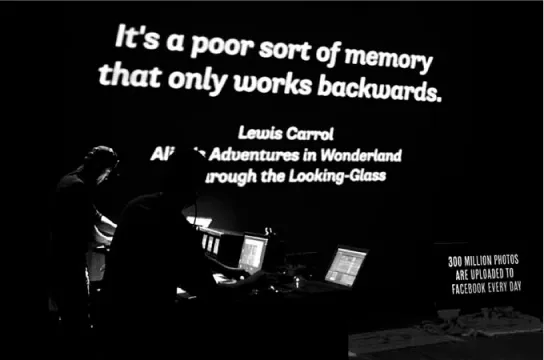
Figure 1.2 Digital media storytelling at the heart of the Doc Next Network
Source: Photographer – Ricardo Barquín Molero (CC BY-NC-SA 2.0).
The Doc Next Network is a collaboration between peers. The ECF identified and connected vibrant local grass-roots cultural/media organisations in the UK, Spain, Poland, the Netherlands and Turkey. On their own initiative, they have grown into a European movement with shared visions and battling common causes – capturing the views of young European media makers, to redefine and re-imagine documentary within Europe’s shifting borders.
Their shared learning is based on supporting creative and opinion-making media, the philosophy of open and free culture3 and the idea of expanded education, in which critical media thinking and making is a fundamental ingredient.
They have a manifesto that reads:
• … our common goals … are:
• To strive for a more inclusive public debate and imagery in and about Europe;
• To champion the idea of commons and present experiences across Europe, regardless of religion, ethnicity and social background;
• To advocate for young people and to promote the fact that young people also have stories to tell, and these stories are important;
• To broaden perspectives of Europe, and to champion the idea that Europe is defined by similarities and proximities, not by borders; and
• To redefine and re-imagine the notion of ‘documentary’ and to promote documentary as a tool for communication, as well as documentation. (Doc Next Network 2012)
Remapping Europe
‘Remapping Europe – a Remix’ is an investigative artistic project by the Doc Next Network. Its aim is to contribute to an inclusive cultural practice and public imagery in and of Europe by connecting young creative media makers who have (im)migrant backgrounds and perspectives from Spain, Poland, Turkey and the UK to wider European intergenerational audiences.
The project’s activities stem from one underlying principle: re-mixing of media is a method to re-view, re-investigate and re-consider prevailing imagery of (im)migrants in European societies and to ultimately ‘re-map’ Europe visually, geographically and mentally.
Its activities include:
• trans-national and cross-sectoral learning platforms, investigating the immigrant’s perspective in public debate and imagery,
• creative remix ateliers involving young digital storytellers with (im)migrant backgrounds and perspectives,
• international showcases of their remix works at cultural festivals across Europe and in an on-line media collection,
• major remix-performances and installations in Amsterdam and Seville, with a wider participatory, digital component involving European citizens across the continent and
• a seminar and publication and catalogue documenting the project process and outcomes.
‘Remapping Europe’ is a two-year programme that began with ‘European Souvenirs’ – a collective exploration by five young media artists who have been on a journey delving into the archives in their countries and the existing imagery of Europe and its travellers. The result has been a combination of live cinema and remix that can truly contribute to deconstruct and challenge our social and cultural European imaginaries. This expedition is deeply influenced by the hegemonic media landscape and pop culture that we silently consume in our daily life: music videos, commercials, advertisements, TV news.
Building on ‘European Souvenirs’, four remix ateliers were being organised in 2013 that would involve young media makers with a migrant background or story of migration to tell. The ateliers are based on a shared methodology developed by the Doc Next Network, in partnership with local migrant associations: non-cultural organisations that have the contacts, trust and networks and have built solid relationships with this target group – something that cultural partners often do not have. A special training course has been developed to enhance the relationships between the cultural and the (im)migrant organisations.4
The remix works produced will be showcased nationally and internationally on a variety of arts-and-culture platforms, such as documentary festivals, in at least four countries and online for a broad and intergenerational audience. To follow the process and to capture the learning, a seminar and publication are planned in 2014.
‘Remapping Europe’ makes a compelling case study, because it reflects all of the intersections mentioned earlier and provides a rich ‘space in between’ and some food for thought.
Mapping the Spaces in Between
International
Doc Next Network is a unique European movement which brings together the European Cultural Foundation (Amsterdam, NL), ZEMOS98 (Seville, Spain), Creative Initiatives ‘ę’ (Warsaw, Poland), Future Film – British Film Institute (London, UK) and Mode Istanbul (Turkey). Each of these organisations is locally rooted but is also a hub, whose connections, exchange and influence reach out across their country, region and internationally. It was not a project that brought these individual organisations together (and they are all very different), but a common and shared interest – a commitment to young people and DIY media expression.5 This plays out quite differently in their individual contexts – one is not transferable to another and there was no interest on the part of ECF to push any single organisation to look like or work like another. What we are interested in is connecting local experience and by so doing to present a European picture – not with a single story but as an intricate mesh overlaying the continent. Shared learning, the network’s manifesto and the individual projects grew organically, as their connection between each other became stronger. Key to this are the elements of time, reflection and meaningful exchange – long-term value cannot be realised overnight or around a single project.
Intercultural
A specific project that did grow out of the international Doc Next Network is ‘European Souvenirs’: four media-artists worked together for six months to make a new live cinema performance and were...
Table of contents
- Cover Page
- Title Page
- Copyright Page
- Contents
- List of Figures
- List of Tables
- Notes on Contributors
- Acknowledgements
- Introduction: Migrating Heritage – Experiences of Cultural Networks and Cultural Dialogue in Europe
- 1 ‘Remapping Europe – A Remix’: A Case Study in International and Inter-institutional Collaboration and Networking
- 2 Translating Objects, Transnationalising Collections: Inventing Europe between Museums and Researchers
- 3 Migrating Heritage, Networks and Networking: Europe and Islamic Heritage
- 4 Migrations and Multiculturalism: A Design Approach for Cultural Institutions
- 5 Visualising Interdisciplinary Research: Algorithmic Treatment of Museum Case-study Information Sets
- 6 Europeana: Cultural Heritage in the Digital Age
- 7 Moving Through Time and Culture with the Biodiversity Heritage Library
- 8 La Cité Nationale de l’Histoire de l’Immigration: A Central Venue and National Network – An Ongoing Challenge
- 9 On Their Own: Telling Child Migrant Stories in a Transnational Context
- 10 ‘Roma Routes’: Heritage as a Path to Dialogue
- 11 City Museums Beyond the Museum: Networking as a Strategy for Twenty-first-century European City Museums
- 12 Turin – Earth: City and New Migrations – From Historical Reflection to Civil Consciousness in the Present Day
- 13 Inclusive Collecting Strategies of City Museums in a Diverse Society: Thoughts on the Implementation of Multi-perspectivity beyond Group Categories
- 14 Post-critical Museology: The Distributed Museum and the Crisis of European Representation
- 15 The Issue of Repatriation for Natural History Museums in Europe: Attempts at the Sharing of Heritage between Science and Traditional Societies
- 16 Critical Objects: Museums, Refugees and Intercultural Dialogue
- 17 A ‘Curious’ Case Study: Creating Intercultural Dialogue through Objects
- 18 Project ‘Blickwinkel’: Rediscovering, Reinventing and Reinterpreting Collections at the Kölnisches Stadtmuseum, Cologne
- 19 The Reggiane Factory and New Immigrants: Memory and Local History to Strengthen Integration
- 20 Separate Workings: Exploring Hidden Histories by Examining the Racially Biased Policies in the Transport Systems of South Africa and the Display of a South African Railways Locomotive at the Riverside Museum, Glasgow
- 21 Intercultural Dialogue as the Mission of a Museum: The ‘Officina Multimediale di Papa Giovanni XXIII’ in Sotto il Monte, Bergamo, Italy
- 22 Self-promotion or Cultural and Ideological Infiltration? Foreign Donations and Acquisition Suggestions in the British Library: A Russian Case Study
- 23 Library and Museum Hybridisation: Ultimate Spatial Forms of Institutional Collaboration in the Process of Identity Representation
- 24 Re-collecting and Connecting: Public Art, Migrating Heritage and the Relocation of Cultural Memory
- Index
Trusted by 375,005 students
Access to over 1.5 million titles for a fair monthly price.
Study more efficiently using our study tools.
Frequently asked questions
Yes, you can cancel anytime from the Subscription tab in your account settings on the Perlego website. Your subscription will stay active until the end of your current billing period. Learn how to cancel your subscription
No, books cannot be downloaded as external files, such as PDFs, for use outside of Perlego. However, you can download books within the Perlego app for offline reading on mobile or tablet. Learn how to download books offline
Perlego offers two plans: Essential and Complete
- Essential is ideal for learners and professionals who enjoy exploring a wide range of subjects. Access the Essential Library with 800,000+ trusted titles and best-sellers across business, personal growth, and the humanities. Includes unlimited reading time and Standard Read Aloud voice.
- Complete: Perfect for advanced learners and researchers needing full, unrestricted access. Unlock 1.5M+ books across hundreds of subjects, including academic and specialized titles. The Complete Plan also includes advanced features like Premium Read Aloud and Research Assistant.
We are an online textbook subscription service, where you can get access to an entire online library for less than the price of a single book per month. With over 1.5 million books across 990+ topics, we’ve got you covered! Learn about our mission
Look out for the read-aloud symbol on your next book to see if you can listen to it. The read-aloud tool reads text aloud for you, highlighting the text as it is being read. You can pause it, speed it up and slow it down. Learn more about Read Aloud
Yes! You can use the Perlego app on both iOS and Android devices to read anytime, anywhere — even offline. Perfect for commutes or when you’re on the go.
Please note we cannot support devices running on iOS 13 and Android 7 or earlier. Learn more about using the app
Please note we cannot support devices running on iOS 13 and Android 7 or earlier. Learn more about using the app
Yes, you can access Migrating Heritage by Perla Innocenti in PDF and/or ePUB format, as well as other popular books in Art & Museum Studies. We have over 1.5 million books available in our catalogue for you to explore.