Fiercely nationalistic, the first prominent American writers exhibited a profound pride in the territory that would come to be known as the United States. Predating even the Declaration of Independence, much early American writing entailed commentary on the newly developing American society. This volume examines the literature of the country in its nascence and writers such as Poe, Hawthorne, and Emerson, who helped cultivate a uniquely American voice.
eBook - ePub
American Literature from 1600 Through the 1850s
- English
- ePUB (mobile friendly)
- Available on iOS & Android
eBook - ePub
American Literature from 1600 Through the 1850s
About this book
Information
Topic
LetteraturaSubtopic
Critica letteraria
CHAPTER 1
EARLY AMERICAN LITERATURE

Like other national literatures, American literature was shaped by the history of the country that produced it. For almost a century and a half, America was merely a group of colonies scattered along the eastern seaboard of the North American continent—colonies from which a few hardy souls tentatively ventured westward. After a successful rebellion against the motherland, England, America became the United States, a nation. By the end of the 19th century this nation had extended southward to the Gulf of Mexico, northward to the 49th parallel, and westward to the Pacific. It had taken its place among the powers of the world—its fortunes so interrelated with those of other nations that inevitably it became involved in two world wars and, following these conflicts, with the problems of Europe and East Asia. Meanwhile, the rise of science and industry, as well as changes in ways of thinking and feeling, wrought many modifications in people’s lives. All these factors in the development of the United States molded the literature of the country.
At first American literature was naturally a colonial literature, by authors who were Englishmen who thought and wrote as such. John Smith, a soldier of fortune, is credited with initiating American literature. His chief books included A True Relation of … Virginia … (1608) and The generall Historie of Virginia, New England, and the Summer Isles (1624). Although these volumes often glorified their author, they were avowedly written to explain colonizing opportunities to Englishmen. In time, each colony was similarly described: Daniel Denton’s Brief Description of New York (1670), William Penn’s Brief Account of the Province of Pennsylvania (1682), and Thomas Ashe’s Carolina (1682) were only a few of many works praising America as a land of economic promise.
Such writers acknowledged British allegiance, but others stressed the differences of opinion that spurred the colonists to leave their homeland. More important, they argued questions of government involving the relationship between church and state. The attitude that most authors attacked was jauntily set forth by Nathaniel Ward of Massachusetts Bay in The Simple Cobler of Aggawam in America (1647). Ward amusingly defended the status quo and railed at colonists who sponsored newfangled notions. A variety of counterarguments to such a conservative view were published. John Winthrop’s Journal (written 1630–49) told sympathetically of the attempt of Massachusetts Bay Colony to form a theocracy—a state with God at its head and with its laws based upon the Bible. Later defenders of the theocratic ideal were Increase Mather and his son, Cotton.
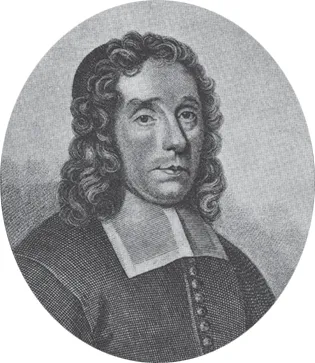
The theocratic works of author and Congregationalist minister Increase Mather are believed to have held great sway over American witchcraft trials in the 1600s. Kean Collection/Hulton Archive/Getty Images
Increase Mather was a Boston Congregational minister, author, and educator, who was a determining influence in the councils of New England during the crucial period when leadership passed into the hands of the first native-born generation. He was the son of Richard Mather (a locally celebrated preacher and formulator of Congregational creed and policy) and the son-in-law of John Cotton (“teacher” minister of the First Church of Boston from 1633 to 1652).
Among his books is An Essay for the Recording of Illustrious Providences (1684), a compilation of stories showing the hand of divine providence in rescuing people from natural and supernatural disasters. Some historians suggest that this book conditioned the minds of the populace for the witchcraft hysteria of Salem in 1692. Despite the fact that Increase and Cotton Mather believed in witches—as did most of the world at the time—and that the guilty should be punished, they suspected that evidence could be faulty and justice might miscarry. Witches, like other criminals, were tried and sentenced to jail or the gallows by civil magistrates. The case against a suspect rested on “spectre evidence” (testimony of a victim of witchcraft that he had been attacked by a spectre bearing the appearance of someone he knew), which the Mathers distrusted because a witch could assume the form of an innocent person. When this type of evidence was finally thrown out of court at the insistence of the Mathers and other ministers, the whole affair came to an end.
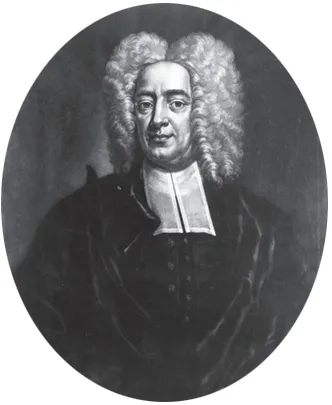
While he and his father, Increase Mather, were colleagues, Cotton Mather was an accomplished and prodigious writer in his own right. More than 400 published works are attributed to the son. MPI/Hulton Archive/Getty Images
John Smith
THE STATE OF VERSE
The utilitarian writings of the 17th century included biographies, treatises, accounts of voyages, and sermons. There were few achievements in drama or fiction, since there was a widespread prejudice against these forms. Unremarkable but popular poetry appeared in the Bay Psalm Book of 1640 and in Michael Wigglesworth’s summary in doggerel verse of Calvinistic belief, The Day of Doom (1662). There was some poetry, at least, of a higher order.
Michael Wigglesworth
Anne Bradstreet was one of the first poets to write English verse in the American colonies. Long considered primarily of historical interest, she won critical acceptance in the 20th century as a writer of enduring verse, particularly for her sequence of religious poems, “Contemplations,” written for her family and not published until the mid-19th century.
Born about 1612 in Northampton, Eng., Anne Dudley was the daughter of Thomas Dudley, chief steward to Theophilus Clinton, the Puritan Earl of Lincoln. She married Simon Bradstreet, another protégé of the earl’s, when she was 16, and two years later she, her husband, and her parents sailed with other Puritans to settle on Massachusetts Bay.
She wrote her poems while rearing eight children, functioning as a hostess, and performing other domestic duties. The Bradstreets moved frequently in the Massachusetts colony, first to Cambridge, then to Ipswich, and then to Andover, which became their permanent home. Bradstreet’s brother-in-law, without her knowledge, took her poems to England, where they were published as The Tenth Muse Lately Sprung Up in America (1650). The first American edition of The Tenth Muse was published posthumously (Bradstreet died in 1672) in revised and expanded form as Several Poems Compiled with Great Variety of Wit and Learning (1678).
Most of the poems in the first edition are long and rather dully imitative works based on the standard poetic conventions of the time, but the last two poems—“Of the Vanity of All Worldly Creatures” and “David’s Lamentation for Saul and Jonathan”—are individual and genuine in their recapitulation of her own feelings.
Her later poems, written for her family, show her spiritual growth as she came fully to accept the Puritan creed. She also wrote more personal poems of considerable beauty, treating in them such subjects as her thoughts before childbirth and her response to the death of a grandchild. These shorter poems benefit from their lack of imitation and didacticism. Her prose works include “Meditations,” a collection of succinct and pithy aphorisms. A scholarly edition of her work was edited by John Harvard Ellis in 1867. In 1956 the poet John Berryman paid tribute to her in Homage to Mistress Bradstreet, a long poem that incorporates many phrases from her writings.
Ranked still higher by modern critics is a poet whose works were not discovered and published until 1939: Edward Taylor, an English-born minister and physician. Taylor was born around 1645 in Coventry, Eng. Unwilling to subscribe to the required oath of conformity because of his staunch adherence to Congregational principles, Taylor gave up schoolteaching in England, immigrated to New England, and was immediately admitted as a sophomore by the president of Harvard College, Increase Mather. After his graduation in 1671, he became minister in the frontier village of Westfield, Mass., where he remained until his death. He married twice and became the father of 13 children, most of whom he outlived. Taylor died in 1729.
Taylor’s 400-page quarto manuscript, Poetical Works, was not published by his heirs at Taylor’s request. It came into the possession of Yale University in 1883 by the gift of a descendant, and the best of his verse was published in 1939. The important poems fall into two broad divisions. “God’s Determinations Touching His Elect” is an extended verse sequence thematically setting forth the grace and majesty of God as a drama of sin and redemption. The “Sacramental Meditations,” about 200 in number, were described by Taylor as “Preparatory Meditations Before My Approach to the Lord’s Supper.”
Central to all his poems is the typical Metaphysical mode: the extravagant figure of speech and the association of image and idea intended by its tension to strike poetic sparks. The Poetical Works of Edward Taylor (1939), edited by T. H. Johnson, is a selection of poems, a biographical sketch, critical introduction, and notes. The Poems of Edward Taylor (1960), edited by Donald E. Stanford, is a comprehensive edition, including the complete text of the “Meditations.”
Bay Psalm Book
Taylor’s poetry and, indeed, all 17th-century American writings were in the manner of British writings of the same period. John Smith wrote in the tradition of geographic literature, Bradford echoed the cadences of the King James Bible, while the Mathers and Roger Williams wrote bejeweled prose typical of the day. Anne Bradstreet’s poetic style derived from a long line of British poets, including Spenser and Sidney, while Taylor was in the tradition of such Metaphysical poets as George Herbert and John Donne. Both the content and form of the literature of this first century in America were thus markedly English.
THE STORY OF MARY ROWLANDSON
The British American colonial author Mary Rowlandson wrote one of the finest firsthand accounts of 17th-century Indian life and of Puritan-Indian conflicts in early New England.
Mary White was born in England in 1637 and was taken to America by her parents when she was a child. They lived in Salem, Mass., until 1653, when they moved to the new frontier village of Lancaster, Mass. In 1656 she married the Rev. Joseph Rowlandson, Lancaster’s first regular minister, and events of the next 20 years of her life are obscure.
In February 1676, during King Philip’s War, a party of Indians attacked Lancaster and laid siege to the Rowlandson house, where many townspeople had sought refuge. They overwhelmed the defenders and took 24 captives, including Mary Rowlandson and her three children, one of whom died a week later. Rowlandson was kept a priso...
Table of contents
- Cover Page
- Title Page
- Copyright Page
- Contents
- Introduction
- Chapter 1: Early American Literature
- Chapter 2: The 18th Century
- Chapter 3: Early 19th-Century Literature
- Chapter 4: The American Renaissance
- Epilogue
- Glossary
- Bibliography
- Index
Trusted by 375,005 students
Access to over 1.5 million titles for a fair monthly price.
Study more efficiently using our study tools.
Frequently asked questions
Yes, you can cancel anytime from the Subscription tab in your account settings on the Perlego website. Your subscription will stay active until the end of your current billing period. Learn how to cancel your subscription
No, books cannot be downloaded as external files, such as PDFs, for use outside of Perlego. However, you can download books within the Perlego app for offline reading on mobile or tablet. Learn how to download books offline
Perlego offers two plans: Essential and Complete
- Essential is ideal for learners and professionals who enjoy exploring a wide range of subjects. Access the Essential Library with 800,000+ trusted titles and best-sellers across business, personal growth, and the humanities. Includes unlimited reading time and Standard Read Aloud voice.
- Complete: Perfect for advanced learners and researchers needing full, unrestricted access. Unlock 1.5M+ books across hundreds of subjects, including academic and specialized titles. The Complete Plan also includes advanced features like Premium Read Aloud and Research Assistant.
We are an online textbook subscription service, where you can get access to an entire online library for less than the price of a single book per month. With over 1.5 million books across 990+ topics, we’ve got you covered! Learn about our mission
Look out for the read-aloud symbol on your next book to see if you can listen to it. The read-aloud tool reads text aloud for you, highlighting the text as it is being read. You can pause it, speed it up and slow it down. Learn more about Read Aloud
Yes! You can use the Perlego app on both iOS and Android devices to read anytime, anywhere — even offline. Perfect for commutes or when you’re on the go.
Please note we cannot support devices running on iOS 13 and Android 7 or earlier. Learn more about using the app
Please note we cannot support devices running on iOS 13 and Android 7 or earlier. Learn more about using the app
Yes, you can access American Literature from 1600 Through the 1850s by Britannica Educational Publishing, Adam Augustyn in PDF and/or ePUB format, as well as other popular books in Letteratura & Critica letteraria. We have over 1.5 million books available in our catalogue for you to explore.