The diagnosis, treatment, and prevention of disease remains a challenging undertaking as emerging disorders and pandemics are constantly presenting new opposition. Behind the practice of medicine is a treasury of great minds and healers who have endeavored tirelessly at the forefront of disease management. This compelling volume introduces readers to the development of medicine over the centuries and to those intrepid individuals who have dedicated their lives to safeguarding the welfare of people around the world.
- English
- ePUB (mobile friendly)
- Available on iOS & Android
eBook - ePub
Medicine and Healers Through History
About this book
Information
Topic
MedicineCHAPTER 1
ANCIENT MEDICINE AND ITS PRACTITIONERS
Medicine has been practiced in various ways throughout history. In primitive societies, the art of healing was an experimental process, guided in large part by trial and error. Many diseases were believed to have been brought upon humans by demons and other supernatural phenomena. Thus, much of the early art of healing dealt with intangible elements of human culture. Over time, however, as more became known about human disease and as the practice of medicine was gradually refined, systems of medicine embedded in folklore were surmounted by systems grounded in the scientific study of basic human anatomy and physiology (the study of the functioning of living organisms, animal or plant, and of the functioning of their constituent tissues or cells). This shift—heralded by the emergence of Western, or conventional, medicine—marked a major turning point in the history of medicine. Western medicine has since become the standard against which all other forms of medicine are measured for their ability to diagnose and treat human disease. Despite its dominance in the West, however, conventional medicine is not the most widely practiced form of medicine in the world today. Rather, various forms of traditional medicine, with origins in places such as Asia and Latin America, are the primary means of healing for the majority of the modern world’s population.
The practitioners of medicine—the healers—have played a fundamental role in guiding the course of medicine over time. Ancient healers relied heavily on harvesting herbs and other natural products for the treatment of general conditions such as fever and gastrointestinal illness. Some of these early healers also experimented with rudimentary techniques for surgery and began to develop tools and approaches to correct physical conditions such as curvature of the spine. In the Renaissance and Enlightenment eras, physicians in the West learned of remedies used by practitioners of traditional medicine in Asia and the New World. In this way, knowledge of herbal cures from different regions of the world spread globally. The physicians of these eras also often recorded and published their observations of disease, which led to the discovery of new diseases and disorders and to better understanding of the causes of illness.
Medicine today is a reflection of the history of its practice and its practitioners. Over the course of time, approaches to the diagnosis and treatment of disease became subdivided into specialties, with physicians often focusing on specific organs or body systems. In the 20th century, the emergence of fields from immunology to endocrinology to oncology enabled medical students to narrow their academic studies and thereby tailor their expertise within a single area of practice. As a result, there occurred substantial and rapid progress in the scientific and medical understanding of health and disease. In the 21st century, continued advance in not only scientific knowledge but also in the training of nurses, scientists, and physicians has fueled the perpetual improvement of medicine and the art of healing.
PRIMITIVE MEDICINE AND FOLKLORE
Unwritten history is not easy to interpret, and, although much may be learned from a study of the drawings, bony remains, and surgical tools of early humans, it is difficult to reconstruct mental attitudes toward the problems of disease and death. It seems probable that humans, as soon as they had reached the stage of reasoning, discovered, by the process of trial and error, which plants might be used as foods, which of them were poisonous, and which of them had some medicinal value. Folk medicine or domestic medicine, consisting largely of the use of vegetable products, or herbs, originated in this fashion and still persists.
But that is not the whole story. Humans did not at first regard death and disease as natural phenomena. Common maladies, such as colds or constipation, were accepted as part of existence and dealt with by means of such herbal remedies as were available. Serious and disabling diseases, however, were placed in a very different category. These were of supernatural origin. They might be the result of a spell cast upon the victim by some enemy, visitation by a malevolent demon, or the work of an offended god who had either projected some object—a dart, a stone, a worm—into the body of the victim or had abstracted something, usually the soul of the patient. The treatment then applied was to lure the errant soul back to its proper habitat within the body or to extract the evil intruder, be it dart or demon, by counterspells, incantations, potions, suction, or other means.
One curious method of providing the disease with means of escape from the body was by making a hole, 2.5 to 5 cm (1 to 2 inches) across, in the skull of the victim—the practice of trepanning, or trephining. Trepanned skulls of prehistoric date have been found in Britain, France, and other parts of Europe and in Peru. Many of them show evidence of healing and, presumably, of the patient’s survival. The practice still exists among indigenous people in parts of Algeria, in Melanesia, and perhaps elsewhere, though it is becoming extinct.
Magic (as a mode of rationality or way of thinking that looks to invisible forces to influence events) and religion played a large part in the medicine of prehistoric or primitive humans. Administration of a vegetable drug or remedy by mouth was accompanied by incantations, dancing, grimaces, and all the tricks of the healer. Therefore, the first doctors, or “medicine men,” were essentially sorcerers. The use of charms and talismans, still prevalent in modern times, is of ancient origin.
Apart from the treatment of wounds and broken bones, the folklore of medicine is probably the most ancient aspect of the art of healing, for primitive physicians showed their wisdom by treating the whole person, soul as well as body. Treatments and medicines that produced no physical effects on the body could nevertheless make a patient feel better when both medicine man and patient believed in their efficacy. This so-called placebo effect is applicable even in modern clinical medicine.
THE ANCIENT MIDDLE EAST AND EGYPT
The establishment of the calendar and the invention of writing marked the dawn of recorded history. The clues to early knowledge are scanty, consisting of clay tablets bearing cuneiform signs and seals that were used by physicians of ancient Mesopotamia. In the Louvre there is preserved a stone pillar on which is inscribed the Code of Hammurabi, who was a Babylonian king of the 18th century BCE. This code includes laws relating to the practice of medicine, and the penalties for failure were severe. For example, “If the doctor, in opening an abscess, shall kill the patient, his hands shall be cut off”; if, however, the patient was a slave, the doctor was simply obliged to supply another slave.
The Greek historian Herodotus stated that every Babylonian was an amateur physician, since it was the custom to lay the sick in the street so that anyone passing by might offer advice. Divination, from the inspection of the liver of a sacrificed animal, was widely practiced to foretell the course of a disease. Little else is known regarding Babylonian medicine, and the name of not a single physician has survived.
When the medicine of ancient Egypt is examined, the picture becomes clearer. The first physician to emerge is Imhotep, chief minister to King Djoser in the 3rd millennium BCE, who designed one of the earliest pyramids, the Step Pyramid at Ṣaqqārah, and who was later regarded as the Egyptian god of medicine and identified with the Greek god Asclepius.
Surer knowledge comes from the study of Egyptian papyri, especially the Edwin Smith and Ebers papyri discovered in the 19th century. The former is a surgical treatise on the treatment of wounds and other injuries, while the latter is a list of remedies. Dating from about 1550 BCE, the Ebers papyrus is one of the oldest known medical works. The scroll contains 700 magical formulas and folk remedies meant to cure afflictions ranging from crocodile bite to toenail pain and to rid the house of such pests as flies, rats, and scorpions. It also includes a surprisingly accurate description of the circulatory system, noting the existence of blood vessels throughout the body and the heart’s function as centre of the blood supply. The Ebers papyrus was acquired by George Maurice Ebers, a German Egyptologist and novelist, in 1873.
Contrary to what might be expected, the widespread practice of embalming the dead body did not stimulate study of human anatomy. The preservation of mummies has, however, revealed some of the diseases suffered at that time, including arthritis, tuberculosis of the bone, gout, tooth decay, bladder stones, and gallstones. There is evidence too of the parasitic disease schistosomiasis, which remains a scourge still. There seems to have been no syphilis or rickets.
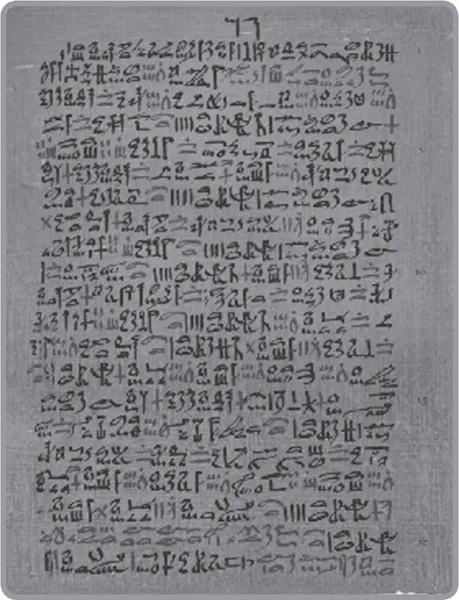
Prescription for asthma treatment on the Ebers papyrus. U.S. National Library of Medicine/National Institutes of Health
The search for information on ancient medicine leads naturally from the papyri of Egypt to Hebrew literature. Though the Bible contains little on the medical practices of Old Testament times, it is a mine of information on social and personal hygiene. The Jews were indeed pioneers in matters of public health.
TRADITIONAL MEDICINE AND SURGERY IN ASIA
Asia has a long history of medicine. Indeed, this region of the world is home to traditional practices of medicine, such as Āyurveda and traditional Chinese medicine, that originated thousands of years ago and are still widely used today. The history of traditional medicine in Asia is rooted in the ancient oral traditions of indigenous peoples. These traditions often are intertwined with folklore and tales, cultural beliefs, and local knowledge and skills. Much of this knowledge was first captured in writing many centuries ago in Asia. Among the oldest and most widely known medical writings from the region are India’s Vedas, China’s Neijing, and Japan’s Ishinhō.
INDIA
Indian medicine has a long history. Its earliest concepts are set out in the sacred writings called the Vedas, especially in the metrical passages of the Atharvaveda, which may possibly date as far back as the 2nd millennium BCE. According to a later writer, the system of medicine called Āyurveda was received by a certain Dhanvantari from Brahma, and Dhanvantari was deified as the god of medicine. In later times his status was gradually reduced, until he was credited with having been an earthly king who died of snakebite.
The period of Vedic medicine lasted until about 800 BCE. The Vedas are rich in magical practices for the treatment of diseases and in charms for the expulsion of the demons traditionally supposed to cause diseases. The chief conditions mentioned are fever (takman), cough, consumption, diarrhea, dropsy, abscesses, seizures, tumours, and skin diseases (including leprosy). The herbs recommended for treatment are numerous.
The golden age of Indian medicine, from 800 BCE until about 1000 CE, was marked especially by the production of the medical treatises known as the Caraka-saṃhitā and Suśruta-saṃhitā, attributed, respectively, to Caraka, a physician, and Suśruta, a surgeon. Estimates place the Caraka-saṃhitā in its present form as dating from the 1st century CE, although there were earlier versions. The Suśruta-saṃhitā probably originated in the last centuries BCE and had become fixed in its present form by the 7th century CE. Of somewhat lesser importance are the treatises attributed to Vagbhata. All later writings on Indian medicine were based on these works.
Because Hindus were prohibited by their religion from cutting the dead body, their knowledge of anatomy was limited. The Suśruta-saṃhitā recommends that a body be placed in a basket and sunk in a river for seven days. On its removal the parts could be easily separated without cutting. As a result of these crude methods, the emphasis in Hindu anatomy was given first to the bones and then to the muscles, ligaments, and joints. The nerves, blood vessels, and internal organs were very imperfectly...
Table of contents
- Cover Page
- Title Page
- Copyright Page
- Contents
- Introduction
- Chapter 1: Ancient Medicine and Its Practitioners
- Chapter 2: Medicine in the Medieval and Renaissance Eras
- Chapter 3: The Rise of Scientific Medicine in the 19th Century
- Chapter 4: Immunology and the 20th-Century Fight Against Infectious Disease
- Chapter 5: Progress in the Understanding of Disease in the 20th Century
- Chapter 6: Developments in the Understanding of Cancer
- Chapter 7: Surgery in the 20th Century and Beyond
- Chapter 8: Nursing and Influential Nurses in History
- Chapter 9: Pioneers of Modern Medicine
- Glossary
- Bibliography
- Index
Trusted by 375,005 students
Access to over 1.5 million titles for a fair monthly price.
Study more efficiently using our study tools.
Frequently asked questions
Yes, you can cancel anytime from the Subscription tab in your account settings on the Perlego website. Your subscription will stay active until the end of your current billing period. Learn how to cancel your subscription
No, books cannot be downloaded as external files, such as PDFs, for use outside of Perlego. However, you can download books within the Perlego app for offline reading on mobile or tablet. Learn how to download books offline
Perlego offers two plans: Essential and Complete
- Essential is ideal for learners and professionals who enjoy exploring a wide range of subjects. Access the Essential Library with 800,000+ trusted titles and best-sellers across business, personal growth, and the humanities. Includes unlimited reading time and Standard Read Aloud voice.
- Complete: Perfect for advanced learners and researchers needing full, unrestricted access. Unlock 1.5M+ books across hundreds of subjects, including academic and specialized titles. The Complete Plan also includes advanced features like Premium Read Aloud and Research Assistant.
We are an online textbook subscription service, where you can get access to an entire online library for less than the price of a single book per month. With over 1.5 million books across 990+ topics, we’ve got you covered! Learn about our mission
Look out for the read-aloud symbol on your next book to see if you can listen to it. The read-aloud tool reads text aloud for you, highlighting the text as it is being read. You can pause it, speed it up and slow it down. Learn more about Read Aloud
Yes! You can use the Perlego app on both iOS and Android devices to read anytime, anywhere — even offline. Perfect for commutes or when you’re on the go.
Please note we cannot support devices running on iOS 13 and Android 7 or earlier. Learn more about using the app
Please note we cannot support devices running on iOS 13 and Android 7 or earlier. Learn more about using the app
Yes, you can access Medicine and Healers Through History by Britannica Educational Publishing, Kara Rogers in PDF and/or ePUB format, as well as other popular books in Medicine & Medical Theory, Practice & Reference. We have over 1.5 million books available in our catalogue for you to explore.