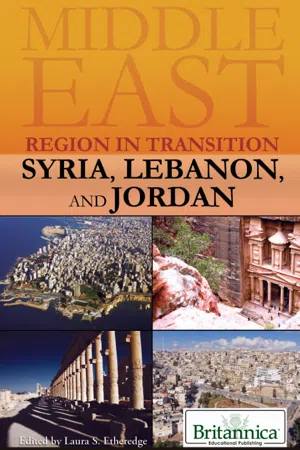
While each country's centrality to the future of Middle East politics and strategy remains unequivocal, the social and cultural traditions of Syria, Lebanon, and Jordan reveal a robust blend of Mediterranean and Arab influences. Home to diverse populations who have experienced centuries of exposure to an array of influences, each country boasts ancient monuments that testify to its ability to withstand conflict and absorb various peoples and ideas. This rich volume profiles the intertwined histories of these three countries and the geographic, economic, and social factors that have come to define each.
- English
- ePUB (mobile friendly)
- Available on iOS & Android
eBook - ePub
Syria, Lebanon, and Jordan
About this book
Information
Topic
HistoireSubtopic
Histoire du Moyen-OrientCHAPTER 1
SYRIA: THE LAND AND ITS PEOPLE
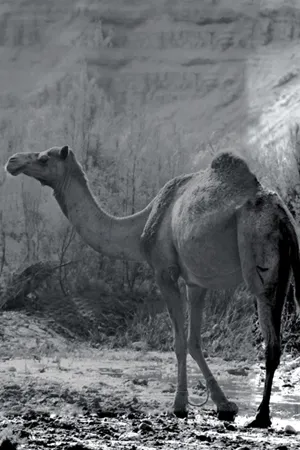
Syria is a country located on the east coast of the Mediterranean Sea. Its area, which includes territory in the Golan Heights that has been occupied by Israel since 1967, does not coincide with ancient Syria, which was the strip of fertile land lying between the eastern Mediterranean coast and the desert of northern Arabia. Modern Syria is bounded by Turkey to the north, Iraq to the east and southeast, Jordan to the south, and Lebanon and Israel to the southwest.
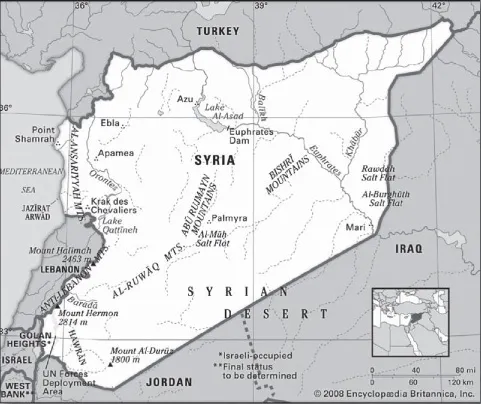
With a rather scant coastline along the Mediterranean Sea, Syria shares borders with Turkey, Iraq, Jordan, Israel, and Lebanon.
The Syrian people evolved from several origins over a long period of time. The Greek and Roman ethnic influence was negligible in comparison with that of the Semitic peoples of Arabia and Mesopotamia—Aramaeans, Assyrians, Chaldeans, and Canaanites. Later the Turks, like the Greeks and Romans before them, influenced political and economic structures but failed to produce any noticeable change in the dominant Arab character of the Syrian people.
RELIEF
Syria has a relatively short coastline, which stretches for about 110 miles (180 kilometres) along the Mediterranean Sea between the countries of Turkey and Lebanon. Sandy bays dent the shore, alternating with rocky headlands and low cliffs. North of Ṭarṭūs, the narrow coastal strip is interrupted by spurs of the northwestern Al-Anṣariyyah Mountains immediately to the east. It then widens into the ‘Akkār Plain, which continues south across the Lebanon border.
The Al-Anṣariyyah mountain range borders the coastal plain and runs from north to south. The mountains have an average width of 20 miles (32 km), and their average height declines from 3,000 feet (900 metres) in the north to 2,000 feet in the south. Their highest point, at 5,125 feet (1,562 m), is situated east of Latakia (Al-Lādhiqiyyah). Directly to the east of the mountains is the Ghāb Depression, a 40-mile (64-km) longitudinal trench that contains the valley of the Orontes River (Nahr Al-‘Āṣī).
The Anti-Lebanon Mountains (Al-Jabal al-Sharqī) mark Syria’s border with Lebanon. The main ridge rises to a maximum height of 8,625 feet (2,629 metres) near Al-Nabk, while the mean height is between 6,000 and 7,000 feet (1,800 to 2,100 m). Mount Hermon (Jabal Al-Shaykh), Syria’s highest point, rises to 9,232 feet (2,814 m).
Smaller mountains are scattered about the country. Among these are Mount Al-Durūz, which rises to an elevation of some 5,900 feet (1,800 m) in the extreme south, and the Abū Rujmayn and Bishrī mountains, which stretch northeastward across the central part of the country.
The undulating plains occupying the rest of the country are known as the Syrian Desert. In general their elevation lies between 980 and 1,640 feet (300 and 500 m); they are seldom less than 820 feet (250 m) above sea level. The area is not a sand desert but comprises rock and gravel steppe. A mountainous region in the south-central area is known as Al-Ḥamād.
DRAINAGE
The Euphrates River is the most important water source and the only navigable river in Syria. It originates in Turkey and flows southeastward across the eastern part of Syria. The Euphrates Dam, constructed on the river at Ṭabaqah, was completed in 1973, and the reservoir behind the dam, Lake Al-Assad, began to fill thereafter.
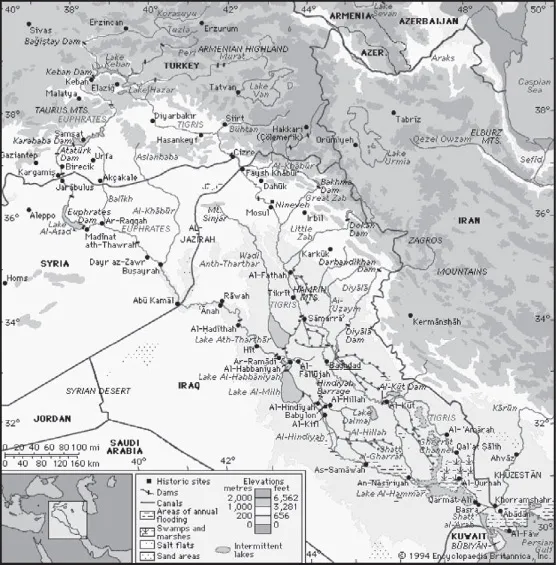
The Tigris and Euphrates river basin and its drainage network.
The Orontes is the principal river of the mountainous region. It rises in Lebanon, flows northward through the mountains and the Ghāb Depression, and enters the Mediterranean near Antioch (Hatay), Turkey. The Yarmūk River, a tributary of the Jordan River, drains the Jabal Al-Durūz and Ḥawrān regions and forms part of the border with Jordan in the southwest.
Scattered lakes are found in Syria. The largest is Al-Jabbūl, a seasonal saline lake that permanently covers a minimum area of about 60 square miles (155 square km) southeast of Aleppo. Other major salt lakes are Jayrūd to the northeast of Damascus and Khātūniyyah to the northeast of Al-Ḥasakah. Lake Muzayrīb, a small body of fresh water, is located northwest of Dar‘ā. The larger Lake Qaṭṭīnah (Lake Ḥimṣ), a reservoir, is west of Ḥimṣ (Homs).
Most of the country’s drainage flows underground. On the surface, impervious rocks—consisting of clay, marl (clay, sand, or silt), and greensand—cover a relatively small area. Porous rocks cover about half of the country and are mainly sandstone or chalk. Highly porous rocks consist of basalt and limestone. Water penetrates the porous rocks, forming underground springs, rivers, or subterranean water sheets close to the surface. Although the springs are profuse, the water sheets are quickly exhausted and may turn saline in areas of low precipitation.
SOILS
Because of aridity, vegetation plays only a secondary role in soil composition. With the exception of the black soil in the northeastern region of Al-Jazīrah, soils are deficient in phosphorus and organic matter. The most common soils are various clays and loams (mixtures of clay, sand, and silt). Some are calcareous (chalky), whereas others—especially in the area of the Euphrates Valley—contain gypsum. Alluvial soils occur mainly in the valleys of the Euphrates and its tributaries and in the Ghāb Depression.
CLIMATE
The coast and the western mountains have a Mediterranean climate with a long dry season from May to October. In the extreme northwest there is some light summer rain. On the coast summers are hot, with mean daily maximum temperatures in the low to mid-80s °F (upper 20s °C), while the mild winters have daily mean minimum temperatures reaching the low 50s °F (low 10s °C). Only above about 5,000 feet (1,500 metres) are the summers relatively cool. Inland the climate becomes arid, with colder winters and hotter summers. Maximum temperatures in Damascus and Aleppo average in the 90s °F (mid-30s °C) in summer, while temperatures reach average lows in the mid-30s to low 40s °F (1 to 4 °C) in winter. In the desert, at Tadmur (Palmyra) and Dayr al-Zawr, maximum temperatures in the summer reach averages in the upper 90s to low 100s °F (upper 30s to low 40s °C), with extremes in the 110s °F (mid- to upper 40s °C). Snow may occur in winter away from the coast, and frosts are common.
The coast and western mountains receive 30 to 40 inches (760 to 1000 mm) of precipitation annually. Annual precipitation decreases rapidly eastward: the steppe receives 10 to 20 inches (250 to 500 mm), Mount Al-Durūz receives more than 8 inches (200 mm), and the desert area of Al-Ḥamād receives less than 5 inches (130 mm). Precipitation is variable from year to year, particularly in the spring and autumn months.
In winter the prevailing winds blow from the east, the north, and the west. In summer the prevailing winds are either northerly or westerly. During the summer the coastal region is subject to westerly winds during the day and easterly ones at night. Once or twice a year sand-bearing winds known as the khamsin raise a wall of dust some 5,000 feet (1,500 m) high, which darkens the sky.
PLANT AND ANIMAL LIFE
Yew, lime, and fir trees grow on the mountain slopes and date palms are found in the Euphrates valley. In both coastal and inland regions, plants include grains, olive trees, grapevines, apricot trees, oaks, and poplars. Lemon and orange trees grow along the coast. Garigue, a degenerate Mediterranean scrub, and maquis, a thick scrubby underbrush, cover many slopes.
Forests make up only a very small percentage of the country’s total area and are primarily found in the mountains, especially in the Al-Anṣariyyah Mountains. Glossy-leaved and thorny drought-resistant shrubs such as myrtle, boxwood, turpentine, broom, arbutus, and wild olive abound to the south. Excessive exploitation of the forests for their wood has largely turned them into scrub. A reforestation project has been undertaken in the mountains north of Latakia, however, and some forests are protected by the government. Commercially important forest plants include sumac, which is used as a spice, wild pistachio, which is important for its oil-rich fruit, laurel, which is used in the production of cosmetics, and mulberry, whose leaves are fed to silkworms. Pine tree branches are used for smoking tobacco leaves. Other useful plants are winter vegetables such as khubbayzah, a kind of spinach; ‘akkūb, a flowering plant; and truffles. Licorice is widely exploited for its root, which is used in the pharmaceutical industry.
The steppe is characterized by the absence of natural tree cover, except for some sparsely distributed hawthorns. All other trees—such as those in the orchards of Damascus and Aleppo and along the banks of the Orontes and Euphrates rivers—are cultivated.
For a brief period before June, the land is covered with a variety of flowering and grassy plants. Under the implacable sun of June, however, the plants soon wither, casting off their seeds onto the dry ground.
Wild animal life is sparse. Wolves, hyenas, foxes, badgers, wild boar, and jackals can still be found in remote areas. Deer, bears, squirrels, and such small carnivor...
Table of contents
- Cover Page
- Title Page
- Copyright Page
- Contents
- Introduction
- Chapter 1: Syria: The Land and Its People
- Chapter 2: The Syrian Economy
- Chapter 3: Syrian Government and Society
- Chapter 4: Syrian Cultural Life
- Chapter 5: Syria: Past and Present
- Chapter 6: Lebanon: The Land and Its People
- Chapter 7: The Lebanese Economy
- Chapter 8: Lebanese Government and Society
- Chapter 9: Lebanese Cultural Life
- Chapter 10: Lebanon: Past and Present
- Chapter 11: Jordan: The Land and Its People
- Chapter 12: The Jordanian Economy
- Chapter 13: Jordanian Government and Society
- Chapter 14: Jordanian Cultural Life
- Chapter 15: Jordan: Past and Present
- Glossary
- Bibliography
- Index
Trusted by 375,005 students
Access to over 1.5 million titles for a fair monthly price.
Study more efficiently using our study tools.
Frequently asked questions
Yes, you can cancel anytime from the Subscription tab in your account settings on the Perlego website. Your subscription will stay active until the end of your current billing period. Learn how to cancel your subscription
No, books cannot be downloaded as external files, such as PDFs, for use outside of Perlego. However, you can download books within the Perlego app for offline reading on mobile or tablet. Learn how to download books offline
Perlego offers two plans: Essential and Complete
- Essential is ideal for learners and professionals who enjoy exploring a wide range of subjects. Access the Essential Library with 800,000+ trusted titles and best-sellers across business, personal growth, and the humanities. Includes unlimited reading time and Standard Read Aloud voice.
- Complete: Perfect for advanced learners and researchers needing full, unrestricted access. Unlock 1.5M+ books across hundreds of subjects, including academic and specialized titles. The Complete Plan also includes advanced features like Premium Read Aloud and Research Assistant.
We are an online textbook subscription service, where you can get access to an entire online library for less than the price of a single book per month. With over 1.5 million books across 990+ topics, we’ve got you covered! Learn about our mission
Look out for the read-aloud symbol on your next book to see if you can listen to it. The read-aloud tool reads text aloud for you, highlighting the text as it is being read. You can pause it, speed it up and slow it down. Learn more about Read Aloud
Yes! You can use the Perlego app on both iOS and Android devices to read anytime, anywhere — even offline. Perfect for commutes or when you’re on the go.
Please note we cannot support devices running on iOS 13 and Android 7 or earlier. Learn more about using the app
Please note we cannot support devices running on iOS 13 and Android 7 or earlier. Learn more about using the app
Yes, you can access Syria, Lebanon, and Jordan by Britannica Educational Publishing, Laura Etheredge in PDF and/or ePUB format, as well as other popular books in Histoire & Histoire du Moyen-Orient. We have over 1.5 million books available in our catalogue for you to explore.