The study of matter is the study of all material things, as well as their ability to transform from one state to another. All matter assumes one of several basic states—solid, liquid, gas, and plasma being the most common. Under varying conditions, each state can be altered to form new substances or adopt new characteristics. This insightful book covers the various structures and elements of different types of matter, while examining the physical and chemical properties that allow for permutation and change.

- English
- ePUB (mobile friendly)
- Available on iOS & Android
eBook - ePub
The Britannica Guide to Matter
About this book
Information
CHAPTER 1
MATTER AND ITS PHASES

Matter is the material substance that constitutes the observable universe and, together with energy, forms the basis of all objective phenomena. At its most fundamental level, matter is composed of elementary particles, known as quarks and leptons (the class of elementary particles that includes electrons). Quarks combine into protons and neutrons and, along with electrons, form atoms of the elements of the periodic table, such as hydrogen, oxygen, and iron. Atoms may combine further into molecules such as the water molecule, H2O. Large groups of atoms or molecules in turn form the bulk matter of everyday life.
However, all matter of any type shares the fundamental property of inertia, which—as formulated within Isaac Newton’s three laws of motion—prevents a material body from responding instantaneously to attempts to change its state of rest or motion. The mass of a body is a measure of this resistance to change. For example, it is enormously harder to set in motion a massive ocean liner than it is to push a bicycle. Another universal property is gravitational mass, whereby every physical entity in the universe acts so as to attract every other one, as first stated by Newton and later refined into a new conceptual form by Albert Einstein.
Depending on temperature and other conditions, matter may appear in any of several states. At ordinary temperatures, for instance, gold is a solid, water is a liquid, and nitrogen is a gas, as defined by certain characteristics: solids hold their shape, liquids take on the shape of the container that holds them, and gases fill an entire container. These states can be further categorized into subgroups. Solids, for example, may be divided into those with crystalline or amorphous structures or into metallic, ionic, covalent, or molecular solids, on the basis of the kinds of bonds that hold together the constituent atoms. Less clearly defined states of matter include plasmas, which are ionized gases at very high temperatures; foams, which combine aspects of liquids and solids; and clusters, which are assemblies of small numbers of atoms or molecules that display both atomic-level and bulklike properties.
These states of matter are called phases. The three fundamental phases of matter are solid, liquid, and gas (vapour), but others are considered to exist, including crystalline, colloid, glassy, amorphous, and plasma phases. When a phase in one form is altered to another form, a phase change is said to have occurred.
GENERAL CONSIDERATIONS
A system is a portion of the universe that has been chosen for studying the changes that take place within it in response to varying conditions. A system may be complex, such as a planet, or relatively simple, as the liquid within a glass. Those portions of a system that are physically distinct and mechanically separable from other portions of the system are called phases.
Phases within a system exist in a gaseous, liquid, or solid state. Solids are characterized by strong atomic bonding and high viscosity, resulting in a rigid shape. Most solids are crystalline, inasmuch as they have a three-dimensional periodic atomic arrangement. Some solids (such as glass) lack this periodic arrangement and are noncrystalline, or amorphous. Gases, which consist of weakly bonded atoms with no long-range periodicity, expand to fill any available space. Liquids have properties intermediate between those of solids and gases. The molecules of a liquid are condensed like those of a solid. Liquids have a definite volume, but their low viscosity enables them to change shape as a function of time. The matter within a system may consist of more than one solid or liquid phase, but a system can contain only a single gas phase, which must be of homogeneous composition because the molecules of gases mix completely in all proportions.
SYSTEM VARIABLES
Systems respond to changes in pressure, temperature, and chemical composition, and, as this happens, phases may be created, eliminated, or altered in composition. For example, an increase in pressure may cause a low-density liquid to convert to a denser solid, while an increase in temperature may cause a solid to melt. A change of composition might result in the compositional modification of a preexisting phase or in the gain or loss of a phase.
THE PHASE RULE
The classification and limitations of phase changes are described by the phase rule, as proposed by the American chemist J. Willard Gibbs in 1876 and based on a rigorous thermodynamic relationship. The phase rule is commonly given in the form P + F = C + 2. The term P refers to the number of phases that are present within the system, and C is the minimum number of independent chemical components that are necessary to describe the composition of all phases within the system. The term F, called the variance, or degrees of freedom, describes the minimum number of variables that must be fixed in order to define a particular condition of the system.
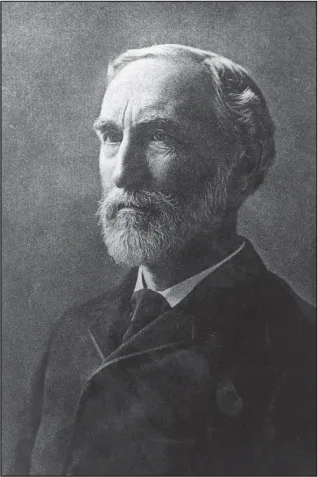
Theoretical chemist J. Willard Gibbs, whose work changed the face of physical chemistry. Hulton Archive/Getty Images
PHASE DIAGRAMS
Phase relations are commonly described graphically in terms of phase diagrams. Each point within the diagram indicates a particular combination of pressure and temperature, as well as the phase or phases that exist stably at this pressure and temperature.
UNARY SYSTEMS
For example, in the diagram for silicon dioxide, SiO2, all phases have the same composition. The diagram in that case is a representation of a one-component (unary) system, in contrast to a two-component (binary), three-component (ternary), or four-component (quaternary) system. The phases coesite, low quartz, high quartz, tridymite, and cristobalite are solid phases composed of silicon dioxide; each has its own atomic arrangement and distinctive set of physical and chemical properties. The most common form of quartz (found in beach sands and granites) is low quartz. The region labeled anhydrous melt consists of silicon dioxide liquid.
Different portions of the silicon dioxide system may be examined in terms of the phase rule. Consider a point A where a single solid phase exists—low quartz. Substituting the appropriate values into the phase rule P + F = C + 2 yields 1 + F = 1 + 2, so F = 2. For point A (or any point in which only a single phase is stable) the system is divariant—i.e., two degrees of freedom exist. Thus, the two variables (pressure and temperature) can be changed independently, and the same phase assemblage continues to exist.
For a point B located on the boundary curve between the stability fields of low quartz and high quartz, these two phases coexist at all points along this curve. Substituting values in the phase rule (2 + F = 1 + 2) will cause a variance of 1 to be obtained. This indicates that one independent variable can be changed such that the same pair of phases will be retained. A second variable must be changed to conform to the first in order for the phase assemblage to remain on the boundary between low and high quartz. The same result holds for the other boundary curves in this system.
For a point C located at a triple point, a condition in which three stability fields intersect, the phase rule (3 + F = 1 + 2) indicates that the variance is 0. Point C is therefore an invariant point; a change in either pressure or temperature results in the loss of one or more phases. The phase rule also reveals that no more than three phases can stably coexist in a one-component system because additional phases would lead to negative variance.
BINARY SYSTEMS
Consider the binary system that describes the freezing and melting of the minerals titanite (CaSiTiO5) and anorthite feldspar (CaAl2Si2O8). The melt can range in composition from pure CaSiTiO5 to pure CaAl2Si2O8, but the solids show no compositional substitution. All phases therefore have the composition of CaSiTiO5, CaAl2Si2O8, or a liquid mixture of the two. The system in the figure has been examined at atmospheric pressure; because the pressure variable is fixed, the phase rule is expressed as P + F = C + 1. In this form it is called the condensed phase rule, for any gas phase is either condensed to a liquid or is present in negligible amounts. The phase diagram shows a vertical temperature coordinate and a horizontal compositional coordinate (ranging from pure CaSiTiO5 at the left to pure CaAl2Si2O8 at the right).
The phase fields contain either one or two phases. Any point in a one-phase field corresponds to a single phase whose composition is indicated directly below on the horizontal axis. For example, point A would present a liquid whose composition is 70 percent CaAl2Si2O8 and 30 percent CaSiTiO5. The compositions of phases in a two-phase field are determined by construction of a horizontal (constant-temperature) line from the point of interest to the extremities of the two-phase field. Thus, a sample with composition B would consist of liquid C (43 percent CaSiTiO5 and 57 percent CaAl2Si2O8) and solid anorthite D. A sample at point E at a lower temperature would consist of the solids titanite (F) and anorthite (G).
Liquid CaAl2Si2O8 cools to produce solid anorthite at 1,550 °C, whereas liquid CaSiTiO5 cools to produce solid titanite at 1,390 °C. If the batch were a mixture of the two components, the freezing temperature of each of these minerals would be depressed. In a melt consisting of a single component, such as CaSiTiO5, all atoms could add to titanite nuclei to form crystals of titanite. If, however, the melt contained 30 percent CaAl2Si2O8, the rate of formation of titanite nuclei would be decreased, as 30 percent of the melt could not contribute to their formation. In order to increase the rate of formation of titanite nuclei and promote crystallization, the temperature of the melt must be decreased below the freezing point of pure CaSiTiO5. When cooled, liquid A does not begin crystallization until temperature H is reached. Pure anorthite crystals precipitate from the melt. Depletion of CaAl2Si2O8 from the melt causes the melt composition to become relatively enriched in CaSiTiO5, with consequent additional depression of the anorthite freezing point.
As freezing continues, the liquid composition changes until the minimum point is reached at I. This point is called the eutectic. It is the lowest temperature at which a liquid can exist in this system. At the eutectic, both anorthite and titanite crystallize together at a fixed temperature and in a fixed ratio until the remaining liquid is consumed. All intermediate liquid compositions migrate during crystallization to the eutectic. The melting sequence of titanite-anorthite mixtures is exactly the opposite of the freezing sequence (i.e., melting of any anorthite-titanite mixture begins at the eutectic).
Depression of the freezing point of a compound by the addition of a second component is common in both binary and more complex systems. This usually occurs when the solid phases either have a fixed composition or show limited solid solution. Common examples are the mixing of ice and salt (NaCl) or the use of ethylene glycol (antifreeze) to depress the freezing point of water.
CHAPTER 2
PROPERTIES OF GASES
The remarkable feature of gases is that they appear to have no structure at all. They have neither a definite size nor shape, whereas ordinary solids have both a definite size and a definite shape, and liquids have a definite size, or volume, even though they adapt their shape to that of the container in which they are placed. Gases will completely fill any closed container; their properties depend on the volume of a container but not on its shape.
KINETIC-MOLECULAR PICTURE
Gases nevertheless do have a structure of sorts on a molecular scale. They consist of a vast number of molecules moving chaotically in all directions and colliding with one another and with the walls of their container. Beyond this, there is no structure—the molecules are distributed essentially randomly in space, traveling in arbitrary directions at speeds that are distributed randomly about an average determined by the gas temperature. The pressure exerted by a gas is the result of the innumerable impacts of the molecules on the container walls and appears steady to human senses because so many collisions occur each second on all sections of the walls. More subtle properties such as heat conductivity, viscosity (resistance to flow), and diffusion are attributed to the molecules themselves carrying the mechanical quantities of energy, momentum, and mass, respectively. These are called transport properties, and the rate of transport is dominated by the collisions between molecules, which force their trajectories into tortuous shapes. The molecular collisions are in turn controlled by the forces between the molecules and are described by the laws of mechanics.
Thus, gases are treated as a large collection of tiny particles subject to the laws of physics. Their properties are attributed primarily to the motion of the molecules and can be explained by the kinetic theory of gases. It is not obvious that this should be the case, and for many years a stati...
Table of contents
- Cover Page
- Title Page
- Copyright Page
- Contents
- Introduction
- Chapter 1: Matter and Its Phases
- Chapter 2: Properties of Gases
- Chapter 3: Kinetic Theory of Gases
- Chapter 4: Properties of Liquids
- Chapter 5: Liquid Solutions and Solubility
- Chapter 6: Crystalline Solids and Liquid Crystals
- Chapter 7: Amorphous Solids and Quasicrystals
- Chapter 8: Plasma
- Chapter 9: Clusters
- Glossary
- Bibliography
- Index
Trusted by 375,005 students
Access to over 1.5 million titles for a fair monthly price.
Study more efficiently using our study tools.
Frequently asked questions
Yes, you can cancel anytime from the Subscription tab in your account settings on the Perlego website. Your subscription will stay active until the end of your current billing period. Learn how to cancel your subscription
No, books cannot be downloaded as external files, such as PDFs, for use outside of Perlego. However, you can download books within the Perlego app for offline reading on mobile or tablet. Learn how to download books offline
Perlego offers two plans: Essential and Complete
- Essential is ideal for learners and professionals who enjoy exploring a wide range of subjects. Access the Essential Library with 800,000+ trusted titles and best-sellers across business, personal growth, and the humanities. Includes unlimited reading time and Standard Read Aloud voice.
- Complete: Perfect for advanced learners and researchers needing full, unrestricted access. Unlock 1.5M+ books across hundreds of subjects, including academic and specialized titles. The Complete Plan also includes advanced features like Premium Read Aloud and Research Assistant.
We are an online textbook subscription service, where you can get access to an entire online library for less than the price of a single book per month. With over 1.5 million books across 990+ topics, we’ve got you covered! Learn about our mission
Look out for the read-aloud symbol on your next book to see if you can listen to it. The read-aloud tool reads text aloud for you, highlighting the text as it is being read. You can pause it, speed it up and slow it down. Learn more about Read Aloud
Yes! You can use the Perlego app on both iOS and Android devices to read anytime, anywhere — even offline. Perfect for commutes or when you’re on the go.
Please note we cannot support devices running on iOS 13 and Android 7 or earlier. Learn more about using the app
Please note we cannot support devices running on iOS 13 and Android 7 or earlier. Learn more about using the app
Yes, you can access The Britannica Guide to Matter by Britannica Educational Publishing, Erik Gregersen in PDF and/or ePUB format, as well as other popular books in Physical Sciences & Physics. We have over 1.5 million books available in our catalogue for you to explore.