This book, first published in 1982, shows that jazz and blues are music forms that are about individualism, experiment, expression and feeling. From their origin in the work songs and spirituals of America's southern slaves, through to their adaptation to the urban adaptation to the urban environment in Chicago and New Orleans, the author details the social and economic background that saw the birth of the blues and jazz, and introduces and appraises their leading exponents. He shows how African rhythms were combined with an American musical tradition to produce a distinctive style which was to revitalise Western music.
- 166 pages
- English
- ePUB (mobile friendly)
- Available on iOS & Android
eBook - ePub
Jazz & Blues
About this book
Information
1 Introduction
DOI: 10.4324/9781315624051-1
As long ago as 1956, Chuck Berry, one of the fathers of rock ’n’ roll, sang ’Roll over Beethoven, tell Tchaikovsky the news.’ He was pointing to the enormous difference between ’classical’ music and the kind of pop music that has gripped young people since the rock ’n’ roll explosion of the 1950s.
It’s difficult to know what Beethoven, or any of the other great ’classical’ composers, would have made of it all. Certainly they would have had great difficulty in understanding today’s pop. Think of some of the differences. Instead of the traditional instruments of the orchestra, we have electric instruments (guitars, keyboards and others) capable of playing at limitless volume. The smooth, controlled voice of the opera singer gives way to the rough, strained sound of the rock vocalist or blues singer. And the furious battering of percussion, highlighted by the wall of drums and cymbals surrounding the group’s drummer, is a constant reminder of the vital role that rhythm plays in today’s pop. Gone are the sheets of music from which the classical musician plays. Gone also is the composer who wrote the music and the conductor whose job it is to help interpret it. Instead, the rock musician plays by ear, composing as he is performing; he plays in a style that he has learned after listening to endless records and after practising with fellow musicians.


Our composer would find other differences too, besides the musical ones. Classical music tends to be played in concert halls, opera houses or churches; the audience sit quietly, reserving their applause till the music ends. Pop musicians play in clubs, pubs, the local village hall, but not to a quiet, seated audience. People dance, talk, they often scream and shout; they drink, they may even talk to the musicians. Even when the great rock supergroups give their concerts to audiences of thousands, people are dancing - moving to the music.
All of this would show our classical composer that something dramatically new had happened to music. He would want to know how and why there had been this change. He would also no doubt be interested to know why young people today are more interested in music than ever before. For, judging by such things as the large sale of records, instruments, and of pop and rock music magazines, interest in music has grown enormously. All over Europe and the USA people listen to the music of live rock groups. Discos beat out a rhythmic pulse to dance to in the absence of live musicians. And not only the Western world listens to this music. It has become truly international.
Yet the beginnings of all this were most unlikely ones: It all started with a group of black slaves who had been forcibly shipped from their homes in Africa to America, where they were compelled to work. They began a whole musical tradition, without which pop music, as we now know it, would not exist. Put any group of rock musicians together for the first time and what will they be most likely to play? The answer is the blues, a development of the music played by wandering black musicians in the southern states of America nearly a century ago.

The blues, together with related black music styles like jazz, gospel and rhythm and blues, have helped produce some of the best of today’s pop. The origins of rock ’n’ roll and much of today’s rock music lie in the rhythm and blues of the late 1940s. Soul and Motown music, so popular in the discos, goes back to a mixture of blues and the religious gospel music sung in black churches. Jazz, too, has had a lasting influence on popular music. It has even influenced a number of modern classical composers. Thus this black music tradition has had a greater impact on the Western world during this century than any other musical form.
But the story we shall be telling is not only one of the new music. It is the story of a way of life developed by black people in a white society, and of how the changes in their music are reflections of the changes in their relationships with other people. Finally, it is the story of how young people today, of all colours, have found in this black music tradition the kind of music they want to play and listen to. But first, we must go back to the beginning of the story, in Africa, centuries ago.
2 The roots of black music
DOI: 10.4324/9781315624051-2
Introduction
What made the black music that developed in the USA so different from both classical music and from the traditional folk songs and ballads, which were popular among the working people in both Britain and the USA? The answer lies in the way in which people in Africa, where the slaves came from, learned, performed and listened to music. In West Africa (the most important source of slaves) the main musical instrument was the drum. Groups of drummers would play music that was highly complicated, particularly in its use of rhythm. Africans would sing and handclap as an accompaniment, but very differently from the way in which Europeans were taught to sing. In some regions of West Africa, the music was also influenced by the music of the Arab countries, which lay to the north. There, in addition to drums, Africans used home-made stringed instruments and rattles. These would accompany the singing of people as they worked, and in the many ceremonies which existed in traditional tribal life.
When the Africans came to America, they created music which mixed both their traditional African music and ideas from the European music of their white masters. This was a new type of music, which was no longer purely African in nature. It therefore received a new name, and came to be called AfroAmerican music. But, before describing this, we need to know something of how the blacks from Africa came to arrive in America.

The slave-trade
The moving of African slaves to other countries had begun as early as the fifteenth century, but the first slaves to land in British America were brought to the state of Virginia by the Dutch in 1619. Over the next 250 years something like 1 million slaves were imported to North America and an even larger number were taken to the West Indies.

The slave-trade was one of the most brutal and inhuman aspects of Europe’s history. Its only aim was to make money for those ship-owners who, having bought slaves very cheaply in Africa, sold them again in the Americas at a large profit to slave-owners, who would use them to do all the hard labour on farms and cotton plantations. Since making money was the only object, no consideration was given to the Africans as human beings. As a result, the conditions of transportation in the slave ships crossing the Atlantic were terrible. On many voyages, up to half the total number of slaves died in the ship. They were chained and tightly packed together in spaces of about five feet in length and three feet in height for each person, so they could neither lie down nor sit upright properly. Conditions in the holds were sickening. For weeks on end the slaves lay amid the stench of vomit and excrement, with rats and lice running freely over their chained bodies. While this was considered good enough for the slaves, the slave-masters could not go down into the holds for long without fainting.
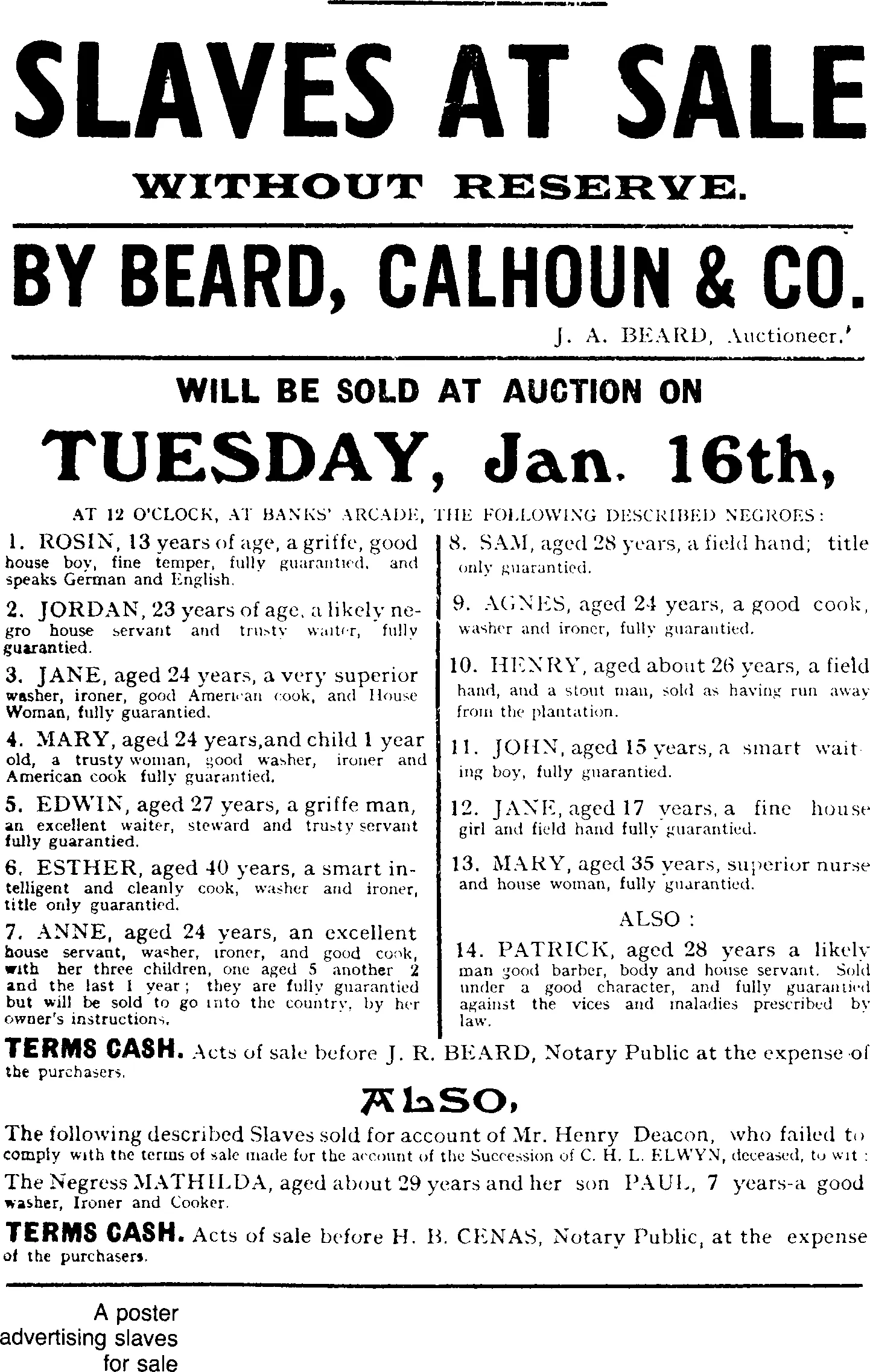
Once they were in America they were not treated much better. Many slave-owners treated the slaves just like common animals, often whipping them and even tying them up. In many southern states, laws were introduced to fix clearly what the relationship between slave-owner and slave was. For example, the Civil Code of Louisiana stated that:

A slave is one who is in the power of a master to whom he belongs. The master may sell him, dispose of his person, his industry, and his labour. He can do nothing, possess nothing, nor acquire anything, but what must belong to his master.
However, it was in these wretched circumstances that we find the origins of the musical heritage that will be the central theme of this book.
Work songs and field hollers
The work song was one of the earliest types of black American music and was strongly influenced by the type of music the blacks had known in Africa. Most of the Africans’ traditional leisure pursuits could not take shape in America because the slaves spent most of their time working. Whether on farms or cotton plantations, they were always closely controlled by the slave-owners. Thus drums, which for many Africans were their main musical instrument, were banned in many states for fear that they would be used to start a rebellion and to communicate messages to other slaves at a distance. In Africa there had always been a close relationship between the spoken language and the playing of drums. Drummers could actually copy the rhythm and intonation of speech. In African wrestling, for example, drummers would tap out comments to the fighters- hence the expression ’the talking drum’.
But the traditional African habit of singing to accompany work did not worry the slave-owners because, if anything, it helped the slaves to work harder. The work song usually included a call-and response pattern of singing. Here one man would sing the verse and the entire group would reply with the chorus. All this would be sung rhythmically in time with whatever work they were doing, easing the boredom. The call-and-response pattern was an important part of the African tradition and later of Afro-American music. It was also important for the development of Afro-American music that the way in which Africans sang was very different from European styles of singing. Africans used varying vocal tones, often involving growls and cries and falsetto, instead of the pure tone favoured by the classically trained singers of Europe.
Work songs were sung extensively on the plantation farms during the days of slavery. Both men and women would be working hard at a variety of jobs, but particularly in helping to pick the cotton crops. They usually sang about their work, but sometimes used the songs purely to express the way they felt about life in general. This included complaining about the way they were overworked, although this could be dangerous if the slave-owners heard them and understood what they were saying:
Well captain, captain, you mus’ be blin’,
Look at yo’ watch! See ain’t it quittin’ time?
Well captain, captain, how can it be?
Whistles keep a-blowin’, you keep a-workin’ me.
Later, after the freeing of the slaves, work songs went with the ex-slaves to their new jobs, whether laying rails with a railroad gang or chopping down trees in the lumber camp. Some types of work song have survived even up to the present day. These are mainly...
Table of contents
- Cover Page
- Half Title Page
- Title Page
- Copyright Page
- Title Original Page
- Copyright Original Page
- Dedication
- Table of Contents
- 1 Introduction
- 2 The roots of black music
- 3 The deep south
- 4 The big move north
- 5 Depression years
- 6 Disturbance at Minton's
- 7 The blues roll on
- 8 The strands meet
- 9 Conclusion
- Glossary of musical terms
- Sources and acknowledgments
- Some suggestions for further reading and listening
- Index
Trusted by 375,005 students
Access to over 1.5 million titles for a fair monthly price.
Study more efficiently using our study tools.
Frequently asked questions
Yes, you can cancel anytime from the Subscription tab in your account settings on the Perlego website. Your subscription will stay active until the end of your current billing period. Learn how to cancel your subscription
No, books cannot be downloaded as external files, such as PDFs, for use outside of Perlego. However, you can download books within the Perlego app for offline reading on mobile or tablet. Learn how to download books offline
Perlego offers two plans: Essential and Complete
- Essential is ideal for learners and professionals who enjoy exploring a wide range of subjects. Access the Essential Library with 800,000+ trusted titles and best-sellers across business, personal growth, and the humanities. Includes unlimited reading time and Standard Read Aloud voice.
- Complete: Perfect for advanced learners and researchers needing full, unrestricted access. Unlock 1.5M+ books across hundreds of subjects, including academic and specialized titles. The Complete Plan also includes advanced features like Premium Read Aloud and Research Assistant.
We are an online textbook subscription service, where you can get access to an entire online library for less than the price of a single book per month. With over 1.5 million books across 990+ topics, we’ve got you covered! Learn about our mission
Look out for the read-aloud symbol on your next book to see if you can listen to it. The read-aloud tool reads text aloud for you, highlighting the text as it is being read. You can pause it, speed it up and slow it down. Learn more about Read Aloud
Yes! You can use the Perlego app on both iOS and Android devices to read anytime, anywhere — even offline. Perfect for commutes or when you’re on the go.
Please note we cannot support devices running on iOS 13 and Android 7 or earlier. Learn more about using the app
Please note we cannot support devices running on iOS 13 and Android 7 or earlier. Learn more about using the app
Yes, you can access Jazz & Blues by Graham Vulliamy in PDF and/or ePUB format, as well as other popular books in Media & Performing Arts & Music. We have over 1.5 million books available in our catalogue for you to explore.