- 630 pages
- English
- ePUB (mobile friendly)
- Available on iOS & Android
eBook - ePub
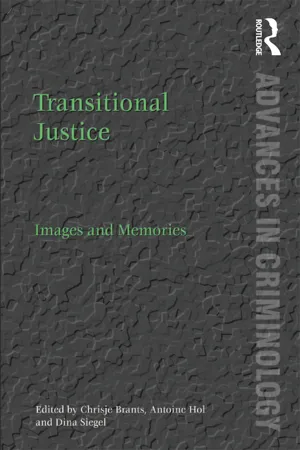
Transitional Justice
About this book
This collection on transitional justice sits as part of a library of essays on different concepts of 'justice'. Yet transitional justice appears quite different from other types of justice and fundamental ambiguities characterise the term that raise questions as to how it should sit alongside other concepts of justice. This collection attempts to capture and portray three different dimensions of the transitional justice field. Part I addresses the origins of the field which continue to bedevil it. Indeed the origins themselves are increasingly debated in what is an emergent contested historiography of the field that assists in understanding its contemporary quirks and concerns. Part II addresses and sets out parts of the 'tool-kit' of transitional justice, which could be understood as the canonical research agenda of the field. Part III tries to convey a sense of the way in which the field is un-folding and extending to new transitions, tools, theories of justice, and self-critique.
Hidden Histories
Chapter 1
The Question of Turkey: Contested, Forgotten and Remembered Memories
Gülhan Demirci
On 24 April 1915, a large number of Armenian intellectuals were arrested in the capital of the Ottoman Empire, Istanbul. The date is still commemorated as the symbolic trigger of collective violence and genocide against the Armenians. Within a year and a half, the majority of Armenians had been deported and whole communities wiped out from the places they had known as their homeland. One day after the arrests in Istanbul, on 25 April, the Gallipoli landings took place. The Ottoman Empire had entered the First World War on the side of the Central Powers, and French and British troops attacked the Gallipoli peninsula in an attempt to reopen and (re)gain entrance to the Black Sea in order to supply their Russian ally. The Dardanelles campaigns were won by the Ottoman Empire, and have been commemorated in Turkey since the 1990s with increasing fervour. While the Turks celebrate 25 April 1915 as the victory of their great leader (and first president of the Turkish Republic) Mustafa Kemal Atatürk and as the first steps towards modern Turkey, the Armenians remember 24 April 1915 as the beginning of the end.
Although the Armenian genocide, referred to in Turkey with great consistency as the ‘question of Armenia’, is still a very sensitive and disputed issue, there are those who publicly oppose the homogeneous national discourse that follows the official account of what happened to the Armenians, and why, in 1915. The official Turkish view denies there was genocide but, increasingly, does accept that Armenians were killed and deported. However, the Turkish interpretation of how these ‘events of 1915’ happened differs from the Armenian. This chapter is concerned with how these contested memories are reflected in Turkish historiography and Turkish identity and why these different narratives are now becoming an issue in Turkey. It deals first with events in 1915 and the two competing versions of them, one confirming and one denying that they amount to genocide. This is followed by the contested memories in Turkey and how the official Turkish version is closely connected to the development and identity of the nation state in the wake of the collapse of the Ottoman Empire.
This in its turn is related to the question of who was the perpetrator and who the victim in that situation, which is much more than a matter of academic definition but is, in practice, about recognizing suffering. In recent decades, the official state ideology and historiography have come under pressure as alternative discourses have been put forward. A case in point is the Battle of Gallipoli, in the narrative of which imageries of Turkish identity are continuously negotiated as different actors use the commemoration of the battle for different purposes. The question remains whether the ongoing contestation of official Turkish historiography will slowly undermine its homogeneity.
The road to a ‘solution’ of the so-called ‘Armenian question’
Views on what happened to the Armenians towards the end of the Ottoman Empire are highly politicized. The Turkish interpretation is dominated by the predominant Republican narrative and promoted by the modern Turkish nation state and its institutions. Turkish scholars working for state universities funded by the government disseminate a view that denies the massacre, and even argue that Turks themselves were the victims. The dominant view from the Armenian disapora takes a completely opposite position, implying or even stating that there was an inherently violent, destructive streak in all Turks that caused the tragedies at the beginning of the twentieth century and, by implication, would bring about their occurrence even today unless a constant and vigilant guard is kept. Both historiographies are biased. The last decade has seen a lively debate among scholars, both Turkish and Armenian, and there is a growing consensus that genocide was committed.
Things were already problematic for Armenians in the Ottoman Empire before 1915. There had been pogroms and widespread killings in 1896 and 1909, although the systematic deportation and massacre of the Armenian population that is the ‘Armenian question’ took place in the period between 1915 and 1919. At present, many, including Turkish academics, maintain that these events constituted genocide.1 It arose in a dynamic combination of three mutually related and reinforcing processes: the deep political crisis that had engulfed the Ottoman Empire, the CUP revolution by the ‘Young Turks’ (see, for example, Karpat 2000; Zürcher 1984; Zürcher 2005) and the First World War. The CUP (Ittihat ve Terakki Cemiyeti, IT – Committee of Union and Progress) was officially founded in 1895 in opposition to Sultan Abdülhamit (1842-1918). Originally comprising several groups, it united in 1907 and consisted for the most part of young officers and civil servants; they took power in 1908 and were a powerful force to be reckoned with for years to come.
The Balkan Wars of 1912-1913 had dramatic consequences for the Ottoman army and for the population. Many Muslims fell victim to war crimes, and important territory, lives and possessions were lost. Muslims fled in huge numbers towards Istanbul and Anatolia. Many Young Turks, including future leaders, were among the refugees, or heard the traumatic stories from family members. With the Balkan provinces, the Ottomans lost what had been the core of the empire, its richest and most developed part, for 500 years. These events were to have a decisive impact on the development of Ottoman society, culture and identity, and on the development of a nation state.
The Young Turks were determined that such a defeat should never again occur in the remaining territories. But it had also demonstrated the weaknesses of the once so powerful Ottoman Empire, which had become known as ‘the sick man of Europe’, both economically and militarily subordinate to the rest of the continent in a semi-colonial relationship of dependency. France, Russia and Britain, all interested in the Ottoman Empire, each feared that the others would gain more territory and disturb the balance of power. None of them wanted, therefore, to destroy the empire, though secretly they agreed on how to divide it up. The big powers already had a great deal of influence on the position of Christian minorities in the country because of the Capitulations and Treaties that had been agreed over the years, on the basis of which they intervened regularly in internal affairs (something the Ottomans regarded as a breach of their autonomy); such ‘humanitarian interventions’ as the western powers called them, allowed them to disguise any desire for carving up the empire, while protecting Christian minorities and supporting their aspirations of independence.
Meanwhile, the loss of the Balkan territories fed the myth of being ‘stabbed in the back’ by the Christians living within the empire’s borders, reinforcing deep distrust of their loyalty and inflaming Turkish-nationalist feeling.
In January 1913, the Young Turks, united in the CUP, staged a coup that gave them complete power. Within the CUP itself, a small group, the Central Committee, took the most important decisions. This is thought to be the group that made the decision both to take part in the First World War and to deport the Armenians.
The outbreak of the First World War, little over a year after the Balkan Wars, took all parties by surprise and was eventually to prove fatal for the Ottoman Empire, and certainly also for the Christian minorities within its borders.
The Young Turks had already discovered how diplomatically isolated the empire could become and were determined to find allies to prevent its demise. The only major power prepared to enter into an alliance with the Ottomans on the basis of equality was the German Empire. While the hope was that victory would liberate the country from its semi-colonial status, at the same time the radical nationalistic branch of the CUP saw the war as a drastic solution for the many problems facing the empire (Akçam 2001; Üngör 2009). The Young Turks also hoped to reclaim lost territory – that loss being a permanent trauma of both late Ottoman and Turkish political culture.
The Armenian question
Relations between the Armenians, the Kurds and the Muslims in the east were already strained and there were regular clashes. The Balkan Wars, increasing distrust towards the non-Muslim population and rising Turkish nationalism exacerbated the situation. The outbreak of the First World War encouraged further distrust, reinforcing the more radical elements in the CUP and creating an atmosphere in which they seemed to be working towards the destruction of non-Turkish and non-Muslim groups within the empire.
In December 1914, the Ottoman army suffered a disastrous defeat by the Russians near Sarıkamış under the leadership of Enver Pasha, general, minister of war and CUP leader. Due to poor preparation, cold and exhaustion, only 12,000 of the 90,000 men with whom he set out on this venture survived (Erickson 2001). After this huge blow to to the Ottoman army, nationalist Armenians saw their chance to create their own state and, encouraged by Russian propaganda, many rose against the Ottomans. This led to harsh repercussions and a further tightening of a policy to keep the Armenians in check. Fearing a Russian invasion led by Armenian ‘traitors’, the Central Committee of the CUP found in the rebellion in the provincial capital of Van (1915) an extra reason for pushing on with plans for deportation; consensus was growing that what was called the ‘Armenian question’ should be definitively solved. Once the decision was made, the deportations and persecutions were processes relatively separate from the ebb and flow of the war, the policy remained to get rid of the Armenians. The Armenian society whose home was Anatolia was destroyed to the extent of never recovering. Exact numbers are unknown, but the latest figures stand at between 800,000 and 1,500,000 dead. The wider context of this massacre was ‘ethnic cleansing’ with a view to creating a homogeneous nation state.
An untouchable history
Interest in the ‘Armenian question’ is not new and this is a piece of hidden history that has re-emerged in Turkey. There were already reports of mass murder and deportations of Armenians in the east of the Ottoman Empire during the First World War. American ambassador Morgenthau wrote:
On April 15th, about 500 young Armenian men of Akantz were mustered to hear an order of the Sultan; at sunset they were marched outside the town and every man shot in cold blood. This procedure was repeated in about eighty Armenian villages in the district north of Lake Van, and in three days 24,000 Armenians were murdered in this atrocious fashion. (1918: 111)
In his report, Morgenthau even mentions massacres that took place in 1895. He gives numerous examples and describes the deportations, concluding that what the CUP was doing amounted to ‘merely the preparatory steps in the destruction of the race’ (1918: 115).
In 1916, the British government published a document known as the ‘Bleu Book’ (Bryce and Toynbee [1916] 2000), detailing the treatment of the Armenians and the mass murders. It was intended as propaganda against the Ottoman Empire, and it shows that the desperate Armenian situation was known to foreign governments at an early stage. Historians such as Arnold Toynbee (Bryce and Toynbee [1916] 2000) and Herbert Gibbons (1917) were among the first to claim that this was a systematic destruction of the Armenians. Turkey’s ally Germany, with its wide network of consuls and other diplomats in Turkey, also learnt about the dramatic events as early as 1915 (Gust 2005).
After the First World War, and under pressure from Britain and France especially, several tribunals were established to try the perpetrators of the Armenian massacres (the term ‘genocide’ did not become generally known until 1948). The most important case began in Istanbul on 28 April 1919. Twelve men, including members of the CUP and ex-ministers, stood trial. Key figures such as Talât Pasha, minister of the interior, Enver Pasha, minister of war, and Cemal Pasha, governor of Aleppo, had fled and were sentenced to death in absentia (Adrian 1991, 1997).
The fact that crimes had happened that could not bear the light of day was not completely unknown among Turks either (mostly the elite) and was discussed in parliament after the war. Motions were even tabled asking for punishment for the persecution of both ‘the Armenian nation’ and ‘the noble Arab people’ (Akçam 2006). But then, too, there were those who maintained that the Turkish people had also suffered in the course of history and had been victims of mass murder. Originally the Turks were not averse to the idea of tribunals to try war criminals, partly because they expected this would have a favourable influence on the Peace Conference in Paris. The Allies, however, also had ulterior motives in wishing to punish the Turks, given that they had already decided before the war to divide up the Ottoman territories (Helmreich 1974, in Akçam 2006). When the Turks became aware of this, their original willingness disappeared. One of the treaties following the Conference, the Treaty of Sèvres of August 1920, imposed such severe terms that it not only carved up most of the Ottoman territory but also meant a de facto loss of autonomy for the government. To the Armenians it promised a political entity, an autonomous homeland.
The new nation state and its leader, Mustafa Kemal, dismissed any connection to the CUP, which was held not only responsible for losing the empire but also for the massacres. Any counter-interpretation of the official nationalist narrative was rendered subversive by the subsequent promulgation of the laws of treason against the Turkish state and Mustafa Kemal. The series of social reforms enacted by the young Republic also made it difficult if not impossible do deal with the traumatic past.
Contested memories
Today, the events of 1915 are still not recognized as genocide in Turkey and the very term occasions fierce emotions. As far as this part of history is concerned, Turkey appears to suffer from collective amnesia. This is closely related to the development of Turkish historiography and national identity. The modern nation state exists partly thanks to remembering. In 1882, Ernst Renan asked: ‘What is a nation?’ only to answer: ‘The possession in common of a rich legacy of memories’. But he also maintained:
Forgetting, I would even go so far as to say historical error is a crucial factor in the creation of a nation. Indeed, historical enquiry brings to light deeds of violence which took place at the origin of all political formation, even those whose consequences have been altogether beneficial. Unity is always been affected by means of brutality. (Renan 1882)
Remembering – and especially forgetting – forms the collective memories of a country. What is selected to be remembered is confirmed in a number of ways. Zerubavel speaks of ‘a master commemorative memory’ that is fed by collective days of celebration, stories, monuments and schoolbooks (1995: 6). The most important stories of commemoration are directed towards the specific group identity and its historical development. Describing this identity as the collective movement of a people through time and events contributes to the forming of a nation. Silhouetted by selective forgetting, these memories help form and maintain ‘imagined communities’ (Anderson 2006). And so the nation state will go to great, not to say any, lengths to keep remembrance under control. After the foundation of the Republic of Turkey, those in power monopolized channels of socialization, schools, the army and the media in order to impress their ideology on society. Their success also helped keep the official version of history uncontested for decades.
In search of Turkish identity
Turkish historiography developed in antagonism to the Ottoman Empire and its fall and is, moreover, teleological in nature. The political, the military and the biographical form the elements through which the thread of state formation is developed, so that Turkish history seems to write itself towards the foundation of the nation state in 1923. Dominant ideology still has it that modern Turkish culture was formed within the nation state post-1923. It is presented as a homogeneous culture, not multi-ethnic, and the Turkish state as having only found its true identity after 1923 (and some primitive experimenting in the final Ottoman period). From this same point of view, the First World War – the direct reason for the struggle for independence and the foundation of the Republic – is interesting only as the transition from multi-ethnic state to homogeneous nation state.
The three most important schools of unifying ideology at the beginning of the twentieth century were Ottomanism, Islamism and Turkism (see, for example, Özkırımlı and Sofos 2008), and their central question was what would be the future foundation of the loyalty of citizens to their state. Externally dictated conditions were such that the ideology of Turkism eventually proved most viable. The loss of Balkan territory reduced the ethnic diversity of the empire. The flight of hundreds of thousands of Muslims towards the Turkish capital was repeated as the Russians advanced during the First World War. The Armenia...
Table of contents
- Cover Page
- Half Title Page
- Title Page
- Copyright Page
- Table of Contents
- List of Tables
- Notes on Contributors
- Acknowledgements
- Introduction
- Part I Hidden Histories
- Part II Processes and Rituals
- Part III Contradictory Perceptions of Conflict and Justice
- Part IV Discourse and Artistic Expression
- Index
Trusted by 375,005 students
Access to over 1.5 million titles for a fair monthly price.
Study more efficiently using our study tools.
Frequently asked questions
Yes, you can cancel anytime from the Subscription tab in your account settings on the Perlego website. Your subscription will stay active until the end of your current billing period. Learn how to cancel your subscription
No, books cannot be downloaded as external files, such as PDFs, for use outside of Perlego. However, you can download books within the Perlego app for offline reading on mobile or tablet. Learn how to download books offline
Perlego offers two plans: Essential and Complete
- Essential is ideal for learners and professionals who enjoy exploring a wide range of subjects. Access the Essential Library with 800,000+ trusted titles and best-sellers across business, personal growth, and the humanities. Includes unlimited reading time and Standard Read Aloud voice.
- Complete: Perfect for advanced learners and researchers needing full, unrestricted access. Unlock 1.5M+ books across hundreds of subjects, including academic and specialized titles. The Complete Plan also includes advanced features like Premium Read Aloud and Research Assistant.
We are an online textbook subscription service, where you can get access to an entire online library for less than the price of a single book per month. With over 1.5 million books across 990+ topics, we’ve got you covered! Learn about our mission
Look out for the read-aloud symbol on your next book to see if you can listen to it. The read-aloud tool reads text aloud for you, highlighting the text as it is being read. You can pause it, speed it up and slow it down. Learn more about Read Aloud
Yes! You can use the Perlego app on both iOS and Android devices to read anytime, anywhere — even offline. Perfect for commutes or when you’re on the go.
Please note we cannot support devices running on iOS 13 and Android 7 or earlier. Learn more about using the app
Please note we cannot support devices running on iOS 13 and Android 7 or earlier. Learn more about using the app
Yes, you can access Transitional Justice by Christine Bell in PDF and/or ePUB format, as well as other popular books in Law & Criminal Law. We have over 1.5 million books available in our catalogue for you to explore.