Over the last four decades computers and the internet have become an intrinsic part of all our lives, but this speed of development has left related philosophical enquiry behind. Featuring the work of computer scientists and philosophers, these essays provide an overview of an exciting new area of philosophy that is still taking shape.
To oversimplify, science has two fundamental ways of changing our understanding. One may be called extrovert, or about the world, and the other introvert, or about ourselves. Three scientific revolutions in the past had great impact both extrovertly and introvertly. In changing our understanding of the external world, they also modified our conception of who we are, that is, our self-understanding. The story is well known, so I shall recount it rather quickly.
We used to think that we were at the centre of the universe, nicely placed there by a creator God. It was a most comfortable and reassuring position to hold. In 1543, Nicolaus Copernicus published his treatise on the movements of planets around the sun. It was entitled On the Revolutions of Celestial Bodies (De Revolutionibus Orbium Coelestium). Copernicus probably did not mean to start a ‘revolution’ in our self-understanding as well. Nonetheless, his heliocentric cosmology forever displaced the earth from the centre of the universe and made us reconsider, quite literally, our own place and role in it. It caused such a profound change in our views of the universe that the word ‘revolution’ begun to be associated with radical scientific transformation.
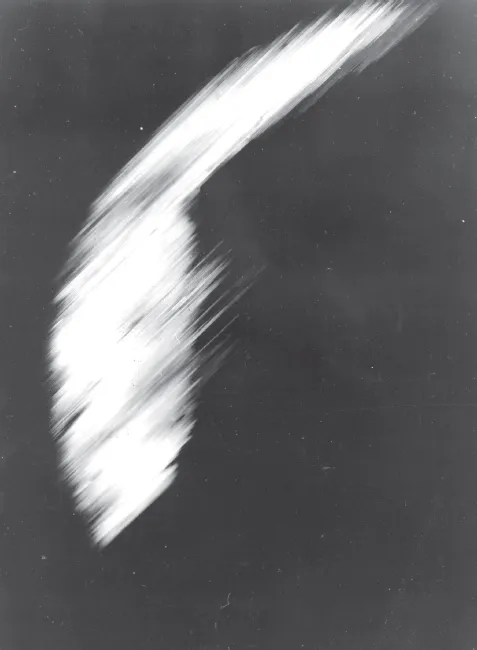
We have been dealing with the consequences of the Copernican revolution since its occurrence. Indeed, it is often remarked that one of the significant achievements of our space explorations has been a matter of external and comprehensive reflection on our human condition. Such explorations have enabled us to see earth and its inhabitants as a small and fragile planet, from outside. Of course, this was possible only thanks to information and communication technologies (ICTs). Figure 1.1 reproduces what is probably the very first picture of our planet, taken by the US satellite Explorer VI on 14 August 1959.
Figure 1.1:First picture of earth, taken by the US satellite Explorer VI. It shows a sunlit area of the Central Pacific Ocean and its cloud cover. The signals were sent to the South Point, Hawaii tracking station, when the satellite was crossing Mexico. Image courtesy of NASA, image number 59-EX-16A-VI, date 14 August 1959.
After the Copernican revolution, we retreated by holding on to the belief in our centrality, at least on planet Earth. The second revolution occurred in 1859, when Charles Darwin (1809–82) published his On the Origin of Species by Means of Natural Selection, or the Preservation of Favoured Races in the Struggle for Life. In his work, Darwin showed that all species of life have evolved over time from common ancestors through natural selection. This time, it was the word ‘evolution’ that acquired a new meaning.
The new scientific findings displaced us from the centre of the biological kingdom. As had been the case with the Copernican revolution, many people did not like it. Indeed, some people still resist the very idea of evolution, especially on religious grounds. But most of us have moved on, and consoled ourselves with a different kind of importance and a renewed central role in a different space, one concerning our mental life.
We thought that, although we were no longer at the centre of the universe or of the animal kingdom, we were still the masters of our own mental contents, the species completely in charge of its own thoughts. This defence of our centrality in the space of consciousness came to be dated, retroactively and simplistically, to the work of René Descartes. His famous ‘I think therefore I am’ could be interpreted as also meaning that our special place in the universe had to be identified not astronomically or biologically but mentally, with our ability of conscious self-reflection, fully transparent to, and in control of, itself. Despite Copernicus and Darwin, we could still regroup behind a Cartesian trench. There, we could boast that we had clear and complete access to our mental contents, from ideas to motivations, from emotions to beliefs. Psychologists thought that introspection was a sort of internal voyage of discovery of mental spaces. William James still considered introspection a reliable, scientific methodology. The mind was like a box: all you needed to do to know its contents was to look inside.
It was Sigmund Freud who shattered this illusion through his psychoanalytic work. It was a third revolution. He argued that the mind is also unconscious and subject to defence mechanisms such as repression. Nowadays, we acknowledge that much of what we do is unconscious, and the conscious mind frequently constructs reasoned narratives to justify our actions afterwards. We know that we cannot check the contents of our minds in the same way we search the contents of our hard disks. We have been displaced from the centre of the realm of pure and transparent consciousness. We acknowledge being opaque to ourselves.
There are now serious doubts about psychoanalysis as a scientific enterprise, and yet one may still be willing to concede that, culturally, Freud was very influential in initiating the radical displacement from our Cartesian certainties. What we mean by ‘consciousness’ has never been the same after Freud, but we may owe him more philosophically than scientifically. If so, then one could replace psychoanalysis with contemporary neuroscience as a likely candidate for such a revolutionary scientific role. Either way, the result is that today we admit that we are not immobile, at the centre of the universe (Copernican revolution), that we are not unnaturally separate from the rest of the animal kingdom (Darwinian revolution), and that we are very far from being Cartesian minds entirely transparent to ourselves (Freudian or neuroscientific revolution).
One may easily question the value of the interpretation of these three revolutions in our self-understanding. After all, Freud himself was the first to read them as part of a single process of gradual reassessment of human nature. His interpretation was, admittedly, rather self-serving. Yet the line of reasoning does strike a plausible note, and it can be rather helpful to understand the information revolution in a similar vein. When nowadays we perceive that something very significant and profound is happening to human life, I would argue that our intuition is once again perceptive, because we are experiencing what may be described as a fourth revolution, in the process of dislocation and reassessment of our fundamental nature and role in the universe.
The Fourth Revolution
After the three revolutions, we were left with our intelligent behaviour as the new line of defence of our uniqueness. Our special place in the universe was not a matter of astronomy, biology or mental transparency, but of superior thinking abilities. As Blaise Pascal poetically puts it in a famous quote: ‘man is but a reed, the most feeble thing in nature, but he is a thinking reed’.
Intelligence was, and still is, a rather vague property, difficult to define, but we were confident that no other creature on earth could outsmart us. Whenever a task required intelligence, we were the best by far, and could only compete with each other. We thought that animals were stupid, that we were clever, and this seemed the reassuring end of the story, even if Thomas Hobbes had already argued that thinking was nothing more than computing (‘reckoning’) with words. We quietly presumed to be at the centre of the space represented by intelligent behaviour.
The result was that we both misinterpreted our intelligence and underestimated its power. We had not considered the possibility that we may be able to engineer autonomous machines that could be better than us at processing information logically and were therefore behaviourally smarter than us whenever information processing was all that was required to accomplish an otherwise intelligent task. The mistake became clear in the work of Alan Turing, the father of the fourth revolution.
Because of Turing’s legacy, today we have been displaced from the privileged and unique position we thought we held in the realm of logical reasoning and corresponding smart behaviour. We are not the undisputed masters of the infosphere. Our digital devices carry out more and more tasks that would require intelligence if we were in charge. We have been forced to abandon once again a position that we thought was ‘unique’. The history of the word ‘computer’ is indicative of this. Between the seventeenth and the nineteenth century, it was synonymous with ‘a person who performs calculations’, simply because there was nothing else in the universe that could compute. In 1890, for example, a competitive examination for the position of ‘computer’ in the US Civil Service had sections on ‘orthography, penmanship, copying, letter-writing, algebra, geometry, logarithms, and trigonometry’.1 It was still Hobbes’s idea of thinking as reckoning. Yet by the time Turing published his classic paper entitled Computing Machinery and Intelligence, he had to specify that in some cases he was talking about a ‘human computer’, because by 1950 he knew that ‘computer’ no longer referred only to a person who computes. After him, ‘computer’ entirely lost its anthropological meaning and of course became synonymous with a general purpose, programmable machine, what we now call a Turing machine.
After Turing’s groundbreaking work, computer science and the related ICTs have exercised both an extrovert and an introvert influence on our understanding. They have provided unprecedented scientific and engineering powers over natural and artificial realities. And they have cast new light on who we are, how we are related to the world and to each other, and hence how we conceive ourselves. Like the previous three revolutions, the fourth revolution has not only removed a misconception about our uniqueness, it has also provided the conceptual means to revise our self-understanding in new terms. We are slowly accepting the post-Turing idea that we are not Newtonian, standalone and unique agents, some Robinson Crusoe on an island, but rather informational organisms (inforgs), mutually connected and embedded in an informational environment, the infosphere, which we share with other informational agents, both natural and artificial, that can process information logically and autonomously often better than we do. Such agents are not intelligent like us, but they can easily outsmart us.
Inforgs
We have seen that we are probably the last generation to experience a clear difference between online and offline environments. Some people already spend most of their time online. Some societies are already hyperhistorical. If home is where your data are, you probably already live on Google Earth and in the cloud. Artificial and hybrid (multi)agents, i.e. partly artificial and partly human (consider, for example, a bank) already interact as digital agents with digital environments, and since they share the same nature they can operate within them with much more freedom and control. We are increasingly delegating or outsourcing our memories, decisions, routine tasks and other activities to artificial agents in ways that will be progressively integrated with us and with our understanding of what it means to be a smart agent. Yet all this is rather well known. And although it is relevant to understanding the displacement caused by the fourth revolution, namely what we are not uniquely, it is not what I am referring to when talking about inforgs, that is, what the fourth revolution invites us to think we may be. Indeed, there are at least three more potential misunderstandings against which the reader should be warned.
First, the fourth revolution concerns, negatively, our newly lost ‘uniqueness’ (we are no longer at the centre of the infosphere) and, positively, our new way of understanding ourselves as inforgs. The fourth revolution should not be confused with the vision of a ‘cyborged’ humanity. This is science fiction. Walking around with something like a Bluetooth wireless headset implanted in your ear does not seem the best way forward, not least because it contradicts the social message it is also meant to be sending: being on call
is a form of slavery, and anyone so busy and important should have a personal assistant instead. A similar reasoning could be applied to other wearable devices, including Google Glasses. The truth is rather that being a sort of cyborg is not what people will embrace, but what they will try to avoid, unless it is inevitable.
Second, when interpreting ourselves as informational organisms I am not referring to the widespread phenomenon of ‘mental outsourcing’ and integration with our daily technologies. Of course, we are increasingly dependent on a variety of devices for our daily tasks, and this is interesting. However, the view according to which devices, tools and other environmental supports or props may be enrolled as proper parts of our ‘extended minds’ is still based on a Cartesian agent, who is stand-alone and fully in charge of the cognitive environment, which it is controlling and using through its mental prostheses, from paper and pencil to a smartphone, from a diary to a tablet, from a knot in the handkerchief to a computer. This is an outdated perspective.
Finally, I am not referring to a genetically modified humanity, in charge of its informational DNA and hence of its future embodiments. This posthumanism, once purged of its most fanciful and fictional claims, is something that we may see in the future, but it is not here yet, either technically (safely doable) or ethically (morally acceptable). It is a futuristic perspective.
What I have in mind is rather a quieter, less sensational and yet more crucial and pr...
Table of contents
Cover Page
Half Title page
Series page
Title Page
Copyright Page
Contents
List of Contributors
List of Figures and Tables
Introduction: Philosophy's Relevance in Computing and Information Science
1 The Fourth Revolution in our Self-Understanding
2 Information Transfer as a Metaphor
3 With Aristotle Towards a Differentiated Concept of Information?
4 The Influence of Philosophy on the Understanding of Computing and Information
5 The Emergence of Self-Conscious Systems: From Symbolic AI to Embodied Robotics
6 Artificial Intelligence as a New Metaphysical Project
7 The Relevance of Philosophical Ontology to Information and Computer Science
8 Ontology, its Origins and its Meaning in Information Science
9 Smart Questions: Steps Towards an Ontology of Questions and Answers
10 Sophisticated Knowledge Representation and Reasoning Requires Philosophy
11 On Frames and Theory-Elements of Structuralism
12 Ontological Complexity and Human Culture
13 Knowledge and Action Between Abstraction and Concretion
14 Action-Directing Construction of Reality in Product Creation Using Social Software: Employing Philosophy to Solve Real-World Problems
15 An Action-Theory-Based Treatment of Temporal Individuals
16 Four Rules for Classifying Social Entities
17 Info-Computationalism and Philosophical Aspects of Research in Information Sciences
18 Pancomputationalism: Theory Or Metaphor?
19 The Importance of the Sources of Professional Obligations
Notes
Index
Trusted by 375,005 students
Access to over 1.5 million titles for a fair monthly price.
Study more efficiently using our study tools.
Frequently asked questions
Yes, you can cancel anytime from the Subscription tab in your account settings on the Perlego website. Your subscription will stay active until the end of your current billing period. Learn how to cancel your subscription
No, books cannot be downloaded as external files, such as PDFs, for use outside of Perlego. However, you can download books within the Perlego app for offline reading on mobile or tablet. Learn how to download books offline
Perlego offers two plans: Essential and Complete
Essential is ideal for learners and professionals who enjoy exploring a wide range of subjects. Access the Essential Library with 800,000+ trusted titles and best-sellers across business, personal growth, and the humanities. Includes unlimited reading time and Standard Read Aloud voice.
Complete: Perfect for advanced learners and researchers needing full, unrestricted access. Unlock 1.5M+ books across hundreds of subjects, including academic and specialized titles. The Complete Plan also includes advanced features like Premium Read Aloud and Research Assistant.
Both plans are available with monthly, semester, or annual billing cycles.
We are an online textbook subscription service, where you can get access to an entire online library for less than the price of a single book per month. With over 1.5 million books across 990+ topics, we’ve got you covered! Learn about our mission
Look out for the read-aloud symbol on your next book to see if you can listen to it. The read-aloud tool reads text aloud for you, highlighting the text as it is being read. You can pause it, speed it up and slow it down. Learn more about Read Aloud
Yes! You can use the Perlego app on both iOS and Android devices to read anytime, anywhere — even offline. Perfect for commutes or when you’re on the go. Please note we cannot support devices running on iOS 13 and Android 7 or earlier. Learn more about using the app
Yes, you can access Philosophy, Computing and Information Science by Ruth Hagengruber,Uwe Riss in PDF and/or ePUB format, as well as other popular books in Historia & Historia del mundo. We have over 1.5 million books available in our catalogue for you to explore.