![]()
1. Uses, Benefits, and History of POE
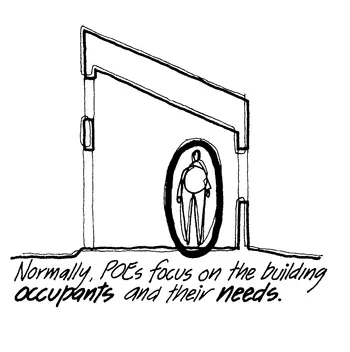
Post-occupancy evaluation is the process of evaluating buildings in a systematic and rigorous manner after they have been built and occupied for some time. POEs focus on building occupants and their needs, and thus they provide insights into the consequences of past design decisions and the resulting building performance. This knowledge forms a sound basis for creating better buildings in the future.
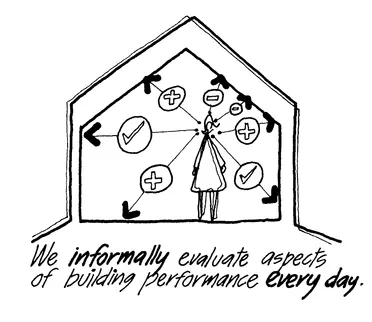
The performance of buildings is evaluated regularly, although not necessarily in a self-conscious and explicit way. In a hotel room, for example, conversations taking place next door may be overheard. In this case the acoustical performance of the building is being assessed. The room temperature, the quality of lighting, storage, finishes, and even the esthetic quality of the view from the hotel window are also informally evaluated.
Similarly, those waiting for an elevator may judge the waiting time to be excessive. The evaluation criteria used in this case come from expectations that are based on previous experiences with elevators.
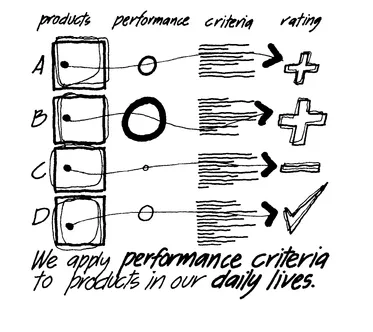
There are many products from which specific performance is expected. For instance, most people are quite careful when choosing a car. Car performance can be evaluated in terms of gas mileage, braking distance, trunk space, acceleration time, image, and so on. Along the same lines, a box camera would not be selected to produce professional-quality photographs. Instead, more sophisticated equipment is examined and evaluated according to performance criteria for shutter speeds, reliability, filters, and availability of a range of accessories.
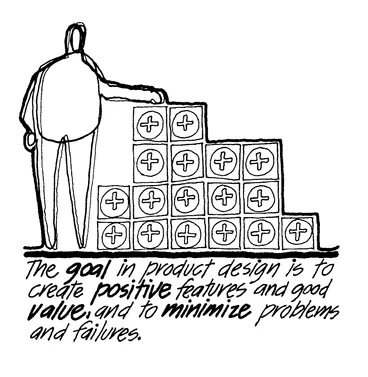
For the buyer, a satisfactory choice is the result of an evaluation of the quality and performance of such products based on the same criteria of performance and evaluation. The goal of the manufacturer or designer is to create products with desirable features, to provide good value, and to minimize problems and failures.
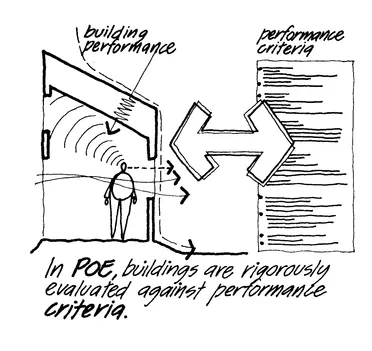
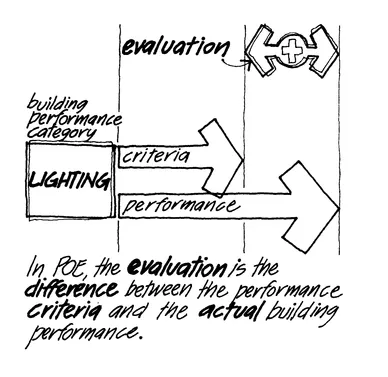
By analogy, POEs are intended to compare systematically and rigorously the actual performance of buildings with explicitly stated performance criteria; the differences between the two constitute the evaluation.
Uses and Benefits of POE
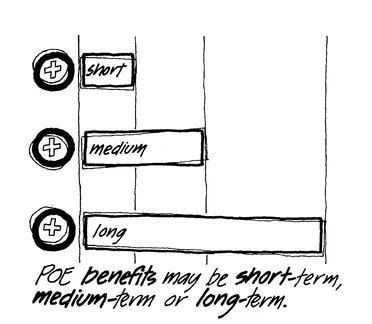
Depending on the objectives of the client organization and the time frame involved, POEs have uses and benefits over the short, medium, and long term (table 1-1).
| SHORT-TERM BENEFITS |
| • Identification of and solutions to problems in facilities |
| • Proactive facility management responsive to building user values |
| • Improved space utilization and feedback on building performance |
| • Improved attitude of building occupants through active involvement in the evaluation process |
| • Understanding of the performance implications of changes dictated by budget cuts |
| • Informed decision making and better understanding of consequences of design |
| MEDIUM-TERM BENEFITS |
• Built-in capability for facility adaptation to organizational change and growth over time, including recycling
of facilities into new uses |
| • Significant cost savings in the building process and throughout the building life cycle |
| • Accountability for building performance by design professionals and owners |
| LONG-TERM BENEFITS |
| • Long-term improvements in building performance |
| • Improvement of design databases, standards, criteria, and guidance literature |
| • Improved measurement of building performance through quantification |
Table 1-1. Post-occupancy evaluation uses and benefits.
Short-term Benefits
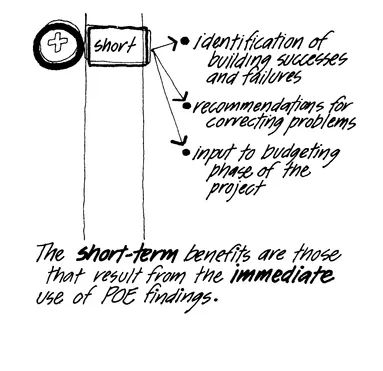
Over the short term, successes and failures in the performance of buildings are identified and recommendations made for the appropriate action required to resolve any problems. Additional study may be needed to understand the identified problems fully, in which case further in-depth POEs may be undertaken.
Another short-term benefit of POE pertains to the budget cutting that is common in the fiscal-planning phase of the building process. Reducing a project's cost often results in inferior quality, which in turn can negatively affect the functioning of the organization occupying the building. POEs can help to show the implications of various design alternatives devised to meet lowered budgets, enabling the achievement of the best level of quality and performance within these constraints.
Medium-term Benefits
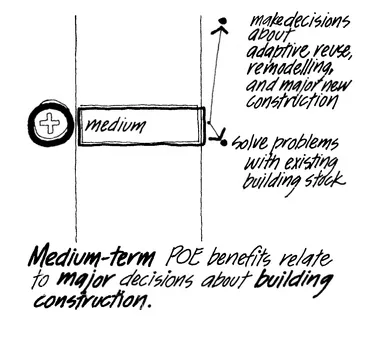
Over the medium term, POEs can provide the justification and information base for adaptive reuse, remodeling, or major construction in order to resolve problems that have been identified in existing buildings. Recycling old loft buildings into apartments, installing new telecommunications wiring, or building additions to accommodate organizations' changing space needs are examples.
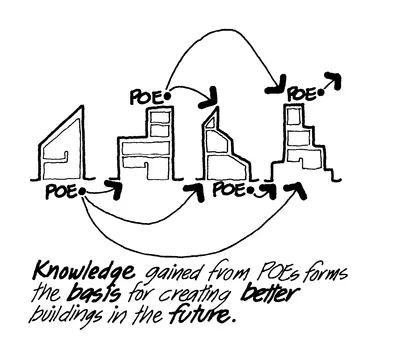
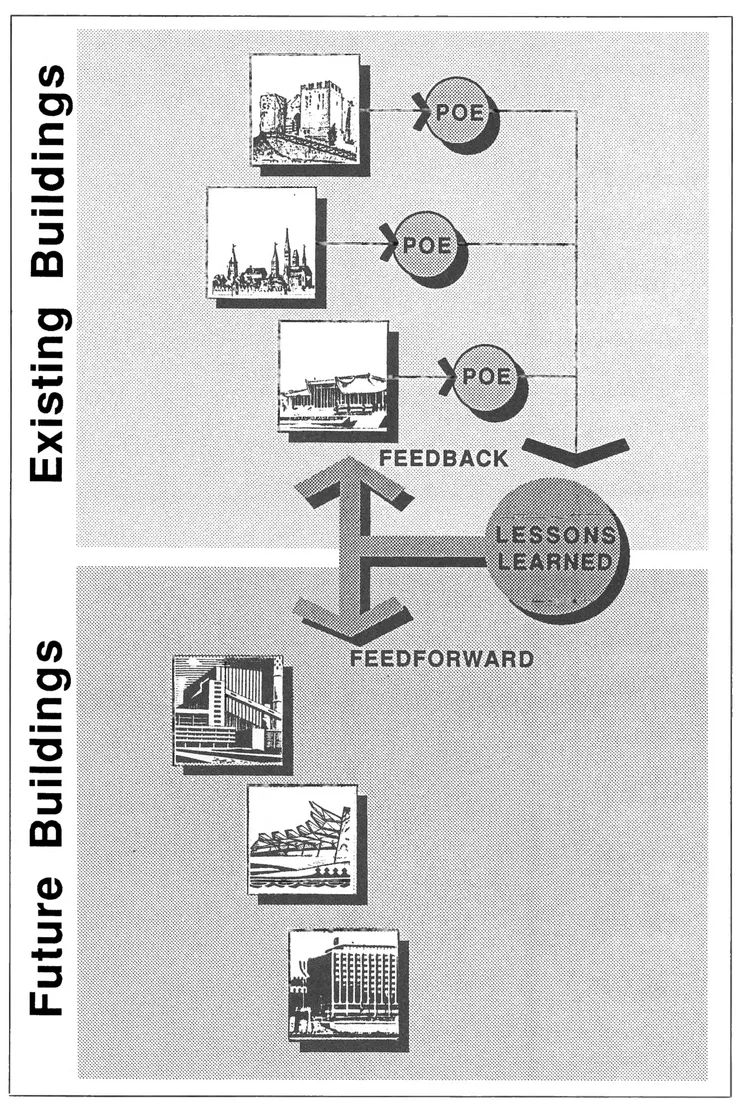
Figure 1-1. Feedforward from POEs improves future buildings.
Long-term Benefits
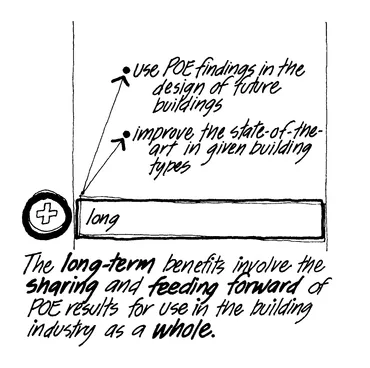
Long-term benefits result when the lessons learned from the failures and successes of building performance are applied to the design of future buildings (fig. 1-1).
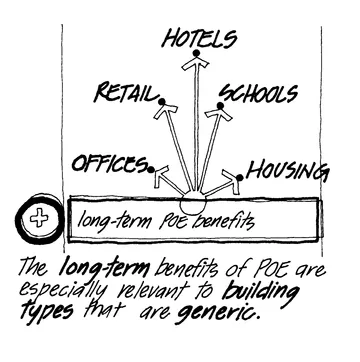
The time frame for long-term benefits to come to fruition can range from three to ten years. As was stated earlier, this benefit of POEs is particularly relevant to generic building types, such as hotels, office buildings, schools, retail facilities, and housing.
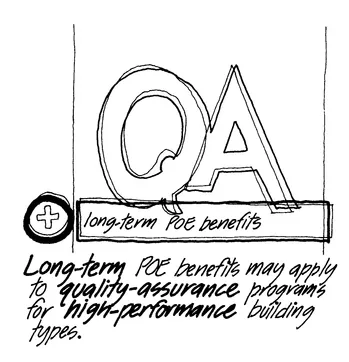
Another long-term benefit of POE is its application to quality assurance (QA). This area of concern is of increasing importance in the medical field, where performance standards have been established, for instance, in the area of laboratory testing. These standards provide for the appropriate levels of accuracy of testing procedures and must be carefully followed. Quality assurance requires some means of indicating quality and performance, action taken on problems identified by these indicators, and accurate recordkeeping. QA, adapted to the building industry, can be implemented by employing the POE process model presented in chapter 4.
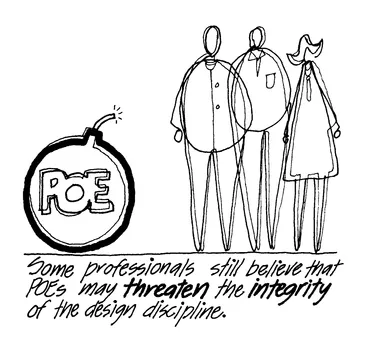
As outlined in table 1-1, POEs can result in a broad range of recommendations and actions. Although POEs are a rational and easily understood activity in the building process, some professionals still believe that such evaluations have the potential to undermine the integrity of design and planning, because in our litigious society, POE can provide evidence in lawsuits where malpractice in architecture and planning is suspected. As appendix A, on legal issues in POE, indicates, these are serious concerns; however, they should not obviate the fact that POEs provide significant benefits to architects, building managers, and client organizations alike.
The History of POE
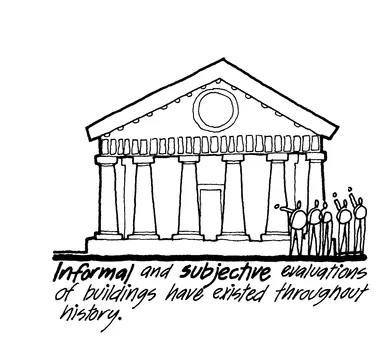
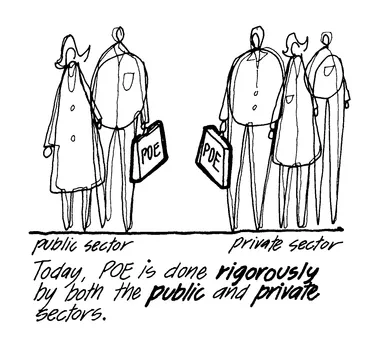
Informal and subjective building evaluations have been conducted throughout history. Systematic POEs, as required for today's complex buildings, however, employ explicitly stated performance criteria with which performance measures of buildings are compared. Today, this type of evaluation is carried out as a routine activity in both the public and private sectors.
POE is said to derive its name from the occupancy permit that is issued when a building is completed, inspected, and deemed safe according to building codes and regulations (Bechtel 1980). The first significant efforts at POE were made in the mid-1960s when severe problems, some of which were attributable to the built environment, were observed in institutions such as mental hospitals and prisons (Osmond 1966). The interest in evaluating the health, safety, security, and psychological effects of buildings on their occupants was further stimulated by Robert Sommer's books Personal Space: The Behavioral Basis of Design (1969) and Tight Spaces: Hard Architecture and How to Humanize It (1974), as well as by Edward T. Hall, who wrote The Hidden Dimension (1966) and The Fourth Dimension in Architecture: The Impact of Building on Man's Behavior (1975).
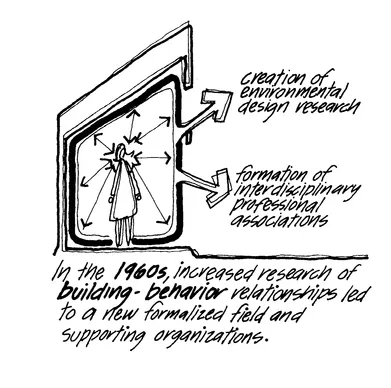
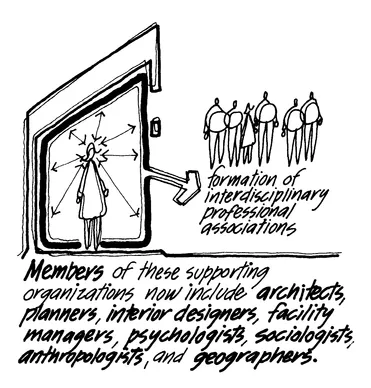
The 1960s saw the growth of research focusing on the relationships between human behavior and building design, which led to the creation of the new field of environmental design research and the formation of interdisciplinary professional associations, such as the Environmental Design Research Association in 1968. Members of these associations include architects, planners, facility managers, interior designers, psychologists, sociologists, anthropologists, and geographers. Emerging professional specializations include human behavior-based building research, facility programming, and, most important, POE. Further manifestations were the increasing numbers of publications (Preiser 1978), including books on evaluation methods, case study applications, and new journals that featured POEs, Environment and Behavior, the Journal of Environmental Psychology, and major architectural magazines, such as Architecture and Progressive Architecture, began to publish building evaluations.
The emergence of POE techniques and the publication of evaluation studies were reinforced by proponents of more rational and rigorous design processes in architecture. Christopher Alexander, an early leader in this field, wrote three influential books: Notes on the Synthesis of Form (1964], Houses Generated by Patterns (1969), and A Pattern Language (1977). These publications introduced the notion of design requirements and patterns into the design process, based upon the evaluation of the needs of those for whom the designs were intended. These efforts set the stage for government agencies, s...