This book brings the field of tourism into dialogue with what is captured under the varied notions of the Anthropocene. It explores issues and challenges which the Anthropocene may pose for tourism, and it offers significant insights into how it might reframe conceptual and empirical undertakings in tourism research. Furthermore, through the lens of the Anthropocene this book also spurs thinking of the role of tourism in relation to sustainable development, planetary boundaries, ethics (and what is framed as geo-ethics) and refocused tourism theory to make sense of tourism's earthly entanglements and thinking tourism beyond Nature-Society. The multidisciplinary nature of the material will appeal to a broad academic audience, such as those working in tourism, geography, anthropology and sociology.
eBook - ePub
Tourism and the Anthropocene
- 204 pages
- English
- ePUB (mobile friendly)
- Available on iOS & Android
eBook - ePub
Tourism and the Anthropocene
1 Tourism and the Anthropocene
An urgent emerging encounter
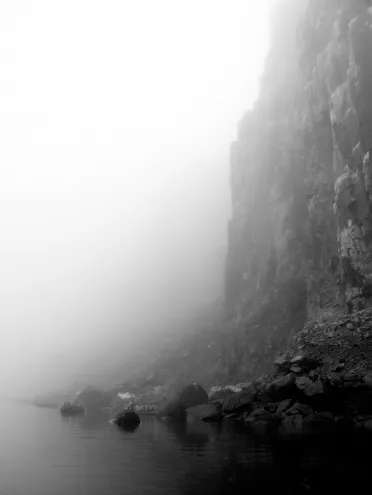
Figure 1.1 Alk Range, Hinlopen, Svalbard, August 2009 – Arrivals
©Tyrone Martinsson, published with permission
An interest in the concept of the Anthropocene has over the last years gained considerable momentum across the sciences and the humanities, but its trajectory in the tourism literature has so far been short and limited. The first attempt to engage with the Anthropocene in the context of tourism was made recently in an article by the editors of this volume (Gren and Huijbens, 2014), developed from a previous one dealing with the conceptualization of the Earth in relation to tourism (Gren and Huijbens, 2012). The aim of this book, the first of its kind, is to explore and map issues and challenges that the Anthropocene may pose for tourism studies, and how it might potentially reframe conceptual and empirical undertakings in tourism research. In this introduction we will first introduce the concept of the Anthropocene, and then provide three broad tentative themes as a brief primer for tourism’s encounter with the Anthropocene. At the end we will provide an outline of the book.
Welcome to the Anthropocene
The Anthropocene is the proposed name of a new geological epoch, following the Holocene, in which humanity (the Anthropos) is being recognized as a geological force, and also one which is intimately entangled with the forces of the Earth (Oldfield et al., 2014). The origins of the Anthropocene as a geological term are meticulously detailed by Castree (2014a), wherein he also states that the Anthropocene has become a ‘powerfully forward facing super concept’ which increasingly now frames a host of issues related to environmental change, sustainable development and various relationships between humans and non-humans in the context of geo-forces at a planetary scale.
The Anthropocene could not have been proposed if not for the recognition of the anthropogenic character of ‘climate change and global environmental change … [in] … prior research and public debate’ (Castree, 2014a, 444). Indeed, the ever growing geo-force of humanity in sculpting its earthly environment at large scale had been recognized already in the late 1800s, but then ‘man’ through divine decree was to become sovereign of the Earth in a new period, the Anthropozoic, named by the Italian geologist Antonio Stoppani (Hansen, 2013). Yet, by that time the indelible mark of the human species at a stratigraphic level was nowhere near being recognized. Since then things have changed. According to contemporary scientific knowledge, the current record levels of CO2 in the Earth’s atmosphere, fuelling global climate change and partly absorbed by the oceans, will remain stratigraphically visible for geological times to come (Zalasiewicz et al., 2008). In geology, the presence and meaning of this and other stratigraphic markers are now being scrutinized and debated. At the time of writing the case is still open whether it will be possible to mark a geological epochal shift as the ‘age of humans’.
Stratigraphic considerations aside, the Anthropocene has already gained considerable momentum also in the social sciences and the humanities, where the implications of humanity’s collective entanglements with the Earth are explored. Johnson et al. (2014) identify three strands of the debate which the concept has initiated. The first deals with how the Anthropocene provides traction for environmental politics, the second how it signifies a bloated idea of humanity (the Anthropos), and the third strand how it might represent the end of humanity. The debate suggests an understanding of the Anthropocene as an uncomfortably unsettling intruder. We ‘appear adrift in this new epoch, alienated not only from a world that refuses to submit to long-held conceptual frameworks, but also alienated from ourselves in relation to this strange and allegedly destructive thing called “humanity”’ (p. 440) and, we might add, the Earth.
For the Earth that comes with the Anthropocene is also an unsettling intruder. In the natural science literature it is most often referred to as the ‘Earth system’, and that is a system which appears to be rather different from the Earth of the previous geological epoch – the Holocene which provided a relatively stable and prosperous ground for humanity. The Earth of the Anthropocene is instead unstable and filled with uncertainty and unpredictability, exemplified by the vocabulary of ‘tipping points’, ‘global warming’, ‘acidification of the oceans’, ‘atmospheric carbon-dioxide’ and ‘species extinction’. Moreover, the Earth system seems to be increasingly entangled with its Anthropos and its earthly endeavours, of which the planetary environmental impacts of tourism is but one example.
The practices of climate science, and natural sciences more generally, reveal the Earth system as an elusive agency which ‘talks back’. It is in a state of becoming and change, and simultaneously subjected to the geo-force of humanity. Thus revealed it is not easily captured as an object of Nature ‘out there’. For example, Bruno Latour (2014, 6) wants us to recognize the Earth through James Lovelock’s (1972, 2006) Gaia hypothesis, arguing that ‘Gaia is another subject altogether – maybe also a different sovereign’ (emphasis in original). The Greek deity personifying Earth is the alterity of our earthly entanglements resulting in the ‘utter confusion between objects and subjects’ (Latour, 2014, 9). Put differently, in the Anthropocene the Earth may become both a subject which underpins and makes for the Anthropos, and, at the same time, an object which is before it and may be set against its earthly undertakings. Integral to understanding the Anthropocene is thus a realization of the objective and subjective geo-agency of the Earth system, or Gaia, attuned to the way it ‘talks back’, and communicating this among disciplines (Oldfield et al., 2014, 5).
At the most general level, the concept of the Anthropocene ushers in a host of issues about the relationship between the Anthropos and the Earth system, particularly at the planetary scale. The Anthropocene is undoubtedly a big concept, and so too are the Anthropos and the Earth system. All need to be broken down, further delineated and reconceptualized in whatever domain they are to be explored and applied. In tourism this process is only about to begin, and it is too early to tell how, and to what extent, an ‘Anthropocene turn’ will take place. What we can do here is to provide three broad tentative themes as a brief primer for tourism’s encounter with the Anthropocene. The first deals with our place in the Anthropocene, the second with the Earth’s, and the last how we may attend to both.
Tourism and the Anthropos
Although born as a geological term the Anthropocene is now also used as a concept which signifies a broad array of planetary environmental affairs. As such it may be understood as a recent addition to the sustainability discourse, particularly when used in relation to global sustainability and planetary limits and boundaries. For the Anthropos the planetary scale actualizes intergenerational responsibilities, present and future inequalities, hazards, and uncertainties. Tourism and tourists are, of course, also involved in this planetary conjuncture, not least when the traveller is considered a geo-force.
According to current scenarios there is a coming Anthropocene future of great environmental changes at planetary scale. These will include increasing global mean-temperatures, altered bio-chemical cycles, and weather extremes that become more and more difficult to predict, all with unforeseeable social and environmental consequences (see Global Weirding, 2015; IPCC, 2014). The year 2014 was the hottest ever recorded, following upon a series of record years, all post-1990s (NOAA, 2015). The changes will translate into biome and habitat relocations and alterations, possibly at scales only paralleled by five preceding events in Earth’s history; in other words, alterations that eventually may even qualify as ‘the sixth mass extinction’ (Kolbert, 2014). Such apocalyptic sentiments have led some into a state of denial, while others have withdrawn in powerlessness, or apathy, wondering how one as a single individual member of the Anthropos can have effect, or if the time for environmental changes to transpire is simply too long for an individual lifespan. If the Anthropocene is different from other episodes of climate change, and if the problem and the solution resides in humanity as a collective geo-force, then what can or should be done?
Simon Dalby (in Johnson et al., 2014, 444) argues that the Anthropocene ‘is the next time, not the end time’, perhaps alluding to apocalypse as ‘revealing’ rather than its modern meaning as ‘the end’. While the project of modernity was about progress and emancipation as an escape from an archaic past, the Anthropocene becomes instead an urgent call to face a future that might already have arrived. Tempering apocalyptic visions and states of denial are part of the Anthropocene, but so is also the search for a reorientation of how planetary politics and environmental discourse can be conceived and implemented. Biermann suggests that this calls for an ‘Earth system governance’, which he defines as:
the sum of the formal and informal rule system and actor networks at all levels of society that are set up to steer societies toward preventing, mitigating, and adapting to environmental change and earth system transformation.
(Biermann, 2014a, 9)
An Earth system governance, under the normative context of sustainable development and planetary boundaries, would entail an ‘effective institutional framework for global cooperation … [mitigating] the human impact on planetary systems’ (Biermann, 2014b, 58–9). This governance would, for example, have to address ‘stranded assets’ of oil firms in terms of fossil reserves that cannot be used, lest climate change keeps apace (Stenek, 2014). In terms of tourism research in the Anthropocene one could argue that Earth system governance may be aligned with:
a research agenda on governing behaviour change in tourism mobilities, provoke and encourage further critical contemplation of the psychological and behavioural complexities of climate change, tourism and sustainability mobility at both the individual and sectorial/institutional levels.
(Cohen et al., 2014, 9)
The Anthropocene, especially for social science, also enhances a need to consider the Earth system and the Anthropos, including its subspecies of tourists, in relation to social, political, cultural and economic systems in which also tourism is firmly placed. One is the system commonly known as capitalism. Most often the assumption is that capitalism’s business as usual will prevail, and also that the nation-states will continue to form the bedrock for this system (Castree, 2014b, 468). But as Klein (2014) argues, significant reordering of the global political, economic and social order will occur in the wake of planetary environmental change.
A critical contemplation of the psychological and behavioural complexities underpinning potential change or reordering also throws into sharp relief the discrepancy between the promotion of tourism development under the umbrella of sustainability in one place, and the emissions tourism generates through matter-energy transformations in other places, together with the trajectories that link them together into an earthly tourism system. Placing tourism policy and debates on, for example, high fuel-consumption at the level of tourist destinations, and a low-carbon society and green responsibilities somewhere else, does not sufficiently align tourism with issues of planetary sustainability in the Anthropocene (cf. Amelung et al., 2007; Amelung and Nicholls, 2014; Hall and Higham, 2005). One Anthropocene reading suggests that changes related to the functioning of the Earth system need to be made manifest through regulatory regimes adapted to issues also at planetary scale. It is reasonable to assume that tourism cannot carry on as business as usual, but ought instead to reflect the reach of Earth system governance which includes ‘effective policy coordination and integration, from local to global levels’ (Biermann, 2014b, 58).
All this suggests that tourism needs also to be conceptualized as a driver of what has taken the Anthropos into the planetary environmental conditions of the Anthropocene. It needs to be understood in the context of the Anthropos, or humanity, on the move, i.e. an entire species with the growing geo-agency to transform the planet by travelling. Under the terms of the Anthropocene it seem unlikely that tourism can carry on in its modern register, that is, as a section of the Anthropos’s geo-force which potentially undermines its own safe operating space by today’s carbon-fuelled travelling. Various aspects of this relationship between tourism and the Anthropos are thus one key research theme that needs to be addressed in tourism’s encounter with the Anthropocene.
Tourism and the Earth system
Another theme of tourism and the Anthropocene is the urgency for action and a call to return to the safe operating space of the Holocene-like conditions as fast as possible, be it by some kind of geoengineering (see Crutzen, 2006; Hamilton, 2013) or through Earth system governance. This raises questions around what kind of science should inform and guide tourism policy and planning in the Anthropocene. Some of the discussion has here been waged under what is sometimes referred to as the ‘climate war’.
The war being waged has been set up between those who downplay, or flatly deny, climate science and especially the role of humans in global climate change, and those who seek to grasp it, and develop ways of mitigation and/or apprehending our means of acting on the basis of climate science (for insight into issues debated under these terms, see Sceptical Science, 2015). Seemingly plausible as two camps of an ongoing debate about scientific controversies, the ways in which this war has been waged demonstrate to us instead something rather different. Scientific controversies and public disputes on issues of climate change – what it is, to what extent it is caused by humans, how it should be studied, financed, modelled, portrayed, explained, distributed, predicted and understood – also indicate a current possible reframing from knowledge of a Nature ‘out there’ to an Earth of the Anthropocene which is also partly ‘in here’. In the Anthropocene, the Earth humans inhabit and traverse is also the Earth which arises out of their own knowledge production and geo-forces. In other words, it is also an Earth partly of their own making.
The causes of global climate change, their effects and outcomes, are nowhere near to being completely understood, and perhaps never can be as the Earth system is an evolving dynamic system in a far-from equilibrium state of becoming in which the Anthropos itself constitutes a participating geo-force. This Earth of the Anthropocene, then, is not like the former Nature that through science could appear as a bundle of objective facts able to put an end to political disputes. It is instead an Earth transformed into an Earth system in becoming, and in the process it has shifted from the static background and instead become a dynamic part of the foreground. As incomplete as knowledge of the Earth system may be, this does not illustrate at all that climate science is being conflated with politics. Nor does it imply that the facts of cli...
Table of contents
- Cover Page
- Half Title page
- Series page
- Title Page
- Copyright Page
- Contents
- Illustrations
- Contributors
- Acknowledgements
- 1 Tourism and the Anthropocene An urgent emerging encounter
- Part I Tourism and tourists in the Anthropocene
- Part II Sustaining tourism in the Anthropocene
- Part III Tourism becomings in the Anthropocene
- Index
Trusted by 375,005 students
Access to over 1.5 million titles for a fair monthly price.
Study more efficiently using our study tools.
Frequently asked questions
Yes, you can cancel anytime from the Subscription tab in your account settings on the Perlego website. Your subscription will stay active until the end of your current billing period. Learn how to cancel your subscription
No, books cannot be downloaded as external files, such as PDFs, for use outside of Perlego. However, you can download books within the Perlego app for offline reading on mobile or tablet. Learn how to download books offline
Perlego offers two plans: Essential and Complete
- Essential is ideal for learners and professionals who enjoy exploring a wide range of subjects. Access the Essential Library with 800,000+ trusted titles and best-sellers across business, personal growth, and the humanities. Includes unlimited reading time and Standard Read Aloud voice.
- Complete: Perfect for advanced learners and researchers needing full, unrestricted access. Unlock 1.5M+ books across hundreds of subjects, including academic and specialized titles. The Complete Plan also includes advanced features like Premium Read Aloud and Research Assistant.
We are an online textbook subscription service, where you can get access to an entire online library for less than the price of a single book per month. With over 1.5 million books across 990+ topics, we’ve got you covered! Learn about our mission
Look out for the read-aloud symbol on your next book to see if you can listen to it. The read-aloud tool reads text aloud for you, highlighting the text as it is being read. You can pause it, speed it up and slow it down. Learn more about Read Aloud
Yes! You can use the Perlego app on both iOS and Android devices to read anytime, anywhere — even offline. Perfect for commutes or when you’re on the go.
Please note we cannot support devices running on iOS 13 and Android 7 or earlier. Learn more about using the app
Please note we cannot support devices running on iOS 13 and Android 7 or earlier. Learn more about using the app
Yes, you can access Tourism and the Anthropocene by Martin Gren, Edward Huijbens, Martin Gren,Edward H. Huijbens,Edward Huijbens, Martin Gren, Edward H. Huijbens in PDF and/or ePUB format, as well as other popular books in Business & Hospitality, Travel & Tourism Industry. We have over 1.5 million books available in our catalogue for you to explore.