Digital video and film technologies are transforming classrooms across the world. Teaching the Screen looks beyond the buttons and knobs to explore ways of teaching video and film effectively in secondary classrooms.
More and more young people have access to low-cost filming and editing technologies - mobile phones, computers, portable digital - which is changing the experience of digital storytelling. Approaches to classroom teaching and learning need to change too. The authors offer a new pedagogy of film storytelling that draws on research from effective classroom film learning practice. They contextualise screen learning within different educational settings, discuss how teachers can highlight aesthetics in film appreciation and filmmaking, and explore the impact of different technologies.
Teaching the Screen is essential reading for educators who want to create engaging learning and teaching activities with screen technologies in secondary English and other subject areas.
'A well balanced and comprehensive account of the issues in filmmaking likely to be encountered by English teachers. It lifts engagement beyond the usual procedural knowledge level, to one of active critique.' - Sue Brindley, University of Cambridge
'This book has bridged the theoretical and practical without compromising either. It offers a thorough systematic account of theoretical issues and practical techniques in teaching film appreciation and filmmaking.' - Associate Professor George Belliveau, University of British Columbia
eBook - ePub
Teaching the Screen
Film education for Generation Next
- 224 pages
- English
- ePUB (mobile friendly)
- Available on iOS & Android
eBook - ePub
About this book
Information
1
Teaching, learning and the screen
You cannot endow even the best machine with initiative; the jolliest steamroller will not plant flowers.
—Walter Lippmann
At the beginning of a book that deals with machines and education, it may serve us to remember the place of the machine—in this case, the digital video camera—in the human endeavour. All a machine will do is reflect the creativity and the initiative with which we fuel it; to expect more is unrealistic. In our case, film technology is neither good nor bad, aesthetically appealing nor disgusting. What matters is the way we use it—or, in relation to this book, the way it is taught and learnt. The melding of teacher skills and intuition with student imagination and creativity is a powerful and grossly under-utilised resource in modern secondary schooling. It is our intention to redress this deficit by providing a series of rationales and approaches for teaching screen narratives in the classroom.
Why teach the screen?
The long answer to this will hopefully unfold for you over the course of this book, but there are two short answers. We teach film because, like the other arts, it is an intrinsically important part of our understanding of ourselves and of human experience. Elliot Eisner (2004) argues that the arts affect consciousness in a number of ways:
They refine our senses so that our ability to experience the world is made more complex and subtle; they promote the use of our imaginative capacities so that we can envision what we cannot actually see, taste, touch, hear, and smell; they provide models through which we can experience the world in new ways and they provide the materials and occasions to grapple with problems that depend on arts-related forms of thinking (2004, p. 19).
Learning about and learning to make film is important because it raises our consciousness and awareness of life. The power of the lens is its ability to communicate detail, to convey the subtlety of nuances such as the power and meaning of a look. While all of these qualities have important ramifications for learning across the curriculum, we should not necessarily rely on pragmatic arguments. While we would argue that film can and does teach many things that are useful outside film learning itself (literacy, social skills, and so on), that should not be the sole reason for teaching the screen. Film should be taught because it is intrinsically worthwhile as an area of schooling, and ultimately a way for us to understand others, our world and ourselves. The second ‘short answer’ is that we increasingly have no choice. Students are now born into a media-rich world where most of the time they are being recorded and often they are recording. Marc Prensky (2001) calls these students digital natives because they have not had to struggle like their digital immigrant elders to get used to the technology that is swirling around them.
Access to the camera and the moving image is not a recent phenomenon, but the ‘massification’ and consequent democratisation of the form certainly are. Students in Western economies have access to inexpensive cameras, phones and film editing programs that means they can produce, shoot and edit their stories without buying professional or specialised equipment. In a recent study (Carroll, Anderson and Cameron, 2006), first-year education and media students at two universities were surveyed about their use of technology. The survey sampled 210 first-year communication students and 280 education students (pre-service teachers) in 2005. The study found that not only did students use technology constantly, but many of them own digital devices. Not surprisingly, mobile telephones have achieved almost complete penetration.
Mobile phones (more often than not equipped with video cameras) are a key device in the lives of students, for whom interactive technologies are entertainment, identity maintenance and communication devices—all at the same time. With the integration of filming capacities on almost all mobile phones, almost everyone has the capacity to shoot film of some quality. Of course, the quality is often the issue.
The place of film learning in the curriculum
You might be forgiven for thinking that, with the overwhelming penetration of these kinds of technologies, there would be a headlong rush by educators to engage with film learning, and schooling systems would be supporting the development of curriculum in the area. Sadly, there is little evidence of this. Rather, its place in the curriculum is patchy and support for teachers interested in developing the teaching of film in their classrooms is patchy as well.
Film learning has suffered from its relatively late development (in the late nineteenth century) as a discrete art form and consequently a discrete curriculum area. While arts curriculum has suffered from marginalisation (O’Toole, 1998; Anderson, 2004), the study of film narrative is often so marginal it does not appear in the curriculum in several schooling systems. In A Guide to Teaching Practice (Cohen and Manion, 2004), self-described as ‘the major standard text for teachers on initial teacher training in the UK’, there is no mention of film learning in any context. In a chapter on information and communication technology, the only passing comment relevant to film argues that ‘multi media’ can ‘overemphasise image over content, presentation over substance and entertainment over learning’ (2004, p. 64). While this might be true of the worst kind of learning in multimedia or indeed film, it overlooks the possibility that film could indeed both engage and teach. The writers of A Guide to Teaching Practice are not alone. There has been an over-emphasis on the tools related to traditional learning and teaching, such as spreadsheets, word processors and the like, that has under-estimated the capacity of other technologies related to creative pedagogies (the camera and editing technologies). Perhaps the relative inaccessibility of the technologies of filmmaking until recent times has also provided obstacles and discouraged teachers and schooling systems from teaching film. Whatever the case, we have now entered an era with exciting possibilities for film. Our students are aware of the technology, and the technology is both affordable and accessible. What is required now is a methodical and clear approach to teaching this art form.
Why teach digital narratives?
Teaching the Screen is focused on the development of film narratives. We are not suggesting here that other forms of screen expression are less valid, but there are many resources that focus on what is referred to as ‘media’ in many schooling systems. This is an important connected area, and much of our discussion here is possible because of the work that has been done in theory and research in that area. We are focusing on narrative because we believe the development of stories is vital to the way our community passes on what it knows and allows us to communicate with each other. It is crucial that young people have the control of a form of communication so they can enter into dialogue in their communities. Narratives are the way we construct meaning about our world and how we as individuals and communities communicate and construct our own identities. Polkinghorne (1988) argues that narrative is ‘the primary form by which human experience is made meaningful’ (1988, p. 1). He further argues that narrative organises human experience into temporally meaningful experiences. Film’s capacity to organise, re arrange and manipulate time makes it an ideal form for the communication of human experience. The film Babel (2006) is a strong example of how narrative can be organised to create dramatic meaning for the audience. Babel tells four stories that, when intertwined, reveal the profound inequities between ‘haves’ and ‘have nots’. The power of this film and many others to manipulate time and space makes it one of the most powerful narrative forms. Allowing young people, who are already ‘connected up’ to the technology, to access film narratives is an important responsibility for educators and schooling systems.
For the individual, narrative has the power to build empathy and a deep understanding of the ‘other’. The world of film and cinema has afforded its audience priceless access to such diverse experiences. Through films such as The Queen (2006), we saw into the imagined world of the British Royal family around the death of Diana, through American Beauty (1999) the world gazed into the lives of Middle America and in Rabbit-Proof Fence (2002) audiences gained an understanding of the plight of the Stolen Generation of Indigenous Australians.
While this could be dismissed as mere entertainment, Roslyn Arnold (2005) argues that these narratives, wherever they are found, have an important role in the development of empathic intelligence:
Through the stories of real and imagined life we become aware of ourselves as feeling and thinking beings who belong in a world potentially richer than, or very different from, our own everyday existence. The culture of narratives experienced through reading, viewing and even participating in dramas can forever stimulate our minds and hearts (2005, p. 72).
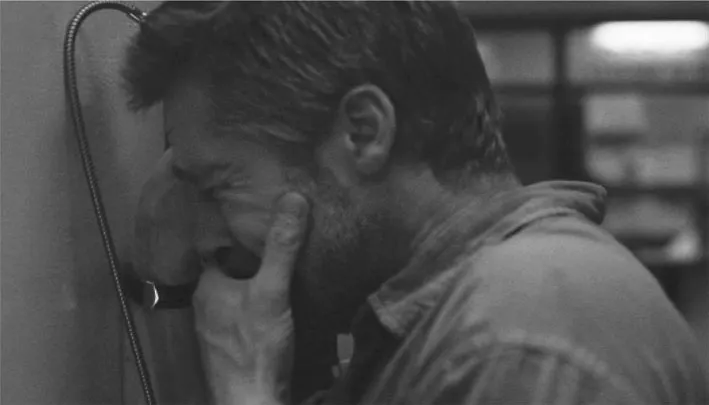
Figure 1.1 This image from Babel occurs at a moment where the other narrative threads are being interlaced with this narrative.
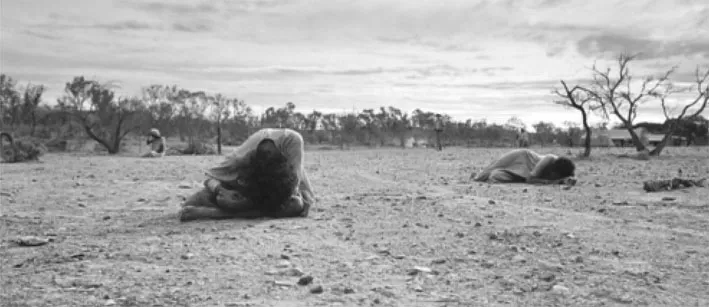
Figure 1.2 Rabbit-Proof Fence is an example of a film world that is often imagined by the audience, but rarely experienced.
Fundamentally, an understanding of narrative and the way it is communicated is essential to the development of young people’s control over their stories. This book attempts to engage with intuitive understandings already present, and seeks to shape that understanding into a more aesthetically rigorous understanding of film. This in turn will help young people to control and cr eate with film.
Teaching versus learning the screen: A useless dichotomy
As you will have noticed, we are placing an emphasis on teaching in our discussions. We believe that a properly resourced expert teacher makes all the difference in student learning. The research evidence has confirmed this conviction. A study that reviewed 500 000 studies on teacher effectiveness demonstrated the centrality of expert teachers in learning: ‘Students who are taught by expert teachers exhibit an understanding of the concepts targeted in instruction that is more integrated, more coherent, and at a higher level of abstraction than the understanding achieved by other students (Hattie, 2003, p. 15).
We are not discounting the importance of the learner—the student—in this relationship; quite the contrary. The discussion you will find here acknowledges that teachers are crucial in the learning of their students. As Ramsden (2003, p. 6) argues: ‘The aim of teaching is simple: it is to make student learning possible.’ We start from the premise that teaching involves a range of approaches that will sometimes include direct instruction, sometimes facilitation and sometimes informal group collaboration, to name just a few. Skilled teachers understand that learning is not made possible wi...
Table of contents
- Cover
- Half Title
- Title Page
- Dedication Page
- Copyright Page
- Contents
- Preface
- Acknowledgements
- Introduction
- 1 Teaching, learning and the screen
- 2 Creativity, multiliteracies and screen learning
- 3 Screen theory, practice and learning
- 4 Narrative, genre and film learning
- 5 Scaffolding learning in film aesthetics
- 6 Collaborative learning processes in filmmaking
- 7 Learning from imagining and being in film stories
- 8 Developing a film curriculum
- 9 Assessing the screen
- 10 Researching screen learning in the classroom
- Appendix: Sample—Scaffolded film learning modules
- Notes
- Filmography
- Bibliography
- Index
Trusted by 375,005 students
Access to over 1.5 million titles for a fair monthly price.
Study more efficiently using our study tools.
Frequently asked questions
Yes, you can cancel anytime from the Subscription tab in your account settings on the Perlego website. Your subscription will stay active until the end of your current billing period. Learn how to cancel your subscription
No, books cannot be downloaded as external files, such as PDFs, for use outside of Perlego. However, you can download books within the Perlego app for offline reading on mobile or tablet. Learn how to download books offline
Perlego offers two plans: Essential and Complete
- Essential is ideal for learners and professionals who enjoy exploring a wide range of subjects. Access the Essential Library with 800,000+ trusted titles and best-sellers across business, personal growth, and the humanities. Includes unlimited reading time and Standard Read Aloud voice.
- Complete: Perfect for advanced learners and researchers needing full, unrestricted access. Unlock 1.5M+ books across hundreds of subjects, including academic and specialized titles. The Complete Plan also includes advanced features like Premium Read Aloud and Research Assistant.
We are an online textbook subscription service, where you can get access to an entire online library for less than the price of a single book per month. With over 1.5 million books across 990+ topics, we’ve got you covered! Learn about our mission
Look out for the read-aloud symbol on your next book to see if you can listen to it. The read-aloud tool reads text aloud for you, highlighting the text as it is being read. You can pause it, speed it up and slow it down. Learn more about Read Aloud
Yes! You can use the Perlego app on both iOS and Android devices to read anytime, anywhere — even offline. Perfect for commutes or when you’re on the go.
Please note we cannot support devices running on iOS 13 and Android 7 or earlier. Learn more about using the app
Please note we cannot support devices running on iOS 13 and Android 7 or earlier. Learn more about using the app
Yes, you can access Teaching the Screen by Michael Anderson,Miranda Jefferson in PDF and/or ePUB format, as well as other popular books in Education & Education General. We have over 1.5 million books available in our catalogue for you to explore.