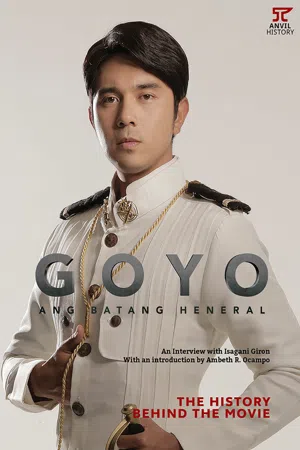
As a Del Pilar scholar, what first got you interested in the life and death of the boy-general?
I used to be the president of Samahang Pangkasaysayan ng Bulacan (SAMPAKA), and it was during my term that the country celebrated the centennial anniversary of the Battle of Tirad Pass in 1999. First thing that we did was to locate Tirad Pass. We were told that there’s a certain town in Ilocos Sur that is named after Gregorio Del Pilar, so together with Dr. Jaime Veneracion and with the assistance of then Vice Governor of Bulacan Rely Plamenco, we coordinated with Governor Chavit Singson of Ilocos Sur who assisted us until we traced where Tirad Pass was located in the municipality of Gregorio Del Pilar. The town was formerly named Concepcion, but in June 10, 1955, through the legislation of Congressman Ricardo Gacula, it was named Gregorio Del Pilar by virtue of Republic Act No. 1246.
On the first week of November 1999, we headed to Tirad Pass. We passed through the towns of Candon and Galimuyod, and we stopped at Salcedo because the roads were damaged by a typhoon. The natives from the Bag-O tribe told us that Gregorio Del Pilar was only fourteen kilometers from the municipality of Salcedo. Could we walk all the way, we wondered, and the natives were amused—they could, in three hours, but they didn’t seem to have faith in us city folk. We didn’t give up right then, attempting to begin our trek, but it didn’t take long before we had to abort the mission. The ascending trail and our unprepared feet did not make for a friendly pair. As a recourse, I coordinated with the mayor of the town of Salcedo, Mayor Leonofre Gironella, and he said that the town next to theirs was Gregorio Del Pilar. Through his assistance, and through a VHF radio, we were able to talk to Mayor Erminda Apayyo of Gregorio Del Pilar about our proposal in line with the celebration of the centennial anniversary of the Battle of Tirad Pass. She consented, and invited us to come on the fourteenth of November in time for the birth anniversary of the general.
A “pilgrimage”: that was what I called our journey from Malolos, Bulacan, to Gregorio Del Pilar, Ilocos Sur. More or less three hundred Bulakeños retraced the footsteps of Gen. Del Pilar and other Bulakeños who sacrificed their lives. With us were the descendants of the Katipuneros who died and survived in the battle. The Chairman and Executive Director of the National Historical Institute (NHI, now NHCP) Pablo Trillana III and his personnel were also with us for the commemoration.
That long trek, and all the planning that went into it, had me really invested in Del Pilar. And since then, the Biyaheng Tirad Pass has been conducted every year in commemoration of the Battle of Tirad Pass and the heroism of Gregorio Del Pilar.
On a sad note, we have seen the marker installed by the Philippine Historical Committee at Gen. Del Pilar’s shrine. It states that he died at the age of twenty-two, when it should be twenty-four, since he was born in 1875 and died in 1899. This and other information on the marker have not been corrected up to now. It reads:
BATTLE OF TIRAD PASS
On a rocky barricade
thrown across this lonely
trail, 22-year-old General
Gregorio H. del Pilar and about
sixty other defenders stood
fast covering the retreat of
President Emilio Aguinaldo to
the wilds of Lepanto. Over 300
pursuing American troops came
upon them, 2 December 1899,
killing the youngest Filipino
general and more than fifty
other guards. On his grave
here where he fell, this inscrip-
tion reads: “General Gregorio
Del Pilar killed at the Battle
of Tila Pass, December 2nd
1899 . . . An Officer and a
Gentleman.”
Twenty-four is an age too soon for a young man to die, and to die as a general, that must have meant he was quite involved in the revolution even in his youth. How would you describe him as a young boy?
Very...