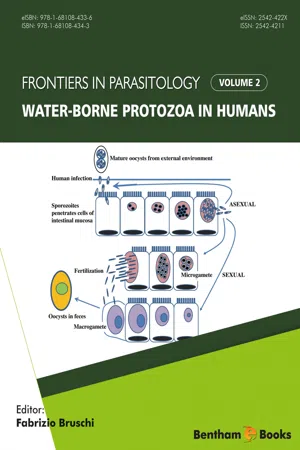
Several parasites are able to spread diseases through contaminated water. While the spread of diseases through contaminated water appears to have a greater correlation with a lack of access to clean water in low income populations in developing countries, there have been outbreaks of water-borne diseases in developed countries. Therefore, addressing water-borne diseases is a major public health concern worldwide. Water-borne Protozoa in Humans is a guide to protozoan infections linked to contaminated water.
Each chapter of this monograph covers the history, morphology, life cycle, global epidemiology, risk factors, immunology, symptoms, diagnosis, treatment and perspectives of control for each relevant protozoan parasite that can be found in contaminated water. These include Giardia duodenalis, Cryptosporidium, Free-living amoebae, Entamoeba histolytica/dispar and other pathogenic intestinal amoebae, Cystoisospora belli, cyclospora, microsporidia, and Blastocystis hominis. This monograph is suitable for a broad readership which includes medical students, parasitologists, clinical microbiologists, epidemiologists, environmental health and water safety technicians, and public health personnel.
- English
- ePUB (mobile friendly)
- Available on iOS & Android
eBook - ePub
Water-borne Protozoa in Humans
About this book
Information
Topic
MedicineGiardia and Giardiasis
INTRODUCTION
Giardia intestinalis, also known as Giardia duodenalis or Giardia lamblia, is a
unicellular protozoan parasite that infects the upper intestinal tract of humans and animals [1]. The disease, giardiasis, manifests in humans as a bout of acute diarrhea that can develop to a chronic stage but the majority of infections remain asymptomatic [2, 3]. Giardiasis has a global distribution with 280 million cases reported annually, with its impact being more pronounced in the developing world, where it is usually associated with poor socioeconomic conditions [4]. Children, elderly people and immunocompromised individuals are the most affected by the disease [5 - 7]. In children specifically, effects on growth, nutrition and cognitive function have been reported [8 - 10]. Currently, it has been suggested that giardiasis could predispose for chronic gastrointestinal disorders such as irritable bowel syndrome (IBS) [11, 12]. In 2004, giardiasis was recognized by the World Health Organization (WHO) as a neglected disease associated with poverty, impairing development and socio-economic improvements [13]. Because giardiasis adds to the global microbial disease burden, an initiative was instigated to implement a comprehensive approach for control and prevention [13]. One area of focus is the potential spread of giardiasis via food and food handling [14, 15], daycare settings [16, 17], travel to endemic areas and close human contact [18 - 20]. Potential transmission of giardiasis from animals to humans (i.e. zoonosis) has been also the subject of extensive research over the years. Wildlife accessibility to water used for drinking and recreational purposes, as well as living in proximity with animals, have been identified as risk factors associated with zoonosis [21 - 23]. Another body of research addressed the effect of giardiasis on livestock. Not only transmission in livestock but also economic losses associated with poor growth, weight loss, reduced productivity and even death of animals [24 - 28]. Thus, giardiasis is regarded as a disease that has a significant impact on both humans and animals.
Currently, there are eight different genotypes, also called assemblages, of G. intestinalis. Giardia assemblages are designated from A to H, the majority of which are host-specific [7]. Parasites that belong to assemblages A and B infect humans but are also common in other mammals [29]. The Giardia life cycle alternates between an actively dividing trophozoite and an infectious cyst. Cysts are transmitted to humans via the fecal-oral route and upon ingestion they break open (i.e. excyst) in the duodenum, releasing trophozoites [29]. Trophozoites attach to the intestinal epithelial cells (IECs), to avoid elimination by peristalsis, and start multiplication. The presence of Giardia in the host intestines and in close contact with IECs induce functional and structural changes in the intestinal epithelia, which overall results in diarrhea [30]. Nevertheless, given the variability in giardiasis symptoms, infection versus symptoms or lack of symptoms is a controversial issue where the interplay between the infecting parasite of a certain assemblage, isolate virulence and host factors could determine the outcome of infection.
Giardia does not cause overt inflammation in the host small intestines during most infections [31 - 33]. However, inflammatory responses have been seen during acute experimental and human infections [34, 35]. In line with this, IECs produce proinflammatory cytokines in response to the parasite or parasite-excreted products in an isolate-specific mode of induction [36]. At the same time, some parasite factors such as cysteine proteases (CPs) have been shown to attenuate the proinflammatory response by cytokine degradation [37]. Indeed, an accumulating body of evidence shows that cytokine production is rather inhibited during giardiasis [38 - 41]. Effector mechanisms play an early part in defense against Giardia and these include nitric oxide (NO) production, lactoferrins, α-defensins, phagocytes, mast cells and dendritic cells [31, 42]. The parasite, however, is able to avert some of these responses, specifically, NO production [43], dendritic cells recruitment [44] and granulocyte infiltration [45]. Patients are able to clear the infection within few weeks and re-infections manifest with reduced symptoms, indicating an acquired immunity against giardiasis [46 - 48]. Antibodies (i.e. B cell response) have been suggested to be important players in parasite clearance while the contribution of T cell responses is still unclear [31, 42].
Identification of cysts by microscopy is the gold standard in diagnosing human giardiasis. This is because trophozoites are only seen in stool during periods of acute diarrhea (i.e. watery or loose stool). Bright field microscopy coupled with morphometry, using phase contrast or differential interference contrast, is performed on wet mounts or following sample concentration [49]. Usually, multiple stool samples are submitted for analysis, especially when neither trophozoites nor cysts could be detected microscopically at initial examination. Fixation and staining can maintain trophozoite morphology and enhance visualizing trophozoite structure [49]. Antigen detection in stool (coproantigen) can be used for large-scale analyses and polymerase chain reaction (PCR) for increased sensitivity and specificity as well as genotyping [49]. For environmental samples, an initial filtration step is included to concentrate cysts in water samples. Immunomagnetic separation (IMS) followed by fluorescent microscopy is the gold standard for detecting cysts and is used for dual detection of Giardia cysts and Cryptosporidium oocysts in different water matrices [50]. The technique uses antibodies immobilized to magnetic beads to capture cysts in concentrated samples and fluorescence isothiocyanate (FITC)-linked antibodies to view cysts by fluorescent microscope [50]. The same method is adopted for food, specifically fruit and vegetables, using different wash buffers and sometimes stom...
Table of contents
- Welcome
- Table OF Contents
- Title
- BENTHAM SCIENCE PUBLISHERS LTD.
- FOREWORD
- PREFACE
- List of Contributors
- Blastocystis spp.
- Cryptosporidium and Cryptosporidiosis
- Cyclospora cayetanensis
- Cystoisospora belli
- Entamoeba histolytica and other Pathogenic Intestinal Amoebea
- Free-living Amoebae
- Giardia and Giardiasis
- Microsporidia
Trusted by 375,005 students
Access to over 1.5 million titles for a fair monthly price.
Study more efficiently using our study tools.
Frequently asked questions
Yes, you can cancel anytime from the Subscription tab in your account settings on the Perlego website. Your subscription will stay active until the end of your current billing period. Learn how to cancel your subscription
No, books cannot be downloaded as external files, such as PDFs, for use outside of Perlego. However, you can download books within the Perlego app for offline reading on mobile or tablet. Learn how to download books offline
Perlego offers two plans: Essential and Complete
- Essential is ideal for learners and professionals who enjoy exploring a wide range of subjects. Access the Essential Library with 800,000+ trusted titles and best-sellers across business, personal growth, and the humanities. Includes unlimited reading time and Standard Read Aloud voice.
- Complete: Perfect for advanced learners and researchers needing full, unrestricted access. Unlock 1.5M+ books across hundreds of subjects, including academic and specialized titles. The Complete Plan also includes advanced features like Premium Read Aloud and Research Assistant.
We are an online textbook subscription service, where you can get access to an entire online library for less than the price of a single book per month. With over 1.5 million books across 990+ topics, we’ve got you covered! Learn about our mission
Look out for the read-aloud symbol on your next book to see if you can listen to it. The read-aloud tool reads text aloud for you, highlighting the text as it is being read. You can pause it, speed it up and slow it down. Learn more about Read Aloud
Yes! You can use the Perlego app on both iOS and Android devices to read anytime, anywhere — even offline. Perfect for commutes or when you’re on the go.
Please note we cannot support devices running on iOS 13 and Android 7 or earlier. Learn more about using the app
Please note we cannot support devices running on iOS 13 and Android 7 or earlier. Learn more about using the app
Yes, you can access Water-borne Protozoa in Humans by Fabrizio Bruschi in PDF and/or ePUB format, as well as other popular books in Medicine & Medical Microbiology & Parasitology. We have over 1.5 million books available in our catalogue for you to explore.