Handbook of Regression Analysis With Applications in R
eBook - ePub

Handbook of Regression Analysis With Applications in R

  1. English
  2. ePUB (mobile friendly)
  3. Available on iOS & Android
eBook - ePub

Handbook of Regression Analysis With Applications in R

About this book

Handbook and reference guide for students and practitioners of statistical regression-based analyses in R

Handbook of Regression Analysis with Applications in R, Second Edition is a comprehensive and up-to-date guide to conducting complex regressions in the R statistical programming language. The authors' thorough treatment of "classical" regression analysis in the first edition is complemented here by their discussion of more advanced topics including time-to-event survival data and longitudinal and clustered data.

The book further pays particular attention to methods that have become prominent in the last few decades as increasingly large data sets have made new techniques and applications possible. These include:

  • Regularization methods
  • Smoothing methods
  • Tree-based methods

In the new edition of the Handbook, the data analyst's toolkit is explored and expanded. Examples are drawn from a wide variety of real-life applications and data sets. All the utilized R code and data are available via an author-maintained website.

Of interest to undergraduate and graduate students taking courses in statistics and regression, the Handbook of Regression Analysis will also be invaluable to practicing data scientists and statisticians.

Frequently asked questions

Yes, you can cancel anytime from the Subscription tab in your account settings on the Perlego website. Your subscription will stay active until the end of your current billing period. Learn how to cancel your subscription.
No, books cannot be downloaded as external files, such as PDFs, for use outside of Perlego. However, you can download books within the Perlego app for offline reading on mobile or tablet. Learn more here.
Perlego offers two plans: Essential and Complete
  • Essential is ideal for learners and professionals who enjoy exploring a wide range of subjects. Access the Essential Library with 800,000+ trusted titles and best-sellers across business, personal growth, and the humanities. Includes unlimited reading time and Standard Read Aloud voice.
  • Complete: Perfect for advanced learners and researchers needing full, unrestricted access. Unlock 1.4M+ books across hundreds of subjects, including academic and specialized titles. The Complete Plan also includes advanced features like Premium Read Aloud and Research Assistant.
Both plans are available with monthly, semester, or annual billing cycles.
We are an online textbook subscription service, where you can get access to an entire online library for less than the price of a single book per month. With over 1 million books across 1000+ topics, we’ve got you covered! Learn more here.
Look out for the read-aloud symbol on your next book to see if you can listen to it. The read-aloud tool reads text aloud for you, highlighting the text as it is being read. You can pause it, speed it up and slow it down. Learn more here.
Yes! You can use the Perlego app on both iOS or Android devices to read anytime, anywhere — even offline. Perfect for commutes or when you’re on the go.
Please note we cannot support devices running on iOS 13 and Android 7 or earlier. Learn more about using the app.
Yes, you can access Handbook of Regression Analysis With Applications in R by Samprit Chatterjee,Jeffrey S. Simonoff in PDF and/or ePUB format, as well as other popular books in Mathematics & Probability & Statistics. We have over one million books available in our catalogue for you to explore.

Information

Publisher
Wiley
Year
2020
Print ISBN
9781119392378
eBook ISBN
9781119392484

PART ONE
The Multiple Linear Regression Model

CHAPTER ONE
Multiple Linear Regression

  1. 1.1 Introduction
  2. 1.2 Concepts and Background Material
    1. 1.2.1 The Linear Regression Model
    2. 1.2.2 Estimation Using Least Squares
    3. 1.2.3 Assumptions
  3. 1.3 Methodology
    1. 1.3.1 Interpreting Regression Coefficients
    2. 1.3.2 Measuring the Strength of the Regression Relationship
    3. 1.3.3 Hypothesis Tests and Confidence Intervals for β
    4. 1.3.4 Fitted Values and Predictions
    5. 1.3.5 Checking Assumptions Using Residual Plots
  4. 1.4 Example—Estimating Home Prices
  5. 1.5 Summary

1.1 Introduction

This is a book about regression modeling, but when we refer to regression models, what do we mean? The regression framework can be characterized in the following way:
  1. We have one particular variable that we are interested in understanding or modeling, such as sales of a particular product, sale price of a home, or voting preference of a particular voter. This variable is called the target, response, or dependent variable, and is usually represented by
    images
    .
  2. We have a set of
    images
    other variables that we think might be useful in predicting or modeling the target variable (the price of the product, the competitor's price, and so on; or the lot size, number of bedrooms, number of bathrooms of the home, and so on; or the gender, age, income, party membership of the voter, and so on). These are called the predicting, or independent variables, and are usually represented by
    images
    ,
    images
    , etc.
Typically, a regression analysis is used for one (or more) of three purposes:
  1. modeling the relationship between
    images
    and
    images
    ;
  2. prediction of the target variable (forecasting);
  3. and testing of hypotheses.
In this chapter, we introduce the basic multiple linear regression model, and discuss how this model can be used for these three purposes. Specifically, we discuss the interpretations of the estimates of different regression parameters, the assumptions underlying the model, measures of the strength of the relationship between the target and predictor variables, the construction of tests of hypotheses and intervals related to regression parameters, and the checking of assumptions using diagnostic plots.

1.2 Concepts and Background Material

1.2.1 THE LINEAR REGRESSION MODEL

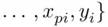
The data consist of
images
observations, which are sets of observed values
images
images
that represent a random sample from a larger population. It is assumed that these observations satisfy a linear relationship,
(1.1)
equation
where the
images
coefficients are unknown parameters, and the
images
are random error terms. By a linear model, it is meant that the model is linear in the para...

Table of contents

  1. Cover
  2. Table of Contents
  3. Preface to the Second Edition
  4. Preface to the First Edition
  5. PART ONE: The Multiple Linear Regression Model
  6. PART TWO: Addressing Violations of Assumptions
  7. PART THREE: Categorical Predictors
  8. PART FOUR: Non‐Gaussian Regression Models
  9. PART FIVE: Other Regression Models
  10. PART SIX: Nonparametric and Semiparametric Models
  11. Bibliography
  12. Index
  13. End User License Agreement