A comprehensive anddetailed overview of the active regeneration, rehabilitation and revitalisation of architectural heritage.
The combined processes of globalisation, urbanisation, environmental change, population growth and rapid technological development have resulted in an increasingly complex, dynamic and interrelated world, in which concerns about the meaning of cultural heritage and identitycontinue to grow. As the need for culturally and environmentally sustainable design grows, the challenge for professionals involved in the management of inherited built environments is to respond to this ever-changing context in a critical, dynamic and creative way.
Our knowledge and understanding of the principles, approachesandmethodsto sustainably adapt existing buildings and placesisrapidly expanding. Architectural Regeneration contributes to thisknowledge-basethrough a holistic approachthatlinkspolicywithpracticeandestablishesa theoretical framework within which to understand architectural regeneration.Itincludes extensive case studies of theregeneration, rehabilitation and revitalisation of architectural heritagefrom around the world. Different scales andcontextsof architectural regeneration are discussed, includingurban, suburban, rural and temporary.
At a time when regeneration policy has shifted to the recognition that 'heritage matters' and that the historic environment and creative industries are a vital driver of regeneration, an increasing workload of architectural practices concerns the refurbishment, adaptive re-use or extension of existing buildings. As a result, this book is ideal for undergraduate and graduate students ofarchitecture, historic conservation, urban and environmental design, sustainability, and urban regeneration, as well as for practitioners and decision makers working in those fields.
1 Architectural Regeneration and its Theoretical Context
Aylin OrbaĆlıand Marcel Vellinga
Oxford Brookes University, UK
Introduction
Cycles of decline and rejuvenation, and the adaptation and reuse of buildings, have been common constants of the built environment throughout the history of human settlement. The more formalised practices of building conservation and regeneration, on the other hand, are an outcome of movements that emerged in the nineteenth century, which were informed by theoretical standpoints that were products of the postâEnlightenment positivist, rational, and romantic outlooks (Gelernter 1995). Some of these theories and standpoints continue to inform interventions in the built environment, while others have been eclipsed by alternative worldviews and environmental realities. Architectural regeneration as a notion and as a distinct discipline emerges from a number of those concurrent, symbiotic, complementary, and sometimes conflicting theories. The purpose of this chapter is to position architectural regeneration into its theoretical context and to demonstrate how it continues to be informed by a range of contemporary philosophies.
Worldwide, laws, policy, and guidance concerning the protection and conservation of historic buildings have come to be based on a set of principles that have emerged from an international conservation movement that can be traced back to the Eurocentric philosophies of the nineteenth century (Jokilehto 1999). The design of the urban realm, buildings, and interiors meanwhile are regularly discussed and critiqued in the context of prevalent design theories which in the latter half of the twentieth century were deliberately separated from theories pertaining to the conservation of historic buildings. The processes of adaptive reuse, which architectural regeneration encompasses, can be seen simultaneously as part of the collective theoretical frameworks of conservation and design, and also outside of them. Although âarchitects have led the conservation world in matters of principles and philosophyâ (Muñoz Viñas 2011, p. 71), they have also been instrumental in decoupling conservation from design. Architectural regeneration has emerged in this middle ground between conservation and architectural design.
At the same time, the broader realm of regeneration is often positioned in the domain of policy, spatial planning, and economic development. Growing environmental concerns and climate change awareness are driving innovation in multiple arenas, including urban planning and building design. The current environmental crisis has become one of the key drivers for making better use of existing resources as well as for adapting buildings to respond to new realities (Leatherbarrow and Wesley 2018).
Starting from the latter part of the twentieth century there have been an increasing number of publications on the subject of adaptive reuse. Nonetheless, a shared and accepted vocabulary and definition of what adaptive reuse is, and what it involves, remains ambiguous, with various terminologies and definitions prevailing (Plevoets and Van Cleempoel 2013, p. 13). The same ambiguity applies to regeneration more generally. One of the earliest books on the subject of reuse is Sherban Cantacuzino's New Uses for Old Buildings, published in 1975. The content, as that of many others that have been published since, is prescriptive and focuses on potential new uses linked to building typologies. Many of the volumes that have followed have remained technical (Eley and Worthington 1984; Highfield 1987) and heavily depend on case studies that are used to exemplify the processes, practicalities, and design potential of reuse (Austin et al. 1988; Latham 2000; Morrison and Waterson 2019). A new perspective was introduced by Stewart Brand in his book How Buildings Learn, published in 1997, where the value of builtâin flexibility is upheld as a characteristic conducive to easy adaptability and a long useâspan for buildings. There remains, however, a theoretical vacuum framing the subject, which this chapter intends to redress.
The chapter consists of two sections. In the first section we examine the various theories within which architectural regeneration is contextualised, and the second proposes a number of key principles that inform the processes of architectural regeneration.
Theoretical Context
Processes of Transformation
Buildings are the subject of adaptation from the minute they are completed, the processes of transformation being both conscious and unconscious in intent and execution. Some elements are altered on a regular basis, some cyclically and others through major change and intervention projects. These are linked to cycles of use and redundancy, underâuse or changing needs. In fact, buildings are never completed and are continuously altered and changed (Maudlin and Vellinga 2014). Adaptive reuse or regeneration projects are also not conclusive and merely form part of an ongoing narrative of change. The practices of building reuse and adaptation and recycling building materials are as old as buildings themselves. In eras when access to raw materials has been difficult, practices of reuse and recycling have been even more important and economically essential (Figure 1.1).
On an urban scale change may be slower, but this evolutionary process results in centuriesâold structures continuing to shape the form and character of places. In the case of Rome in Italy a former stadium is now the urban square of Piazza Navonna, whilst the Roman period Diocletian's Palace has over time been transformed into the urban fabric of the city of Split in Croatia (Scott 2008). In the Syrian town of Aleppo the classically laid out Roman agora gradually morphed into a tightly knit complex of souqs, maintaining the commercial function whilst the architectural and social character evolved (Bianca 2000).
The processes of transformation are natural and evolutionary on the one hand, or planned and directed on the other. The concept of âadaptive reuseâ indicates a conscious and planned alteration of a building to accommodate the changing needs of its function or for use in a new function. The process of regeneration, meanwhile, is a planned activity of renewal with intended economic and social benefits. Buildings are inherently linked to their surroundings. As buildings are transformed so are the places around them and changes to an area (new infrastructure, natural disasters, closing down of an industry) ultimately impact on individual buildings, their usefulness or desirability, the capacity to maintain them or the economic value of the land they sit on.
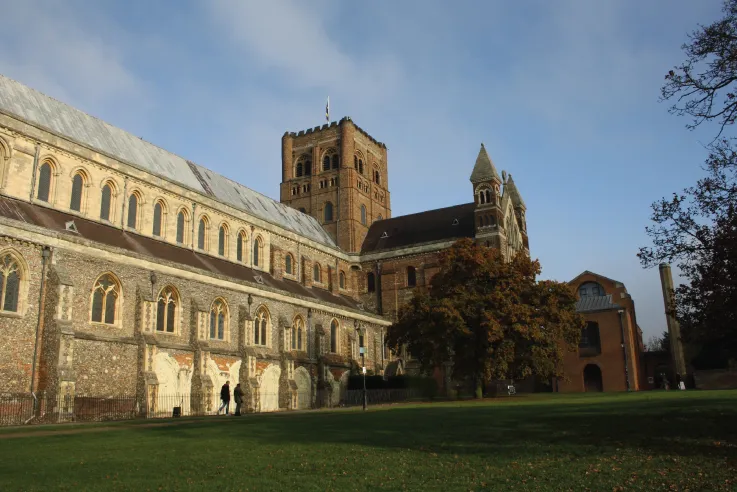
Figure 1.1 Cathedral and Abbey Church of St Alban in England, whilst maintaining its functionality as a place of worship for most of the time since it was built up until the present day, has been regularly restored, altered, adapted, and extended including in the twentyâfirst century. Each change is visibly evident in the fabric of the cathedral, while also becoming part of the whole. The structure also exemplifies numerous examples of recycling, most notably the Roman era bricks that form the tower.
Source: Photograph by Aylin OrbaĆlı (2015).
Architecture as a Dynamic Process
It is commonly understood that architecture is a process. Although architectural discourse is generally dominated by static representations of buildings in a state of completeness (often at the point of completion) architecture is rarely, if ever, finished (Maudlin and Vellinga 2014). The process of architecture is normally a long one, ranging from initial ideas and conceptions of needs, to the design of a building, a process of construction, and an often prolonged period of use, the latter sometimes spanning many generations. Architectural representations tend to emphasise short phases of this process (the design stage, the construction phase, or the period of initial use); commonly those periods where the architect is most heavily involved.
In the case of conservation, the focus shifts to later stages in the process. This emphasis on distinct stages in the lifecycle of a building sometimes gives the impression that buildings are static objects that do not, or even should not, change; indeed, in some cases, the transformation of architecture over time is distinctly identified as a process of decline that needs to be stopped, as it results i...
Table of contents
Cover
Table of Contents
Author Biographies
Architectural Regeneration: An Introduction
Part I: Theory
Case Study 1: Architectural Regeneration in Oxford, UK
Index
End User License Agreement
Frequently asked questions
Yes, you can cancel anytime from the Subscription tab in your account settings on the Perlego website. Your subscription will stay active until the end of your current billing period. Learn how to cancel your subscription
No, books cannot be downloaded as external files, such as PDFs, for use outside of Perlego. However, you can download books within the Perlego app for offline reading on mobile or tablet. Learn how to download books offline
Perlego offers two plans: Essential and Complete
Essential is ideal for learners and professionals who enjoy exploring a wide range of subjects. Access the Essential Library with 800,000+ trusted titles and best-sellers across business, personal growth, and the humanities. Includes unlimited reading time and Standard Read Aloud voice.
Complete: Perfect for advanced learners and researchers needing full, unrestricted access. Unlock 1.4M+ books across hundreds of subjects, including academic and specialized titles. The Complete Plan also includes advanced features like Premium Read Aloud and Research Assistant.
Both plans are available with monthly, semester, or annual billing cycles.
We are an online textbook subscription service, where you can get access to an entire online library for less than the price of a single book per month. With over 1 million books across 990+ topics, weâve got you covered! Learn about our mission
Look out for the read-aloud symbol on your next book to see if you can listen to it. The read-aloud tool reads text aloud for you, highlighting the text as it is being read. You can pause it, speed it up and slow it down. Learn more about Read Aloud
Yes! You can use the Perlego app on both iOS and Android devices to read anytime, anywhere â even offline. Perfect for commutes or when youâre on the go. Please note we cannot support devices running on iOS 13 and Android 7 or earlier. Learn more about using the app
Yes, you can access Architectural Regeneration by Aylin Orbasli, Marcel Vellinga, Aylin Orbasli,Marcel Vellinga in PDF and/or ePUB format, as well as other popular books in Architecture & Architecture General. We have over one million books available in our catalogue for you to explore.