- 275 pages
- English
- ePUB (mobile friendly)
- Available on iOS & Android
eBook - ePub
About this book
First Published in 1998.People cannot live without changing nature. They do so by breathing, feeding and defecating, by dressing and heating and by creating barriers against wind and water, cold and heat. These forms of human-induced change of nature have been present since the dawn of mankind. People are constantly confronted by a malignant nature against which they have to defend themselves and whose resources they have to use in order to survive. However, the relationship between man and nature has dramatically changed during the past centuries. More than the word 'nature', the term 'environment' has become strongly associated with damage and decay caused by human beings. Hence, in practice 'environment' is mostly associated with problems. In this book the term 'environment' does not describe different 'environments' and the way they are changed by human activities in general, but focuses on those human-induced of it. What are the causes of these changes, when and where are these changes considered as environmental problems and how do people react to these changes are the main questions of this book. One of the possible reactions to environmental problems is the efforts to solve them. The ways in which individual citizens, private enterprises, public authorities, environmental organizations and others try to solve environmental problems is a main topic of this book.
Information
Chapter 1
Environment and environmental problems
1.1 Interaction between ‘environment’ and ‘society’
According to the dictionary, the concept of environment refers to all sorts of surroundings and includes material, social and spiritual conditions of living beings. However, in this book the term 'environment' only refers to non-human, living and non-living, physical surroundings. Characteristics of ecosystems, biodiversity, quality of air, water and soil, and stocks of non-renewable resources are included in our concept of the environment. Types of family relationships, conflicting or harmonious relationships in organisations and political systems are excluded from it.
In this book, therefore, the 'environment' is defined as a physical entity. As such it is an object of study by natural scientists. However, the (physical) environment continually changes under the influence of human behaviour. These changes are evaluated and reacted upon by human beings. The term 'society' in the title of this book refers to both human interventions which cause changes in the physical- environment and human perceptions and interpretations of these changes (See figure 1.1.).
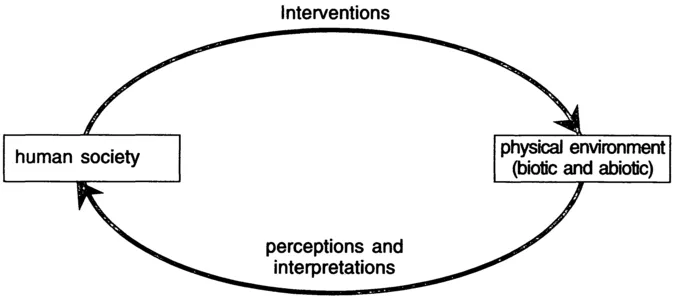
Figure 1.1 The interactions between man and environment (Udo de Haes, 1991, p.22).
1.2 Environmental problems
Unlike the concept of 'nature', which is strongly associated with positive qualities like beauty, purity and rarity, the concept of 'environment' is often used in the context of 'environmental problems', such as air pollution or destruction of tropical forests. Environmental problems are consequences of human intervention in the environment, as perceived and interpreted by human beings (see figure 1.1.). They may be defined as 'changes of the environment which are both caused by and considered as problematic by human beings'. The human causation of environmental problems may be clarified by the difference between natural and environmental catastrophes. We speak about 'natural catastrophes' when we assume that a dramatic change of the environment was caused by a natural process without human behaviour being involved. However, when speaking about environmental catastrophes we have dramatic events in mind which were, at least partly, caused by human activities. This is a analytical distinction. In concrete cases of floods, droughts and even earthquakes it may be uncertain whether or not human behaviour caused, or at least contributed to, the catastrophe. Nevertheless, for analytical purposes the distinction between natural and environmental catastrophes is extremely useful. We will not discuss interaction between man and environment in a general way, but focus on problematic forms of interactions between man and the environment.
In section 1.3 we will examine different types of human-induced environmental changes, in section 1.4 we will present major developments which cause these changes and in section 1.5 we will consider what makes these changes problematic and the different reactions to these problematic changes.
1.3 Types of environmental problems
Environmental problems manifest themselves as changes in the physical environment. Many human-induced changes in the physical environment are being interpreted as environmental problems. It is quite common to distinguish three broad categories of environmental problems: exhaustion, pollution and disturbance.
1.3.1 Exhaustion
The concept of exhaustion refers to the depletion of both non-living (abiotic) and living (biotic) nature. Natural resources are divided in non-renewable resources and renewable resources.
Non-renewable resources
Minerals and fossil fuels are non-renewable resources. Their stocks are fixed. However, assessments of the quantities of available minerals and the moment of their exhaustion become outdated time and again. The precarious nature of such assessments is caused by the numerous uncertainties regarding the extractability of minerals and fossil fuels. Which quantities of materials are defined as available reserves depends on the contemporary state of geological knowledge, mining technology and state of the market. There are identified resources, hypothetical and speculative resources (which have not yet been discovered) and unconceived resources. Only part of the identified resources can be exploited in a way that is economically feasible.
The earth's crust also contains minerals which probably will never become available in substantial quantities because of the financial costs of extraction. The concept of 'potential economic threshold' refers to this barrier. Even harder to cross is the so-called 'mineralogical threshold'. Many minerals are present in large quantities, but in such low concentrations that extraction on a large scale must be considered impossible, because of the quantities of energy required. Another impediment is formed by the huge quantities of waste that will remain as an unwanted by-product of the extraction of these minerals.
The dimensions of the availability of resources categorized above are summarized in figure 1.2.
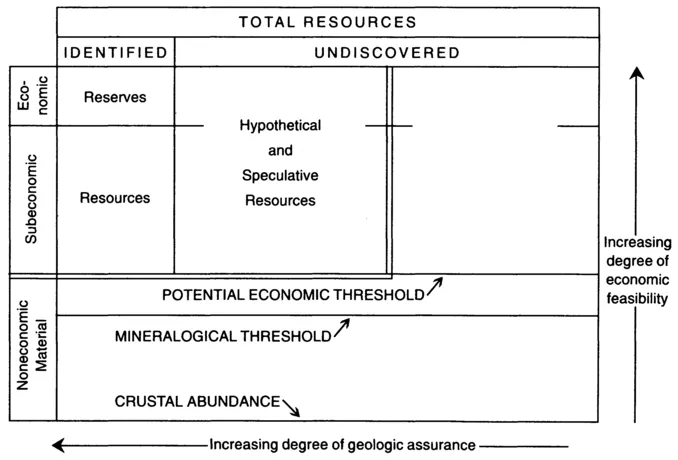
Figure 1.2 Classification of mineral resources.
Source: Brobst, 1979, p. 118. Reprinted by permission of The John Hopkins University Press, © 1979.
So far social factors which limit the availability of minerals and fossil fuels have not been mentioned. For political reasons countries sometimes limit the extraction and the export to other countries. Extraction may also be limited because of harmful environmental effects. Different forms of pollution of air, water and soil, disturbances of ecosystems and damage to the scenic beauty of landscapes are among the negative environmental impacts associated with extraction of minerals and fossil fuels.
Renewable resources
The use of non-renewable materials often leads to their dispersal in air, in water or on soils. In that case, they are no longer available for human use. There are other elements of nature which can be consumed without excluding availability in the future. This is the case with the so-called renewable resources. These include both abiotic components like soil and water and biotic components like plants and animals. Their renewal can take place as a completely natural process or be stimulated by human intervention. Both rainfall and artificial infiltration can preserve stocks of groundwater when these stocks are used as drinking water. Even when plants and animals are used for human consumption their species can survive as a result of natural reproduction. The same effect can also be reached by deliberate breeding of plants and animals.
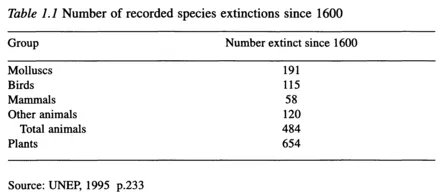
Exhaustion of renewable resources may take place directly or indirectly. Direct exhaustion takes place when the use of a resource exceeds its reproduction. This is the case when more groundwater is extracted than produced by rainfall or infiltration, when more fish are caught than reproduced, or more trees are felled than planted. Indirect exhaustion occurs when the conditions for reproduction are disturbed or when existing stocks are destroyed or made unusable. For instance, it is water pollution instead of hunting that limits the number of seals in the Waddensea along the coasts of the Netherlands, Germany and Denmark. At several places in the eastern part of the Netherlands, it was not the excessive consumption of water, but pollution by agricultural chemicals that made the further use of groundwater for the preparation of drinking water impossible. In theory, the use of renewable resources can be continued endlessly. However, this is only possible if stocks are not destroyed by external influences and if they are renewed permanently. In many cases of declining populations of plants and animals these conditions are not fulfilled. Various types of human use of natural resources lead to the shrinking of populations and the ultimate extinction of species of plants and animals.
Renewable energy
Energy generation can be based on non-renewable or on renewable resources. Both uranium (fissile fuel for nuclear energy) and fossil fuels are non-renewable resources. The formation of natural gas, oil and coal takes so much time that, in studying contemporary environmental problems, these resources are considered as being non-renewable. Energy can be provided by means of sunshine, wind and water power. These types of energy do not use stocks and for that reason cannot be exhausted. In particular for the third world countries, wood and other forms of bio-mass are important renewable sources of energy.
In theory, the use of these 'endless' sources of energy is the least harmful to physical environments. In practice, even the use of these resources is causing environmental problems. In countries like Brazil and Russia, production of hydroelectric power led to the loss of extensive areas, their flora and fauna, their settlements and their agricultural land. Even the construction and the use of windturbines for electricity production may cause damaging environmental impact, for example on birds.
1.3.2 Pollution
Used materials, whether or not transformed into solid, fluid or gaseous waste, sooner or later return into the environment.
In case of exhaustion the environment is used as a storehouse which is depleted. In case of pollution the environment functions as a garbage can which overflows. Pollution can be defined as the release of harmful substances into the environment. Besides pollution, as defined above, there are other environmental effects of human behaviour which are experienced as annoying or risky. Examples are: noise, radiation and heat. The term 'environmental stress' is used as the all-embracing designation of these various effects. In chapter 7 on risk and nuisance we will discuss human perceptions and responses to different forms of environmental stress. Here we deal only with different forms of pollution. In the preceding section we made a distinction between renewable and nonrenewable resources. Here we will distinguish between degradable and nondegradable or persistent substances.
Degradable substances
Emission of substances into air, water and soil is a permanent and natural process. Waste substances are used as nutrients by bacteria's. These organisms transform substances in such a way that they can be used again as nutrients by plants and, as a consequence, also by animals. Millions of bacteria's and other organisms may live in one gram of soil. These decomposers prepare the remnants of plants and animals for absorption by new plants and new animals, (see figure 1.3 )
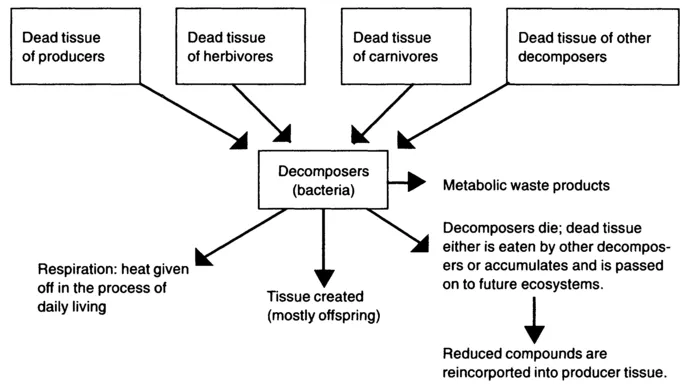
Figure 1.3 Inputs and outputs of a decomposer
Source: Sutton and Harmon (1973, p.52) Reprinted by permission. © Copyright John Wiley & Sons, Inc.
Degradation and mineralization of waste is a process as natural as the renewal of resources discussed earlier. In both cases human interventions can stimulate natural processes. People can make compost out of their own vegetable, fruit and garden waste. In agriculture, animal and human faeces can be used to enhance soil fertility. Even the environmental problems related to the renewal of resources and degradation of substances resemble each other. Both the use of renewable resources and landfilling with waste can exceed the capacities of the environment, to renew resources and to degrade substances respectively. Manure surpluses caused by intensive cattle breeding are an example of overburdening the natural capacity to degrade substances.
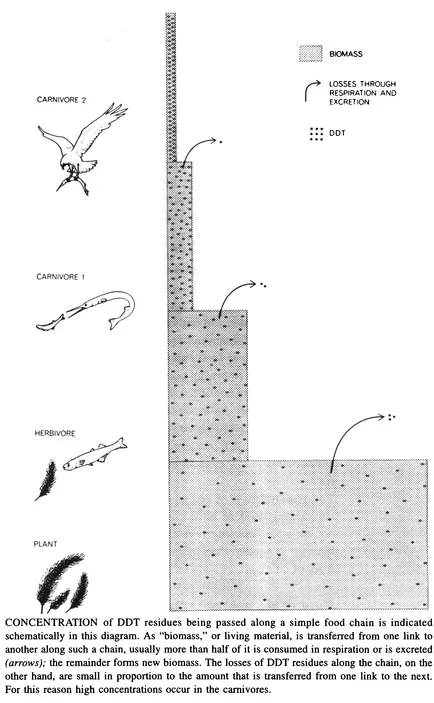
Figure 1.4. Accumulation in the food chain.
Source: Woodweli (1967, p.30)
Non-degradable or persistent substances
Nowadays many substances are produced which do not exist in nature. Some of these substances cannot be degraded by natural processes at all or only very slowly. Among these man-made substances are pesticides which are used in agriculture. They can be divided into insecticides, herbicides and fungicides which are used to destroy insects, weeds and fungi respectively. One of the most infamous insecticides is DDT. In 1962 Rachel Carson described in her book 'Silent Spring' the death of birds caused by the use of DDT and other pesticides. Probably no other book contributed so much to the raising of awareness of environmental problems during the sixties (See section 6.5.2). Today the use of DDT is prohibited in a large number of countries. Nevertheless, like many other pesticides, DDT is still present in the environment today.
For a clear understanding of the effects of persistent substances like DDT the concepts of 'food chain' and 'food pyramid' are very important. The base of the food pyramid is formed by autotrophic organisms which prepare their own food out of energy and build themselves up by means of anorganic substances like water, carbon dioxide and salts. Plants belong to the autotrophic organisms. By means of absorption of sunlight the leaf green (chlorophyll) of plants is able to transform water and carbon dioxide into glucose, oxygen and water. This process is called photosynthesis. Heterotrophic organisms are dependent on other organisms for their food supply and feed on organic substances of plants and animals. At each following trophic level the quantity of organic matter or biomass is reduced by a factor of ten. Persistent substances like DDT are not reduced to the same degree. As a consequence, the concentration of these substances increases at each higher trophic level. This process is called accumulation in the food chain. As a result of this process, substances which are present in the environment in low concentrations may end up in high concentrations in human food.
The phenomenon of reduction of biomass at each higher trophic level is sometimes used as an argument for vegetarianism or reduction of meat consumption. In using vegetable food of the lower trophic level of plants, less biomass is needed than in case of consumption of meat of the higher trophic level of animals.
Flux-type and sink-type pollution
Forms of environmental pollution can be divided into flux-type...
Table of contents
- Cover
- Title
- Copyright
- Contents
- Acknowledgements
- Introduction
- 1 Environment and environmental problems
- 2 History
- 3 Geography
- 4 Culture and civilization
- 5 Social dilemmas
- 6 Environmental attitudes and behaviour
- 7 Annoyance and risk
- 8 Organizations
- 9 State and environmental policy
- 10 Globalization
- References
- Subject Index
- Author Index
Trusted by 375,005 students
Access to over 1.5 million titles for a fair monthly price.
Study more efficiently using our study tools.
Frequently asked questions
Yes, you can cancel anytime from the Subscription tab in your account settings on the Perlego website. Your subscription will stay active until the end of your current billing period. Learn how to cancel your subscription
No, books cannot be downloaded as external files, such as PDFs, for use outside of Perlego. However, you can download books within the Perlego app for offline reading on mobile or tablet. Learn how to download books offline
We are an online textbook subscription service, where you can get access to an entire online library for less than the price of a single book per month. With over 1.5 million books across 990+ topics, we’ve got you covered! Learn about our mission
Look out for the read-aloud symbol on your next book to see if you can listen to it. The read-aloud tool reads text aloud for you, highlighting the text as it is being read. You can pause it, speed it up and slow it down. Learn more about Read Aloud
Yes! You can use the Perlego app on both iOS and Android devices to read anytime, anywhere — even offline. Perfect for commutes or when you’re on the go.
Please note we cannot support devices running on iOS 13 and Android 7 or earlier. Learn more about using the app
Please note we cannot support devices running on iOS 13 and Android 7 or earlier. Learn more about using the app
Yes, you can access Society and Its Environment by Egbert Tellegen,Maarten Wolsink in PDF and/or ePUB format, as well as other popular books in Biological Sciences & Environmental Science. We have over 1.5 million books available in our catalogue for you to explore.