An influential study of political power, originally published in 1917. Laski's theoretical ideas are elaborated through examples drawn from political and religious movements, such as the Catholic Revival and the creation of the German Empire. He concludes that the state is not a supreme entity; it is one association among many that must compete for the people's loyalty and obedience.
Your business as thinkers is to make plainer the way from something to the whole of things; to show the rational connection between your fact and the frame of the universe.
Speeches of Mr. Justice Holmes.
TO H. A. L. FISHER AND ERNEST BARKER FELLOWS OF NEW COLLEGE WITH AFFECTIONATE GRATITUDE
Preface
This volume is the first of a series of studies in which I hope to discuss in various aspects the theory of the State. Its starting point is the belief that in such a theory, the problem of sovereignty is fundamental, and that only in the light of its conception can any satisfactory attitude be adopted. It is essentially a critical work, and it is only in the most tentative fashion that I have hinted at what seems to me the right avenue of approach. When I have finished similar studies in the political theory of the Catholic Reaction in France during the nineteenth century, and of the Conciliar Movement in the fifteenth, it may be that I shall be able to attempt a more constructive discussion. But it has not seemed to me entirely purposeless to point out the dangers of an attitude fraught with consequences so momentous to the character of our political institutions.
How much it owes to Maitland and Saleilles and Dr. Figgis, I dare not estimate; but if it sends anyone to their books (and particularly to Maitland’s) I shall be well content. I owe much, too, to the work of my friend and colleague, Professor McIlwain, from whose ‘High Court of Parliament’ I have derived a whole fund of valuable ideas. Nor have I, as I hope, failed to learn the lesson to be learned from the constitutional opinions with which Mr. Justice Holmes has enriched this generation. I would add that it was from Mr. Fisher that I first learned to understand the value of individuality, as it was from Mr. Barker that I first learned the meaning of community.
I should like, too, to associate whatever there is of good in the thought of this book, with the name of my friend, Alec Rowan Herron, Scholar of New College and second-lieutenant in the King’s Royal Rifles, who fell at Givenchy in the first year of war. What we have lost in him only those of us who had the rare privilege of his intimate friendship can tell; but I may be permitted to say that it was the opinion of those with the right to judge that a very brilliant career lay before him.
This book could never have been written were it not for the constant and splendid sympathy of my friend, Professor Frankfurter of the Harvard Law School. If I mention that, and the debt it of course owes to my wife, it is not in repayment, but in recognition. They, I know, will understand.
I have to thank the editors of the American Political Science Review, the Canadian Law Times, the New Republic, and the Journal of Philosophy, Psychology and Scientific Methods for leave to use material already printed in their pages.
H. J. L.
September 28, 1916.
Harvard University.
Contents
Preface
Chapter I. The Sovereignty of the State
Chapter II. The Political Theory of the Disruption
Chapter III. The Political Theory of the Oxford Movement
Chapter IV. The Political Theory of the Catholic Revival
Chapter V. De Maistre and Bismarck
Appendix A. Sovereignty and Federalism
Appendix B. Sovereignty and Centralisation
Index
Chapter 1 The Sovereignty of the State1
DOI: 10.4324/9781315742724-1
1 Read at the Fourth Conference on Legal and Social Philosophy, at Columbia University, November 27, 1915.
Hegelianwise, we can not avoid the temptation that bids us make our State a unity. It is to be all-absorptive. All groups within itself are to be but the ministrants to its life; their reality is the outcome of its sovereignty, since without it they could have no existence. Their goodness is gained only through the overshadowing power of its presence. It alone, so to speak, eternally is; while they exist but to the extent to which its being implies them. The All, America, includes, ‘implicates’ in James’ phrase, its constituent states. They are one with it and of it—one and indivisible. Each has its assigned place and function in the great Whole which gives them life. This is essential; for otherwise we should have what Mr. Bradley calls ‘a plurality of reals’; which is to destroy the predicated unity.
Of the exaltation of such unity a long history could be written. To speak only of medieval times, it would have to tell of Dante with his maxime unum as the maxime bonum; nor dare we repaint the picture he drew of that world state which is one because its law is one and its spirit also. State must be, Gregory VII will tell us, absorbed in Church; and so the eighth Boniface, perhaps with some lingering thought of Aquinas in his mind, will declare the heresy of dualism and straightway make claim to the lordship of the world. Binarius numerus infamis—so it was Aquinas wrote; and so it is that your pope must have the plenitudo potestatis and your emperor be legibus solutus. Thus will they embody all and transcend the shifting variety of an inconvenient multiplicity.
Your medieval thinker deals in worlds; with the Renaissance is born the national State. But only the perspective is altered. Still the problem is this monistic reduction. How to make of many one was surely the problem Henry VIII confronted when he declared the realm of England to be an empire; for if it is capable of such promotion then is its king imperial, and he may work his will with recalcitrant chancellors who look vainly Rome-wards. So, too, with the Stuart. He mistakes the popular basis of the Tudor throne, and thinks a sovereignty in practice theoretical also. It is his, he urges, by a right divine. Like another Richard II he feels that the laws are in his own breast; while non-juring Hickes will preach solemnly of the Stuart rectitude as he lays down the gospel of non-resistance.
It seems far off; yet in truth it is very near to us. It would be no inapt definition of politics in our time to term it the search for social unity. Whatever political problems we may consider upon this fundamental question, we shall always ultimately be driven back. How far, and in what way, is our society one? How far is there an interest of the Whole, a monistic interest, which transcends the interests of the Many who compose that whole? It is a fundamental question; therefore—as the ‘Parmenides’ bears witness—it is amazingly subtle and difficult. We shall find, I think, that there is one best method of considering our problem. Suppose that on the one hand we adopt the monist solution, what concrete difference will that make to our political life? If we are pluralists, how does that affect our activities? What, in short, are the consequences of our attitude? It is from them we may deduce its truth.
And at the outset, let us note that we tend, in our political thinking, to adopt a sort of mystic monism as the true path of thought. We represent a State as a vast series of concentric circles, each one enveloping the other, as we move from individual to family, from family to village, from village to city, to county, thence to the all-embracing State. We talk of England, Greece, Rome, as single personal forces, transcending the men and women who compose them. We personalise, that is to say, the collective body. ‘Rome,’ writes Lord Bryce, ‘sacrificed her domestic freedom that she might become the mistress of others.’ Here is a Rome beyond her citizens, a woman terrible in the asceticism of her supreme sacrifice.
Clearly the reality of the State’s personality is a compulsion we may not resist. But the habit is common to other things also. To the American, New York has a personality no less real than that of the Republic. To the shipowner, Lloyds is not the mere sum of its individual underwriters. When we take any group of people leading a common life, to whom some kindred purpose may be ascribed, we seem to evolve from it a thing, a personality, that is beyond the personalities of its constituent parts. For us that personality is real. Slowly its reality has compelled the law, when dealing with associations, to abandon the theory of fiction. A man who looks at the battlefield of Europe will assuredly not deny that certain personalities, England, France, Germany, are real to the soldiers who die for them. A man who would remain cold to an appeal to stand by Englishmen waxes eloquent over the splendour of England; from all Englishmen he synthesises a thing greater than they. Think of the momentous consequences of such personalising and then ask if we dare attribute fiction to its nature. ‘Our fellowship,’ wrote Maitland, ‘is no fiction, no symbol, no piece of the State’s machinery, but a living organism and a real person, with body and members and will of its own.’ If this be true, there are within the State enough of these monistic entities, club, trade-union, church, society, town, county, university, each with a group-life, a group-will, to enrich the imagination. Their significance assuredly we may not deny.
Yet, so we are told, the State itself, the society of which they form part, is mysteriously One above them. ‘Everywhere the One comes before the Many. All Manyness has its origin in Oneness and to Oneness it returns. Therefore all order consists in the subordination of Plurality to Unity, and never and nowhere can a purpose that is common to Many be effectual unless the One rules over the Many and directs the Many to the goal…. Unity is the root of all, and therefore of all social existence.’ Here is no mystic thought from the East, but a sober German jurist dealing with the essential political thought of the medieval world. Unity, it is clear, there finds laudation enough. And the State as the expression of that unity enjoys a similar benediction. It, too, must be one and indivisible. Trade-unionists and capitalists alike must surrender the interests of their smaller and antithetic group-persons to the larger demands of that all-embracing One, the State. Of that One it is first that you are part; only in secondary fashion do you belong to church or class or race. In the One differences become harmonised, disappear. There are no rich or poor, Protestants or Catholics, Republicans or Democrats, but all are members of the State. The greatest of ideas takes all others to itself. ‘All Manyness has its origin in Oneness, and to Oneness it returns.’
So may be described the monistic theory of the State. It is a theory of which the importance may not be minimised in our time. That this view—largely perhaps from its evident relation to the dominant philosophy of Hegel—has triumphed not only in modern Germany, but also, in some lesser degree, in modern Europe, is the merest platitude in a world where Treitschke furnishes the theme of drawing-room conversation. A time of crisis unifies everywhere what before bore the appearance of severalty. The exclusive State makes an easy triumph.2
2 On Bismarck and Hegel the reader can consult an admirable paper by Mr. William Clarke in the Contemporary Review for January, 1899.
We have to admit, so your monist philosopher tells us, that all parts of the State are woven together to make one harmonious whole. What the Absolute is to metaphysics, that is the State to political theory. The unity is logically necessary, for were there independence, one group, as Lotze argued, could never act upon another. Were there independence there would be impenetrability. Yet nothing is so evident as the supreme fact of mutual influence. Pluralism, in an ultimate sense, is therefore impossible; for it would make unintelligible any rational interpretation of society.
Certain implications of this doctrine are worth noting before we attempt any criticism of it. If it be conceded that the analogy of State and Absolute be justified, clearly just as in metaphysics we can condemn the world as a whole, or praise it as a whole, so must the State be good or bad as a totality. It can not be good or bad in its separate parts. Pessimistic or optimistic, you may be in regard to it, but melioristic you have no right to feel so far as the State is concerned. For that which distinguishes your State must be implied in its parts, however various, is in its parts, could we but see it, and an evil part is evil, be it capitalist or labor agitator, only if the State as a totality is evil. We bridge over, in fact, the distinction between right and wrong, between good and bad. It is due only to the limitations of our finite political intelligence. It is not, so to speak, in the State-in-itself. It is only the appearance below which we must penetrate if we would grasp political reality. That is why Mr. Bradley can regard his Absolute—for us the State—as the richer for every disharmony; for that seeming pain is in truth but a minister to joy.
And here clearly enough Sovereignty emerges. The State must triumph and has need of some organ whereby its end may be attained. If we anywhere preach a gospel of non-resistance it is here. We go to war. We must fight with the State whether or no we feel the justice of its cause. When in 1870 the Vatican Council defined papal infallibility Mr. Gladstone was quick to observe that Roman Catholic loyalty was endangered. Did not Sir Robert Peel oppose Catholic emancipation because that sect could not in his view unify its allegiance? Was not the Kulturkampf but the expression of Bismarck’s conviction that your sovereign must be one and know no fellow? When M. Combes aids in the separation of Church and State, on what other grounds does he base his attack than this,—that only State-rights are real? Corporations—wormlike Hobbes called them—causie but troublesome disease. Forthwith let them disappear that the sovereignty of the State may be unique.
What for us is here of deepest significance is the claim that what the State wills has therefore moral pre-eminence. We pass, if I may be old-fashioned and use Rousseau’s terms, from the Will of All to the General Will, and assume their identity. So that force gains a moral sanction because the
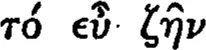
is thereby to be achieved. What the State ordains begins to possess for you a special moral sanction superior in authority to the claim of group or individual. You must surrender your personality before its demands. You must fuse your will into its own. It is, may we not without paradox say, right whether it be right or wrong. It is lack of patriotism in a great war to venture criticism of it. It has the right, as in this sovereign...
Table of contents
Cover Page
Half Title Page
Title Page
Copyright Page
Title Page
Frontmatter 1
Frontmatter 2
Dedication
Preface
Table of Contents
Chapter I. The Sovereignty of the State
Chapter II. The Political Theory of the Disruption
Chapter III. The Political Theory of the Oxford Movement
Chapter IV. The Political Theory of the Catholic Revival
Chapter V. De Maistre and Bismarck
Appendix A. Sovereignty and Federalism
Appendix B. Sovereignty and Centralisation
Index
Trusted by 375,005 students
Access to over 1.5 million titles for a fair monthly price.
Study more efficiently using our study tools.
Frequently asked questions
Yes, you can cancel anytime from the Subscription tab in your account settings on the Perlego website. Your subscription will stay active until the end of your current billing period. Learn how to cancel your subscription
No, books cannot be downloaded as external files, such as PDFs, for use outside of Perlego. However, you can download books within the Perlego app for offline reading on mobile or tablet. Learn how to download books offline
Perlego offers two plans: Essential and Complete
Essential is ideal for learners and professionals who enjoy exploring a wide range of subjects. Access the Essential Library with 800,000+ trusted titles and best-sellers across business, personal growth, and the humanities. Includes unlimited reading time and Standard Read Aloud voice.
Complete: Perfect for advanced learners and researchers needing full, unrestricted access. Unlock 1.5M+ books across hundreds of subjects, including academic and specialized titles. The Complete Plan also includes advanced features like Premium Read Aloud and Research Assistant.
Both plans are available with monthly, semester, or annual billing cycles.
We are an online textbook subscription service, where you can get access to an entire online library for less than the price of a single book per month. With over 1.5 million books across 990+ topics, we’ve got you covered! Learn about our mission
Look out for the read-aloud symbol on your next book to see if you can listen to it. The read-aloud tool reads text aloud for you, highlighting the text as it is being read. You can pause it, speed it up and slow it down. Learn more about Read Aloud
Yes! You can use the Perlego app on both iOS and Android devices to read anytime, anywhere — even offline. Perfect for commutes or when you’re on the go. Please note we cannot support devices running on iOS 13 and Android 7 or earlier. Learn more about using the app
Yes, you can access Studies in the Problem of Sovereignty (Works of Harold J. Laski) by Harold J. Laski in PDF and/or ePUB format, as well as other popular books in Politics & International Relations & Communism, Post-Communism & Socialism. We have over 1.5 million books available in our catalogue for you to explore.