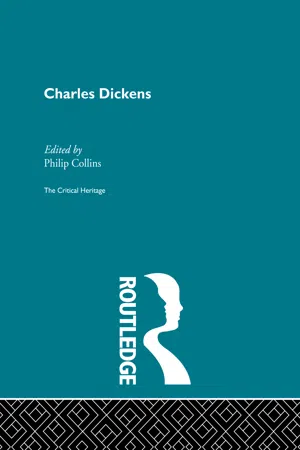
The Critical Heritage gathers together a large body of critical sources on major figures in literature. Each volume presents contemporary responses to a writer's work, enabling students and researchers to read for themselves, for example, comments on early performances of Shakespeare's plays, or reactions to the first publication of Jane Austen's novels.
The carefully selected sources range from landmark essays in the history of criticism to journalism and contemporary opinion, and little published documentary material such as letters and diaries. Significant pieces of criticism from later periods are also included, in order to demonstrate the fluctuations in an author's reputation.
Each volume contains an introduction to the writer's published works, a selected bibliography, and an index of works, authors and subjects.
The Collected Critical Heritage set will be available as a set of 68 volumes and the series will also be available in mini sets selected by period (in slipcase boxes) and as individual volumes.
- 664 pages
- English
- ePUB (mobile friendly)
- Available on iOS & Android
eBook - ePub
About this book
Information
GREAT EXPECTATIONS
All the Year Round, 1 December 1860 – 3 August 1861
‘You will not have to complain of the want of humor as in the Tale of Two Cities,’ Dickens wrote to Forster in October 1860. ‘I have made the opening, I hope, in its general effect exceedingly droll.’ From many recent discussions of this famous opening, one would certainly not imagine that anything so low as drollery was being offered, but at the time of publication this element was much noticed and welcomed with vociferous relief, after the decade of grimness since David Copperfield. Even the Saturday Review began to relent: ‘Mr Dickens may be reasonably proud of these volumes. After a long series of his varied works—after passing under the cloud of Little Dorrit and Bleak House—he has written a story that is new, original, powerful, and very entertaining…. Great Expectations restores Mr Dickens and his readers to the old level. It is in his best vein,…quite worthy to stand beside Martin Chuzzlewit and David Copperfield’ (20 July 1861, xii, 69). This was generally felt, even if put in such grudging tones as Mrs Oliphant’s (‘a gleam of departing energy’: see No. 124).
Other interesting reviews include those in the Athenaeum (13 July 1861, 43–5, by H. F. Chorley), British Quarterly Review (January 1862, xxxv, 135–59), Examiner (20 July 1861, 452–3, by Forster), Atlantic Monthly (September 1877, xl, 327–33, by E. P. Whipple). For a fuller list, and a reprint of Whipple’s 1877 essay, see Assessing Great Expectations, ed. Richard Lettis and William E. Morris (San Francisco, 1960).
120.
[Edwin P. Whipple], from a review, Atlantic Monthly
September 1861, viii, 380–2
… We have read it, as we have read all Mr Dickens’s previous works, as it appeared in instalments, and can testify to the felicity with which expectation was excited and prolonged, and to the series of surprises which accompanied the unfolding of the plot of the story. In no other of his romances has the author succeeded so perfectly in at once stimulating and baffling the curiosity of his readers. He stirred the dullest minds to guess the secret of his mystery; but, so far as we have learned, the guesses of his most intelligent readers have been almost as wide of the mark as those of the least apprehensive. It has been all the more provoking to the former class, that each surprise was the result of art, and not of trick; for a rapid review of previous chapters has shown that the materials of a strictly logical development of the story were freely given. Even after the first, second, third, and even fourth of these surprises gave their pleasing electric shocks to intelligent curiosity, the dénouement was still hidden, though confidentially foretold. The plot of the romance is therefore universally admitted to be the best that Dickens has ever invented. Its leading events are, as we read the story consecutively, artistically necessary, yet, at the same time, the processes are artistically concealed. We follow the movement of a logic of passion and character, the real premises of which we detect only when we are startled by the conclusions.
The plot of Great Expectations is also noticeable as indicating, better than any of his previous stories, the individuality of Dickens’s genius. Everybody must have discerned in the action of his mind two diverging tendencies, which, in this novel, are harmonized. He possesses a singularly wide, clear, and minute power of accurate observation, both of things and of persons; but his observation, keen and true to actualities as it independently is, is not a dominant faculty, and is opposed or controlled by the strong tendency of his disposition to pathetic or humorous idealization….
In Great Expectations… Dickens seems to have attained the masteryof powers which formerly more or less mastered him. He has fairly discovered that he cannot, like Thackeray, narrate a story as if he were a mere looker-on, a mere ‘knowing’ observer of what he describes and represents; and he has therefore taken observation simply as the basis of his plot and his characterization. As we read Vanity Fair and The Newcomes, we are impressed with the actuality of the persons and incidents. There is an absence both of directing ideas and disturbing idealizations. Everything drifts to its end, as in real life. In Great Expectations there is shown a power of external observation finer and deeper even than Thackeray’s; and yet, owing to the presence of other qualities, the general impression is not one of objective reality. The author palpably uses his observations as materials for his creative faculties to work upon; he does not record, but invents; and he produces something which is natural only under conditions prescribed by his own mind. He shapes, disposes, penetrates, colors, and contrives everything, and the whole action is a series of events which could have occurred only in his own brain, and which it is difficult to conceive of as actually ‘happening.’ And yet in none of his other works does he evince a shrewder insight into real life, and a clearer perception and knowledge of what is called ‘the world.’ The book is, indeed, an artistic creation, and not a mere succession of humorous and pathetic scenes, and demonstrates that Dickens is now in the prime, and not in the decline of his great powers.
The characters of the novel also show how deeply it has been meditated; for, though none of them may excite the personal interest which clings to Sam Weller or little Dombey, they are better fitted to each other and to the story in which they appear than is usual with Dickens. They all combine to produce that unity of impression which the work leaves on the mind. Individually they will rank among the most original of the author’s creations….
The style of the romance is rigorously close to things. The author is so engrossed with the objects before his mind, is so thoroughly in earnest, that he has fewer of those humorous caprices of expression in which formerly he was wont to wanton. Some of the old hilarity and play of fancy is gone, but we hardly miss it in our admiration of the effects produced by his almost stern devotion to the main idea of his work. There are passages of description and narrative in which we are hardly conscious of the words, in our clear apprehension of the objects and incidents they convey. The quotable epithets and phrases are less numerous than in Dombey and Son and David Copperfield; but the scenesand events impressed on the imagination are perhaps greater in number and more vivid in representation. The poetical element of the writer’s genius, his modification of the forms, hues, and sounds of Nature by viewing them through the medium of an imagined mind, is especially prominent throughout the descriptions with which the work abounds. Nature is not only described, but individualized and humanized.
Altogether we take great joy in recording our conviction that Great Expectations is a masterpiece. We have never sympathized in the mean delight which some critics seem to experience in detecting the signs which subtly indicate the decay of power in creative intellects. We sympathize still less in the stupid and ungenerous judgments of those who find a still meaner delight in wilfully asserting that the last book of a popular writer is unworthy of the genius which produced his first. In our opinion, Great Expectations is a work which proves that we may expect from Dickens a series of romances far exceeding in power and artistic skill the productions which have already given him such a preëminence among the novelists of the age.
121.
[E. S. Dallas], from an unsigned review, The Times
17 October 1861, 6
Dallas (1828–79), author of The Gay Science and other notable critical books and reviews, was certainly acquainted with Dickens in 1862, and in August 1865 Dickens supported his application for the Chair of Rhetoric and Belles-lettres at Edinburgh. He reviewed the All the Year Round Christmas Numbers very warmly in The Times (3 December 1863, 12; 2 December 1864, 12; 6 December 1865, 6: see No. 115): also Our Mutual Friend (No. 130).
Mr Dickens has good-naturedly granted to his hosts of readers the desire of their hearts. They have been complaining that in his later works he has adopted a new style, to the neglect of that old mannerwhich first won our admiration. Give us back the old Pickwick style, they cried, with its contempt of art, its loose story, its jumbled characters, and all its jesting that made us laugh so lustily; give us back Sam Weller and Mrs Gamp and Bob Sawyer, and Mrs Nickleby, Pecksniff, Bumble, and the rest, and we are willing to sacrifice serious purpose, consistent plot, finished writing, and all else. Without calling upon his readers for any alarming sacrifices, Mr Dickens has in the present work given us more of his earlier fancies than we have had for years. Great Expectations is not, indeed, his best work, but it is to be ranked among his happiest. There is that flowing humour in it which disarms criticism, and which is all the more enjoyable because it defies criticism. Faults there are in abundance, but who is going to find fault when the very essence of the fun is to commit faults?…
The method of publishing an important work of fiction in monthly instalments was considered a hazardous experiment, which could not fail to set its mark upon the novel as a whole. Mr Dickens led the way in making the experiment, and his enterprise was crowned with such success that most of the good novels now find their way to the public in the form of a monthly dole. We cannot say that we have ever met with a man who would confess to having read a tale regularly month by month, and who, if asked how he liked Dickens’s or Thackeray’s last number, did not instantly insist upon the impossibility of his getting through a story piecemeal. Nevertheless, the monthly publication succeeds, and thousands of a novel are sold in minute doses, where only hundreds would have been disposed of in the lump…. On the whole, perhaps, the periodical publication of the novel has been of use to it, and has forced English writers to develop a plot and work up the incidents. Lingering over the delineation of character and of manners, our novelists began to lose sight of the story and to avoid action. Periodical publication compelled them to a different course. They could not afford, like Scheherazade, to let the devourers of their tales go to sleep at the end of a chapter. As modern stories are intended not to set people to sleep, but to keep them awake, instead of the narrative breaking down into a soporific dulness, it was necessary that it should rise at the close into startling incident. Hence a disposition to wind up every month with a melodramatic surprise that awakens curiosity in the succeeding number. Even the least melodramatic novelist of the day, Mr Thackeray, who, so far from feasting us with surprises, goes to the other extreme, and is at particular pains to assure us that the conduct and the character of his personages are not in the least surprising, falls into the way of finishing off his monthly work with a flourish of some sort to sustain the interest.
But what are we to say to the new experiment which is now being tried of publishing good novels week by week? Hitherto the weekly issue of fiction has been connected with publications of the lowest class—small penny and halfpenny serials that found in the multitude some compensation for the degradation of their readers. The sale of these journals extended to hundreds of thousands, and so largely did this circulation depend on the weekly tale, that on the conclusion of a good story it has been known to suffer a fall of 40,000 or 50,000. The favourite authors were Mr J. F. Smith, Mr Pierce Egan, and Mr G. W. Reynolds, and the favourite subjects were stories from high life, in which the vices of an aristocracy were portrayed, now with withering sarcasm, and now with fascinating allurements. Lust was the alpha and murder the omega of these tales. When the attempt was made to introduce the readers of the penny journals to better authors and to a more wholesome species of fiction, it was an ignominious failure…. Mr Dickens has tried another experiment. The periodical which he conducts is addressed to a much higher class of readers than any which the penny journals would reach, and he has spread before them novel after novel specially adapted to their tastes. The first of these fictions which achieved a decided success was that of Mr Wilkie Collins—The Woman in White…. After Mr Wilkie Collins’s tale, the next great hit was this story of Mr Dickens’s to which we invite the attention of our readers. It is quite equal to The Woman in White in the management of the plot, but, perhaps, this is not saying much when we have to add that the story, though not impossible like Mr Wilkie Collins’s, is very improbable. If Mr Dickens, however, chose to keep the common herd of readers together by the marvels of an improbable story, he attracted the better class of readers by his fancy, his fun, and his sentiment. Altogether, his success was so great as to warrant the conclusion, which four goodly editions already justify, that the weekly form of publication is not incompatible with a very high order of fiction. And now there is being published, in the same periodical another novel, which promises still more. It is by one who of all our novelists is the greatest master of construction, and who knows how to keep an exciting story within the bounds of probability. The Strange Story which Sir Edward Lytton is now relating week by week, is not only interesting as an experiment in hebdomadal publication, it is doubly interesting as a scientific novel. Scientific novels are generally dull, dead things. SirEdward Lytton undertakes the most difficult of all tasks—to write a scientific novel in weekly parts. It appears to be the greatest of all the successes achieved by All the Year Round. Hundreds of thousands of readers rush to read ‘the fairy tales of science and the long results of time’ as recorded by Sir E. B. Lytton.
Great Expectations is republished as a three-volume novel. Mr Dickens, we believe, only once before published a three-volume tale—Oliver Twist. We mention the fact because the resemblance between the two tales is not merely the superficial one that they are both in the same number of volumes, but is also one of subject very much and of treatment. The hero of the present tale, Pip, is a sort of Oliver. He is low-born, fatherless and motherless, and he rises out of the cheerless degradation of his childhood into quite another sphere. The thieves got a hold of Oliver, tried to make him a pickpocket, and were succeeded in their friendly intentions by Mr Brownlow, who thought that he could manage better for the lad. Pip’s life is not less mixed up with the ways of convicts. He befriends a convict in his need, and henceforth his destiny is involved in that of the prisoner. The convict in the new story takes the place of Mr Brownlow in the old, and supplies Master Pip with every luxury. In either tale, through some unaccountable caprice of fortune, the puny son of poverty suddenly finds himself the child of affluence. If we are asked which of the tales we like best, the reply must be that the earlier one is the more fresh in style, and rich in detail, but that the later one is the more free in handling, and the more powerful in effect. It is so, even though we have to acknowledge in the work some of Mr Dickens’s worst mannerisms. For example, it is a mere mannerism that in all his tales there should be introduced some one—generally a woman—who has been confined indoors for years, and who, either from compulsion or from settled purpose, should live in dirt and gloom, never breathing the fresh air and enjoying the sunshine. A lady who has a whim of this sort is here, as in most of Mr Dickens’s tales, the blind of the story. Making every allowance, however, for repetitions, the tale is really worthy of its author’s reputation, and is well worth reading….
[Dallas offers some samples.]
These few quotations are taken from the first two volumes. When Mr Dickens gets into the third he is driven along by the exigencies of the story, and he can no longer afford to play with his subject. The interest is still sustained, but it is of a different kind. We might quotewhole pages of eloquent writing and passionate dialogue, but readers, we dare say, will be better pleased with the sort of extracts we have given. The public insist upon seeing in Mr Dickens chiefly the humourist; and, however great he may be in other directions, they count all as nothing beside his rare faculty of humour. To those who may not be satisfied with a work of this author’s unless humour superabounds most, we can heartily commend Great Expectations.
122.
From an unsigned review, Dublin University Magazine
December 1861, lviii, 685–93
If the title of Mr Dickens’s last novel could fairly be taken to mean more than a slight foreshadowing of the plot therein developed, we could not easily bring ourselves to congratulate the author on a hit so curiously unhappy as that which a playful fancy will be prone to lay to ...
Table of contents
- Cover
- Halftitle
- Title
- Copyright
- General Editor’s Preface
- Contents
- Preface
- Acknowledgments
- Note on the Text
- Introduction
- The Early Works: From Pickwick to Nickleby
- Pickwick Papers (1836–7)
- Oliver Twist (1837–9)
- Nicholas Nickleby (1838–9)
- Estimates of Dickens’s early works
- Master Humphrey’s Clock (1840–41)
- American Notes (1842) and Pictures from Italy (1846)
- The Christmas Books (1843–8)
- Martin Chuzzlewit (1843–4)
- Dombey and Son (1846–8)
- David Copperfield (1849–50)
- Bleak House (1852–3)
- Hard Times (1854)
- Little Dorrit (1855–7)
- The Weekly Periodicals (1850–70)
- A Tale of Two Cities (1859)
- Great Expectations (1860–1)
- Our Mutual Friend (1864–5)
- Obituary Tributes (1870)
- Edwin Drood (1870)
- Forster’s Life of Dickens (1871–3)
- The Letters of Charles Dickens (1880–2)
- Appendix I: The Sales of Dickens’s Works, by Robert L. Patten
- Appendix II: Authorship of Anonymous Items: Evidence for Attributions
- Bibliography
- Index
Trusted by 375,005 students
Access to over 1.5 million titles for a fair monthly price.
Study more efficiently using our study tools.
Frequently asked questions
Yes, you can cancel anytime from the Subscription tab in your account settings on the Perlego website. Your subscription will stay active until the end of your current billing period. Learn how to cancel your subscription
No, books cannot be downloaded as external files, such as PDFs, for use outside of Perlego. However, you can download books within the Perlego app for offline reading on mobile or tablet. Learn how to download books offline
Perlego offers two plans: Essential and Complete
- Essential is ideal for learners and professionals who enjoy exploring a wide range of subjects. Access the Essential Library with 800,000+ trusted titles and best-sellers across business, personal growth, and the humanities. Includes unlimited reading time and Standard Read Aloud voice.
- Complete: Perfect for advanced learners and researchers needing full, unrestricted access. Unlock 1.5M+ books across hundreds of subjects, including academic and specialized titles. The Complete Plan also includes advanced features like Premium Read Aloud and Research Assistant.
We are an online textbook subscription service, where you can get access to an entire online library for less than the price of a single book per month. With over 1.5 million books across 990+ topics, we’ve got you covered! Learn about our mission
Look out for the read-aloud symbol on your next book to see if you can listen to it. The read-aloud tool reads text aloud for you, highlighting the text as it is being read. You can pause it, speed it up and slow it down. Learn more about Read Aloud
Yes! You can use the Perlego app on both iOS and Android devices to read anytime, anywhere — even offline. Perfect for commutes or when you’re on the go.
Please note we cannot support devices running on iOS 13 and Android 7 or earlier. Learn more about using the app
Please note we cannot support devices running on iOS 13 and Android 7 or earlier. Learn more about using the app
Yes, you can access Charles Dickens by Philip Collins in PDF and/or ePUB format, as well as other popular books in Literature & Literary Criticism. We have over 1.5 million books available in our catalogue for you to explore.