![]()
![]()
Leon J. Kamin (et altera, et altera)1
Princeton University
And God gave Solomon wisdom and understanding exceeding much, and largeness of heart, even as the sand that is on the sea shore. And Solomon’s wisdom excelled the wisdom of all the children of the east country, and all the wisdom of Egypt. For he was wiser than all men … and his fame was in all nations round about. And he spake three thousand proverbs: and his songs were a thousand and five … he spake also of beasts, and of fowl, and of creeping things, and of fishes. And there came of all people to hear the wisdom of Solomon, from all kings of the earth, which had heard of his wisdom. (I Kings 4:29–34)
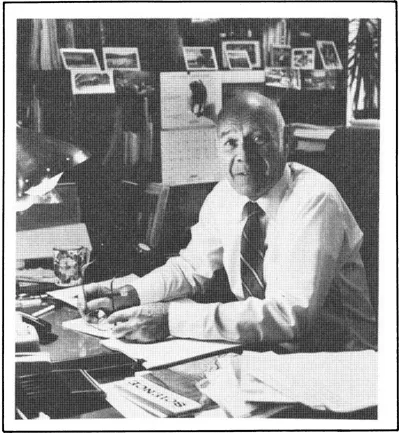
The title of this chapter is open to at least two interpretations. It might mean the psychology produced by R. L. Solomon, his work. Then again, it might mean the psychology of Solomon, what makes him tick. Each of the contributors comments to some degree on each of those two aspects of the psychology of R. L. Solomon.
We begin with a couple of biographical tid-bits, perhaps not known to all of you. Dick Solomon was brought up in Brookline, MA, the son of a chartered public accountant, and destined to become a CPA himself. We owe a lot to a high school teacher named Tyler B. Kipner, who detected in Dick what he believed to be college material and induced Dick to think of going to a liberal arts college.
We also owe a lot to the captain of the football team of Brookline High School, because when the time came for Dick to select a college, he didn’t know where to go. He was greatly influenced by the fact that the football captain had gone to Brown—and by the fact that Brown was 45 miles from Brookline. So Dick went off to Brown as an undergraduate; there he studied economics and psychology and came under the influence of J. McV. Hunt.
Finally, we also owe a lot to the rampant anti-Semitism of the 1930’s and early 1940’s. Dick, in applying to graduate school in 1942, thought he would like to work with Kurt Lewin at Massachusetts Institute of Technology (MIT), but he received a letter from the Department of Economics and Social Science telling him that it simply wasn’t politic to award a fellowship to a Jew at that time. So Dick went to Brown as a graduate student with a fellowship from Walter Hunter, who dashed to the rescue with $32.50 a month! We owe the fact that Dick isn’t a social psychologist to Walter Hunter.
Although Dick is best known as an experimental psychologist, his transition from social psychology was not immediate (viz. Lemann & Solomon, 1952). There are a few very early papers that I don’t think should be allowed to sink from sight.2 I thought it would be a clever idea to go back to the very first paper that Dick published to see whether one could detect retrospectively within it that boldness of spirit and largeness of conception that has characterized his work in later years.
Dick’s first publication in the 1942 American Journal of Psychology, titled “The Stability and Some Correlates of Group Status in a Summer Camp Group of Young Boys,” was coauthored with J. McV. Hunt (Hunt & Solomon, 1942). I thought that surely I would see the seeds of Solomon’s future greatness in this early work, but I was dead wrong. I’ve read the paper very sympathetically, and I must say, there’s not a hell of a lot in it. It took 23 boys in the midget unit of Camp Indian Acres, in Fryeburg, Maine, and asked them who their favorite fellow campers were. They were asked this repeatedly, so that changes in the sociometric pattern over time could be plotted. I suppose you can see in this the beginnings of Dick’s commitment to parametric analysis.
More seriously, there is something in that paper that I think is predictive of the broad scope of Dick’s later work. When Hunt and Solomon discuss the significance of the tendency for the sociometric pattern to stablilize, they write: “It is probable that this process of stabilization, like that found in so many other forms of behavior, operates under what may be called the principle of organismic economy. Freud’s ‘pleasure principle’ and Thomdike’s ‘law of effect’ can be considered as statements of the same principle.” Dick is known for interpreting his data in broad contexts, and this quote indicates he must have learned part of that from Joe Hunt.
There’s another early paper that illuminates the psychology of R. L. Solomon. It’s about the relation of infantile experience to hoarding behavior in rats (Hunt, Schlosberg, Solomon, & Stellar, 1947). The authors start out with the following:
In his original paper, Hunt noted that the evidence for the stress currently placed upon infantile experience as a determinant of adult behavior derives from approaches which observe first the effect in the adult and then look backward for the causes. In the psychoanalysis, the method consists of noting the characteristics of an adult and then looking backward for the cause through his free associations into a childhood already past. In comparative study of cultures, the method consists of noting certain common behavioral characteristics of the adults in a society, and then examining their method of rearing children for the causes. Hunt sought to provide a predictive, experimental test of the hypothesis that infantile experience can endure and can effect (sic) adult behavior. Using rats as subjects, because of their relatively brief span of life, he found that animals submitted to feeding-frustration in infancy hoarded more than two and one-half times as much as their freely fed litter-mate controls. (p. 291)
And they concluded this very interesting paper with: “These observations and those deriving from psychoanalysis and the comparative study of cultures, coupled with our own on rats, argue that we may be dealing with a phenomenon which can appear generally in mammals.”
There is, I think, an absolutely unmistakable style here: Psychoanalysis, culture, and “generally in mammals” lead, in later years, to love, hate, fear, guilt, passion, imprinting, drug addiction, thrill seeking…
I also call your attention to an early paper by Dick on an extension of control group design (Solomon, 1949). In that paper he wrestles at great length with the history and purposes of control group designs and with whether control procedures might interact with the very things we’re trying to control for. These same issues were addressed anew in a developmental context (Lessac & Solomon, 1969; Solomon & Lessac, 1968), and it is no accident that clear thinking about the yoked control procedure (Church, 1964) and the proper control procedures for Pavlovian conditioning (Rescorla, 1967) should have originated in the minds of students trained by Dick Solomon.
I’ll conclude now with a couple of quotations, and, I’m afraid, a few more anecdotes. I’ve always understood Dick to be tremendously concerned with the interactions between affect, cognition, and behavior. I want to read to you a quotation from Solomon, Turner, and Lessac’s (1968) paper on delay of punishment and resistance to temptation in dogs. The authors present what they call “a complicated theory of conscience.” They write:
The authors assume that the dogs, even with long delays of punishment, quickly ‘know’ which food results in punishment administered by the experimenter. This is a type of cognitive learning that can span long temporal delays. The dogs know what they are not supposed to eat! However, when the experimenter is missing, and the dogs are faced with an uncertainty or a change in the controlling stimulus situation, the authors’ argument is that cognition is not enough. The hungry dogs cannot be certain any longer that eating the taboo horsemeat will result in punishment, because the experimenter is gone. It is under these conditions of changed social stimulation that the authors believe the conditioned emotional reactions of the dogs “take over”. If emotional conditioned responses take mediational control of behavior under conditions of cognitive uncertainty, the temporal characteristics of Pavlovian emotional conditioning will manifest themselves. This is why delay of punishment is a powerful determiner of subsequent resistance to temptation and the emotional concomitants of taboo violations. (p. 237)
And for still another view of Dick’s combination of broadness and sagacity, I recommend to you his marvelous review of several chapters in the 1952 American Journal of Psychology of Stevens’ Handbook of Experimental Psychology. Here is Dick, writing about George Miller’s, chapter on speech and language. Remember, the year is 1952.
The chapter on Speech and Language is new to experimental psychology. Miller’s contribution is different and exciting. He gives a great deal of attention to the analysis of verbal productions, including statistical analyses and analysis in terms of information theory. Phonetics and phonemics are discussed. There are sections on “talking and thinking,” which, while not as developed as some areas of experimental psychology, will probably become increasingly important. This chapter is worth studying. (p. 128)
That, if you remember the temper of the times, is a rather impressive tribute to Dick’s broadness and openness. But what has always intrigued me about Dick’s commitment to broadness was that at the same time there was his absolute demand for carefulness and precision in experimental work, his worrying control groups to death, his attempt to ...