The London 2012 Paralympic Games - the biggest, most accessible and best-attended games in the Paralympics' 64-year history - came with an explicit aim to "transform the perception of disabled people in society," and use sport to contribute to "a better world for all people with a disability." This social agenda offered the potential to re-frame disability; to symbolically challenge "ableist" ideology and to offer a reinvention of the (dis)abled body and a redefinition of the possible. This edited collection investigates what has and is happening in relation to these ambitions. The book is structured around three key questions: 1. What were the predominant mediated narratives surrounding the Paralympics, and what are the associated meanings attached to them? 2. How were the Paralympics experienced by media audiences (both disabled and non-disabled)? 3. To what extent did the 2012 Paralympics inspire social change? Each section of this book is interspersed with authentic "voices" from outside academia: broadcasters, athletes and disabled schoolchildren.
eBook - ePub
Reframing Disability?
Media, (Dis)Empowerment, and Voice in the 2012 Paralympics
- 270 pages
- English
- ePUB (mobile friendly)
- Available on iOS & Android
eBook - ePub
Reframing Disability?
Media, (Dis)Empowerment, and Voice in the 2012 Paralympics
About this book
Information
Section I
Photo Montage
Paralympic Sports within Victoria Education Centre
At Victoria School sport is very important to us. I have therefore shown through the chosen images a fraction of our many successes we have had in the sporting field, despite our disabilities.
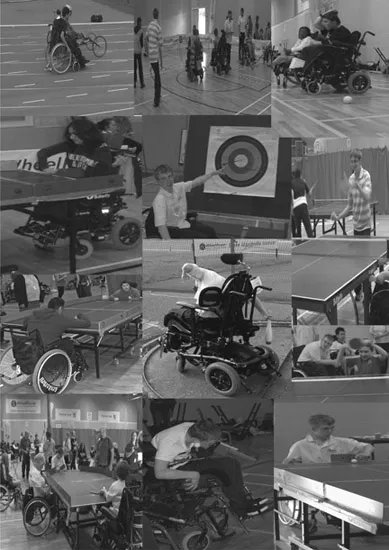
Figure I.1 Photo montage—‘Paralympic sports within Victoria Education Centre’
1
Between Exclusion and Inclusion
The Importance of the Olympic Movement for the Development of Paralympic Sports
This chapter deals with the development of disabled sports from a historico-cultural perspective. I shall demonstrate that, from antiquity to today, the social perception of disabled people and their physical capabilities has transformed from societal segregation and contempt to an ever-increasing social integration of the capabilities of disabled people. Particular attention will be paid to the importance of the Olympic movement for the development of disabled sports in general and of the Paralympic Games in particular.
From Antiquity to Modern Times: Imperfection as a Symbol of Ugliness, Immorality and the Grotesque
We know little about how humans with disabilities were treated during pre-history and early history, although a number of archaeological artefacts call into question the general discrimination or contemptuous ostracism of disabled people. Nevertheless, from antiquity to the modern age evidence for the segregation of and contempt towards disabled people has been found in the occidental cultures. In ancient Greece and Rome, and especially at Sparta, there was no sense of responsibility towards disabled people. In most cultures it was a permissible and legal custom to kill physically disabled, blind, deformed or sickly babies at birth. In Sparta the community legally regulated this practice; the assembly of elders decided which children were strong and healthy and thus fit to be accepted into the community. The others were taken from their parents and killed. In this age, disabled people had no entitlement to care and were stigmatised in many ways. These activities and the spatial displacement of disabled people into quarries and mines were rationalised by philosophers like Aristotle and Plato as being in the interest of public health.
From antiquity to modernity, abnormalities were perceived not as coincidental external manifestations independent of a person’s inner qualities but as a correlate to the soul, thus allowing inferences about someone’s character. One way in which this view is reflected is in the pseudo-science of physiognomy, through which it was believed that conclusions about character and psycho-emotional capacities could be drawn from facial features and the shapes of other body parts.
Consequently, as a result of the described attitudes, people with physical disabilities did not simply contradict the generally accepted ideal of beauty, but were generally considered to be socially inferior, immoral and evil. They were practically excluded from physical exercise, which at that time was very militarily oriented. They did not fit into the classical age’s elitist concept of competition. Physical competitions were elitist, military concepts that disabled people could not easily participate in. As such the participation of people with physical and mental disabilities was not compatible with the ideological foundations of the ancient Olympic Games.
Not until the era of the Roman emperors were disabled people used in competitive circus games in a big way. Yet they were assigned only a grotesque role as objects of merciless amusement. At the gladiator games, the munera, they were sometimes used in the show programme, usually in the intermissions; during the rule of Emperor Titus Flavius Domitianus (51–96 AD) female gladiators were pitched against dwarfs every evening, ‘a combination which was probably just a comical intermezzo in the game with death’ (Meijer, 2003: 73). Under Emperor Commodus (161–192 AD) disabled people were rounded up, dressed as giants and sent into the arena. The disabled people had no say in these proceedings, because they were considered inferior and unworthy of social consideration. Their public image was limited to a clownish, commercially exploited role. There was no co-determination or attention—in other words, no social status—given to the disabled.
The treatment, perception and social status of disabled people did not change until modern times. During the enlightenment, when modern psychiatry began to emerge, disabled people were still discriminated against to a large extent. For instance, in 1784 the most modern hospital in Europe was established in Vienna, Austria, which included a department for the mentally insane. The methods of treatment in this ‘fools’ tower’ ranged from mechanical restraints and straightjackets to shock therapy, using dogs, cannon blasts and cold baths. By the end of the 19th century the situation had not improved significantly. Again and again, disabled people were perceived either as vicious harbingers of evil, which might require eradication, or at best a grotesque ‘caprice of nature’ or chilling bizarrety that could be exploited for entertainment. In the Renaissance and baroque eras misshapen people were employed as court jesters to entertain the courtiers and so-called freak shows were always a means of entertaining the masses: Siamese twins, people with hydrocephalus or pointed or cylindrical heads and extremely obese or completely hirsute people were displayed in these showcases.
Not until the beginning of the 19th century did the relationship of society to its members with disabilities start to change, albeit in a tentative way. This can be observed in publications and the establishment of associations during this era. In the mid-19th century works were published that drew attention to athletic and physical therapies for prevention and healing of deformities of the human body. The first sports clubs (like the Berlin Sports Club for the Deaf) were formed in 1888, and other such new clubs followed in quick succession.
Despite these first socio-integrative measures, it is not until the World War I that we can speak of the integration of disabled people. The lack of social responsibility at this time is exemplified by a dangerous, life-threatening development for disabled people. The first institutes for eugenics were opened, the main objective of which was the sterilisation of those at the lower end of the so-called social stratum or even the destruction of lives that were considered unworthy of life. It was believed that building sanctuaries for the amential and hereditary cripples was extremely damaging to the human race.
In the first phase examined here, from the ancient world to the 20th century, disabled people were marginalised, tortured, persecuted and made the victims of inconsiderate curiosity. Disabled people participated in physical challenges only as a way of satisfying the basest desires of the masses; they were presented in circus games as an entertaining diversion for the masses in a most debasing way, which generally only encouraged segregation and contempt.
In this first phase there were no real connections to the Olympic movement. The exclusion of people with physical and mental disabilities from the ancient Olympic competitions is unsurprising. There was no concept of social integration in that society, at least not towards people with physical and mental disabilities. Accordingly, they were not found in the four Panhellenic Games.
The early connection between the modern Olympic Games and people with physical and mental disabilities is more surprising in that there were no strong ties during this phase, despite the fact that the concept behind the modern Olympic ideals and codes intrinsically speaks to the inclusion of people with physical and/mental disabilities. The Olympic movement is, after all, founded on the humanistic ideal, although certainly there was no segregation during this phase either. Around the turn of the century, for instance, we see the first known participation of an athlete with a disability at the Olympic Games. In 1904 in St. Louis, George Eyser, a US national born in Kiel, won three gold medals, two silver medals and a bronze medal for gymnastics with his wooden prosthetic leg.
Eyser remains an exception, however; in the following years the Olympic movement does not make allowances for disabled people. There is no suggestion of this topic even being discussed. Disabled sports thus springs from a socio-integrative pedagogical approach, which did not follow from the Olympic ideals, but was the result of medico-therapeutic considerations. Thus disabled sports did not derive from the sporting movement, but emerged from other social subsystems. It was not the sports world that promoted disabled sports as a result of its own social responsibility and understanding; instead disabled sports grew from society’s unavoidable problems and challenges.
It took the tragedy of the World Wars to create a new understanding of disabled people in society—an understanding that allowed step-by-step progress to the end of social marginalisation. The sheer number of war invalids made this group far less of a social minority. This new mass of disabled people became increasingly organised and found a media and social voice through disabled sports and a variety of other media, which in turn led to an ever more pragmatic attitude towards disability. It was the veterans wounded in combat that insisted on having a say in society and regained their strength by organising sporting activities. This right to have a say was no longer a request from a social minority; it was coming from society’s heart—from the countless war invalids.
From the World Wars to the 1960s: The Objectification and Integration of the Imperfect
The disastrous effects of the World Wars caused the situation of people with mental and physical disabilities to improve in a multitude of manners. Hitherto unheard of masses of physically and mentally injured people returned home from the World Wars—people whose fates could not be ignored. Many measures were thus developed and implemented, which led to the gradual improvement of conditions for disabled people.
Changed Conditions in the Context of World War I
It is estimated that 1.5 to 2.6 million German war invalids with severe physical and mental injuries returned from WWI. These injuries were suffered in a patriotic spirit and thus in service to society. Also, the great majority of these people were not women, children or the elderly, but young men who had previously held important roles in society or were destined to acquire such positions in the future. At least this was the view of the general public in those days. It was consequently an urgent social duty for the Weimar Republic to (re)integrate the millions of war invalids into society.
In the context of these times, disability became less of a segregating difference or stigma and was instead seen as a badge of patriotism and courage. The large number of injured soldiers also made certain measures essential to maintain the morale at the front as well as to make reintegration at home possible. So, the first major rehabilitation measures were initiated at the military hospitals. ‘Here the recovered but still weak war invalids were given the opportunity to improve their physical and mental condition by participating in gymnastic exercises’ (Lorenzen, 1961: 5).
Physical activity was increasingly recognised and used as a beneficial vehicle that improves health in a multitude of ways and thus effectively promotes rehabilitation. Parallel to this came the first tentative developments in disabled sports. In the military hospitals of WWI sports were used to promote healing and a feeling of well-being among the war invalids. Even before the war ended the first books on sports for the war wounded were published. In 1917 the first illustrated volume on ‘physical exercises for the rehabilitation of the severely wounded’ (Leibesübungen zur Ertüchtigung Schwerbeschädigter) was published, and in 1918 a film entitled Gymnastics, Play and Sports as Therapy for the War Wounded (Turnen, Spiel und Sport als Heilverfahren für Kriegsbeschädigte) was released. Rather than decreasing after WWI, the importance of athletics for the disabled increased significantly in many European countries during the 1920s. The young men who suffered serious physical and mental injuries during the war years were supposed to strengthen their will to live by playing sports. It is not a coincidence that the first international competitions took place in the 1920s, like the first World Games for the Deaf at Paris in 1924.
The legislation in various nations after WWI is a clear sign of the increased feeling of moral responsibility for people with disabilities. Wounded war veterans were promised a preferred status by the state. In 1920 the Prussian ‘Krüppelfürsorgegesetz’ (cripples’ welfare law) was enacted in Germany. For the first time employability became an important issue. The increased public presence resulted from the politico-moral feeling of responsibility, as well as from a new understanding of physical impairments, which were now seen as a result of patriotic service rather than divine retribution.
Changed Conditions in the Context of WWII
World War II led to further changes in the living conditions of people with disabilities. Fifty million dead and thirty-five million injured was this war’s devastating tally. Because so many disabled people could no longer be ignored and pushed out of community life, a more realistic view of human disability and the integration of people with impairments had to evolve. This became ever more pressing as war invalids organised themselves into powerful associations and voiced their demands effectively to the public. Another good reason to improve the situation of disabled people was to lessen the financial burden on the state. By implementing therapeutic and rehabilitative measures the state had a chance to integrate young men with handicaps into normal working life. It was impossible to support indigent people in such numbers, and this was an attempt to turn welfare cases back into taxpayers—that is, to replenish the state’s coffers rather than depleting them. Thus, rehabilitative activities were highly important at home as well as at the front lines.
During this time major progress was made in the medical sciences, which improved the treatment of people with disabilities significantly. For instance, early rehabilitation for neurological-neurosurgical cases had its origins in Germany during WWII. The physician Wilhelm Tönnis was one of those who developed a concept for the rehabilitative care of brain damaged patients, who were assembled in special institutions and were cared for by a team of multiple-discipline specialists, from acute treatment right up until occupational reintegration. ...
Table of contents
- Cover Page
- Half Title page
- Series page
- Title Page
- Copyright Page
- Contents
- Figures
- Tables
- Acknowledgements
- Introduction
- Section I Photo Montage Paralympic Sports within Victoria Education Centre
- Section II My Experiences of the Paralympics
- Section III The Paralympics Poem
- List of Contributors
- Index
Trusted by 375,005 students
Access to over 1.5 million titles for a fair monthly price.
Study more efficiently using our study tools.
Frequently asked questions
Yes, you can cancel anytime from the Subscription tab in your account settings on the Perlego website. Your subscription will stay active until the end of your current billing period. Learn how to cancel your subscription
No, books cannot be downloaded as external files, such as PDFs, for use outside of Perlego. However, you can download books within the Perlego app for offline reading on mobile or tablet. Learn how to download books offline
Perlego offers two plans: Essential and Complete
- Essential is ideal for learners and professionals who enjoy exploring a wide range of subjects. Access the Essential Library with 800,000+ trusted titles and best-sellers across business, personal growth, and the humanities. Includes unlimited reading time and Standard Read Aloud voice.
- Complete: Perfect for advanced learners and researchers needing full, unrestricted access. Unlock 1.5M+ books across hundreds of subjects, including academic and specialized titles. The Complete Plan also includes advanced features like Premium Read Aloud and Research Assistant.
We are an online textbook subscription service, where you can get access to an entire online library for less than the price of a single book per month. With over 1.5 million books across 990+ topics, we’ve got you covered! Learn about our mission
Look out for the read-aloud symbol on your next book to see if you can listen to it. The read-aloud tool reads text aloud for you, highlighting the text as it is being read. You can pause it, speed it up and slow it down. Learn more about Read Aloud
Yes! You can use the Perlego app on both iOS and Android devices to read anytime, anywhere — even offline. Perfect for commutes or when you’re on the go.
Please note we cannot support devices running on iOS 13 and Android 7 or earlier. Learn more about using the app
Please note we cannot support devices running on iOS 13 and Android 7 or earlier. Learn more about using the app
Yes, you can access Reframing Disability? by Daniel Jackson, Caroline E.M. Hodges, Mike Molesworth, Richard Scullion, Daniel Jackson,Caroline E.M. Hodges,Mike Molesworth,Richard Scullion in PDF and/or ePUB format, as well as other popular books in Social Sciences & Media Studies. We have over 1.5 million books available in our catalogue for you to explore.