eBook - ePub
The Internet and Workplace Transformation
- 304 pages
- English
- ePUB (mobile friendly)
- Available on iOS & Android
eBook - ePub
The Internet and Workplace Transformation
About this book
The technologies of the Internet have exerted an enormous influence on the way we live and work. This volume in the "Advances in Management Information Systems" series presents cutting-edge research on the transformation of the workplace by the use of these information technologies. The book focuses first on the deleterious transformations (such as "cyberloafing"), then the promising ones (such as the emergence of virtual teams), and then the ways the troubling transformations can be redeemed for organizational benefit. The editors overlay IT topics with insights from organizational behavior, human resource management, organizational justice, and global culture.
CHAPTER 1
_____________________________________________________
_____________________________________________________
THE INTERNET AND WORKPLACE TRANSFORMATION
An Introduction
MURUGAN ANANDARAJAN, CLAIRE A. SIMMERS, AND THOMPSON S.H. TEO
The Internet is transforming the workplace, enabling unprecedented access to unlimited information on a twenty-four-hour, seven-day-a-week basis. Robust, two-way communication is available on demand, primarily limited only by the speed of connections; the richness and reach of the Internet have spread into every aspect of our work and personal lives (Evans and Wurster 2000). The physical component of the workplace has not altered significantly; we still have desks, chairs, cubicles, or offices. However, with the growth of Internet usage, the atmosphere of the workplace and of the way we work has been irrevocably altered (Wallace 2004). Now, we are no longer bound to our physical location; through the Internet, we can be anywhere in the world and view countless types of Web sites. The Internet creates a paradox in the workplace unlike any previous technology (Wallace 2004). The obstructing and enabling effects of the Internet are as vast and complicated as the Internet itself. The troubling and promising ways the Internet is transforming our workplaces are due to the enormous amount of information available, the disaggregation of work and location, and the rapid worldwide adoption of this technology. Within this netcentric world, individual and organizational methods of coping that discourage and control the negative usages while fostering the positive usages are not evolving as quickly as the Internet technology. We, as scholars, are called upon to investigate these Internet-induced workplace transformations and the ways to manage this phenomenon.
Individuals and organizations are being transformed in disquieting ways. On the individual level, the ability to be “always on” tends to blend work and personal life: balancing work and private life becomes more difficult because work never seems to end. The potential for deviant and addictive behaviors escalates within an Internet-connected workplace because of the openness and the depth of reach provided by the Internet (Anandarajan 2002). Organizations also face challenges of declining productivity, damaging viruses, security leaks, potential for legal actions, and overloaded networks (Anandarajan et al. 2000).
The Internet-enabled workplace also brings the advantages of greater flexibility to employees and to organizations as work is disconnected from place, time, and information availability constraints. Team members need no longer be located in the same place. Learning can be accomplished without leaving the office, and the Internet becomes a telephone book, reference book, record book, and encyclopedia. Using the Internet can increase productivity; two-thirds of users (65.8 percent) reported that going online at work made them somewhat or much more productive, up from 64.5 percent in 2003 (USC Annenberg School 2004, 89). As scholars, we are called upon to broaden our knowledge about the negative and positive ways that the Internet is transforming workplaces, as well as the ways individuals and organizations can transform and contain negative usage while increasing positive usage (Anandarajan and Simmers 2005).
BACKGROUND
The Internet, designed and developed in the early 1970s, grew slowly and painstakingly as an electronic forum for academic and scientific researchers. Vast quantities of information were scattered about the network; finding this information taxed even those computer-literate devotees. One development that made the Internet a “twenty-five-year overnight success” was the creation of hypertext markup language (HTML) in the beginning of the 1990s. Another was the design of server and browser software to view the interconnected documents that would collectively become the World Wide Web, or the Web. While Internet usage penetration is not as large as that of the radio or television, the rate of adoption for the Internet has outpaced these other information technologies. Worldwide, Internet usage continues to grow; based on 2005 estimated numbers, penetration in world regions (defined as the number of users divided by the total population) varies from 1.5 percent in Africa to 67.4 percent in North America (Internet World Stats 2005). Within ten years, the penetration usage in the United States is expected to match the 80 to 85 percent usage already in existence in Sweden, Finland, and South Korea. In that same time span, other industrialized nations (Japan, Britain, and Germany) will probably reach just below 75 percent usage (Cole 2004). While usage penetration in the rest of the world will be rapid, it is not expected to reach the same levels as in the industrialized nations.
Recognizing the criticality of the Internet, researchers began a longitudinal project in 2000 at the University of Southern California’s Annenberg School Center for the Digital Future. The center has been collecting data yearly regarding Internet users and nonusers, the ways people use the Internet, and its effects on their online and offline lives. The panel study, which started with 2,000 Americans, has recently expanded to include participants in more than twenty countries. The trends from the 2004 survey are very clear: (1) the Internet is central to most Americans; (2) for users it is the most significant source of information; (3) use of the Internet increases productivity; but (4) people are working more and the line between work and home is increasingly blurred; and (5) wireless connections will become standard, facilitating increased Internet accessibility as a catalyst for increased usage (USC Annenberg School 2004).
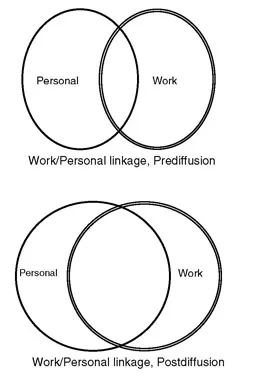
Figure 1.1 Work/Personal Linkage, Pre- and Post-Internet Diffusion in the Workplace
It is difficult to recall what life was like before this level of connectivity and instantaneous access to billions of bytes of information was possible. Yet this workplace phenomenon has assumed an important place in corporate America only since 1995 (Websense 2005). Of those who have access to the Internet at work in the United States, visiting Web sites for business purposes increased from 83.7 percent in 2000 to 91.2 percent in 2004. Additionally, reported personal usage at work grew from 50.7 percent in 2000 to 64.7 percent in 2004 (USC Annenberg School 2004).
While some of the transformations in the workplace induced by the Internet are remarkable, others are more understated; some are immediately apparent while others are more long term. What cannot be doubted is that how people work is different from how people worked in the previous century. Before the diffusion of computer-enabled technology in general and the revolution engineered by the Internet, work spheres and personal spheres were largely separated. People went to work, did their job, and went home to their personal lives; companies had defined work shifts in terms of hours and days. People generally left their unfinished work on their desks at the end of their prescribed work time. The diffusion of the Internet into the workplace has dramatically changed this pattern, and the overlap between the two spheres is now considerable (Figure 1.1). People now take their work into their personal time and their personal interests into their work time with fluidity and ease. The rewards are numerous, such as flexibility, autonomy, increased capacity for work, ability to work in a global environment, and access to vast amounts of information. The challenges of the overlapping spheres are also numerous and familiar to individuals and organizations—for example, stress, overwork, loss of organizational control, and proliferation of information and noise.
The Internet has altered the work environment, the business environment, and the competitive environment in a cycle of interdependent relationships. “The Internet became a catalyst for new business models, strategies, and organizational structures. It introduced new factors that affected the competitive landscape, new rivalries, new competitors, and new pressures” (Wallace 2004, 3). The business changes caused by the Internet demanded a recasting of the terms of the employment relationship known as the psychological contract, especially in the United States, but also in the rest of the world (as Internet usage increases). The pre-Internet psychological contract signified the employee’s and employer’s beliefs or perceptions about the employment association (Robinson and Rousseau 1994). In the pre–Internet-defined psychological contract, the employer was the caretaker and provider; the employee performed the prescribed job and was rewarded for performance; there was job security and certainty. The psychological contract had a transactional component focused primarily on tangible compensation requirements, and a relational component involving socioemotional elements, such as, trust, fairness, and commitment (Robinson et al. 1994).
However, due to changes brought about in large part by the Internet, a new psychological contract has been evolving. This new contract is based on shorter-term employment, employee responsibility for career development, commitment to the work performed rather than the employer, and the diminishing importance of hierarchy (Ehrlich 1994).
In this volume, we present several ways in which the Internet forces attention toward the changing nature of information, business, and management and how best to utilize employees’ capabilities and potentials as they operate under the new psychological contract. The role of the Internet is shaping work existence through both promising and troubling transformations. We are seeing promising transformations in knowledge management, in usability of interfaces to promote learning, in virtual teams, and in virtual career support. Simultaneously, we observe troubling transformations such as the increase in deviant Internet behavior, varying in degree of severity from “cyberloafing,” defined as the voluntary act of employees using their companies’ Internet during office hours to surf non-job-related Web sites for personal purposes (Lim et al. 2002), to diminished capacity for self-control manifested in addictive behavior.
We are also developing insights into how to manage through transformative modes such as human resource management, work commitment, organizational justice, and sensitivity to national culture differences. Thus transformative modes have a containing or diminishing effect on troubling transformations and an encouraging effect on promising transformations.
This volume is divided into three parts: Part I, Troubling Transformations; Part II, Promising Transformations; and Part III, Changing Troubling Transformations Into Promising Ones. It is a collection of conceptual and empirical work, providing a rich resource as well as an agenda for future scholarly endeavors.
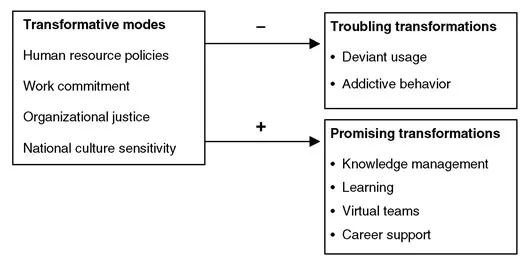
Figure 1.2 The Internet and Workplace Transformation
PART I: TROUBLING TRANSFORMATIONS
Part I has four chapters exploring Internet abuse—the troubling side of the Internet in the workplace. Pruthikrai Mahatanankoon in Chapter 2 (Internet Abuse in the Workplace: Extension of Workplace Deviance Model) extends a model of workplace deviance in general to specifically include unproductive Internet usage. Deviant use of Internet technology is defined as usage of Internet technology in the workplace that violates the accepted standards of an organization and in doing so threatens the well-being of the organization and/or its members. Individual, social, and technological factors interact with psychological factors to explain an individual’s propensity to commitment deviant Internet behaviors. Mahatanankoon defines four spheres of deviant Internet behaviors: property, production, political, and personal aggression. The consequences of such behaviors negatively impact the individual, others in the organization, and the organizational entity.
The next three chapters examine problematic Internet usage. Problematic Internet usage is distinct from cyberloafing in the degree of severity. While cyberloafing may inhibit productivity, problematic Internet usage is a serious occupational health issue. It is a multidimensional syndrome consisting of cognitive and behavioral symptoms resulting in negative social and professional consequences. All three chapters present strong arguments for psychosocial predispositions as antecedents rather than as consequences of problematic Internet usage. The chapters provide a better understanding of the psychological and interpersonal processes that facilitate the development of problematic Internet usage.
In Chapter 3 (Self-Regulation of Communication Technology in the Workplace), Eastin et al. argue that psychological state and image management relate to self-efficacy perceptions and unregulated Internet use. The transition to problematic usage begins when accessing the Internet acts as an important or exclusive mechanism to heighten one’s image and relieve some form of negative affect such as stress, depression, boredom, or anxiety in the presence of a weak self-regulation mechanism.
James Phillips in Chapter 4 (The Psychology of Internet Use and Misuse) and Scott Caplan in Chapter 5 (Problematic Internet Use in the Workplace) continue the discussion on problematic behavior in Internet use. Phillips discusses the role of preexisting tendencies (low self-esteem and procrastinating behaviors) in fostering addictive Internet use. The chapter offers two explanations for inappropriate workplace Internet use: (1) the diminished self-control associated with a strong habit (an addiction) and (2) a deliberate act linked to a tendency to procrastinate with a subsequent tendency to offer diminished self-control as an excuse.
In Chapter 5, Caplan argues that problematic Internet use in the workplace is not analogous to other behavioral addictions. Instead, Caplan views problematic Internet use through a cognitive-behavioral model that proposes that psychosocial problems, such as loneliness or social anxiety, predispose some Internet users to develop cognitions and behaviors involving their online activity that ultimately result in problematic Internet usage.
PART II: PROMISING TRANSFORMATIONS
Part II con...
Table of contents
- Cover
- Half Title
- Title Page
- Copyright Page
- Table of Contents
- Series Editor's Introduction
- 1. The Internet and Workplace Transformation: An Introduction
- Part I. Troubling Transformations
- Part II. Promising Transformations
- Part III. Changing Troubling Transformations Into Promising Ones
- Editors and Contributors
- Series Editor
- Index
Trusted by 375,005 students
Access to over 1.5 million titles for a fair monthly price.
Study more efficiently using our study tools.
Frequently asked questions
Yes, you can cancel anytime from the Subscription tab in your account settings on the Perlego website. Your subscription will stay active until the end of your current billing period. Learn how to cancel your subscription
No, books cannot be downloaded as external files, such as PDFs, for use outside of Perlego. However, you can download books within the Perlego app for offline reading on mobile or tablet. Learn how to download books offline
We are an online textbook subscription service, where you can get access to an entire online library for less than the price of a single book per month. With over 1.5 million books across 990+ topics, we’ve got you covered! Learn about our mission
Look out for the read-aloud symbol on your next book to see if you can listen to it. The read-aloud tool reads text aloud for you, highlighting the text as it is being read. You can pause it, speed it up and slow it down. Learn more about Read Aloud
Yes! You can use the Perlego app on both iOS and Android devices to read anytime, anywhere — even offline. Perfect for commutes or when you’re on the go.
Please note we cannot support devices running on iOS 13 and Android 7 or earlier. Learn more about using the app
Please note we cannot support devices running on iOS 13 and Android 7 or earlier. Learn more about using the app
Yes, you can access The Internet and Workplace Transformation by Murugan Anandarajan,Thompson S. H. Teo,Claire A. Simmers in PDF and/or ePUB format, as well as other popular books in Business & Business General. We have over 1.5 million books available in our catalogue for you to explore.