Originally published in 1986, this volume deals with the historical, philosophical and psychological concepts found in Islamic medical practices, and covers Islamic ideas on physiological, pathological, curative and preventative medicine. This was the first systematic study of Islamic medicine to be published in the English language and continues to have much relevance at a time when interest both in Islamic thought and in alternatives to conventional medicine is strong.
- 128 pages
- English
- ePUB (mobile friendly)
- Available on iOS & Android
eBook - ePub
Islamic Medicine
About this book
Information
CHAPTER 1
Historical background
We have sent among you an apostle (Muhammad, P.B.U.H) from among yourselves, rehearsing to you our signs, and instructing you in scripture and wisdom and in new knowledge.
The Qur’an 2:150
Health and medicine in pre-Islamic Arabia
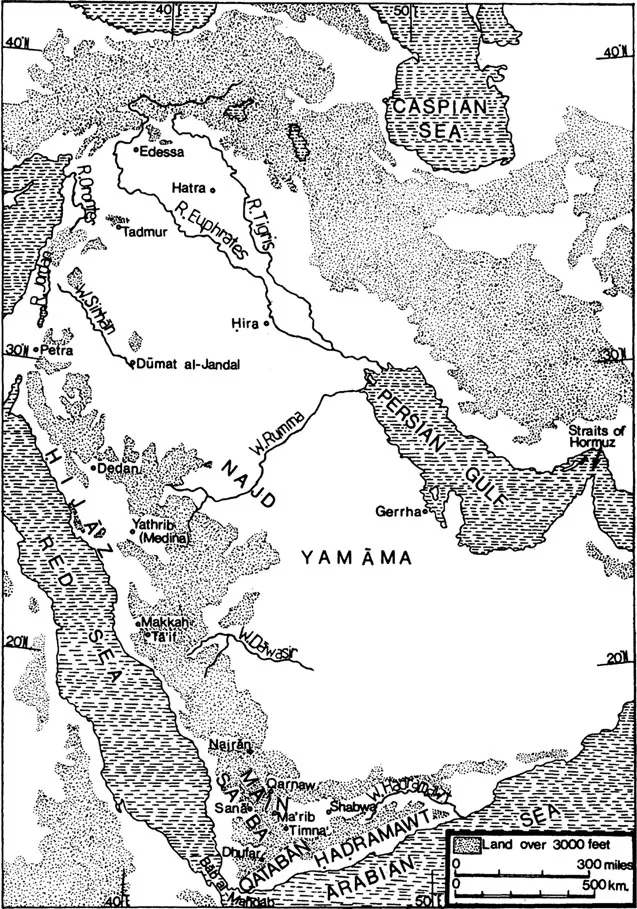
Before considering the genesis and development of Islamic medicine, it would be useful to begin by enquiring into medical conditions before Islam. Pre-Islamic Arabia provides an interesting case study and comparative analysis with later Islamic civilisation. Consideration of the ecological and socio-cultural conditions in ancient Arabia would be an appropriate starting point. The Arabic term Jazirat Al-Arab – the Arabian peninsula, has come to be used for the whole of the Arabian peninsula which is situated on the east of the Red Sea and extends as far as the Modern Iranian Gulf.1 The peninsula has considerable variation in climatic and ecological conditions which have influenced both the level and development of medicine.
Pre-Islamic Arabia
Within the Arabian peninsula is to be found one of the great desert regions of the world, covering an area of about 900,000 square miles. It is bordered in the west by the Red Sea, in the north by the Syrian Desert, in the south by the Arabian Sea and the Gulf of Aden and in the east and north-east by the Persian gulf, the Gulf of Oman and the Arabian Sea. There is almost always a breeze which changes seasonally to winds of gale force, cold or hot, which chill the body especially at night and roast it during the summer days. The summer heat is intense, with the interior of the peninsula being dry and tolerable. Coastal regions and some highlands, however, attain high humidity in summer with dew and fogs at night or in the early mornings.
The winters are invigoratingly cool with the coldest weather occurring at Taif, with several inches of snow and ice. Summer rains in Rub Al-Khalil accompany the monsoon winds from the Indian Ocean. Dominant winds blow from the Mediterranean, swinging to the east, south-east and south-west in a great arc. Two semi-annual windy seasons occur from December to January and from May to June. These are called Shamals, which try the patience of man and beast, are dry and transport huge loads of sand and dust, altering the shapes of sand dunes. Sharp drops in temperature are often followed by rain with wind velocities reaching gale force. On hot days the wind produces myriads of Jinn – dust devils and the ill-famed mirage.
The vegetation throughout the peninsula is varied. Plants are primarily xerophytic – those which grow in very dry conditions. After the spring rains long-buried seeds germinate and bloom. Date palm are grown in many oases in the desert, and across the peninsula. Also found is rice, alfalfa, barley, wheat, citrus, melons, tomatoes, onions, and in higher regions peaches, grapes and pomegranates. Fish is in abundance in Al-Hijaz. Ancient Arabia was well known for its production of myrrh and frankincense, two important ingredients in the ancient civilizations of Egypt and Greece.2
Arabia has been inhabited by mankind since early times, and consequently Arabia has had many influences from different civilisations. Most of the ancient cultures have perished however.3 The Arabs consider themselves to be descendants of Kahtan and Adnan. From these two ancestors arose numerous tribal units, forever splitting or confederating. Ancient Arabs lived as nomadic and semi-nomadic camel- and sheep-owning pastoralists in villages with agriculture. The cities have had merchant and religious classes. The Quraish of Makkah were an important group of tribes who controlled commerce and were in charge of the religious shrine of Kabbah. They organized two great trading caravans, one setting out in winter for Yemen, the other in summer for Syria. These were huge convoys bringing Oriental and African goods such as perfumes and silk. The visits of these caravans culminated in fairs with pilgrims at Makkah.
Although there have existed montheistic communities, pre-Islamic Arabia generally was polytheistic. Numerous deities were worshipped, the chief being Al-Lat, Al-Uzza and Manat.4 Promiscuity was widespread and there were mass nude exhibitions and rituals in which both sexes took part.5 The status and treatment of women was inhuman. Women had no right of inheritance and were considered a commodity. If a man died, the head of the clan would throw his gown over the widow as a gesture of acquisition which meant that the widow could not re-marry anyone except the owner of the gown. If he so wished he would marry her, or keep her in a state of bondage until she died.6 Female-child infanticide was common. Newborn girls were buried alive or thrown to their premature deaths from high places.7 This callous and inhuman practice left deep emotional trauma on members of the unfortunate families, including the father who had to perform the brutal act.8 Tribal chauvanism was the hallmark of ancient Arabia. Tribal wars were a common occurrence fermented by interminable vendettas, with the killing of men and enslaving of children and women.9
The psychological implications of living in a society of ignorance and injustice were deep insecurity, excessive pride, guilt and dependence on alcohol. Alcohol for the pre-Islamic Arab was a psychological necessity. Life amidst oppression and stress created optimum conditions for the abuse of alcohol. It was so common that the Arabic word Tajir, which means merchant, became a synonym for the salesmen of Khmar – alcohol. The shops and bars of these merchants never closed during the day or night and were clearly distinguishable, being designated with special flags.10 It is within this ecological and socio-economic environment that the level of health and medical knowledge of the pre-Islamic Arabs needs to be located. The general level of health was poor, and harsh climatic conditions were exacerbated by social injustice, poverty and ignorance. Thus it was fertile soil for the growth and proliferation of numerous diseases. The scarcity of a clean and adequate supply of fresh water was a permanent feature. The nutritional situation was poor, with a shortage of food and a monotonous diet. There were a number of endemic diseases – leprosy, malaria, tuberculosis, rickets, scurvy, numerous eye diseases and gastro-intestinal diseases.11
The pre-Islamic Arabs were familiar with the working of major internal organs, although only in general. Surgical knowledge and practices were limited to cauterisation, branding and cupping. The care of the sick was the responsibility of the women. There is no evidence of any oral or written treatise on any aspect of medicine. There was use of folk medicine, which has interesting connections with magic. It is also interesting to note that pre-Islamic Arabia had contacts with ancient Egypt, Greece, Persia and India, where medicine was highly developed, but there is no material to suggest that it was adopted or utilized by the ancient Arabs. This is particularly surprising in view of the fact that the ancient Arabs were well developed in their poetry.
Medicine in the early period of Islam
The beginning and development of Islamic concepts and practices of health are inextricably interwoven into the general body of Islam. The organic nature of Islam encompasses the core principles of Islamic health traditions. For an understanding of the historical or conceptual aspects of Islamic medicine reference to Islam itself has to be made. The earlier brief sketch of pre-Islamic Arabia provides a window onto the type of society at the time of Muhammad, peace be upon him. The proclamation by Muhammad, P.B.U.H., that he was the final messenger and prophet of Allah to mankind began with the Wahy – the revelation. Until this day Muhammad, P.B.U.H., had lived as a man, amongst pagan Arabs, working as a trader. The people of Makkah, where he was born and grew up knew him to be a reflective, gentle, kind and trustworthy man. The forty years that he spent amongst them led them to regard him as Al-Ameen – the trustworthy. The foundation of Muhammad’s message was knowledge, based upon higher value. The first revelation placed knowledge, as its central focus, ‘read in the name of Lord who created human being from clots of blood. Read! Your Lord is the most bounteous who has taught the use of the pen. Has taught human being what he did not know.’12
Thus the ignorance-based society of ancient Arabia was faced with Islam, which considered revealed knowledge to be its basis. The revelation continued to be a regular feature of the twenty-three years, and the repository of revealed knowledge became the Qur’an which, as a source of direct and pure knowledge, addressed itself to all facets of ancient Arabian belief and conduct. Whilst on one hand the Qur’an stressed the oneness of Allah and his powers, there was also the continued scrutiny of injustices and oppression. The Qur’an was clear and explicit in referring to these callous practices:
When if one of them receive tiding of the birth of a female his face remains darkened, and he is wrath inwardly. He hides himself from the folks because of the evil of that whereof he has had tidings, (asking himself)! Shall he keep the child in contempt or bury it in the dust. Verily evil is their judgement.13
‘And do not marry those women whom your fathers married . . . it was ever lewdness and abomination, an evil way.’14
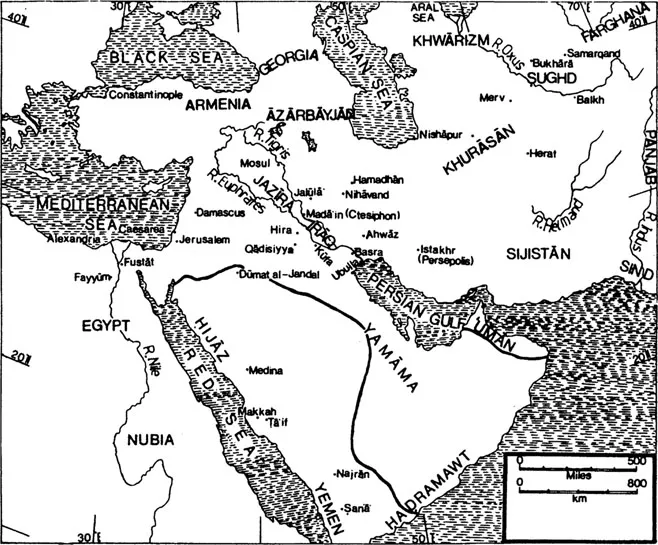
Muhammad, P.B.U.H., continued his work for thirteen years in Makkah and within a decade he was able to attract most of the oppressed people, many of them slaves and poor. The small number of Muslims became increasingly victims to abuse, torture and killing. When the Quraish saw no success in their methods, they planned to kill Muhammad, P.B.U.H. News of this reached the Prophet and he decided to leave Makkah and migrate to the ancient city of Yathrib. (Later Yathrib was referred to as Medina-Almunawra – the illuminated city). It is from this event that Islamic dating begins which is known as the Hijra. It was in Medina that the Muslims became a community. As a community, as with other aspects of life and living, they began to develop a tradition of health and well-being that has continued to be practised in Muslim communities throughout the world. The ecological and climatic conditions in Medina were much more conducive to life and health than Makkah. Medina provided the conditions for the unfolding of Shariha – the Islamic way of life, of which medicine was an integral part. The Qur’an gave general guidelines and rules on nutrition, cleanliness, marital relations, child rearing, etc. As an example the Qur’an established the relationship between nutrition and behaviour. The concepts of Halal – lawful – and Tayab – wholesome – were linked to Amal Salha – constructive behaviour – and Fisq – destructive behaviour related to Haram – unlawful foods and beverages.
The messenger, P.B.U.H., laid great stress on the importance of sound health amongst his followers. He once said that: There are two gifts of which many men are cheated, health and leisure.’15
The time of the Prophet, P.B.U.H.
Muhammad, P.B.U.H., gave specific instructions on various aspects of healthcare and treated people himself. He gave detailed information on specific diseases such as leprosy and infertility, with their causes and treatments. He prohibited certain types of treatments such as cauterisation and magic and introduced more appropriate ones. It was Muhammad, P.B.U.H., who told his companions not to embark upon treatment without adequate training. If any patient is harmed then the practitioner has to pay Diya – compensation.16 The prophet Muhammad, P.B.U.H., provided the foundation for a medical tradition that considered a human being in its totality; the spiritual, the psychological and the physical within the context of a social milieu. The environment in Medina was one where ignorance and oppression was replaced with knowledge and justice. The level of health and well-being of the people of Medina was such that it appears miraculous. There was an enormous difference in the level of health between the pre-Islamic era to that in the new community of Muslims. A story from the period illustrates the health conditions:
One of the kings of Persia sent to Muhammad, P.B.U.H., a learned physician. The physician remained in Arabia for one or two years but no one approached him or sought his treatment. At last he presented himself before the Prophet and complained: ‘I have been sent to treat your companions but during all this time no one has asked me to carry out my duties in any respect whatever’ to which the Prophet replied: ‘It is the custom of these people not to eat until hunger overcomes them and to cease eating while there still remains a desire for food!’ The physician answered: This is the reason for their perfect health,’ kissed the ground in reverence and departed.17
The period that followed the death of the Prophet, P.B.U.H., is referred to as Khilafit-I-Rashida – the right-guided rule. The Prophet had created a generation of men and women who became the torchbearers of knowledge and justice in the traditions introduced by him. It was during this period that the famous medical centre of Jundishapur became part of the Muslim lands and continued to flourish.18 Companions of the messenger, such as Umar and Ali had become masters of matters of health and medicine. The prophetic teachings were interpreted by these men. New cities were built according to health principles and Muslim forces and travellers were given specific instructions on the maintenance of complete health. The period was an unfolding of the efforts of the Prophet, P.B.U.H., which he continued during his entire life. This was the perio...
Table of contents
- Cover Page
- Half Title Page
- Title Page
- Copyright Page
- Original Title Page
- Original Copyright Page
- Dedication
- Contributors
- Contents
- Maps and diagrams
- Preface
- Acknowledgments
- Chapter 1 Historical background
- Chapter 2 Philosophical conceptions of Islamic medicine
- Chapter 3 The psychological foundations
- Chapter 4 Physiological concepts
- Chapter 5 Pathogenesis
- Chapter 6 Diagnosis
- Chapter 7 Preventative aspects
- Chapter 8 Principles of treatment
- Chapter 9 The future of Islamic medicine
- Glossary
- Notes and references
- Index
Trusted by 375,005 students
Access to over 1.5 million titles for a fair monthly price.
Study more efficiently using our study tools.
Frequently asked questions
Yes, you can cancel anytime from the Subscription tab in your account settings on the Perlego website. Your subscription will stay active until the end of your current billing period. Learn how to cancel your subscription
No, books cannot be downloaded as external files, such as PDFs, for use outside of Perlego. However, you can download books within the Perlego app for offline reading on mobile or tablet. Learn how to download books offline
Perlego offers two plans: Essential and Complete
- Essential is ideal for learners and professionals who enjoy exploring a wide range of subjects. Access the Essential Library with 800,000+ trusted titles and best-sellers across business, personal growth, and the humanities. Includes unlimited reading time and Standard Read Aloud voice.
- Complete: Perfect for advanced learners and researchers needing full, unrestricted access. Unlock 1.5M+ books across hundreds of subjects, including academic and specialized titles. The Complete Plan also includes advanced features like Premium Read Aloud and Research Assistant.
We are an online textbook subscription service, where you can get access to an entire online library for less than the price of a single book per month. With over 1.5 million books across 990+ topics, we’ve got you covered! Learn about our mission
Look out for the read-aloud symbol on your next book to see if you can listen to it. The read-aloud tool reads text aloud for you, highlighting the text as it is being read. You can pause it, speed it up and slow it down. Learn more about Read Aloud
Yes! You can use the Perlego app on both iOS and Android devices to read anytime, anywhere — even offline. Perfect for commutes or when you’re on the go.
Please note we cannot support devices running on iOS 13 and Android 7 or earlier. Learn more about using the app
Please note we cannot support devices running on iOS 13 and Android 7 or earlier. Learn more about using the app
Yes, you can access Islamic Medicine by Muhammad Salim Khan in PDF and/or ePUB format, as well as other popular books in Theology & Religion & Islamic Theology. We have over 1.5 million books available in our catalogue for you to explore.