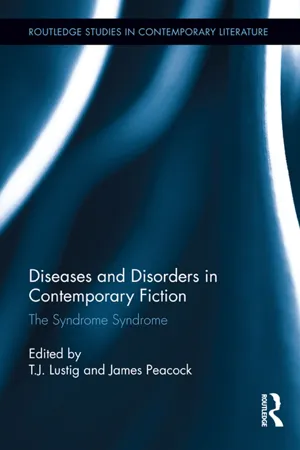
The essays in this collection address the current preoccupation with neurological conditions and disorders in contemporary literature by British and American writers. The book places these fictional treatments within a broader cultural and historical context, exploring such topics as the two cultures debate, the neurological turn, postmodernism and the post-postmodern, and responses to September 11th. Considering a variety of materials including mainstream literary fiction, the graphic novel, popular fiction, autobiographical writing, film, and television, contributors consider the contemporary dimensions of the interface between the sciences and humanities, developing the debate about the post-postmodern as a new humanism or a return to realism and investigating questions of form and genre, and of literary continuities and discontinuities. Further, the essays discuss contemporary writers' attempts to engage the relation between the individual and the social, looking at the relation between the "syndrome syndrome" (referring to the prevalence in contemporary literature of neurological phenomena evident at the biological level) and existing work in the field of trauma studies (where explanations tend to have taken a psychoanalytical form), allowing for perspectives that question some of the assumptions that have marked both these fields. The current literary preoccupation with neurological conditions presents us with a new and distinctive form of trauma literature, one concerned less with psychoanalysis than with the physical and evolutionary status of human beings.
eBook - ePub
Diseases and Disorders in Contemporary Fiction
The Syndrome Syndrome
- 216 pages
- English
- ePUB (mobile friendly)
- Available on iOS & Android
eBook - ePub
Diseases and Disorders in Contemporary Fiction
The Syndrome Syndrome
About this book
Trusted by 375,005 students
Access to over 1.5 million titles for a fair monthly price.
Study more efficiently using our study tools.
Information
1
The Naturalistic Turn, the Syndrome, and the Rise of the Neo-Phenomenological Novel
Hamlet fascinates. For conservatives, he is the jewel in the crown of the Western canon. But even critics on the left see Hamlet as the first literary portrayal of a modern self. Being modern mostly seems to involve turning inward, and this involves thinking—thinking too much, perhaps. Hamlet is the first modern self because in Shakespeare’s reworking of the revenge tradition, conventional obstacles to action are transmuted into thoughts. But those thoughts, the inward ruminations of the melancholic mind reflecting endlessly upon itself, are also the source of Hamlet’s undoing. Thinking too much makes you sick. The modernity of Hamlet’s subjectivity seems inextricably bound to the question of his madness. The old chestnut of literary criticism—is he or isn’t he mad?—continues to haunt us. Is Hamlet’s antic disposition the sign of genuine unreason or a strategic and perfectly rational disguise? Or is it rather a strategy for coping with a devastating absence? In this interpretation, Hamlet mimics the flamboyant gestures of the stereotypical madman in order to conceal a deeper but ‘partial’ madness. He may be mad, but not in the way others think he is mad. Hamlet fascinates because his is a very modern madness.
“Psychology can never tell the truth about madness because it is madness that holds the truth of psychology:” so Michel Foucault asserts in Madness: the Invention of an Idea (2011, 73). The book was written in the early 1950s when Foucault was working in psychiatric hospitals and observing the rise of neuro-surgery and psychopharmacology. He witnessed the beginning of a ‘naturalistic’ turn that would reshape understandings of mental health in the era of the syndrome. Psychology invented ever more ingenious ‘personality’ tests and statistical measurements of human behavior in order to fit the postwar population to the new rigors of welfare capitalist corporate life. Behaviorism was supplanted by computational models of mind. Neo-Darwinist assumptions of hard-wired modules and evolutionarily honed ‘distal’ mechanisms displaced the idea of consciousness as self-reflection—the model of the mind for which Hamlet stands as the literary exemplar. New psychotropic drugs gave further credence to the idea of the mind as simply the neuro-transmissions of the brain. At an early point during this naturalistic turn in the cognitive sciences, the first edition of the Diagnostic and Statistical Manual of Mental Disorders (DSM–I)—the first systematic diagnostic manual of psychiatry—was published. The mind was well on its way to medicalization (see Andreasen 1984, Aronowitz 1998, Morris 1998, Luhrmann 2000, Horowitz 2002 and Lane 2007).
During this transition from earlier dynamic psychologies of mental illness to the biomedical syndrome, a hugely influential essay, “On Being Sane in Insane Places,” was published. David Rosenhan tested R. D. Laing’s claim that psychiatry was in a state of diagnostic chaos by sending eight individuals to different psychiatric hospitals, each claiming to be hearing a voice repeating particular words like ‘thud.’ Diagnoses were largely, though not entirely, of schizophrenia, with a bizarre variety of ‘co-morbid’ states being subsequently reported: one ‘patient,’ observed queuing a few minutes early for the hospital canteen, was reported to be suffering from ‘oral acquisitiveness syndrome;’ another, jotting down ideas in a notebook, was diagnosed with ‘obsessional writing syndrome’ (see Rosenhan 1973). On exposure of the hoax, the American Psychiatric Association initiated a program to collect data on mental illness which resulted in DSM–III. In 1980, then, the Age of the Syndrome began. Some twenty years later, the psychologist Stephen Pinker announced that cognitive neuroscience “will not shrink from applying its new tools to every aspect of mind and behavior” (2002, 135).
The neuroscientific literature underpinning much of the thinking behind the rise of the syndrome offers an understanding of mental disorder which not only somatizes but also molecularizes the self. Mental illnesses are diseases of the brain or central nervous system conceived as evolutionarily wired into localized and dedicated functional modules. These modules signal to each other via dendritic and axonal interconnections through chemical and electrical transmission. The ‘self’ is reduced to a material property of the brain and can still further be reduced to neural networks, modules, neurotransmitters and genes (see Dennett 1993, Calvin 1997, Wilson 2004, Rose 2005). But this phantom objectivity naturalizes (in the Marxist sense) what is actually constructed: it exhibits what Alfred North White-head called the fallacy of “misplaced concreteness” (1997, 51). In 1890, William James, the American philosopher who also trained in medicine, cautioned against medical materialism and the positivist insistence on the separation of fact and value: “there is no purely objective standard of sound health [ … ] we should broaden our notion of health instead of narrowing it” (1950, II: 545). In our own time, the syndrome has been naturalized (in the Marxist and scientific sense) through neurobiological materialism. The teenager at odds with the world now learns the mantra that ‘it’s not me, but my ADHD’; the distinguished professor struggling with constant performance monitoring now prefers to blame ‘chronic fatigue syndrome’ rather than neo-corporate late capitalism. All of us reach for the phantom ‘object’—material or social—to explain our sicknesses of soul. And this is especially true when the theorists, philosophers, and self-help books seem bent on persuading us that the idea of ‘my self’ is an outmoded metaphysical entity (see Kenny 1988). ‘I’ am instead simply a body extended into a nervous system that helps me survive through the illusion of a self; I am, in effect, wired up like a computer, and when I go wrong it is for mechanical reasons, just as a computer goes wrong.
Looking for alternatives to this bleak picture, we find psychosocial medicine approaching mental illness as socially constructed within norms of behavior that determine available possibilities. Such studies include Thomas Szasz-style denials of the very existence of mental illness, but also more nuanced ‘bio-cultural’ accounts by philosophers and historians who argue that suffering produces observable changes in individuals and is disseminated through social (as opposed to neurological) mechanisms (see Shorter 1997, Hacking 1998). The distress that appears as anorexia in one culture may present as abdominal pain in another. Ian Hacking describes an outbreak of the dissociative disorder of fugue amongst lower-middle-class clerks in late nineteenth-century France. He argues that the appearance of a disorder taking this form and restricted to this group was created through class precariousness and professional boredom. Such feelings found expression in an “ecological niche” shaped by the culture’s fascination with travel as a sign of leisure, and its fear of that other, more commonly encountered traveler, the mad vagrant (Hacking 1998, 1 and passim). For Hacking, fugue is a ‘real’ illness which arises out of class (and gender) positioning at a particular historical moment and geographical place. There is no gene propelling us to wander unknowingly.
But such accounts are unheard of in biomedicine. Biologization encourages abandonment of even a basic distinction between ‘organic’ (somatic) and ‘functional’ (mentally induced) disorders. Just as the self is somatized and molecularized, so more and more of everyday life is medicalized. Though Eric Kandel introduced the idea of neural plasticity and offered a more sophisticated epigenetic argument that recognized the significance of cultural influences on gene expression, he also optimistically predicted that, as “biology begins to change the nature of psychiatry,” the latter field would become a “more scientifically rigorous medical discipline” (1998, 467). Genes are deep in our culture, but the breadth of human experience is scarcely represented in the ever-increasing number of symptom clusters lining up for inclusion as syndromes under the neurobiological umbrella. DSM–V, still under construction but available online, lists almost five hundred. The prospect of successful pharmaceutical treatment of chronic or ineradicable symptoms may be a factor here, particularly in a culture for which the pursuit of health has become equivalent to the Platonic good. Stigma too may play a role, for if we accept that we can be held morally responsible for our ‘mental’ choices, there is no such responsibility if we imagine that genes determine our brain chemistry and therefore behavior. Most of all, perhaps, in a secular age, the syndrome provides hope for a way out of what Kierkegaard calls “the sickness unto death,” the ever present anxiety that accompanies the condition of mortality and is sometimes referred to as ‘shit life syndrome.’
The transition from madness to mental disorder in bio-psychiatry and the concomitant neurobiologization of the mind has fascinated contemporary novelists. Some claim to have rejected postmodernism and its mantra of uncertainty. But the rise of postmodernism overlapped with that of the “evolutionary epic,” E. O. Wilson’s term for scientific approaches which reductively insisted that human behavior and culture was biologically determined (1978, 201). It might seem, then, that swallowing the pill of neurobiology would be the quickest way to reject postmodern uncertainty. But those who reject postmodernism often blame cognitive science and neo-Darwinianism for the decline of a humanist conception of interiority. Indeed, there are valid grounds for suspicion. As the naturalistic turn gathered momentum, a hermeneutic sense of selfhood as a complex and dynamic reframing of experience was left behind. The new paradigm (most influentially articulated by Dennett [1995]) had no need for the idea of intentionality or agency. If Hamlet is taken to be emblematic of modern consciousness as the capacity for self-conscious introspection, postmodernist self-reflexivity seems—like the naturalistic account of behavior—to have no need of mind, authorship or selfhood. If Hamlet suffers from the disease of doubt, of a characteristically modern hyper-reflexivity, the postmodern might, following Fredric Jameson, be encapsulated as a new “pathology of auto-referentiality,” of not thinking at all (1991, 392).
Few writers of fiction have been as postmodern as that and few have seen science as the way out of the postmodern. In fact, Jonathan Franzen suggests that his “recovery” from postmodernism involved quelling the “amateur scientist” in himself (2004, 10). But everyone seems to agree that postmodernism is over. Zadie Smith pronounced it dead in 2009: “the American metafiction that stood in opposition to realism has been relegated to a safe corner of literary history” (73). As early as 1993, David Foster Wallace suggested that the “linguistic self-consciousness” of metafiction “gets empty and solipsistic real fast.” For Wallace, fiction is “about what it is to be a fucking human being”; half the job of the novelist is to “dramatize the fact that we still ‘are’ human beings” (1993, 143). Yet the obituaries for postmodernism had hardly been written when the arrival of cognitive neuroscience was loudly proclaimed. After the molecular biology revolution, as the social theorist Nikolas Rose puts it, “things will not be the same again” (2007, 5). According to Rose, “the deep psychological space that opened in the twentieth century has flattened out”: life is now best understood “at the molecular level” (192). Writing on the neurobiological turn, the novelist Marilyn Robinson takes a more nuanced view: for her, claims of “epochal change” are rhetorical displays of discursive power (see 2010, 3–4).
The apocalyptic fervor of early cognitive science and postmodernism seems to have faded. The contemporary novel shows a continuing preoccupation with what it feels like to live in a biomedicalized, neo-corporate, late capitalist, post-postmodern culture and with the relations between the economic and the neurobiological as they play out in the psychopathologies of contemporary everyday life. But the pathologies have changed. The manic addictions, obsessions and anxieties of the postmodern 1980s captured in Martin Amis’ Money (1984) or Bret Easton Ellis’ American Psycho (1991) have been replaced by a sense of what the sociologist Alain Ehrenberger calls “the weariness of the self” (2010). We are somehow back to Hamlet. The sobriety of titles such as The Corrections (2001), Remainder (2005) or The Terrible Privacy of Maxwell Sim (2010) reflects a continuing preoccupation with the self after postmodernism and the naturalistic turn. But the mania has gone. These are primarily novels about loss, inadequacy, and weariness in which the dominant mood is depressive (though sometimes comic-depressive) rather than apocalyptic, manic or addictive.
In the current cross-disciplinary quest to recover from what Raymond Tallis calls “neuromania” and “Darwinitis” as well as from postmodernism, there seems to be a renewed interest in retrieving the self through examining those processes and structures of feeling that give rise to its loss, as in conditions of mental disturbance and depression (2011). After post-modernism, there is an acute awareness that language plays a crucial role in this process. Madness is demotically referred to as being ‘off one’s head’ or ‘out of one’s mind.’ Mind is conceived here as supra-bodily space. In ‘shattered’ or ‘frayed nerves,’ however, the suggestion is of something material. Either way, words make a difference to how we understand ourselves; metaphors are abridgments of metaphysics; and the novel is the perfect place to explore what it is like to live in a biomedicalized world. Franzen writes of his journey from postmodernism, through neuro-flirtation, to a sense that fiction recovers “the soul-like aspects of the self,” showing that we are “more than our biologies” (2004, 33). In its self-reflexive, masterfully comic anatomy of a culture obsessed with its own biological life and neglectful of its soul, The Corrections describes the results of this journey. In his 2004 essay “Why Bother?” Franzen writes of that earlier incarnation of himself who, feeling that his culture offered him a choice between “being sick or healthy,” chose to become depressed: “if that flattening of possibilities is what’s depressing you,” he comments, “you’re inclined to resist … by calling yourself depressed” (72). Franzen’s former self is reincarnated in the novel as the Lamberts’ son Chip, politically correct intellectual manqué, who is as obsessed with the pursuit of sex as he is with his lack of money, and who pronounces on the biomedical condition of his culture by observing that “the very definition of ‘mental health’ is the ability to participate in the consumer economy” (2001, 36). Chip’s brother Gary, the neo-corporate man, resident of executive commuter-belt country, is similarly in a constant state of self-monitoring and socially mimetic self-fashioning. Through Gary, Franzen revisits the “amateur scientist,” giving us a satirical portrait of an individual who constantly tracks his neurochemistry, checks the neural correlates of every slump in mood or spring in step, and is terrified that his performance as the confident corporate executive, the happy bourgeois husband and family man, might fall short. Wearing a post-Fordist mask of smiling neutrality, Gary throws himself into the urban pastoral of his Iron John role as the spearer and searer of exotic barbecue meats. Despite this constant monitoring of bodily signs, however, Gary cannot acknowledge his inability to find pleasure and meaning in life. The urban pastoral palls, and instead of browning meat on the barbecue he sees the “eternal broiling, broiling of the damned. The parching torments of compulsive repetition” (189). Feeling here becomes perception though not self-knowledge, for the language of DSM–IV has intervened: Gary’s “weariness” involves “the deficit of every friendly neurofactor” (263). Misery is neurological “deficit,” a cause and not the effect of his condition.
Franzen depicts a culture mired in a depressive free-fall from which the only exits are money or bio-science—the disease pursued as cure. Despite constant self-surveillance, everyone is hidden to themselves, in anosognosic flight from spiritual weariness. A neuro-maniacal obsession with the body and the brain, with the discourse of physical health and self-fulfilment, presents self-reflexivity, not as a route to cure, but as part of the sickness. Franzen moves from the comically postmodern to an estrangement from postmodernism’s own estrangement by revealing how the affective self-estrangement infecting all of his characters is a restitution strategy, an attempt to name and contain a pervasive mood of weariness that colors the entire world. The Corrections opens with one of the most brilliant portrayals of Kierkegaardian angst in contemporary fiction as a cold front creeps over the “gerontocratic” suburbs of St Jude and an “alarm bell of anxiety” rings in the heads of Alfred and Enid, the ageing parents of Gary and Chip (3). It is as if Franzen sets out to extrapolate The Sickness Unto Death into life in the contemporary US. Kierkegaard wrote that there is “not one single living human being who is completely healthy” and “not one single living human being who does not despair a little” (1980, 22). And in Franzen’s novel, “despair” looms in empty hours that are a “sinus in which infections bred,” in the “metasound” of consciousness, which hears its own alarm bell of anxiety resounding through the world outside (4). Franzen creates a pre-reflective existential1 underworld which runs throughout the novel and intermittently explodes into melodramatic display in bizarre set-pieces (most memorably in the scene with Alfred and the talking turds). Alfred is lost in the ruminative labyrinth of his mind, but the source of his anxiety is the absence of an affective anchor in the world, an absence that is projected onto the world around him. A man brought up to regard feeling as self-indulgent, Alfred’s anxiety is not felt in his body: it is a feeling that takes over everything in his world. Suffering from a degenerative neurological condition, Alfred’s growing sense of dissociation from his ailing body leaves him with the feeling that he does not inhabit that either: his shaking hands become alien objects that he longs to chop off (see 77).
A sense of affective blankness is...
Table of contents
- Cover
- Half Title
- Title Page
- Copyright Page
- Table of Contents
- Acknowledgments
- Introduction
- 1. The Naturalistic Turn, the Syndrome, and the Rise of the Neo-Phenomenological Novel
- 2. Mapping the Syndrome Novel
- 3. From Syndrome to Sincerity: Benjamin Kunkel’s Indecision
- 4. “We learned to tell our story walking:” Tourette’s and Urban Space in Jonathan Lethem’s Motherless Brooklyn
- 5. The Pathologies of Mobility: Time Travel as Syndrome in The Time Traveller’s Wife, La Jetée and Twelve Monkeys
- 6. Syndrome, Symptom, and Trauma Chains in American Pre- and Post-9/11 Novels
- 7. Mind and Brain: The Representation of Trauma in Martin Amis’ Yellow Dog and Ian McEwan’s Saturday
- 8. “Two-way traffic”? Syndrome as Symbol in Richard Powers’ The Echo Maker
- 9. “I wanted unheimlich [ . . . ] but of the right kind. Strangeness and Strangerness without the blank despair:” Trauma and Travel in the Works of Jenny Diski
- 10. The Human Condition?
- 11. A Psychiatrist’s Opinion of the Neuronovel
- Annotated Bibliography of Primary Materials
- Annotated Bibliography of Secondary Materials
- Glossary
- List of Contributors
- Index
Frequently asked questions
Yes, you can cancel anytime from the Subscription tab in your account settings on the Perlego website. Your subscription will stay active until the end of your current billing period. Learn how to cancel your subscription
No, books cannot be downloaded as external files, such as PDFs, for use outside of Perlego. However, you can download books within the Perlego app for offline reading on mobile or tablet. Learn how to download books offline
Perlego offers two plans: Essential and Complete
- Essential is ideal for learners and professionals who enjoy exploring a wide range of subjects. Access the Essential Library with 800,000+ trusted titles and best-sellers across business, personal growth, and the humanities. Includes unlimited reading time and Standard Read Aloud voice.
- Complete: Perfect for advanced learners and researchers needing full, unrestricted access. Unlock 1.5M+ books across hundreds of subjects, including academic and specialized titles. The Complete Plan also includes advanced features like Premium Read Aloud and Research Assistant.
We are an online textbook subscription service, where you can get access to an entire online library for less than the price of a single book per month. With over 1.5 million books across 990+ topics, we’ve got you covered! Learn about our mission
Look out for the read-aloud symbol on your next book to see if you can listen to it. The read-aloud tool reads text aloud for you, highlighting the text as it is being read. You can pause it, speed it up and slow it down. Learn more about Read Aloud
Yes! You can use the Perlego app on both iOS and Android devices to read anytime, anywhere — even offline. Perfect for commutes or when you’re on the go.
Please note we cannot support devices running on iOS 13 and Android 7 or earlier. Learn more about using the app
Please note we cannot support devices running on iOS 13 and Android 7 or earlier. Learn more about using the app
Yes, you can access Diseases and Disorders in Contemporary Fiction by James Peacock, Tim Lustig, James Peacock,Tim Lustig in PDF and/or ePUB format, as well as other popular books in Literature & English Literary Criticism. We have over 1.5 million books available in our catalogue for you to explore.