- 174 pages
- English
- ePUB (mobile friendly)
- Available on iOS & Android
eBook - ePub
About this book
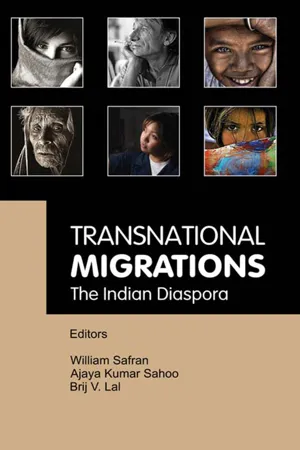
This book studies Indian diaspora, currenlty 20 million across the world, from various perspectives. It looks at the 'transnational' nature of the middle class worker. Other aspects include: post 9/11 challenges; ethnicity in USA; cultural identity versus national identity; gender issues amongst the diaspora communities. It argues that Indian middle classes have the unique advantages of skills, mobility, cultural rootedness and ethics of hard-work.
Trusted by 375,005 students
Access to over 1.5 million titles for a fair monthly price.
Study more efficiently using our study tools.
Information
Subtopic
Politics1
Examining the “Global” Indian Middle Class: Gender and Culture in the Silicon Valley/Bangalore Circuit
Smitha Radhakrishnan
Smitha Radhakrishnan is an Assistant Professor of Sociology at Wellesley College. Her current work examines the politics of a new “global India” through multi-sited ethnography in Indian cities and in the diaspora. Her recent articles have appeared in Theory and Society, Gender and Society and Feminist Studies. Correspondence to: Dr Smitha Radhakrishnan, Sociology Department, Wellesley College, 106 Central Street, Wellesley, MA 02481, USA. Email: [email protected]
Smitha Radhakrishnan is an Assistant Professor of Sociology at Wellesley College. Her current work examines the politics of a new “global India” through multi-sited ethnography in Indian cities and in the diaspora. Her recent articles have appeared in Theory and Society, Gender and Society and Feminist Studies. Correspondence to: Dr Smitha Radhakrishnan, Sociology Department, Wellesley College, 106 Central Street, Wellesley, MA 02481, USA. Email: [email protected]
Abstract
The phenomenal growth of India’s information technology (IT) industry has produced a transnational class of professionals who are actively engaged in constructing a notion of a new India that is global in scope, yet Indian in essence. The affluent US-based Indian diaspora, along with professionals in India, co-construct a new India. This interaction has been enhanced through growing professional opportunities in India for immigrants who return. Between the software hubs of Silicon Valley and Bangalore, discourses of belonging that emphasise “Indian family values” gain strength through constant circulation. Professional women play a critical role in re-inventing the Indian family and thus, a new kind of “global Indianness”. Drawing from interviews with software engineers in Silicon Valley and Bangalore, this paper argues that a new discourse of belonging to India is a fundamentally gendered one that relies on the ability of professional women to make delicate balances between an “Indian” home life and a “global” professional life. The similarities across contexts of these personal struggles indicate the merging of meanings of Indianness among professional Indians across the globe, suggesting a need for a transnational approach to diaspora studies that is attentive to the dynamics of gender, class and nation.
In June 2006, the cover of Time magazine in the USA featured the face of a beautiful Indian woman, clothed in the finery of a traditional Indian dancer. Amidst the jewels, distinctly Indian features and the bindi, was a prominently displayed headset, the icon of India’s booming call centre industry. The woman is smiling demurely, but gazing directly into the camera, apparently at ease among seemingly contrasting para phernalia. Her face is superimposed on top of a golden halo of elaborately embroidered silk, converting the image of a face into something as iconic as a flag. “India Inc.”, says the headline, “why the world’s biggest democracy is the world’s next economic superpower – and what it means for America.” A few days later, a follow-up article on Time’s website introduced the woman on the cover, who was not acknowledged in the print version – a professional Indian woman living in California. Gunjan Thiagarajan, age 29, was invited by a friend to be photographed by a stock photographer, and was asked to interact with various kinds of technological gadgets in her dance costume in exchange for $100. She was not a model or an actress, but a marketing professional who grew up in Nigeria, moved to the USA in the 1980s and is now married to a US-based Sri Lankan. The article suggests that Thiagarajan’s personal history makes her an appropriate model for a globalising India. Thiagarajan was told by her friends, the article says, that she was a good choice for the cover, as she “represented the best of a progressive global Indian woman” (Myers).
While several magazines have focused on India’s economic boom in recent years, often featuring Indian women, Time’s cover inadvertently drew in a diasporic woman to represent India’s success. Her Indianness was marked not through her location in India, but through bindi, jewellery, headset, and implicitly, her Indian-but-global femininity. The follow-up article online underscores the appropriateness of Thiagarajan’s face for projecting a new India. Not only did the image of Thiagarajan’s photo deliver the message that Time intended, but Thiagarajan’s story, the person behind the photo, became one more symbol of a global India: a nation rooted in an exotic, classical culture, that is still able to integrate seamlessly into a technology-driven global political economy. Implicit in the success of this image in communicating these messages are two interrelated trends: the centrality of the diaspora in articulating an ideology of “global Indianness” and the importance of a particular brand of femininity to convey the progress of the nation.
Here, I aim to briefly examine the symbolic and material ways in which an upwardly mobile diaspora interact with their professional counterparts in a globalising India to construct an ideology of global Indianness. I argue that the ideology of global Indianness is premised upon a set of fundamentally gendered presumptions, in which professional Indian women, both in India and the diaspora, must ensure the continuity of the Hindu family. To study these ideas, I focus on the gendered notion of “balance”, as articulated in the narratives of professional IT women in Bangalore and Silicon Valley.
“Global Indianness” at Home and in the World
In the last 10 years, a sense of India as a global nation has come to maturity alongside India’s booming information technology (IT) industry. Economic liberalisation beginning in the 1990s fuelled India’s development into a hub for outsourced IT work, creating an upwardly mobile class of educated professionals in urban India whose numbers have been close to doubling every year (“NASSCOM”). In a previous generation, young technical talent sought opportunities outside India, but today, many Indian engineers seek their fortunes within the country, and IT professionals who had previously moved to the USA are increasingly seeking opportunities “back home”, indicating a shift from “brain drain” to “brain circulation” (Saxenian). At the same time, it has become increasingly commonplace for Indian engineers to go “onsite” to a US firm for training, support or product development for a few months or a year (Aneesh). These trends have brought an affluent transnational Indian middle class of IT professionals to the centre of a new nation-building project. As urban India experiences the optimism of an economic upswing, and the diaspora increasingly engage in it, an ideology of “global Indianness” has crystallized – a set of beliefs and practices that are at once tied to a global lifestyle and to a deep sense of belonging to the Indian nation. Where previously, Indianness and Westernness were opposed to one another, a discourse of global Indianness makes the two compatible; a sense of “Indianness” sets the moral and personal boundaries for the material successes available to the West.
The advent of economic liberalisation and the development of IT were not the only factors to have fuelled the construction of a “global Indian” ideology, however. Central to the political success of a “global Indian” ideal was the strength of a Hindu nationalist movement, which received significant financial and symbolic support from the diaspora. The Hindu nationalist movement captured national attention in 1992 when it led a march to destroy a mosque thought to have been constructed upon the birthplace of the Hindu epic hero, Ram.1 The Bhartiya Janata Party (BJP), which helped to lead the march, came to political power in 1998, setting into motion nuclear tests that succeeded in launching India onto a global stage. Scholars of the contemporary Hindu nationalist movement have noted its synergy with a globalising India. The ideology of the Hindu right is not based in an anti-Western religious fundamentalism, but rather in a desire for “recognition of themselves and India by the Western powers through assertion of cultural difference” (Hansen 12). In Hindu nationalist discourse, national scale cultural identity encouraged a homogenisation of sub-national identities in favour of a pan-Indian one, which was nonetheless very narrowly defined. As such, Hindu nationalism must be understood as a sophisticated movement that may express a new phase of India’s version of modernity (Hansen; Mazzarella; Rajagopal Politics after Television). Indeed, the BJP government also played a critical role in spurring on globalisation in India by promoting IT and providing incentives for foreign investment. For these reasons, the BJP has historically drawn from the strong support of the Indian middle classes. Hindu nationalism was also “global” in its success in mobilising the diaspora. Arvind Rajagopal and Peter van der Veer have separately noted the extent to which transnational Hindu organisations, such as the Vishwa Hindu Parishad (VHP), were funded in large part through the support of Indians living abroad, which in turn fuelled the rise of the BJP and a right-wing Hindutva agenda in India (Rajagopal Politics after Television; Veer). In these ways, the Indian diaspora has been deeply implicated in both the rise of religious nationalism and the apparent success of liberalisation in India.
The Indian diaspora has also been symbolically and ideologically linked to the progress of the nation for at least the last generation. Graduates of the Indian Institute of Technology (IIT) have helped to found every major Silicon Valley company, from Sun to Microsoft, and have thus provided a powerful prototype for global Indianness. As Rukmini Bhaya Nair notes in her observations of IIT students, “The IITian-turned-NRI2 represents a dream figure in the subconscious of the Indian bourgeoisie” (Nair 149). Implicit in an IIT education, Nair explains, is the promise of becoming a professional who helps to constitute a global culture free of nationalist ties and obligations. In the past, such an orientation to the world has been amen able to “brain drain”, such that most graduates, having acquired the traits and education to belong to a global culture of professionals, assert their right to pursue goals of a better life than can be found in India (Nair 154). The rapid development of the Indian IT industry in recent years, however, in response to the rise of offshore development among multinational firms, has significantly altered the meanings of India and the USA for technical professionals such as those described by Nair. While the realm of professionals, particularly IT professionals, continues to be global, the tech parks of urban India have now become enmeshed in that global culture of professionals, such that it is increasingly common for graduates from prestigious Indian universities to go abroad for a limited time and return to India, endowed with global experience. Thus the “dream figure” of the IITian-turned NRI still exists, but opportunity and nation beckon the dream figure home in a way that it could not before (Kaul).
Increasingly, NRIs, especially returning IT professionals, are deeply engaged in the project of building a “global India”, defined simultaneously through an exclusive cultural identification, a constructed set of “core values” and a consumer-oriented lifestyle. The “new middle class” of India has been noted to exhibit this peculiar combination of values, where religious nationalism becomes reconciled with the liberalisation of public culture and rising levels of consumption, especially of goods with a “foreign” character (Mankekar; Mazzarella; Rajagopal “Thinking About the New Indian Middle Class”). Similarly, scholars of the Indian diaspora, especially in America, have shown how a preoccupation with an “authentic” culture makes affluent Indian Americans both liberal in the acquisition of consumer goods and conservative in matters of religion and family (Lal; Mathew and Prashad). New opportunities for return to India fuel the further convergence of values, ideologies and attitudes between India’s “new middle class” and their newly returned diasporic counterparts. For NRIs, India continues to represent the source of an authentic culture, and return to India offers the opportunity for the renewal of cultural and family values liable to be degraded outside India.
Images such at Time’s cover, however, hint at the idea that the production of “global Indianness” is also importantly mediated through gender, and that diasporic women have an important role to play. Indian national and cultural history has historically been articulated in deeply gendered terms. Partha Chatterjee has argued that during the early nationalist movement middle-class Bengali women served as to mark the spiritual essence of the nation, thought to be located in the domestic sphere (Chatterjee). These women were the carriers of national culture and as such, could not be essentially Westernised by engaging in the material sphere outside the home, where men were dominant. Even in the diaspora, Indian women mark an essential Indianness, and are held to constructed standards of Indian womanhood, with varying impacts on their lives and communities (Bhachu; Bhattacharjee; Das Gupta; Mukhi). Since the 1990s, the visibility of Indian women in the public sphere, ranging from right-wing Hindu politics to international beauty pageants, has reflected shifting, and often competing, representations of Indianness to the nation and the world. These representations have also engaged the diaspora in important ways (Kumar; Oza; Rai; Sarkar).
Global Indianness is importantly articulated through the bodies and representations of iconised “global Indian women”, of which Thiagarajan is perhaps only the most recent instance. The success of Indian women in international beauty pageants since 1994, coinciding with India’s economic boom, launched Indian women onto a global stage. Ostensibly no longer weighed down by the shackles of tradition, Indian women became the embodiment of “global” beauty – they were not only physically in line with global beauty standards, but also showed intelligence and proficiency in English. Moreover, these women, exemplified by Aishwarya Rai, not only managed to be beautiful and sophisticated by global standards, they also preserved a distinctly “Indian” aura by showing overt respect for a set of nationalist values and norms. This regard for the nation made their success resonate with audiences both at home and abroad, while reinforcing the successes of economic liberalisation in India (Ahmed-Ghosh; Parameswaran). As growing numbers of women have entered the IT industry during the same period, media representations of India’s booming IT industry have often carried a woman’s face, suggesting that the tech revolution in India has signalled a gender revolution as well, where educated women come to occupy relatively well-paid positions (Baker and Kriplani; Friedman; Pink). At a national level, the success of the Indian beauty queen and the professional Indian IT woman helped to bring women to the centre of India’s global success – both as producers of India’s economic success as IT professionals and as beneficiaries of this success, able to take their place as the most beautiful women in the world. By drawing in part on gendered discourses of Indianness legitimised through nationalist scripts, professional women, like beauty queens, make appealing the dramatic changes of globalisation.
Drawing from 15 months of ethnographic research and over a hundred interviews with professional Indian women working in IT on three continents, here I argue that a gendered vision of “global Indianness” circulates through IT professionals between Silicon Valley and Bangalore. I demonstrate the ways in which global Indianness is a fundamentally gendered ideology, in which women working in IT uphold and embody the cultural ideals of Indian family life, whether in India or as part of the diaspora. I suggest that the notion of finding a “balance”, fundamental to the notion of global Indian identity, is one that is achieved through the everyday practices of professional Indian women, and is expressed through a language of progress and sacrifice. Here, I examine discourses of global Indianness as they relate to a gendered discourse of balanced individuality, putting the family first, and a respectable femininity. The similarity of these discourses across locations and personal histories indicates a convergence of ideas about Indianness in ways that simultaneously offer greater freedom for the individual, while narrowly defining the terms of cultural identification, especially with regard to the Indian family.
Gendered “Balance” and Global Indian Cultural Flows
The importance of “balance” between individual, family and community responsibilities was a recurring theme in the narratives of professional IT women I interviewed. Although these women expressed a diversity of viewpoints on how they achieve or fail to achieve that most desired balance in their own lives, they frequently referenced a common set of values and morals that they defined as “Indian”. For most women, “Indian” values were incorporated into what they understood to be “global” values with little or no conflict. Indeed, in many instances, “globalness” and “Indianness” were not understood as conflicting or antithetical to one another, but complementary. The strategies that individual women use to produce an unproblematic idea of “global Indianness” are in...
Table of contents
- Cover
- Title
- Copyright
- Contents
- Indian Diaspora in Transnational Contexts — Introduction
- 1. Examining the "Global" Indian Middle Class: Gender and Culture in the Silicon Valley/Bangalore Circuit
- 2. 9/11 and the Indian Diaspora: Narratives of Race, Place and Immigrant Identity
- 3. Committed to Ethnicity, Committed to America: How Second-Generation Indian Americans' Ethnic Boundaries Further their Americanisation
- 4. The Indian Diaspora in Transnational Context: Social Relations and Cultural Identities of Immigrants to New York City
- 5. Transnationalism and the Indo-Fijian Diaspora: The Relationship of Indo-Fijians to India and its People
- 6. Home and Away: Diasporas, Developments and Displacements in a Globalising World
- About the Editors
- Notes on Contributros
- Index
Frequently asked questions
Yes, you can cancel anytime from the Subscription tab in your account settings on the Perlego website. Your subscription will stay active until the end of your current billing period. Learn how to cancel your subscription
No, books cannot be downloaded as external files, such as PDFs, for use outside of Perlego. However, you can download books within the Perlego app for offline reading on mobile or tablet. Learn how to download books offline
Perlego offers two plans: Essential and Complete
- Essential is ideal for learners and professionals who enjoy exploring a wide range of subjects. Access the Essential Library with 800,000+ trusted titles and best-sellers across business, personal growth, and the humanities. Includes unlimited reading time and Standard Read Aloud voice.
- Complete: Perfect for advanced learners and researchers needing full, unrestricted access. Unlock 1.5M+ books across hundreds of subjects, including academic and specialized titles. The Complete Plan also includes advanced features like Premium Read Aloud and Research Assistant.
We are an online textbook subscription service, where you can get access to an entire online library for less than the price of a single book per month. With over 1.5 million books across 990+ topics, we’ve got you covered! Learn about our mission
Look out for the read-aloud symbol on your next book to see if you can listen to it. The read-aloud tool reads text aloud for you, highlighting the text as it is being read. You can pause it, speed it up and slow it down. Learn more about Read Aloud
Yes! You can use the Perlego app on both iOS and Android devices to read anytime, anywhere — even offline. Perfect for commutes or when you’re on the go.
Please note we cannot support devices running on iOS 13 and Android 7 or earlier. Learn more about using the app
Please note we cannot support devices running on iOS 13 and Android 7 or earlier. Learn more about using the app
Yes, you can access Transnational Migrations by William Safran,Ajaya Sahoo,Brij V. Lal in PDF and/or ePUB format, as well as other popular books in Politics & International Relations & Politics. We have over 1.5 million books available in our catalogue for you to explore.