- 264 pages
- English
- ePUB (mobile friendly)
- Available on iOS & Android
eBook - ePub
Globalizing International Human Resource Management
About this book
This edited book, in twelve chapters on covers a wide range of regional and national cultures, as well as perspectives, exploring how these might shape both theory and practice in the field of international human resource management.
International human resource management: a North American perspective, a thematic update and suggestions for future research
Introduction
The past 15 years have witnessed tremendous advancements in the research and practice of international human resource management (Brewster et al., 2005; Sparrow and Braun, 2006; Sparrow and Brewster, 2006; Taylor et al., 1996). Broadly speaking, the consensus is that international human resource management (IHRM) is about the worldwide management of human resources (e.g. Brewster, 2002; Brewster and Suutari, 2005; Briscoe and Schuler, 2004; Harris and Brewster, 1999; Poole, 1999). More specifically, the field of IHRM is about understanding, researching, applying and revising all human resource activities in their internal and external contexts as they impact the processes of managing human resources in organizations throughout the global environment to enhance the experience of multiple stakeholders (Schuler and Jackson, 2005; Schuler and Tarique, 2003; Sparrow and Braun, 2006; Sparrow and Brewster, 2006; Stahl and Bjorkman, 2006).
The purpose of IHRM is to enable the firm, the multinational enterprise (MNE), to be successful globally. Because observations about large multinational enterprises (MNEs) are also applicable to small and medium-sized enterprises (Sparrow and Brewster, 2006), the singular term MNE refers to both throughout this article. Being successful globally entails being: (a) competitive throughout the world; (b) efficient; (c) locally responsive; (d) flexible and adaptable within the shortest of time periods; and (e) capable of transferring knowledge and learning across their globally dispersed units (Sparrow and Brewster, 2006). These requirements are significant, and the magnitude of the reality is indisputable. IHRM for many firms is likely to be critical to their success, and effective IHRM can make the difference between survival and extinction for many MNEs (Briscoe and Schuler, 2004).
In this article, we attempt to offer a perspective from North America to describe how IHRM has evolved during the past 15 years since the framework by Schuler et al. (1993) was introduced. Although those authors actually described the framework as one for ‘strategic’ IHRM, for consistency with the IHRM field more broadly defined, we incorporate the strategic perspective and use the term ‘IHRM’. We use ‘strategic IHRM’ as a critical component of the broad field of IHRM. We start by presenting a thematic framework of IHRM that organizes and updates the existing IHRM literature within five thematic areas: (1) strategic MNE components; (2) exogenous factors; (3) endogenous factor themes; (4) IHRM issues, functions, policies, and practices themes; and (5) MNE effectiveness themes. Within each thematic area, we describe several sub-themes that reflect important changes in and evolutions of IHRM issues.
Next, we build on and extend the thematic framework by discussing in detail one of the increasingly important sub-themes in the ‘strategic management components’ theme, namely, cross-border alliances (CBAs). Including this sub-theme provides the opportunity to discuss the impact of the phenomenon of complexity which is significant for MNEs as well as CBAs. We describe the several forms of CBAs and then argue that all forms of CBAs share varying amounts of complexity, which in turn can serve as a roadblock to the three needs common to all forms of CBAs, including the needs for learning, economies and efficiencies, and control, needs shared with all MNEs. Thus because these conditions are amenable to IHRM activities, as the form of CBA goes from relatively simple to much more complex, the importance of IHRM increases (Schuler and Tarique, 2006a, 2006b). Similarly, as the complexity for MNEs grows, the importance of IHRM increases. We then focus on the most complex form of CBA, the international joint venture (IJV), and develop a typology as a way of illustrating the complexity of IJVs and the challenge of crafting an effective set of IHRM activities.
Finally, we conclude with 20 avenues or topics for future research and investigation in IHRM. This is done by organizing the suggestions according to the five thematic areas that are illustrated in our basic framework of IHRM. This is based on a presentation of the realities of MNEs and their implications for the field and profession of IHRM.
Thematic framework of IHRM
Within North America, the development of IHRM has been a significant trend during the past quarter century (Briscoe and Schuler, 2004; Reynolds, 2001; Schuler, 2000; Schuler and Jackson, 2005; Stahl and Bjorkman, 2006). Clearly, the field of IHRM has become substantially more important in every way because of globalization. Broadly speaking, we conceptualize globalization as being about movement and change: movement in goods, information, knowledge, people and service across borders facilitated and accelerated by changes in economic, social, legal, political, cultural, technological, educational and workforce conditions. It is the characteristics of these conditions that are important for MNEs and IHRM, so they are incorporated throughout this paper.
As a result of the globalization of industry, many firms now must compete on a worldwide basis rather than on the regional basis that was previously favoured (Bartlett and Ghoshal, 1998). It must be noted, however, that some argue quite persuasively that the majority of MNEs do and should compete strategically on a regional or even local basis, rather than on a global basis (Ghemawat, 2005; Greenwald and Kahn, 2005; Rugman, 2003). Nevertheless, all MNEs need to be concerned on an operational basis with human resource management issues on an international or global platform (Sparrow and Brewster, 2006). Human resource management in this international context requires developing an understanding of the issues facing multinational enterprises of all sizes (Briscoe and Schuler, 2004; Evans et al., 2002). In turn, this requires an understanding of the environmental realities these enterprises confront. These are presented in a later section of this article.
Models/frameworks of IHRM
In an effort to understand the role of human resources in MNEs, scholars have suggested several IHRM models or frameworks (e.g. Brewster et al., 2005; De Cieri and Dowling, 1999; Schuler et al., 1993; Sparrow and Brewster, 2006; Taylor et al., 1996). Each of these has some very useful and interesting contributions to the field to IHRM, but the thematic framework of IHRM we use in this article is based on the framework offered by Schuler et al. (1993) (shown in Figure 1) because it draws on Sundaram and Black’s (1992: 733) definition of a MNE as: ‘any enterprise that carries out transactions in or between two sovereign entities, operating under a system of decision making that permits influence over resources and capabilities, where the transactions are subject to influence by factors exogenous to the home country environment of the enterprise.’ This definition serves to highlight the differences between managing global firms and domestic firms and thus establishes the basis for conceptualizing IHRM as substantially more encompassing than domestic HRM (e.g. Bartlett and Ghoshal, 1998; Black et al., 1999; Briscoe and Schuler, 2004; Roberts et al., 1998). In addition, the framework provides an overarching structure to utilize five thematic areas and highlight sub-themes that reflect several changes in and evolutions of key IHRM issues during the past 15 years.
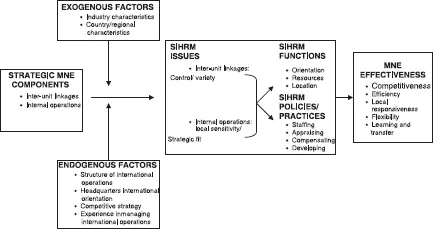
Figure 1 Integrative framework of strategic international human resources management in MNEs (adapted from Schuler et al., 1993)
As shown in Figure 2 (as well as Figure 1) there are five major themes: (1) strategic MNE components; (2) exogenous factors; (3) endogenous factors; (4) IHRM issues, functions, and policies and practices; and (5) MNE effectiveness. Taken as a whole, the thematic approach describes the contributions of previous models of IHRM, and identifies key scholars and their contributions to understanding and advancing IHRM. Use of this framework also enables us to present and discuss the changes in and evolutions of sub-themes efficiently and to organize our suggestions for future research.
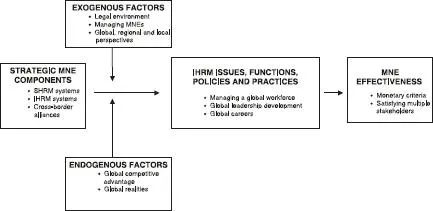
Figure 2 Thematic framework of international human resources management in MNEs: 2007 update and extension (adapted from Schuler et al., 1993. While consistent with the original, entries in this version highlight important sub-themes that have emerged in IHRM literature over the past 15 years)
Strategic MNE components
SHRM systems
Because a number of aspects of strategic human resource management (SHRM), as well as human resource management (HRM), research have influenced IHRM, it is useful to review this field and its key concepts of alignment and systems. At this time, it appears that scholars have not yet adopted a common definition of SHRM, but most would probably agree that it covers research intended to improve our understanding of the relationship between how organizations manage their human resources and their success in implementing business strategies (cf. Schuler and Jackson, 2005, 2007; Snell et al., 1996). As a focal topic for HRM research, SHRM began to emerge approximately 25 years ago (Dyer, 1985; Fombrun et al., 1984; Galbraith and Nathanson, 1978, Niniger, 1980; Schuler and Jackson, 2005; Schuler and MacMillan, 1984). Since then, it has evolved to include several streams of theoretical and empirical investigations. More detailed reviews can be found elsewhere (e.g., see Becker and Huselid, 1998; McMahan et al., 1999; Schuler and Jackson, 2005).
An element that differentiates the strategic HRM approach from earlier approaches is a focus on the system. Horizontal alignment among HRM policies and practices is a hallmark of an SHRM system (Schuler et al., 2001; Schuler and Jackson, 2007). Higgs et al. (2000) provide an example of how adopting a systems perspective can influence the practice of HRM. They note that the traditional HRM perspective treats selection primarily within the context of hiring decisions. They further explain that adopting a systems view of selection reveals that a large number of HRM practices that were previously considered as distinct activities (e.g. hiring, training, performance evaluation, special assignments, career development) can all be considered selection processes (Schuler and Jackson, 2005). Begin (1997) used the systems approach for examining how sets of IHRM policies and practices fit together and then used these sets in making cross-national comparisons in the management of human resources.
Another key element in the strategic HRM approach is vertical alignment. The main aspect of this alignment is linking the HRM policies and practices with understanding and knowledge of the organization, including all its internal contextual factors, such as its strategy, leadership, vision, values and culture, and all its external contextual factors, such as the political, social, culture, competitive and legal environment (Jackson and Schuler, 1995). Vertical and horizontal alignments that are distinctive in strategic HRM systems are also found in IHRM systems, although attaining them in IHRM is considerably more challenging.
IHRM systems
As is true for firms operating in a single country or region, MNEs strive to develop IHRM systems that fit the contours of the realities of MNEs, their present context – a context that is much more complex, multifaceted, uncertain and even chaotic than ever before (London, 2006). Consequently, effectively managing human resources in MNEs also requires a strategic and systems approach for ma...
Table of contents
- Cover
- Half Title
- Title Page
- Copyright Page
- Table of Contents
- Notes on Contributors
- Introduction: globalizing international human resource management
- 1. International human resource management: a North American perspective, a thematic update and suggestions for future research
- 2. Human resource management with ‘Asian’ characteristics: a hybrid people-management system in East Asia
- 3. Comparative HRM: European views and perspectives
- 4. Vertical integration of corporate management in international firms: implementation of HRM and the asset specificities of firms in China
- 5. What drives adoption of innovative SHRM practices in Indian organizations?
- 6. Building flexibility into multi-national human resource strategy: a study of four South African multi-national enterprises
- 7. Globalization of HR at function level: four UK-based case studies of the international recruitment and selection process
- 8. The human resource challenge to outward foreign direct investment aspirations from emerging economies: the case of China
- 9. The prospect for gender diversity in Japanese employment
- 10. The impact of culture on HRM styles and firm performance: evidence from Japanese parents, Japanese subsidiaries/joint ventures and South Asian local companies
- 11. Introducing the impact of technology: a ‘neo-contingency’ HRM Anglo-French comparison
Trusted by 375,005 students
Access to over 1.5 million titles for a fair monthly price.
Study more efficiently using our study tools.
Frequently asked questions
Yes, you can cancel anytime from the Subscription tab in your account settings on the Perlego website. Your subscription will stay active until the end of your current billing period. Learn how to cancel your subscription
No, books cannot be downloaded as external files, such as PDFs, for use outside of Perlego. However, you can download books within the Perlego app for offline reading on mobile or tablet. Learn how to download books offline
Perlego offers two plans: Essential and Complete
- Essential is ideal for learners and professionals who enjoy exploring a wide range of subjects. Access the Essential Library with 800,000+ trusted titles and best-sellers across business, personal growth, and the humanities. Includes unlimited reading time and Standard Read Aloud voice.
- Complete: Perfect for advanced learners and researchers needing full, unrestricted access. Unlock 1.5M+ books across hundreds of subjects, including academic and specialized titles. The Complete Plan also includes advanced features like Premium Read Aloud and Research Assistant.
We are an online textbook subscription service, where you can get access to an entire online library for less than the price of a single book per month. With over 1.5 million books across 990+ topics, we’ve got you covered! Learn about our mission
Look out for the read-aloud symbol on your next book to see if you can listen to it. The read-aloud tool reads text aloud for you, highlighting the text as it is being read. You can pause it, speed it up and slow it down. Learn more about Read Aloud
Yes! You can use the Perlego app on both iOS and Android devices to read anytime, anywhere — even offline. Perfect for commutes or when you’re on the go.
Please note we cannot support devices running on iOS 13 and Android 7 or earlier. Learn more about using the app
Please note we cannot support devices running on iOS 13 and Android 7 or earlier. Learn more about using the app
Yes, you can access Globalizing International Human Resource Management by Chris Rowley,Malcolm Warner in PDF and/or ePUB format, as well as other popular books in Business & Business General. We have over 1.5 million books available in our catalogue for you to explore.