eBook - ePub
Fashion, Design and Events
- 210 pages
- English
- ePUB (mobile friendly)
- Available on iOS & Android
eBook - ePub
Fashion, Design and Events
About this book
The importance of fashion and design in an events context remains under-researched, despite their ubiquity and significance from a societal and economic perspective. Fashion-themed events, for example, appeal to broad audiences and may tour the globe. Staging these events might help to brand destinations, boost visitor numbers and trigger popular debates about the contributions that fashion and design can make to identity. They may also tell us something about our culture and wider society.
This edited volume for the first time examines fashion and design events from a social perspective, including the meanings they bestow and their potential economic, cultural and personal impacts. It explores the reasons for their popularity and influence, and provides a critique of their growth in different markets. Events examined include fashion weeks, fashion or design themed exhibitions, historical re-enactments, extreme/alternative fashion and design events, and large-scale public events such as royal weddings and horse races. International examples and case studies are drawn from countries as diverse as the USA, UK, Germany, Bhutan, New Zealand and Australia. These are used to develop and critique various thematic concepts linked to fashion and design events, such as identity, gender, aspirations and self-image, commodification, authenticity, destination development and marketing, business strategy and protection/infringement of intellectual property. Fashion, Design and Events also provides a futurist view of these types of events and sets out a future research agenda.
This book has a unique focus on events associated with fashion and design and features a swathe of disciplinary backgrounds. It will appeal to a broad academic audience, such as students of art and design, cultural studies, tourism, events studies, sociology and marketing.
1 Social conformity or radical chic? Fashion, design and events
Fashion and design provide ideal vehicles for investigating the links between events and society. Hugely popular right around the globe and across various cultures, fashion and design are arguably two of the strongest cultural forces at play in the modern world. While fashion is sometimes marginalised as a frivolous or lightweight pursuit, there is a ‘secret need for it’ (König 1971: 33). An alternative discourse is to see fashion as a ‘semiotic language through which cultural meanings are constructed’ (Troy 2003: 11, following Barthes 1967; see also König 1971 and Thompson and Haytko 1997). For both individuals and groups, it defines identity. Many of us see our fashion style as making a statement as to who we are, whether that be conservative or radical, classical or avant-garde, stylish or quirky. This can be termed self-representation, where fashion is used or even manipulated to alter the way others see us (Argyle 1988; Goffman 1956). It is a means of expressing status or social class (Argyle 1988; Wolfe 1973). Fashion allows us to either fit into a group or sub-culture, or to break away and assert our individuality. It thus acts simultaneously as a ‘barrier and connection’ (Moseley 2005: 7) to others. We can be fashionistas, dedicated followers of fashion or slaves to fashion. We can proudly be in fashion or out of fashion. Though our tastes may vary widely, an interest in fashion transcends generations and social classes. As lecturers and researchers, we are interested in fashion and we know our students also share that interest.
These messages can be radical. As Quinn (2002: 442) notes, fashion is ‘a realm heavily freighted with contradictions, dualities, defiance and subversive ideas’. The ability of fashion to enchant as well as shock us may be a prelude to or a reflection of societal change. The outfit of visiting English model Jean Shrimpton caused a scandal at Melbourne's Derby Day races in 1965 (Figure 1.1). Invited as a judge for the Fashions in the Field competition, not only was her hemline high, but her lack of hat, stockings and gloves symbolised a new era of female liberation and sexual freedom (Harrison 2005). Punk, with its body piercings, ripped clothing, heavy boots and Mohawk hairstyles, came to prominence in the 1970s as an anti- establishment movement in a period marked by social unrest, unemployment and strikes.
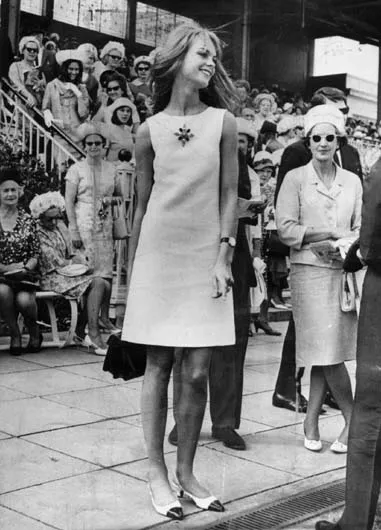
Figure 1.1 Model Jean Shrimpton shocks conservative 1960s Melbourne with her racing attire.
Source: News Ltd
Fashion and design can form important elements of an event, or constitute its overall theme. We cover both examples in this book. The following is a basic typology of fashion or design themed events:
Exhibitions in galleries or museums
These display retrospectives or the latest examples of fashion or design. The Victoria and Albert Museum in London has a permanent fashion collection, the largest in the world, with many items on display in its Fashion Gallery. It also stages popular temporary exhibitions such as The Golden Age of Couture: Paris and London 1947–57 (2007/2008), and the recent Ballgowns: British Glamour since 1950 (2012/2013). Other outstanding fashion collections include the Bath Fashion Museum, the Philadelphia Museum of Art, the Metropolitan Museum of Art in New York, the MoMu Fashion Museum in Antwerp and the Musée Galliera in Paris. In 2011, the latter staged an exhibition of Madame Grès' creations in the Musée Bourdelle (Figure 1.2), where the marble sculptures made a stunning backdrop for her Grecian-style draped gowns.
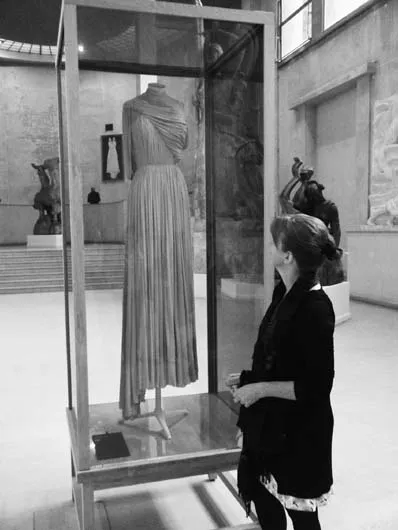
Figure 1.2 Admiring the elegance of drapery at the Madame Grès Exhibition, Musée Bourdelle, Paris, in 2011.
Source: J. Laing
The Maryhill Museum of Art in Goldendale, Washington State, is home to the Théâ tre de la Mode – a group of fashion dolls, one-third human size, that were created at the end of the Second World War and toured European and North American cities ‘to prove that [French] couture had survived in full force’ (Dorner 1975: 27). The couture houses that took part, including Balmain, Nina Ricci and Schiaparelli, could save on the cost (and risk) of live mannequins travelling the world. There were no cutting corners however on the workmanship. These dolls are miniature works of art (Peers 2004), with the clothes exhibiting perfect tailoring and delicate trimmings, sumptuous fabrics and exquisitely rendered accessories. Sets were created as a backdrop, by artists like Jean Cocteau (Steele 1997). Profits collected on attendance at the exhibition (nearly 100,000 saw it in Paris alone) went to charity – the French war relief (Steele 1997). This philanthropic underpinning perhaps stymied criticism of couture as self-indulgent and whitewashed concerns that the French fashion industry was tainted by allegations of collaboration with the Nazis during the occupation (Peers 2004; Walford 2008). The dolls were argued to be both a labour of love and a form of resistance (Steele 1988: 270). The Théâ tre de la Mode collection was acquired by the museum in the late 1950s and toured the world for a second time in the 1990s.
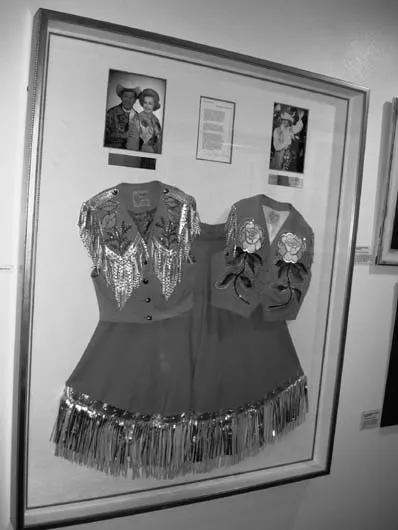
Figure 1.3 Exhibits of Nudie Cohn creations at the Lone Pine Museum of Western Film History, California.
Source: W. Frost
Museums of design can be found around the world, including London, Ghent, Helsinki and New York City. Examples of exhibitions showcasing design include Art Deco: 1910–1939 at the National Gallery of Victoria in Melbourne (2008) and Bauhaus: Art as Life at the London Barbican Art Gallery (2012). Fashion and design exhibitions are also found in a range of cultural heritage museums. California's Lone Pine Museum of Western Film History, for example, features the elaborate singing cowboy and rodeo costumes of Nudie Cohn (Figure 1.3).
Industry events
These act as a showcase for new collections, such as the prestigious and aspirational couture line (Quinn 2002), and more accessible prêt-à-porter (ready to wear) clothing (Reinach 2005). Individual designers stage their own fashion events, as well as participating in those organised by their industry or their destination. Some of these industry events are global, such as Vogue's Fashion's Night Out (http://fashionsnightout.com), where attendees have the opportunity to shop after hours at parties hosted by labels such as Coach, Dior and Mulberry, sometimes alongside an A-list crowd. They may also attract extensive international media coverage, particularly where the collection is provocative or heralds a change in fashion.
Fashion and theatre have long been intertwined concepts (Steele 1988), with the ‘dramatic potential of fashion shows’ self-evident (Troy 2003: 81). Fashion shows were staged from the early years of the twentieth century, with the idea often accredited to Lady Duff Gordon, a couturier known as Lucile and later to become famous as a Titanic survivor. The aim of the show was to counteract the ‘crassness associated with obvious merchandise promotions’ (Troy 2003: 91). It was also recognised that live mannequins display clothes to their best advantage, as a form of spectacle (Evans 2011). The resulting show can be highly entertaining, as well as aspirational (Troy 2003). Oderberg (2012: 25) describes the appeal of a modern fashion show for onlookers: ‘The room is buzzing. There's palpable anticipation. The pumping music comes up. The lights come on, bright and furious.’ Such theatricality is now a key theme in popular culture reflections on fashion, such as in the film Zoolander.
Large capital cities associated with fashion such as London, Paris, Milan or New York have traditionally staged fashion weeks, which might play a part in shaping the image of a destination (Skov 2006), as well as providing a focus for innovation. Designer Kirrily Johnston labels Australian Fashion Week ‘the creative pinnacle of the year for us’ (Breen Burns 2012a: 5). Attracting an order from a buyer, particularly the new e-tailers like Net-a-Porter, with their international reach, can ‘anoint a brand with global credibility, marketing and potential sales to all points of the planet’ (Breen Burns 2012b: 6). These shows also generate revenue for professional event organisers. The global corporation IMG Fashion has a portfolio of fashion weeks, including Sydney, Tokyo, Zurich, New York, Berlin and Miami, and observe that their audiences ‘are in the millions and will keep increasing’ (Breen Burns 2012a: 5). The centrepiece of these industry events is often a parade, which is commonly choreographed to surprise audiences, aside from showcasing the fashions themselves. Australian Fashion Week has seen everything as accessories, from pythons to rats (Breen Burns 2012a). Models stride down a catwalk in front of an audience composed of the media, VIPs, buyers and other industry players and fashion leaders. Celebrities often get to sit in the front row, and are there to see and be seen, as much as for the clothes (Blanchard 2012; Entwistle and Rocamora 2006). American Vogue 's creative director, Grace Coddington, is scathing about the trend towards ‘celebrities walking in and being filmed and having their moment … Every season when it comes to collection time, you have to take a deep breath and try to ignore all that crazy stuff’ (Blanchard 2012: 24). The concept of a fashion week has spread to many parts of the world eager to promote their fashion industries and brand themselves as linked to fashion and design. Reinach (2005: 48) observes that the Shanghai Fashion Festival aims to make Shanghai the ‘sixth most important center of world fashion’.
Other destinations, such as Hong Kong and Düsseldorf, stage fashion events such as trade fairs or shows, more for their commercial benefits than to brand the destination as associated with fashion and design (Skov 2006). Trade shows have a long history, particularly the bridal fair. In 1881, the Grand Wedding Exhibition at the Royal Aquarium in London was acknowledged to be the first bridal fair in Britain. It displayed wares and samples by various wedding-related businesses, including ‘dressmakers, jewellers, caterers, florists, stationers, photographers and furniture makers’ (Ehrman 2011: 85).
Product or brand launches
These are events that accompany the launch of a new fashion line or label or the opening of a new store. They aim to maximise media exposure and create a buzz around a new brand, which might attract buyers (Skov 2006). The centrepiece of the highly anticipated openings of the Zara stores in central Sydney and Melbourne in 2011 involved invitation-only parties, attended by VIPs and the social set.
Reenactments
These attempt to recreate the past, by the playing out of roles, and can be argued to form a subset of living history (Frost and Laing 2013). They usually involve participants donning appropriate costumes, either authentic (vintage) garb or clothes that have been styled to resemble the original. For those involved, these events allow immersion in a social world where authenticity, research and design are all highly regarded (Belk and Costa 1998; Frost and Laing 2013).
Fan events
These are organised by sub-cultures, with clothes acting as markers of membership of a group or fan club (Kozinets 2001). Steampunk, manga, gothic and anime devotees sport distinctive clothing, which is often shown off at events. The bustle, corset, top hat and lace-up Victorian boots for women and the airmen's goggles, bowler hat, fez or pith helmet for men, are steampunk staples, while goths are often identified by their dark garb, crucifixes and skull motifs, dead white foundation and black-rimmed eyes. The event might be approached as a liminal space, allowing people to either feel free to adopt different personas or instead be what they regard as their true selves (Sharpe 2008). This might then encourage greater self- expression with respect to clothing and the taking of risks that perhaps would be seen as more difficult in their everyday lives. Others dislike that the emphasis on clothing sets them apart and makes them potentially a figure of fun. As one disgruntled Star Trek fan remarked:
Can someone please tell me why whenever there is a media story on Star Trek fans, t...
Table of contents
- Cover Page
- Half Title page
- Series Page
- Title Page
- Copyright Page
- Dedication
- Contents
- Figures
- Tables
- List of Contributors
- 1 Social conformity or radical chic? Fashion, design and events
- Part I Glamour and spectacle
- Part II Industry and destination perspectives
- Part III Emerging trends and a view of the future
- Index
Trusted by 375,005 students
Access to over 1.5 million titles for a fair monthly price.
Study more efficiently using our study tools.
Frequently asked questions
Yes, you can cancel anytime from the Subscription tab in your account settings on the Perlego website. Your subscription will stay active until the end of your current billing period. Learn how to cancel your subscription
No, books cannot be downloaded as external files, such as PDFs, for use outside of Perlego. However, you can download books within the Perlego app for offline reading on mobile or tablet. Learn how to download books offline
Perlego offers two plans: Essential and Complete
- Essential is ideal for learners and professionals who enjoy exploring a wide range of subjects. Access the Essential Library with 800,000+ trusted titles and best-sellers across business, personal growth, and the humanities. Includes unlimited reading time and Standard Read Aloud voice.
- Complete: Perfect for advanced learners and researchers needing full, unrestricted access. Unlock 1.5M+ books across hundreds of subjects, including academic and specialized titles. The Complete Plan also includes advanced features like Premium Read Aloud and Research Assistant.
We are an online textbook subscription service, where you can get access to an entire online library for less than the price of a single book per month. With over 1.5 million books across 990+ topics, we’ve got you covered! Learn about our mission
Look out for the read-aloud symbol on your next book to see if you can listen to it. The read-aloud tool reads text aloud for you, highlighting the text as it is being read. You can pause it, speed it up and slow it down. Learn more about Read Aloud
Yes! You can use the Perlego app on both iOS and Android devices to read anytime, anywhere — even offline. Perfect for commutes or when you’re on the go.
Please note we cannot support devices running on iOS 13 and Android 7 or earlier. Learn more about using the app
Please note we cannot support devices running on iOS 13 and Android 7 or earlier. Learn more about using the app
Yes, you can access Fashion, Design and Events by Kim Williams, Jennifer Laing, Warwick Frost, Kim Williams,Jennifer Laing,Warwick Frost in PDF and/or ePUB format, as well as other popular books in Business & Fashion Design. We have over 1.5 million books available in our catalogue for you to explore.