International Thinking on Children in Museums introduces current research, theory, and practice about young learners in museums around the world. The book imparts vital knowledge about the nature of childhood and children's learning that will improve understanding of the very youngest museum-goers.
Including contributions from practitioners, scholars, and consultants around the globe, this volume examines museum practices and children's learning across a range of distinct cultural and geographic locales. The framework of the book is based on research and current thinking in the realm of developmental psychology, sociology, and anthropology, allowing the contributors to examine the evolution of early learning and children's programs through a sociocultural lens. This broad-based look at international museum practices for children offers a rare view of the field from an important, but oft-neglected perspective: that of society and culture.
International Thinking on Children in Museums will broaden understanding of museum practice across cultures and geographic regions and, as such, will be of interest to scholars and students engaged in the study of museum education, museum studies, and early learning. It should also provide a much-needed source of inspiration for museum practitioners working around the world.
PART I The conceptualization of childhood and sociocultural theory
1 CONCEPTUALIZING CHILDHOOD
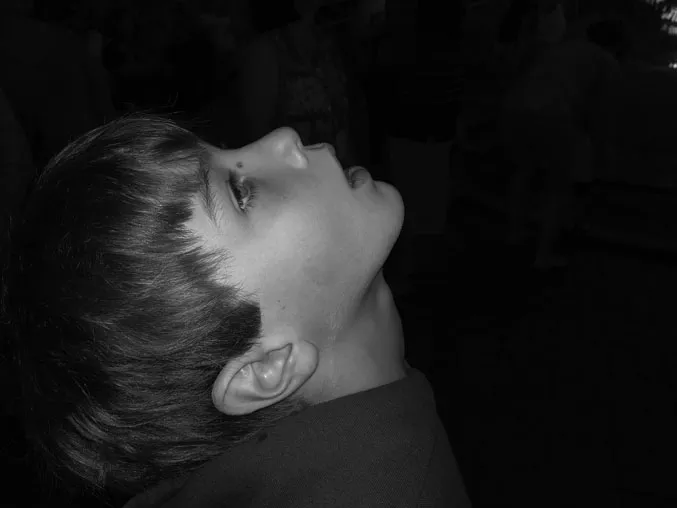
FIGURE 1.1 A child’s natural curiosity: gazing at the stalactites in Luray Caverns.
Introduction
Childhood is commonly understood as a precious time of life, yet childhood as a concept is far from universal and highly contextual (Norozi and Moen 2016), varying greatly across time and space, impacted by a wide range of factors. It is understood in the twenty-first century as a social construct (Ariès 1962; Corsaro 2018; James and James 2008; James and Prout 1997; Jenks 2004; Norozi and Moen 2016) that reflects the core values and beliefs of each social community and follows traditions and rituals of that specific culture.
A society’s conceptualization of childhood has a distinct impact on its social institutions and, in many cases, determines what role children play in any specific aspect of society. If children are perceived as innocent, dependent, and vulnerable, then the response from the community at large will be one of protection. When children are viewed as capable and sophisticated learners, educational institutions such as museums will offer learning opportunities in light of this shared belief.
The conceptualization of childhood can be thought of as “ways of seeing, hearing about, or understanding” and denotes “a set of ideas which represent a particular view of the world, or an understanding of how the world works” (McNamee 2016, pp. 10–11). It is a perception that mirrors the values, beliefs, and traditions of a given cultural context.
World views attributable to a specific locale ultimately represent shared social beliefs that have over time gained broader acceptance within the community, beliefs that have power beyond the individual and hold sway over social institutions. What becomes accepted wisdom within a community ultimately serves as a catalyst for change in most aspects of public life, creating a sense of equilibrium. Attitudes and practices are brought into alignment as part of the shift in perspective. As values and beliefs take hold, their influence is felt across the community, touching its social institutions.
Over time, beliefs about childhood evolve (Jenks 2004) and questions are raised about the defining features or characteristics of this phase of life and, similarly, the place of children in society, both of which are critical to understanding early learning practices in museums and other cultural institutions. Are children accepted members of social circles in their community and as individuals or do they exist on the periphery? Are they viewed as competent and capable in their own right with personal agency or perceived on the margins only in the context of families or other groups? What is the place or role of children in the world? Are children welcomed into traditional museums or defined simply by chronological age and limited in museum participation to institutions such as children’s museums that are created specifically for them?
Society’s conceptualization of childhood plays a critical role in determining children’s place within the social structure of the community. Reflection on the history, psychology, and social understanding of childhood in various contexts contributes to a broad understanding of this time of life, but also has significant meaning for museums across the globe as they consider children as a potential audience.
Childhood: a closer look
Childhood is a term that exists in everyday language, understood by the common person and ubiquitous in nature. It is a state of being frequently mentioned by authors, recounted by famous individuals, and perceived as a natural part of life. As an example, this term appears in Richard Paul Evans’ The Christmas Box (1993) when he writes, “The smells of Christmas are the smells of childhood.” He implies a correlation between the experiences of childhood and an individual’s interpretation of the world; the experiences of childhood become inextricably entwined with experiences thereafter. Childhood is viewed as a critical time of life and a point of reference for future thought.
And yet with all of its importance, the study of children in many scholarly texts, particularly those penned prior to 1990, offers few discussions or insight into childhood as a distinct concept. A few exceptions should be recognized as noteworthy, particularly in the arena of what is termed the new sociology of childhood. According to Allison James and Alan Prout (1997), “In 1990, the sociology of childhood was only just beginning to emerge as a distinct sub-discipline” (p. ix), although there is some evidence to suggest that the early beginnings reach back to the 1970s and 1980s (Norozi and Moen 2016). This seeming lack of discourse and study in the broader realm of child studies is perplexing given the unquestionable link between the terms children and childhood in the minds of most people.
Prior to the twenty-first century, most scholarly discourse related to children focused on the concept of child development and its origins in psychology (Corsaro 2018), “the scientific study of the mind and behavior” (McLeod 2011, p. 1), with some theorists extending the conversation beyond nature to include “the social and cultural factors” that influence that development (The Open University 2018). This perspective examines the child as a developing being moving toward adulthood and attempts to understand all aspects of development and how it occurs. In more recent times, a new mindset is holding sway among social scientists, reflecting a broader understanding of childhood that acknowledges the child’s individual agency where actions contribute to shaping personal experience as well as the experiences of adults in his social circle (Corsaro 2018; James and Prout 2015; McNamee 2016). The notion of childhood is more fully developed and understood as an experience that deserves study in and of itself.
Changing beliefs about childhood and their influence on cultural institutions
With new trends and innovative ideas, cultural institutions feel the effects of shifting norms or beliefs within the community, in many cases leading to rethinking of practices and decision-making by leaders in these organizations. The museum is one such organization experiencing change based on evolving social norms, attitudes, and beliefs of the public. This is true for most museums, including art galleries, historic homes, science centers, and cultural institutions, as well as children’s museums.
Museums, like other cultural organizations, are influenced by social change (Schwarzer 2006). In the past three decades, one noticeable shift relates to perceptions about children. A major factor driving this change originated with research findings from the 1990s regarding the significance of the early years of life (IMLS 2013; Shore 1997). This new information heightened interest in museums for their potential learning opportunities. And while there are questions about the specific correlation between brain research and early experiences in museums, there remains a strong conviction among educators and museum professionals that creating opportunities for early learners is beneficial and contributes to a child’s social, emotional, and cognitive development. Social attitudes and actions of both parents and educators appear to be linked to increased interest in and knowledge of young children’s capacity to learn.
As awareness of early learning increases, children are gaining new status as a recognized audience within museums; they are visiting galleries and participating in programs in unprecedented numbers. The Journal of Museum Education addressed this trend in its spring 2012 issue, Early Learning: A National Conversation (Shaffer, ed.), opening conversations and inviting thought among museum professionals across America as well as internationally. Why are young children visiting traditional museums now more than in the past? What factors are influencing museum professionals as practitioners and changing their views of young children as valued learners? What is society’s view of childhood and expectations for children as learners? What is the value of a museum experience for the young child? Grappling with these questions and others in light of new research as well as patterns of visitation among early learners is vital for museum professionals.
To analyze current trends in museums, it is critical to remember that museums are a reflection of society and that change within the museum mirrors, in many ways, change within society. In Riches, Rivals, & Radicals, Marjorie Schwarzer (2006) makes that point and further captures the spirit of the museum as a cultural institution: “The American museum is a prism of American society. … Its exhibitions tell us stories, adding to the ever changing, sometimes contentious meanings we Americans give to history, to culture, to identity” (Schwarzer 2006, p. 1). Change in the social fabric of a community ultimately is reflected in its cultural institutions, in exhibitions, and in practice.
Evolving social beliefs and values about children and childhood are visible in current research by social scientists and impact the broader community, crossing boundaries to instill change within cultural institutions and eventually altering museum practice. Historically, media contributes to this spread of ideas and gives rise to social awareness of research findings, a practice seen in the early days of brain research in the 1990s, with discoveries confirming the early years as a significant time of learning. With the increased attention and expanded research on children and childhood, social discourse is impacted and the ripple effect is felt far beyond the inner circle of the sociologist’s or psychologist’s world and the realm of academic research. It clearly is a time of change for young children in society. In this period of change, it is time to examine current notions about children and childhood to better understand what that means for museums and other educational institutions.
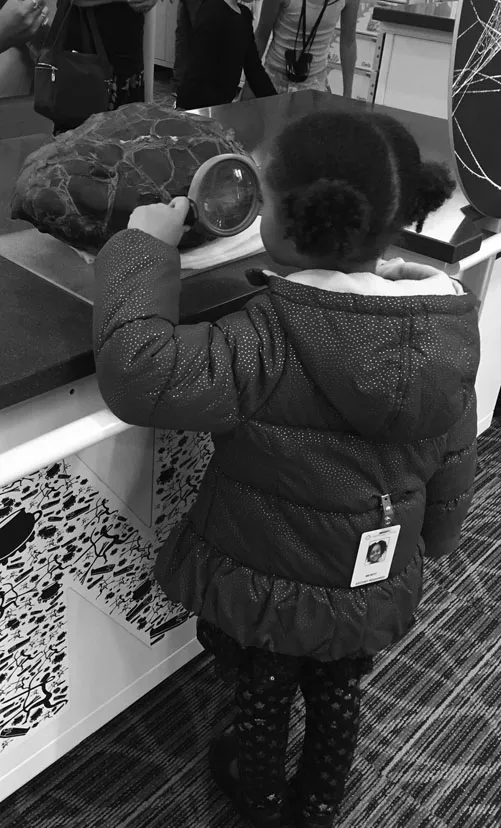
FIGURE 1.2 Young children: a growing audience in museums around the world.
Source: Smithsonian Early Enrichment Center.
Informal views of childhood: many layers of meaning
Childhood is a term familiar to all, yet broadly construed when considered across time and place. In the everyday world, people frequently speak of childhood, seldom questioning their knowledge or understanding of the term, often perceiving childhood as a period of growth when “children discover one thing at a time” and where “the tiniest detail sparks wonder” (Cameron 2018, p. 1). And while there are fine points of consensus embedded in the larger concept of childhood, the complexity represented by the term demonstrates the existence of a broad spectrum of experiences. Understanding childhood requires a deep examination of the topic. This seemingly simple term is, without question, a complex concept to define and understand, as illustrated by the expanding research on the subject, particularly by sociologists and educators.
In today’s world, the conceptualization of childhood can be as diverse as the people engaged in the conversation. For many, the answer is rooted in a biological context defined by chronological age, an identifying characteristic used “for definitional purposes in many contemporary societies, particularly in western societies” (Norozi and Moen 2016, p. 77). A counter viewpoint suggests the concept is more about defining features associated with childhood, such as a time of innocence, dependence, imperfection, or freedom from responsibility. Still others perceive childhood as a time “of ‘becoming’ rather than a person in their own right” (Woodhead 2013, p. 144). Childhood is an idea with familiarity, a phase of life that everyone experiences. It is complex in that it is a concept rooted in historical beliefs and practices, yet also includes intersecting concepts inclusive of chronological age and prominent qualities that characterize the experience of children.
A more accurate account of childhood requires serious work represented by a range of scholars – developmental psychologists, sociologists, cultural anthropologists, historians, educators, and others – to address the essence of the term and its many iterations across time and place. With in-depth examination, dialogue, and research, the idea of childhood moves away from superficial thinking so common in society and expands to include a more comprehensive and, at times, concerning side of what it means to be a child. The need to examine influences across culture, from gender and socioeconomic status to history and politics, is essential to any conversation that invokes the notion of childhood and its place in a twenty-first-century context.
A discussion of childhood begins with the root question of what it means to be a child. The term, defined in Merriam-Webster’s Dictionary as “a young person especially between infancy and youth” (2018), offers a starting point for contemplation, but is far from adequate for understanding the concept. Furthermore, there are those who argue that dictionaries are not value-neutral, but rather “they are just as steeped in culture and prejudice as the rest of the world – and they have the power to shape what we see as normal” (Shulist, Proctor, and Oman-Reagan 2006). From that point of view, there is likely a white, Western perspective portrayed in the definition.
To create a more complete description of the term that goes beyond the dictionary definition, one might add characteristic features or attributes, some positive and some negative, commonly associated with the word – immature, dependent, carefree, or under the legal age – terms used in everyday conversations. When viewed in the context of time and place, ideas vary widely in personal and professional accounts of what it means to be a child.
The term childhood reflects “the state or period of being a child” (Merriam-Webster 2018), yet when examined more closely, represents far more than these simple words. The textbook definition of childhood opens conversation about the many layers associated with being a child and the time period of a child’s existence, yet also requires context that includes historical perspective, cultural representation, economic circumstance, and political ideology, all powerful influences on the perceptions and reality of childhood. There is little argument that childhood in a rich suburb of an American city differs greatly from childhood in a poverty-stricken community in Niger where resources are scarce. As thinking broadens, it is possible to catch a glimmer of what the reality of childhood encompasses. In the twenty-first century, there is particular interest in understanding diverse concepts of childhood and recognizing that this social construct is far from universal.
One ...
Table of contents
Cover
Half Title
Series Page
Title Page
Copyright Page
Contents
List of illustrations
List of contributors
Acknowledgments
Preface
Introduction
Part I The conceptualization of childhood and sociocultural theory
Part II Research perspectives from the field
Part III Case studies on children and museums
Part IV Museum practices in a global society
Index
Trusted by 375,005 students
Access to over 1.5 million titles for a fair monthly price.
Study more efficiently using our study tools.
Frequently asked questions
Yes, you can cancel anytime from the Subscription tab in your account settings on the Perlego website. Your subscription will stay active until the end of your current billing period. Learn how to cancel your subscription
No, books cannot be downloaded as external files, such as PDFs, for use outside of Perlego. However, you can download books within the Perlego app for offline reading on mobile or tablet. Learn how to download books offline
Perlego offers two plans: Essential and Complete
Essential is ideal for learners and professionals who enjoy exploring a wide range of subjects. Access the Essential Library with 800,000+ trusted titles and best-sellers across business, personal growth, and the humanities. Includes unlimited reading time and Standard Read Aloud voice.
Complete: Perfect for advanced learners and researchers needing full, unrestricted access. Unlock 1.5M+ books across hundreds of subjects, including academic and specialized titles. The Complete Plan also includes advanced features like Premium Read Aloud and Research Assistant.
Both plans are available with monthly, semester, or annual billing cycles.
We are an online textbook subscription service, where you can get access to an entire online library for less than the price of a single book per month. With over 1.5 million books across 990+ topics, we’ve got you covered! Learn about our mission
Look out for the read-aloud symbol on your next book to see if you can listen to it. The read-aloud tool reads text aloud for you, highlighting the text as it is being read. You can pause it, speed it up and slow it down. Learn more about Read Aloud
Yes! You can use the Perlego app on both iOS and Android devices to read anytime, anywhere — even offline. Perfect for commutes or when you’re on the go. Please note we cannot support devices running on iOS 13 and Android 7 or earlier. Learn more about using the app
Yes, you can access International Thinking on Children in Museums by Sharon Shaffer, Sharon E. Shaffer,Sharon Shaffer, Sharon E. Shaffer in PDF and/or ePUB format, as well as other popular books in Art & Museum Studies. We have over 1.5 million books available in our catalogue for you to explore.