![]()
Introduction
James S. Adelman
Words are the building blocks of language, and are the interface between written and spoken language. Recognition of the printed word is both essential to the important skill of reading and among the easiest routes for the experimenter to access higher cognition. In this light, it is little surprise that the identification and pronunciation of written (or more often, printed) words are among the earliest studied (Cattell, 1886) and most studied aspects of cognition.
Visual word recognition is studied both in its own right, in terms of the processes of recognizing a word and the performance of word-based tasks, but also more broadly in context as a link to semantics and concepts, cognitive individual differences, reading prose and learning to read. This volume concentrates on the latter, broader, form of study of visual word recognition, whilst its companion concentrates on the former, narrower form of study.
The first three chapters consider how written words link to their meanings, and how those meanings affect the recognition of those words. In Chapter 1, Feldman and Weber argue that morphological processing is best characterized within a single graded mechanism that incorporates both meaning and form from the earliest stages. In Chapter 2, Pexman discusses a variety of meaning-based variables that are known to affect word recognition, and what they mean for the processing of words. In Chapter 3, Jones and Estes review lexical priming effects, where word recognition is influenced by a preceding, related, word context, and what this means for the organization of concepts.
Chapters 4 and 5 consider how words are recognized within sentences, as evidenced by eye movements. In Chapter 4, Schotter and Rayner review the experimental evidence, and argue it is consistent with the idea that the reading system operates on a serial, word-by-word basis. In Chapter 5, Kliegl and colleagues consider the analysis of large databases of eye-movement data, and argue that parafoveal effects are evidence for concurrent processing of words.
The remaining chapters consider a variety of issues surrounding how individuals differ and how reading develops. In Chapter 6, Schwartz and van Hell consider how knowing more than one language affects word recognition in sentence context. In Chapter 7, Andrews considers individual differences among skilled readers, and argues that they may be interpreted in terms of lexical quality: how precisely words are represented. In Chapter 8, Cunningham and colleagues argue that orthographic learning, improving the orthographic dimension lexical quality, is a major (and often overlooked) aspect of reading development. In Chapter 9, Wagner and colleagues discuss developmental dyslexia from a cognitive perspective that emphasizes the role phonological processing has in reading development and impairment. In Chapter 10, Stein considers the biological bases of developmental dyslexia and argues that visual-orthographic processes are impaired and phonological impairments are markers not causes of impaired reading.
In sum, these chapters cover the key issues involved in understanding the processing of the written word in the context of reading and its development.
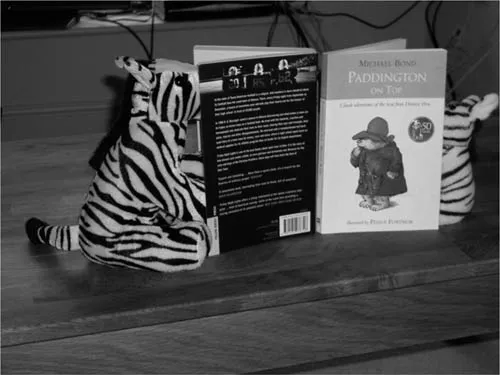
Visual word recognizers come in sizes big and small.
References
Cattell, J. M. (1886). The time taken up by cerebral operations. Mind, 11, 377–92. Retrieved from http://psychclassics.yorku.ca
1 Morphological Processing
A Comparison of Graded and Categorical Accounts
Laurie Beth Feldman and Katherine Weber
Debate between single- and dual-route accounts of language processing plays out in the morphological domain as it does in the phonological domain (cf. Coltheart, accompanying volume, Chapter 1). For this reason, morphological processing has gained attention in recent years. At issue is whether there are two distinct and independent mechanisms for recognizing a word or whether lexical and sublexical contributions work cooperatively and interdependently and comprise a single mechanism. Cast in phonological terms, words can be either regular, in that they respect a mapping between orthographic and phonological units that can be characterized by correspondence rule or they can be irregular, in which case they do not and must be learned by association among whole-word orthographic and phonological forms. By a dual mechanism account, either the sublexical (rule based) or the lexical (associative) alternative can apply to regular words. This is not the case for irregular words where the sole option is lexical. In essence, by a dual mechanism account, the choice of mechanism depends on whether a word belongs to the regular or irregular category and, importantly, the options cannot operate cooperatively. Cast in morphological terms, the dual mechanism debate focuses on the efficacy of relying on rules to capture regular morphological processes such as past tense formation (add ED), with an associative mechanism between present and irregular past tense forms that functions as the backup. The single mechanism alternative contrasts sharply in that it eschews categories like regular and irregular. It emphasizes, instead, systematic correspondences between orthographic and phonological or between orthographic-phonological and semantic dimensions of similarity as the basis of recognizing a word in the phonological and morphological domains respectively. In this chapter, we argue that because many effects are graded, some within a category, morphological processing can be better captured by a single mechanism graded account than by a dual mechanism account determined by category.
Variation Among Morphologically Related Words
Morphemes are the meaningful elements that comprise the internal or sublexical structure of words. For example, the words PAINT and TOAST are composed of a single morpheme and cannot be broken down into smaller elements that contribute to the meaning of the word as a whole. By contrast, the words PAINTED and PAINTER are morphologically complex because they are composed of multiple morphemes and thus can be broken down further. In the case of PAINTED, the stem is PAINT and the affix, ED, is inflectional in that it serves a grammatical function. In the case of PAINTER, the stem is also PAINT but here the affix, ER, is derivational in that it serves to form a new word whose meaning and word class can differ from that of the stem in isolation. These meanings may differ in ways that are not always totally predictable by rule. For example, based on knowledge about the ways in which morphemes combine to form PAINTER, it could be difficult to arrive at an accurate interpretation for TOASTER. The PAINTER-TOASTER comparison shows one aspect of semantic transparency or predictability; that is, how a stem contributes to the meaning of a complex word form. Attenuated transparency is not exclusively a property of a particular affix, in this case ER. Analogously, attenuated transparency is not an exclusive property of a particular stem. Therefore, it is difficult to classify a word as semantically ‘transparent’ or ‘opaque’ on the basis of either its stem or its affix in isolation. In effect, transparency is more of a relative than an absolute property. For example, although both are formed from the stem ALLOW, ALLOWABLE is semantically more transparent than ALLOWANCE. Note that the meaning of ALLOWANCE is related to ALLOW, albeit in a more idiosyncratic manner.
Transparency and opacity can be defined in an analogous manner at the level of language form. For example, both DIVIDEND and DIVISOR are derivations formed from the stem DIVIDE. In this instance, the former is more transparent than the latter with respect to orthographic and phonological form. Because semantic and orthographic transparency each varies in a continuous manner and because they vary independently of each other it is difficult to classify words as categorically transparent or opaque.
The recognition and the production of complex forms pose slightly different challenges to a rule-based account. The comparison of ALLOWANCE, DIVISION and AMENDMENT demonstrates that there are many affixes (e.g., ANCE, SION, MENT) with which one may form nouns from verbs. Likewise, the comparison of APOLOGIZE, STRENGTHEN and VACCINATE demonstrates that there are many affixes (e.g., IZE, EN, ATE) with which one may form verbs from nouns. Collectively, neither the meaning nor the form of all words composed of more than one morpheme within a language can be described easily in terms of rules for combining morphological segments (or morphemes). At best, linguistically analytic recognition processes based on rules for segmenting words into morphemes can succeed to the extent that morphologically complex words within a language are transparent. While the production of morphologically complex forms can be described reliably in terms of rules for combining morphemes overall, selection within the class of affixes as well as the full word meaning can be more complex. When words cannot be recognized or produced with reference to rules that account for the segmentation or combination of sublexical constituents, it is generally postulated that they are treated as wholes.
The rules for forming morphologically complex words can vary across languages and some have claimed that models of morphological processing emphasize word form more in languages such as Hebrew than in others (Frost, Kugler, Deutsch, & Forster, 2005). In English, the sublexical structure of morphologically complex words can consist of a stem or base morpheme such as PAINT and an affix, either a prefix as in RE+ PAINT or a suffix such as PAINT +ABLE. In some cases it is possible to append multiple affixes as in the English word RE+ PAINT +ABL(E) +ITY. Sequencing of affixes is more characteristic of some languages than of others. For example in Turkish, an agglutinative language, multiple inflectional affixes followed by multiple derivational affixes can be appended to a stem (EV meaning ‘house’) to form a single word such as EVINIZDEYIM (meaning ‘I am in your house’). Languages differ one from another not only with respect to the prevalence of multiply affixed word forms but also with respect to the patterns for combining morphemes. Some languages (e.g., Chinese) tend not to combine morphemes to form new words. Others do form new words that way, and, among those, some (e.g., Turkish) change the form of the affix depending on the stem to which it is appended. Further, many morphemes, even many inflectional affixes can combine within a single word. Fusional languages like Serbian tend to change the inflectional affix as grammatical function (number, gender and case) changes rather than by appending more separate affixes. The nature of the constraints on forming morphologically complex words can differ across languages as well. In French or English as well as Serbian and Turkish, for example, morphemes are connected linearly (e.g., RE+ PAINT +AB(I)L(E) +ITY). In Hebrew, by contrast, morphemes can be infixed one within another (e.g., -a-a- is infixed into the root pattern N-F-L to form NaFaL meaning ‘he fell’ and -o-e- is infixed o form NoFeL meaning ‘he falls’) so that morphemes are not composed of contiguous letters (phonemes).
Words formed from a shared morpheme (e.g., PAINT, PAINT+ ABLE, PAINT +ER, PAINT+ER+LY, PAINT +ING, PAINT +WORK) are morphologically related. Because they share a morpheme, morphological relatives tend to be similar along dimensions of meaning as well as form. Inflectionally related forms share a stem but differ with respect to an inflectional affix (e.g., S, ED, ING in English). As a rule, regularly inflected forms (e.g., DIVIDED-DIVIDE, PAINTED-PAINT) tend to share greater form similarity with their stems than do irregularly inflected forms such as those whose past tense does not end in ED or D (e.g., SANG-SING). Exceptions to the claim that irregulars tend to share less form overlap with their morphological relatives than do regulars are those irregulars in English formed by affixing an N to the stem (e.g., SHOWN-SHOW). Here, the stem (SHOW) is preserved so shared form between stem and past participle is as high as for regulars. It is irregular, however, because the past form does not end in ED. Similar processes occur in other languages as well. In general, however, gradations of form similarity when degree of shared meaning is constant are characteristic of irregularly inflected morphological forms. Complementarily, gradations of meaning similarity or semantic transparency when degree of shared form is constant are characteristic of many derivationally related forms. Transparent derived forms (e.g., ALLOWABLE-ALLOW) tend to share greater meaning similarity than do opaque derived forms (e.g., ALLOWANCE-ALLOW). In the ALLOW example, degree of shared form (orthographic transparency) based on the stem is constant but in other pairs of derived words such as DIVISIVE-DIVIDE degree of shared form as well as meaning can vary.
The study of the morphology of a language allows researchers to ask questions about the nature of the cognitive mechanism(s) at the word and sublexical levels by which words are recognized and produced. Current investigation is often framed in terms of one of two issues:
(1) Are there categories of words (e.g., irregular/regular, derivation/ inflection) under which morphologically complex words are treated only as wholes and others where they are decomposed by rule into constituent morphemes? Inherent in the categorical versus graded debate are conflicting assumptions about whether morphological structure is represented explicitly in the lexicon so that different rules apply to different categories of morphological structures. Graded effects of similarity within a category are not easily compatible with two mechanisms that are independent and cannot work in parallel or sequentially.
(2) Is there an initial phase of morphological processing based exclusively on form that is blind to semantics? That is, does recognition of regular and decomposable morphologically complex words rely initially on decomposition into orthographically defined morphemes and only subsequently on analysis for meaning? Inherent in this debate are conflicting assumptions about the potential separation between linguistic levels and about the locus of semantic effects. For example, many more words are formed from the ACT stem (e.g., ACTION, ACTIVE, ACTIVATE, ACTOR) than from the stem YELL. Successive exposures to a word permit orthographic codes to get restructured by semantic as well as phonological systematicity (see e.g., Rueckl, 2010). Thus, the form-meaning mapping will be stronger for ACT than for YELL. Degree of covariation among morphological relatives in conjunction with degree of form similarity in the absence of similar meaning provides a way to characterize variation in morphological processing within as well as across languages (Feldman, Basnight-Brown, & Pastizzo, 2006). By this account, semantic properties of words or morphemes cannot be separated from form-based properties, even early in the course of word recognition. Further, word pairs that share form and meaning tend to behave differently than pairs that share only form or only meaning.
In the remaining sections we review categorical and graded accounts of regularity, inflections vs derivations, and semantic influences on morphological processing.
Regularity and Morphological Processing
Differences in how speakers of a language recognize and produce regularly (PAINTED-PAINT) and irregularly (SANG-SING) inflected words serve as the focus of heated debate. On one side are those who advocate a dual mechanism account, with computation based on rules as one option and associatio...