This book provides a new critical methodology for the study of landscapes in children's literature. Treating landscape as the integration of unchanging and irreducible physical elements, or topoi, Carroll identifies and analyses four kinds of space — sacred spaces, green spaces, roadways, and lapsed spaces — that are the component elements of the physical environments of canonical British children's fantasy. Using Susan Cooper's The Dark Is Rising Sequence as the test-case for this methodology, the book traces the development of the physical features and symbolic functions of landscape topoi from their earliest inception in medieval vernacular texts through to contemporary children's literature. The identification and analysis of landscape topoi synthesizes recent theories about interstitial space together with earlier morphological and topoanalytical studies, enabling the study of fictional landscapes in terms of their physical characteristics as well as in terms of their relationship with contemporary texts and historical precedents. Ultimately, by providing topoanalytical studies of other children's texts, Carroll proposes topoanalysis as a rich critical method for the study and understanding of children's literature and indicates how the findings of this approach may be expanded upon. In offering both transferable methodologies and detailed case-studies, this book outlines a new approach to literary landscapes as geographical places within socio-historical contexts.
- 242 pages
- English
- ePUB (mobile friendly)
- Available on iOS & Android
eBook - ePub
Landscape in Children's Literature
About this book
Trusted by 375,005 students
Access to over 1.5 million titles for a fair monthly price.
Study more efficiently using our study tools.
Information
Chapter One
The Sanctuary Topos
Sacred and Domestic Spaces
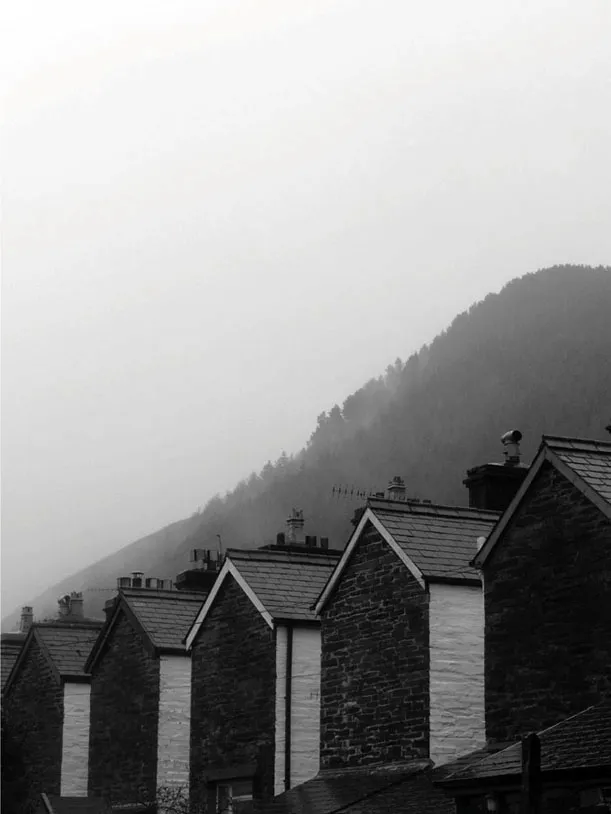
Figure 1.1 Houses at Abergnowlyn, Wales. ©Jane Carroll.
The desire to shape and order land and to create landscape may be expressed, at its most basic, as ‘the passion for building enclosures.’1 Enclosed, bounded, and limited spaces dominate the built environment and, accordingly, are among the most common features in literary representations of landscape. Yi-Fu Tuan suggests that ‘nature is too diffuse, its stimuli too powerful and conflicting, to be directly accessible to the human mind and sensibility’2 and so must be mediated through architectural forms which ‘demarcate and intensify forms of social life.’3 Focusing on sacred spaces, on enclosures which are set apart from other aspects of the built environment and distinguished from the rest of the landscape by virtue of their sacred nature,4 this chapter will examine the role of enclosed spaces in children’s literature. Positing the home as a sanctuary, I suggest a new way of reading the domestic dwelling spaces as they are represented in such texts.
The architectural characteristics and symbolic functions of the sanctuary topos are closely related. Three main attributes, which signify metaphysically and are expressed physically, characterise the topos. First, the sacred space has a strong vertical dimension. Whereas landscape, just like the format of a paper document, is generally imagined and represented as horizontal, the sacred space transcends the basic geometric plane by extending on a vertical as well as horizontal axis. As we shall see, this verticality is not unique to the sacred space. The lapsed topos, which is the focus of Chapter Four, also makes use of vertical—albeit chthonic—directional aspects. This verticality is spiritual as well as physical and the space ‘allows for passage between different levels of reality,’5 thus providing an interface between the mundane and the sacred. Second, the sacred space has strongly demarcated boundaries.6 Sharon Gerstel notes that whereas there are ‘material expression[s] of […] visual limits’ there are also sensory and emotional barriers in place around the sacred zone, and that ‘prohibition, sanction and fear also establish boundaries.’7 Third, and perhaps most importantly, the sacred space has a central chamber or space which is, in effect, the heart of the topos. This central space may hold an object ‘vested with real and symbolic importance in and beyond the act of worship, an object that compels notice and demands response […] a book, or a scroll, an image, a relic, even a sacred stone.’8 Thus, the space has a central focal point. By extension, the sanctuary may represent ‘the centre, the axis or the navel of the world,’9 and so becomes a focal point for the surrounding community. Even if it is not located at the direct centre of the civic space, it is a site ‘on which the feelings and senses of the people [are] deeply engaged.’10 These spaces are sanctified through their form, contents, and attitudes and reactions of the community towards them.
The Home as Sacred Space
Sacred space is often closely conflated with domestic space as the same physical and symbolic elements which distinguish sacred spaces also characterise domestic spaces. The sanctuary is ‘a house of the gods’11 and the boundaries of the sacred zone may be likened to the walls of a house.12 As Hamilton and Spicer have observed, the Indo-European sacred space is closely modelled on the shape of the house; for instance, in Celtic societies which favoured round dwellings with a central hearth, the typical temple is also circular with a altar or sacred fire placed at the exact centre; and the style of churches and cathedrals across Northern Europe generally reflects the hall-style dwelling common in medieval times.13 Just as the domestic space provides a frame of reference which enables a greater understanding of sacred places, the paradigms associated with such sacred places may, in turn, enable a greater understanding of domestic spaces.
Our understanding of the home is authenticated only if it is considered as a sacred space and as part of the sanctuary topos. Edward Relph cautions against the dilution of the symbolic function of the home by treating it as synonymous with the term ‘house’ which brings about a ‘splitting of the functions associated with it.’14 The mass-produced desacralised house which results from and is expressed by modernist and post-modernist architecture often deliberately subverts the dialectical relationship between interior and exterior space. By embracing these ‘homogenous and neutral’ spaces, the structure becomes a secular ‘machine for living in.’15 Whereas the function of the house may be narrowly defined as ‘a shelter against heat, cold, rain, thieves and the inquisitive’ and ‘a certain number of cells appropriated to cooking, work and personal life’16 the function of a home—as an aspect of the sanctuary topos—is far broader.
The home is sanctified because it reflects, on a microcosmic level, the world as a whole. Humans, as made in their god’s image, sacralise a space by making it their own, by shaping it according to their needs and desires. Eliade notes that
to settle in a territory is […] equivalent to consecrating it. […] Establishment in a particular place, organizing it, inhabiting it, are acts that presuppose an existential choice—the choice of the universe that one is prepared to assume by ‘creating’ it. Now this universe [the home] is always a replica of the paradigmatic universe created and inhabited by the gods; hence it shares in the sanctity of the gods’ work.17
As the human body may be read as a version of the cosmos, the home which houses, shelters and protects that body acquires similar associations. Thus, home is at once a personal, localised place and a microcosmic version of the world. For Edward Casey, it is the ‘first universe’18 where, as Eliade suggests, ‘the roof symbolizes the dome of the sky; the floor represents earth, the four walls the four directions of cosmic space.’19
The home shares in the physical and symbolic attributes of the sanctuary topos; it too is characterised by verticality, strict boundaries and an intense, interiorising central focus. Like other sacred spaces it ‘is imagined as a vertical being. It rises upwards,’ and this verticality is confirmed by ‘the polarity of cellar and attic.’20 Like other sanctuaries, the domestic space is is secured and distinguished from the rest of the world by a series of clearly delineated boundaries, causing it to stand ‘apart from the wilderness’21 and from the profane world. The space is often partitioned internally too; thresholds, walls, windows, doors, roofs, hearths, attics, basements, and stairwells demarcate areas of the home which have their own distinct function. These demarcations affect the behaviour of the occupants. Irene Cieraad points out that ‘domestic borders are not just materialised in brick and mortar, but are also confirmed and expressed in the residents’ behaviour towards visitors.’22 The rituals enacted on crossing the threshold of the domestic space serve to remind us that the borders of the home are also the borders between public and private, family and community, self and other.23 The dialectic of self and other is especially important as the home is a highly exclusive zone, and the things gathered there form a carefully selected collection. The group of people admitted is similarly select. Thus, the threshold ‘filters the crudities of nature, the lawlessness of society, and produces an atmosphere of temporary well-being, where vigour can be renewed for contact with the outside.’24 These boundaries allow the centre of the home to become ‘a concentrated being’25 and an ‘idealised’26 rarefied space.
Whereas the majority of sacred places are appropriated to a special purpose, the home is appropriated to some person or persons. So whereas temples and churches and standing stones provide a link between a deity and the mundane world, the home, as a centre of human identity, acts as a nexus between the world and the Self. Home is the ‘focus of personal sentiments [and] the meanings associated with it lie at the core of a persona’s identity.’27 As a place of profound attachment, the domestic space has, for many people, ‘socially endowed and shared meanings that touch on all aspects of their lives, helping shape who they are by virtue of where they are.’28
In literature, ‘landscape and identity reinforce one another’29 to the extent that ‘place is identity’30 and setting is ‘inextricable from character.’31 In literature, where all places are significant, the relationship between location and identity reaches its climax in the representation of the home which becomes ‘a logical extension and reflection of the self.’32 Moreover, as John Rennie Short suggests, the home—the true sacralised house—functions as a meeting place between the self and the world. It is
a nodal point in a whole series of polarities; sanctuary-outside; family-community; space-place; inside-outside; private-public; domestic-social; spare-time-work-time; feminine-masculine; heart-mind; Being-Becoming. These are not stable categories; they are both solidified and undermined as they play out their meaning and practice in and through the home.33
The key element of Short’s vision of the home as sacred space is play: the fluctuating interactions, differences, challenges, and games and rituals which are enacted at the threshold, on the meeting point between the private cosmos and the universe. These negotiations and interactions are central to the narrative function of the home in literature.
The Symbolic Function of Home
Whereas Pauline Dewan sees the built environment and nature as ‘incongruous elements’34 in the landscape, the home, when considered as a sacred space, becomes a site of integration, of communion between the Self and the wider world. Just as the sacred place provides a point of contact between the earth and the gods, the home is also a point of contact—it is the nexus between the individual and the physical environment. Providing a point at which the human body, the built environment and the natural landscape come together, the home is the site where the connection between human and landscape is at its most intense, where the boundaries between person and place, between the Self and the landscape, dissolve altogether.
Although it may be ‘hermetically closed,’35 the borders of the home are not completely inviolable, lest the dwelling-place becomes a prison. The boundaries between home and universe are, as Gaston Bachelard notes, ‘painful on both sides.’36 In the sacralised home, the threshold acts as ‘the limit, the boundary, the frontier that distinguishes and opposes two worlds—and at the same time the paradoxical place where those worlds communicate, where passage from the profane to the sacred world becomes possible.’37 These liminal areas are, as Homi Bhabha suggests, ‘the connective tissue that constructs the difference.’38 They both separate and join adjacent spaces and, as such, allow the home to operate as a sanctuary, a site which allows communication to a physically and symbolically higher place. The borders of the home are, in truth, interfaces.
These physical and symbolic attributes may be readily traced in the representations of sacred and domestic spaces in literature. All aspects of the sanctuary topos are characterised by clearly demarcated boundaries set around a central space or precious object. They are sites of identity, liminality, and sacred communion with the rest of the world which connect human characters with their geographical and cultural environments. These functions are evident in the representation of sanctuaries, sacred spaces and homes throughout literature. I will trace the primary features of the topos from its earliest inception in medieval literature through to modern children’s literature before analyzing the form and functions of the topos as expressed in Susan Cooper’s Dark Is Rising Sequence.
The Sanctuary Topos in Medieval Literature
In Northern European medieval literature the sanctuary topos is a common and readily recognisable aspect of the fictional landscape. Whereas sacred spaces are seldom described in the fiction and poetry of the period, halls, homes, and dwellings of all kinds may be categorised as sanctuaries and may be seen to uphold the physical and symbolic conventions of the topos which I have identified. Many of the castles in The M...
Table of contents
- Cover
- Halftitle
- Title
- Copyright
- Contents
- List of Illustrations
- Series Editor’s Foreword
- Acknowledgements
- Introduction
- 1. The Sanctuary Topos: Sacred and Domestic Spaces
- 2. The Green Topos: Gardens, Farms, Wilderness
- 3. The Roadway Topos
- 4. The Lapsed Topos
- 5. Applications
- Notes
- Bibliography
- Index
Frequently asked questions
Yes, you can cancel anytime from the Subscription tab in your account settings on the Perlego website. Your subscription will stay active until the end of your current billing period. Learn how to cancel your subscription
No, books cannot be downloaded as external files, such as PDFs, for use outside of Perlego. However, you can download books within the Perlego app for offline reading on mobile or tablet. Learn how to download books offline
Perlego offers two plans: Essential and Complete
- Essential is ideal for learners and professionals who enjoy exploring a wide range of subjects. Access the Essential Library with 800,000+ trusted titles and best-sellers across business, personal growth, and the humanities. Includes unlimited reading time and Standard Read Aloud voice.
- Complete: Perfect for advanced learners and researchers needing full, unrestricted access. Unlock 1.5M+ books across hundreds of subjects, including academic and specialized titles. The Complete Plan also includes advanced features like Premium Read Aloud and Research Assistant.
We are an online textbook subscription service, where you can get access to an entire online library for less than the price of a single book per month. With over 1.5 million books across 990+ topics, we’ve got you covered! Learn about our mission
Look out for the read-aloud symbol on your next book to see if you can listen to it. The read-aloud tool reads text aloud for you, highlighting the text as it is being read. You can pause it, speed it up and slow it down. Learn more about Read Aloud
Yes! You can use the Perlego app on both iOS and Android devices to read anytime, anywhere — even offline. Perfect for commutes or when you’re on the go.
Please note we cannot support devices running on iOS 13 and Android 7 or earlier. Learn more about using the app
Please note we cannot support devices running on iOS 13 and Android 7 or earlier. Learn more about using the app
Yes, you can access Landscape in Children's Literature by Jane Carroll in PDF and/or ePUB format, as well as other popular books in Literature & Literary Criticism. We have over 1.5 million books available in our catalogue for you to explore.