![]()
Part I
Writing History
![]()
1 The commissioned historians of the Bank of England
Charles Goodhart
1.1 Introduction and Background
The Governor of the Bank of England, Montagu Norman (Governor, 1920–44), envisaged commissioning a history of the Bank as early as 1929. ‘At the end of the year 1929 the Governor stated that he wished a history of the Bank of England’s policy to be compiled currently and carried back, as occasion served, to the beginning of the post war period’ (Bank of England, file G15/49). John Osborne, then working as Principal in the Chief Cashier’s Office, was put to work on the exercise.1 Part of its purpose was to provide background for the Bank in its evidence to the Macmillan Committee, 1929–31 (Sayers, 1976, Vol. 1, Chapter 16). In the event some of the material was felt to be too sensitive to put forward as evidence.2 In the light of that experience, a bank official noted (ibid.), ‘History, to be well written, need not, probably should not, be written concurrently with the events it records.’
But the Governor clearly felt that the Bank should have its history properly delineated. W. Marston Acres, ‘History of the Bank from Within’, had not had access to the files and was insufficiently policy oriented. Andreades was dismissed as ‘dry as dust’. The next obvious occasion was 1944, simultaneously the 250th Anniversary of the Bank, and the 100th Anniversary of the Bank Chapter Act of 1844. In 1938 Henry Clay wrote to the then Deputy Governor, B.G. Catterns (Deputy Governor, 1936–45), proposing that J.H. Clapham be approached to do the job. No other name was put forward. As noted later, Clapham was the leading economic historian of the day. Moreover, ‘that he is not primarily a monetary theorist is an advantage, since he would not be tempted to subordinate research to the support of preconceived monetary theories,’ Clay to Catterns (Bank of England, file M12401: Histories of the Bank: Sir John Clapham).
Since then there have been only four commissioned histories,3 with Richard Sayers, John Fforde and now Forrest Capie following Clapham, though there have been many other histories of part, or all, of the Bank’s history (I did one such short account for the New Palgrave). Note should be taken of the distinction between a commissioned and an official history, since the latter implies that the institution has not only commissioned but has also checked and agreed the contents.4 Clapham’s history was published by Cambridge University Press, because of wartime exigencies; otherwise the Bank would have printed it themselves. But the Bank paid for it. In the CUP Catalogue, the blurb stated, “The book was, however, allowed to be wholly its author’s child – and the choice of material and expression of opinion are purposely made entirely at his own discretion.” As reported in several notes to the Bank’s Committee of Treasury then, the decision not to make these histories an official account could serve as protection for the Bank, for example against accusations of self-seeking bias. This distinction became, however, forgotten, or abandoned, by the time Fforde wrote; this history is now described as ‘official’ both in the opening blurb and in Fforde’s preface. Perhaps this was because by then it was taken for granted that each author would be expressing his own general judgement.
Clapham’s history is in two volumes, covering the years 1694–1914 (Vol. I, 1694–1797; Vol. II 1797–1914), though there is a brief Epilogue on ‘The Bank as it is’ (Clapham, 1944 pp. 417–427), briefly discussing subsequent changes. There was also an abortive Volume III, commissioned by the Bank’s Committee of Treasury after the first two volumes were completed, to cover the years 1914–31; I shall note its fate later (Bank of England files M12401 and CT.146.01: Books about the Bank, Vol. I: 1938–68). It was initially expected that writing this book would take just one year, and a fee of £1000 was proposed. Sir John’s prior commitments on the history of King’s College, Cambridge, where he was Vice Provost, and his work for the Cambridge Economic History slowed that down; and then the Second World War ensued. He worked part time, at fees ranging from £250 to £500 per annum. By August 1940 he had done Volume I; ‘Also if a bomb fell on me at the Bank it would be pleasant to have the 18th century (for which the new MS material is more valuable than for the 19th) set up in type’ (Clapham to Clay, M12401). Besides Clay, Clapham’s two main interlocutors at the Bank were Edward Holland-Martin and Humphrey Mynors (then the Bank’s Secretary).
Clapham died suddenly in 1946. His proposed Volume III was in typescript, but not revised for publication, and its sources were ‘narrowly restricted’5 (Sayers, 1976, Preface, p. xii). Moreover (as noted in file CT.146.01), since he was an economic, and not a monetary, historian, ‘his unpublished “Volume III” gives too little prominence to technical problems and developments and is now thought unsuitable for publication.’ Instead Sir Theodore Gregory was asked in 1964 to prepare a survey of material and, very likely at Gregory’s suggestion, in 1967 the then Governor, L.K. O’Brien, approached Richard Sayers to take forward the Bank’s history. This was published in 1976, comprising two volumes of text, and a third of Appendices. It covered the period 1891–1944, with a considerable overlap.6 The third commissioned history was undertaken by John Fforde. Lord Cobbold had written to Jasper Hollom (then Deputy Governor of the Bank) in 1979 urging the Bank to press forward with the next stage of the history as being in the long-term interest of the Bank as well as having a wider historical advantage. He admonished that the next Bank historian should be got to work ‘before any more of the main characters of the period die or go gaga’ (Cobbold to Hollom, file M12401).
After Fforde retired as Executive Director for Home Affairs in 1982, he remained in the Bank then as an Adviser for two years, focusing on preparations for writing the next stage of the history. He presumably wanted to do this; and as a close colleague of the Governors it might have been hard for them to deny him. I do not know whether there was much, or any, consideration of the pros and cons of having an internal senior official write up the Bank’s history, though he himself had played little, or no role in the historical period that he covered; He joined the Bank in 1957 and his History ends in 1958. Anyhow, once he had retired from the Bank in 1984, he was asked by the Governors (Robin Leigh-Pemberton and his Deputy, Kit McMahon) to continue the official history of the Bank for the years 1941–58. There was much less overlap in this case. Fforde did not deal with war finance, and only went back to 1941 in so far as it was necessary to cover the discussions leading up to Bretton Woods, the Anglo-American Loan, and the establishment of the postwar international monetary regime, especially in Chapter 2. The history ends in 1958, prior to the publication of the Radcliffe Report.7
Forrest Capie, the fourth and latest commissioned historian, was asked by the Governor, Mervyn King, in May 2004, to take the official history on a further 20 years. The main starting point was necessarily the Radcliffe Committee Report (hearings started 1957, published 1959), but Forrest needed to go back to the mid 1950s to review the antecedents of this. The closing date was 1979, partly because of the Bank’s 30-year rule on disclosure, partly because 1979 represented a major watershed between the Keynesian-style macro-policies of previous governments and the attempts of the subsequent Conservative government(s) to introduce new, and initially more ‘monetarist’, regimes.
1.2 The Historians
1.2.1 Clapham
A rationale for presenting this particular paper is that I am one of the very few people to have known three of these four historians personally, and in each case, quite closely, at least for a few years 8 (and as a history specialist at school, and then as an economist undergraduate, I read Clapham’s Economic History of Modern Britain [1930, 1932, 1938] and his Economic Development of France and Germany, 1815–1914 [1921]). I was also privileged to review both the Sayers and Fforde histories, and have every intention of doing the same with Forrest Capie’s forthcoming history. As you might expect, I did not review Clapham’s History; but M. Anson of the Bank of England unearthed six reviews of this for me; the best two are by Lloyd Mints (1946) and by Sayers (1947).
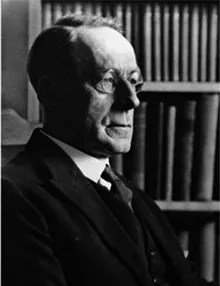
Although Sir John Clapham is billed as an economic historian, he was an historian first and foremost, and not much of an economist. As Sayers’ quote in note 6 suggests, Clapham had little interest in economic theory. His most famous paper, ‘Of empty economic boxes’ (1922), ‘accused the theorists of operating with concepts which were empty and irrelevant’, notably whether particular industries were operating under conditions of increasing, decreasing, or constant returns. Despite having a disdain for theoretical economics, he was at that time not only the leading historian of economic development, though he had had no particular expertise in monetary or financial history, but he was also an establishment figure. He was a protégé of Alfred Marshall, elected to the newly created Chair of Economic History at Cambridge in 1928 (held until retirement in 1938), and Fellow and then Vice-Provost of King’s College (1933–43), and elected President of the British Academy in 1940. He was a safe choice as historian of the Bank, even if unlikely to be particularly original or perceptive on the monetary debates in which the Bank was embroiled in the nineteenth century.
1.2.2 Sayers
It is difficult after this lapse of time to recall how commanding a position Richard Sayers had in the 1950s and 1960s in the field of money and banking in the UK. This was partly because this field, which was then treated at LSE, and perhaps at several other UK universities, as quite separate from general macrotheory, was held to require a profound knowledge of both monetary history and institutional detail. Richard Sayers had both. His early work on Bank of England Operations, 1890–1914 (1936), in which he shows how the Bank used open market operations to make its official Bank Rate effective, remains a classic. He also wrote histories of Lloyds Bank (1957) and Gilletts, a discount house (1968). During the war he served in the Ministry of Supply and then became deputy director of the economic section of the Cabinet Office, an experience which served him well when he came to write the history of Financial Policy, 1939–45.
But his main role was not as an historian, but as an analyst and recorder of current banking practices, especially in the UK, but much more widely; thus he edited Banking in the British Commonwealth (1952) and Banking in Western Europe (1962). His main claim to fame was his book Modern Banking, first published in 1938, but which went through innumerable editions thereafter (the seventh, 1976, being the last on my own shelves). This was the authorised text which all British students of the subject were required to read, at least until the 1970s; from 1938 until around the early 1970s it dominated the scene.
Besides his historical work, his main innovations and original ideas were, first, to switch analysis of the fulcrum for the determination of the supply of money from the cash ratio to the liquid assets ratio and, second, to emphasise the ease of substitution among, and between, bank deposits and other liquid instruments. Thus the emphasis on ‘Liquidity’ in the Radcliffe Report, on which Committee he and Alec Cairncross were the key participants, was very much his doing. While he was correct to realise that the Bank had to make such cash available to the banks as they needed, in order to keep market rates in line with the Bank Rate, he was mistaken in believing that the liquid assets ratio was any less porous; he wrote just as concern about controlling bank liquidity began to be abandoned in favour of a narrow focus on bank capital adequacy.
Sayers’ doubts on the stability of the relationship between (any definition of) money and nominal incomes has stood the test of time much better, but he was unfortunate in the timing of the Radcliffe Report. This occurred just as the early econometric studies were proclaiming that the demand for money function was stable (though they all, then and later, soon thereafter ‘broke down’). Moreover, the emerging US monetarists, led by Milton Friedman, were using improved (mathematical) techniques to integrate monetary and macro-theories in a way that left the more institutional approach of Sayers looking old-fashioned and fuddy-duddy. The Radcliffe Report was criticised in the UK, and ignored and dismissed in the USA, which embittered Sayers. Perhaps this unhappy experience may have led him to focus his energies more on his historical work, especially his history of the Bank of England.
1.2.3 Fforde
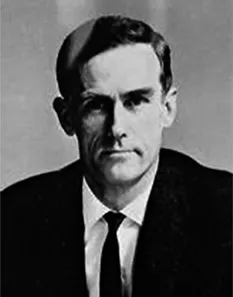
Three of the four authors of these commissioned histories have been professional (economic) historians. The (partial) exception is John Fforde. It is only partial because in the early 1950s he wrote a history of The Federal Reserve System, 1945–1949. After getting a First in PPE at Oxford, he became a student (1949–51) and then a Fellow of Nuffield College (1953–57), with a stint in Churchill’s Prime Ministerial statistical branch, in practice his think tank, in between. Thus in his earlier years he did train as an academic and/or economic historian.
But by the time that I came to know him, especially in the 1970s, he would vociferously deny that he had any residual capacity as an academic economist, or indeed as an economist of any stripe. But he protested too much. He was alway...