Hanich looks at fear at the movies – its aesthetics, its experience and its pleasures--in this thought-provoking study. Looking at over 150 different films including Seven, Rosemary's Baby, and Silence of the Lambs, Hanich attempts to answer the paradox of why we enjoy films that thrill us, that scare us, that threaten us, that shock us –affects that we otherwise desperately wish to avoid.
eBook - ePub
Cinematic Emotion in Horror Films and Thrillers
The Aesthetic Paradox of Pleasurable Fear
- 314 pages
- English
- ePUB (mobile friendly)
- Available on iOS & Android
eBook - ePub
Cinematic Emotion in Horror Films and Thrillers
The Aesthetic Paradox of Pleasurable Fear
About this book
Information
Part I
Introduction
It is a common observation, that objects which in the reality would shock, are in tragical, and such like representations, the source of a very high species of pleasure. This taken as a fact, has been the cause of much reasoning.
(Edmund Burke)1
[T]he audience knows what they’re coming to see, they’ve paid their six bucks. They’re saying, ‘Okay Mr. Barker … or okay, Mr. Cronenberg, okay, Mr. Lynch, or whoever the director is, horrify me.
(Clive Barker)2
THE PARADOX OF FEAR: I’M AFRAID, THEREFORE I ENJOY
Can fear be pleasurable? In February 1949 the director Alfred Hitchcock publishes an article in which he raises this extraordinary question. Writing in the magazine Good Housekeeping, of all publications, Hitchcock tackles the matter in an amusing and anecdotal way: “I was discussing this point with an old friend not long ago. ‘Fear,’ he said, ‘is the least pleasant of all emotions. I experienced it when I was a boy, and again during both wars. I never want my children to experience it. I think it entirely possible, if I have anything to say about it, that they’ll live their entire lives and never know the meaning of the word.’ ‘Oh,’ I said, ‘what a dreadful prospect!’ My friend looked at me quizzically. ‘I mean it,’ I went on. ‘The boys will never be able to ride a roller coaster, or climb a mountain, or take a midnight stroll through a graveyard. And when they’re older’—my friend is a champion motorboat racer—‘there’ll be no speedboating for them.’ ‘What do you mean?’ he asked, obviously offended. ‘Well, now, let’s take the speedboat racing, for instance. Can you honestly tell me that the sensation you get when you cut close to a pylon, or rough water, with a boat riding close on one side and another skidding across in front of you, is anything but fear? Can you deny that a day on the water without fear, without that prickly sensation as the short hairs on your neck rise, would be an utter dead failure? It seems to me that you pay lots of money a year for fear. Why do you want to deny it to your sons?’ ‘I’d never thought of it quite that way,’ he said. And he hadn’t. Few people have. That’s why my statement, made in all sincerity, that millions of people every day pay huge sums of money and go to great hardship merely to enjoy fear seems paradoxical.”3
Can fear be pleasurable? Answering this unusual question will be the purpose of the approximately 300 pages that follow. Why do we, at times, deliberately and voluntarily expose ourselves to what seems to be a negative emotion—an emotion that we desperately wish to avoid in everyday life? How can we even think of spending our precious leisure time by driving to a movie theater and watch a film entitled, say, The Texas Chainsaw Massacre (1974)? Why pay at the multiplex box-office to be frightened and shocked by a movie that promises the Dawn of the Dead (2004), let alone The Evil Dead (1981)? Behind these questions lies the basic paradox that I will deal with in this study. I call it the paradox of fear.
Hitchcock was certainly not the first who pondered the question of pleasurable fear. The vexing character of the paradox can be gauged from its long tradition. Some 1,600 years ago, St. Augustine asked a very similar question in his Confessions.4 Yet it was particularly during the 18th century that the problem created heated debates. Philosophers and aestheticians were interested in the question why sublime nature—enormous Alpine mountains, impenetrable forests, gaping gorges—could be an enjoyable spectacle. The most notable contributions were those of Edmund Burke in A Philosophical Enquiry into the Origins of our Ideas of the Sublime and Beautiful (1757) and Immanuel Kant in his Critique of the Power of Judgment (1790).5 But the discussion also revolved around the pleasures of tragic and sorrowful stage plays, as can be judged from David Hume’s “Of Tragedy” (1757) and Friedrich Schiller’s “On the Reason Why We Take Pleasure in Tragic Subjects” (1792).6 Last but not least, numerous authors like Joseph Addison (“Why Terrour and Grief are Pleasing to the Mind when Excited by Descriptions”, 1712) or John and Anna Laetitia Aikin (“On the Pleasure Derived From Objects of Terror”, 1773) were struck more specifically by terror and horror in works of art: in literature, on stage, in painting.7 They put their astonishment in oxymoronic expressions like ‘terrible joy,’ ‘pleasing horror,’ ‘terreur agréable,’ ‘schaudervolles Ergötzen’ and ‘angenehmes Grauen.’ I will refrain from rephrasing their arguments in detail—not only because the interested reader might pick up Carsten Zelle’s excellent studies, but also because these 18th-century analyses hail to us from pre-cinematic times and therefore do not take into account what is different in terms of the medium of film and its place of reception, the movie theater.8 The pleasurable frightening situation inside the cinema, however, is precisely what interests me here.
Undeniably, in Hitchcock’s wake a number of authors have—explicitly or implicitly—sought for the function of frightening movies and even set out to solve the present conundrum. Noël Carroll, for one, has devoted an important and highly controversial book to what he calls the “paradox of horror.”9 Yet Carroll’s approach is only moderately convincing. First, by arguing that the viewer’s main pleasure derives from the satisfaction of cognitive interest in the impossible being of the monster and the fascintation for the narrative’s gradual process of disclosing, discovering and proofing the monster’s existence, Carroll overemphasizes the cognitive pleasure and thus overintellectualizes a rather somatic experience. Second, by maintaining that the emotion of art-horror—a commingling of fear and disgust—is unpleasant and merely the price to be paid for the pleasure of satisfied interest, Carroll both denigrates the viewer’s emotional experience and situates pleasure outside of fear. Both arguments are counterintuitive. Hence there are good reasons for a new attempt in tackling the paradox of fear.
Because this study focuses on the U.S. and Hollywood movies, it does not help much to solve the paradox by taking into account the current cultural climate in the United States. Sociologists, political scientists, historians, media scholars and at least one filmmaker—Michael Moore in Bowling for Columbine (2002)—have concluded that Americans have for some time been living in a “culture of fear.”10 None of these scholars considers the situation healthy. None of them is particularly fond of fear. None of them believes that—against the backdrop of a society that is, across-the-board, safe and secure—the proportions of fear are adequate and rational. Peter N. Stearns, known as historian of emotions, locates this upsurge of fear within the time span of the last three decades. What are the reasons? On the one hand, “[t]oo many Americans have developed unrealistic hopes for a risk-free existence, and as such are open to excessive reactions when risk intrudes and to excessive worries about risks that may not eventuate,” Stearns informs us.11 As a result, there is a growing desire for safety and protection against risks. On the other hand, precisely this desire for safety and protection is capitalized on by various fearmongers who use fear as a means to unworthy ends. They manipulate and exploit their clienteles by evoking bleak scenarios and thus use fear as a political, economic or legal tool.12 Hence the answer to why Americans harbor so many unnecessary fears is that power and money await those who tap into moral insecurities and provide symbolic substitutes.13 As a consequence, many Americans were becoming easier to scare and ever more eager to escape their fears.14
And yet: the American cinema of fear thrives and thrives. But why do so many fearful Americans enjoy movies that scare them at the exact historical moment when they have more than enough of it in everyday life? On the face of it, America’s culture of fear makes the puzzle even more striking.
MULTIPLE PLEASURES: NO PARADOX AFTER ALL?
Then again, some theorists have raised doubts if frightening movies involve a paradox at all. Matt Hills, for instance, rejects the idea that asking “Why horror?” could open up a conundrum since this would imply essentializing the genre by declaring scariness as the generic characteristic.15 But why should we want to reduce horror movies to the experience of fear, if there are so many other pleasures to be gained? And if there are so many other pleasures, Hills suggests, why should watching horror movies be paradoxical? Indeed, distinguishing between a film’s function (as the more general use-value) and the pleasure it generates (as one specific function), we have to admit that the horror film and its sister-genre the thriller not only fulfill various functions but also generate diverse pleasures. One reason is the filmmakers’ active interest: in order to sell the same film to two or more audiences, a variety of pleasures and other functions are planted into the movie. As a consequence, there may be no ultimate essence to the pleasures of film viewing. Cinematic pleasures are dispersed and depend on film, genre, viewer, and cultural and historical context.16 In this study I neither intend to present a grand theory about filmgoing in general nor do I want to fix the quintessential pleasures and functions of specific genres. A movie may be worthwhile for many reasons.
Think of information and knowledge: The fact that we can obtain information and learn from the movies not only goes for documentaries or sophisticated fiction films. Although frightening films often cannot be taken at face value, these films can nevertheless satisfy epistemophilia—our desire for knowledge—by creating vivid impressions of unknown places, times and works of art aesthetically. For instance, we can acquire sociological insights of how other classes or groups of society live. Examples comprise the Amish in Peter Weir’s thriller Witness (1985), rural America (Signs, 2002), the lower class (Henry—Portrait of a Serial Killer, 1986), the young urban elite in a ‘yuppie-horror movie’ like Basic Instinct (1992), life in the projects (Candyman, 1992) or campus culture (Scream 2, 1997). And what about adaptations from other art forms, most notably literature? The film versions of Bram Stoker’s Dracula (1992) by Francis Ford Coppola and Mary Shelley’s Frankenstein (1994) by Kenneth Branagh tell us about and interpret classic novels.
But cinema can also function as a place for acquiring (sub-)cultural capital in Pierre Bourdieu’s sense—that is, as a means of social distinction.17 Discussing a David Fincher thriller around the water cooler helps those who have seen the movies to distinguish themselves from the rest. Another way of acquiring social recognition is the consumption of films which are taboo for a certain age group or might be considered as a test of courage (like R-rated horror movies). The one who has managed to see these films stands out from the group due to an act of social transgression that defies authority.18 Moreover, the display of connoisseurship allows fans to demarcate the boundaries of the ‘in-group’, separating fans from non-fans, long-term aficionados from newcomers. Stressing media literacy, education and knowledge of the genre by pointing out intertextual allusions, previous work done by the auteur-director or recognizing the craftsmanship of special effects, sets those viewers apart.19
Watching frightening films certainly comprises the satisfaction of scopophilia. Think of ‘gazing’ at star performances such as Brad Pitt in Seven (1995) or watching good-looking, often highly eroticized people on the screen more generally; the stunning bodies in slasher films like I Know What You Did Last Summer (1997) come to mind. But pleasure of looking also involves the sight of well-crafted special effects: the convincing evocation of the monster via CGI (The Lost World: Jurassic Park 2, 1997) or hand-made (Hellraiser, 1987), the stunning depiction of violence (e.g., the famous decapitation scene in The Omen, 1976) or the creation of unknown worlds (Alien 3, 1992).
Moreover, pleasure might come from hermeneutic activity. Think of intertextual comparisons, ad-hoc interpretations and evaluations. An informed viewer will likely have fun following the allusions and drawing comparisons to other films while watching self-reflexive movies like Wes Craven’s New Nightmare (1994) and Scream (1996). Or she may find it pleasurable to interpret Clarice Starling (Jodie Foster) in The Silence of the Lambs (1991) as a feminist heroine and evaluate the movie Virus (1999) as a trashy version of Goethe’s poem “The Sorcerer’s Apprentice.”
There are more pleasures to be gained from frightening films if we think of aesthetic experience more narrowly defined—for instance the pleasure of cognitive and emotional self-expansion, imaginary role-play and self-fashioning.20 Through an act of transfer of personal thoughts, emotions and body schemas the viewer concretizes and completes the characters and worlds offered by the film. The spectator transcends his or her own limited identity and can thus pleasurably stage himself or herself as someone else and somewhere else for a short period of time. In a terrifying movie like The Silence of the Lambs this not only comprises the heroine Clarice Starling, but also the fascinating and horrendous serial killer Hannibal Lecter (Anthony Hopkins). In fact, it necessarily comprises all the characters present in the film. Employing Nietzsche’s concept of power-as-pleasure, Daniel
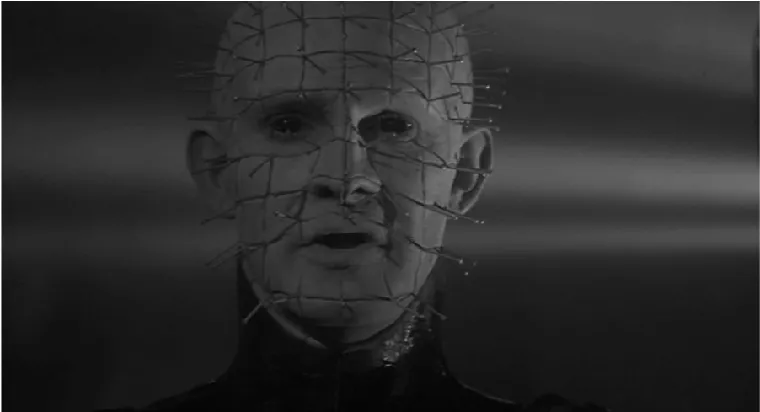
Figure I.1 Pinhead (Doug Bradley), the fascinating monster in Hellraiser.
Shaw claims that the horror spectator derives a feeling of self-empowerment by siding with the immensely powerful villain and the awesome havoc that he (or she) wreaks as well as the eventual triumph of the final girl (or boy) and the death and destruction of the villain.21 Through imaginary role-play the viewer can have it both ways: empathy with the devil and satisfaction from the victim’s victory.
Hence it would be blatantly reductive to restrict the aesthetic experience of frightening films to the aspect of emotion and the body. On the other hand, aesthetic experience certainly does involve sensory and sensual aspects. Particularly talking about the pleasure of fear without talking about the body and the way we experience it would certainly be an odd endeavor. Conceding that there are numerous pleasures to be gained from and functions fulfilled by frightening movies does not help to find an answer to the aesthetic paradox at the heart of my investigation. Let me underscore: unlike Hills and others who talk about the pleasures of horror, I do not ask for the function of one specific genre but for the pleasure of fear more generally. My guiding question is not: what functions do certain genres fulfill? But rather: what pleasures does the viewer gain from experiencing types of cinematic fear like horror, shock, dread or terror?
If we approach the problem from this angle, the essentializing tendency vanishes. We do not have to stipulate one single overarching function (like scaring the audience), but can concede a multiplicity of pleasures. What still remains unanswered, is the question how we derive pleasure from the fearful engagement with the movie. Studying the pleasure of cinematic fear implies, then, the deliberate disre...
Table of contents
- Routledge Advances in Film Studies
- Contents
- Figures
- Acknowledgments
- Part I
- Part II
- Part III
- Notes
- Bibliography
- Index
Trusted by 375,005 students
Access to over 1.5 million titles for a fair monthly price.
Study more efficiently using our study tools.
Frequently asked questions
Yes, you can cancel anytime from the Subscription tab in your account settings on the Perlego website. Your subscription will stay active until the end of your current billing period. Learn how to cancel your subscription
No, books cannot be downloaded as external files, such as PDFs, for use outside of Perlego. However, you can download books within the Perlego app for offline reading on mobile or tablet. Learn how to download books offline
Perlego offers two plans: Essential and Complete
- Essential is ideal for learners and professionals who enjoy exploring a wide range of subjects. Access the Essential Library with 800,000+ trusted titles and best-sellers across business, personal growth, and the humanities. Includes unlimited reading time and Standard Read Aloud voice.
- Complete: Perfect for advanced learners and researchers needing full, unrestricted access. Unlock 1.5M+ books across hundreds of subjects, including academic and specialized titles. The Complete Plan also includes advanced features like Premium Read Aloud and Research Assistant.
We are an online textbook subscription service, where you can get access to an entire online library for less than the price of a single book per month. With over 1.5 million books across 990+ topics, we’ve got you covered! Learn about our mission
Look out for the read-aloud symbol on your next book to see if you can listen to it. The read-aloud tool reads text aloud for you, highlighting the text as it is being read. You can pause it, speed it up and slow it down. Learn more about Read Aloud
Yes! You can use the Perlego app on both iOS and Android devices to read anytime, anywhere — even offline. Perfect for commutes or when you’re on the go.
Please note we cannot support devices running on iOS 13 and Android 7 or earlier. Learn more about using the app
Please note we cannot support devices running on iOS 13 and Android 7 or earlier. Learn more about using the app
Yes, you can access Cinematic Emotion in Horror Films and Thrillers by Julian Hanich in PDF and/or ePUB format, as well as other popular books in Social Sciences & Media Studies. We have over 1.5 million books available in our catalogue for you to explore.