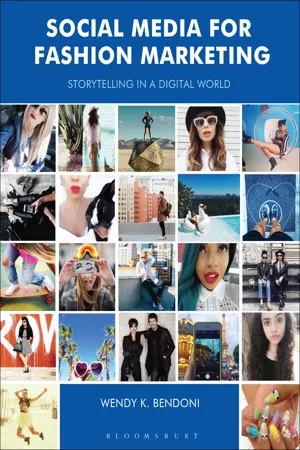
Social Media for Fashion Marketing uses cutting edge case studies and detailed interviews to show how the business of fashion is changing in the digital landscape. Bendoni (@BendoniStyle) also considers the psychological impact of being a hyper-connected consumer and the generational gaps in social media communication. Using academic research, alongside her 25 years of fashion marketing experience, Bendoni offers a clear picture of the changing narrative of storytelling, social confirmation, digital nesting and how to use data to shape a brand's online presence. With practical and critical thinking activities to hone your skills into professional practice, this is the ultimate guide to social marketing, promotion, SEO, branding and communication. Featured topics
- Rules of Digital Storytelling
- Rethinking Gamification
- Strategic Digital Marketing
- The Role of Citizen Journalists
- The Social Media Looking Glass
- World of Influencer Marketing
- Visual Consumption Economy
- Global Perspective of Social Media
- 272 pages
- English
- ePUB (mobile friendly)
- Available on iOS & Android
eBook - ePub
About this book
Information
1.1
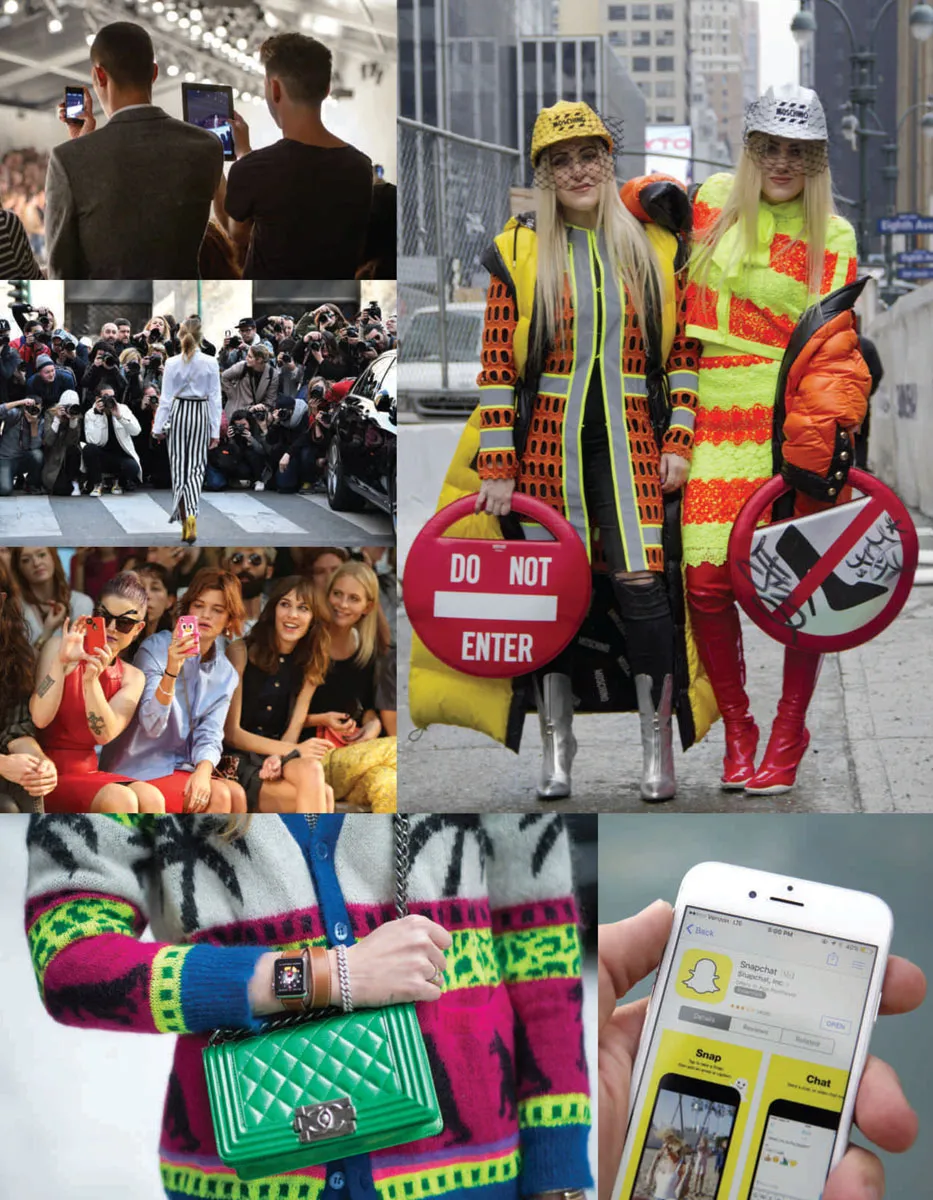
Fashion disrupted through consumers’ need to consume and share endless “postable moments” in real time.
PART 1
THE DIGITAL LANDSCAPE TRANSFORMS THE FASHION INDUSTRY
DIGITAL DISRUPTION OF THE FASHION INDUSTRY
Chapter Objectives
•Explore the traditional fashion landscape before the emergence of social media
•Discover the ever-changing fashion system
•Examine how social media democratized the fashion industry
•Understand the digital disruptions that have forever changed the fashion industry
•Discover the blogosphere revolution
•Understand the strength of the fashion community
•Discover the future of runway
•Study the evolution of fashion intelligence
INTRODUCTION
The business of fashion has undergone a revolution in the digital age of social media. It has democratized, disrupted, and even shifted the business model of the traditional fashion system. Most fashion industry veterans barely recognize the industry from a decade ago and continue to adapt to the emergence of new technologies and their influence on the new fashion consumer. This transition is not limited to marketing and management, but permeates to the core of design itself. While blogs and social media have influenced the speed of fashion-to-market, it is important to examine the way in which the cycle of trends and the adoption of fashion impacts the industry as a whole. In this chapter, we will take a closer look at the fashion industry from the beginning of the digital age (1990s) to the information age of the millennium. To forecast where the “business of fashion” is heading with the fast pace of social media behind it, we must first reflect on the fashion system before the disruption of social media. The traditional methodology of the fashion ecosystem has been rewritten; consumers’ need for immediacy in receiving products and their demand for faster accessibility to trends contribute to the shift in the fashion industry. In this chapter, insights will be given into the pre-social media fashion industry and the building blocks of customers’ adoption of fashion trends. Consumers’ fashion interests derive from a collective response, globalized with the boundless reach of social media. While this disruption has enabled fashion marketers to become closer to their customers, they have had to first understand the shifts that are affecting the industry as a whole. The fashion industry’s entire ecosystem goes to great lengths to ensure that they offer goods and services that coalesce with consumer needs and desires seamlessly. Historical, economic, societal, and technological variables have always had an impact on fashion sales. This is true of any industry; however, today, the fashion industry has embraced this series of impactful disruptions as “business as usual.” From the Industrial Revolution to women’s suffrage, NAFTA, and the introduction of the Internet to mass consumption in the 1990s, the industry has been forced to adapt repeatedly.
Of these movements, social media’s buildup of the “Information Age” and “Online Communities” have proven to be one of the most dramatic shifts to ever affect the fashion industry. In this chapter, we will explore the fashion industry before social media, and how the emergence of user-generated content democratized the industry as a whole. Additionally, the power of online social communities appears to be able to alter a brand’s role in the marketplace. It permits a role reversal in which the industry doesn’t merit chasing consumer cues and creating content in real-time to attract prospective customers. We will introduce and begin to examine four disruptions of the fashion industry, based on the evolution of the Internet and the impact of social networks on the future of fashion.
“FASHION IS RIPE FOR DISRUPTION… BECAUSE A LOT OF THE WAYS THINGS ARE DONE NOW — FASHION-OF-THE-WEEK SHOWS, BUYERS, VERY POWERFUL EDITORS IN MAJOR FASHION CAPITALS — THESE WERE THE WAYS THAT TRENDS WERE DISTRIBUTED, AND THEY WEREN’T VERY DEMOCRATIC. BUT THE INTERNET DEMOCRATIZES EVERYTHING.”
MANISH CHANDRA, FOUNDER AND CEO OF POSHMARK (SILICON VALLEY BUSINESS JOURNAL) (XAVIER, 2014)
THE FASHION LANDSCAPE BEFORE SOCIAL MEDIA
The fashion system before the advent of real-time social media feeds followed predictable boundaries of time and space. Fashion collections were set, styles were anticipated, and fashion venues for the collections were globally established, thus setting the tone for the fashion season. The fashion system was determined and controlled by a method that ran as the exclusive business of fashion through the 1980s and 1990s. Consumers were not privy to previews of designer collections, nor did they have any tools to monitor fashion shows in real time. By the beginning of the twenty-first century, technological advances such as Apple’s 2007 smartphone, the iPhone, social media’s open-platforms, and Web 2.0 applications began to transform both the creation and marketing of fashion. While this change created a disruption within the fashion industry, it is necessary to understand the fashion system before social media platforms became an active participant in the process.
Social media is “a group of Internet-based applications that build on the ideological and technological foundations of Web 2.0, and that allow the creation and exchange of user-generated content (Kaplan and Michael).” The adoption of social media changed the way consumers communicated and connect in our modern culture, but it also opened doors to a new way to unite globally with others. There are over two billion active users on social media. While it may have began as a way to connect with friends and family it has now evolved as a powerful tool for brands to connect with consumers.
The Fashion System of Yesterday
Before social media, consumers adopted trends at a much slower pace, maintaining a leisurely driven fashion cycle (number of trend adopters over time). Consumers before social media were also more passive recipients, approving (and rarely rejecting) the industry-driven preselected collections presented to them in stores. The flow of goods through the fashion system (design concept and retail supply to consumers) shared a similarly moderate pace. However, after the social media movement, highly demanding, digitally connected consumers imposed intense and unprecedented pressures on the fashion system. Social media’s real-time content has raised consumers’ awareness and measurable participation throughout the fashion pipeline. This movement naturally creates new challenges along with new opportunities for retailers, marketers, and suppliers.
Who kept consumers up-to-date with what was deemed fashionable before social media? How was fashion cycled through society by the industry and its influencers before the onset of Google and fashion blogs? Early on, the fashion system opened with the presentation of collections to industry gatekeepers (influencers), a pre-selected, elite group of fashion editors, collectors, buyers, and celebrities. Fashion is also an expression of personal preference, influenced by other, more prominent, groups (celebrities or publishers of fashion information) who inspire the masses through envy or reliability. Such gatekeepers largely defined fashion-acceptable merchandise (Shoemaker and Vos, 2009). This gatekeeper theory also explains how traditional media such as fashion magazines, movies, or coverage of fashion events filtered “how and why certain information either passes through gates or is closed off from media attention” (Shoemaker and Vos, 2009).
1.2
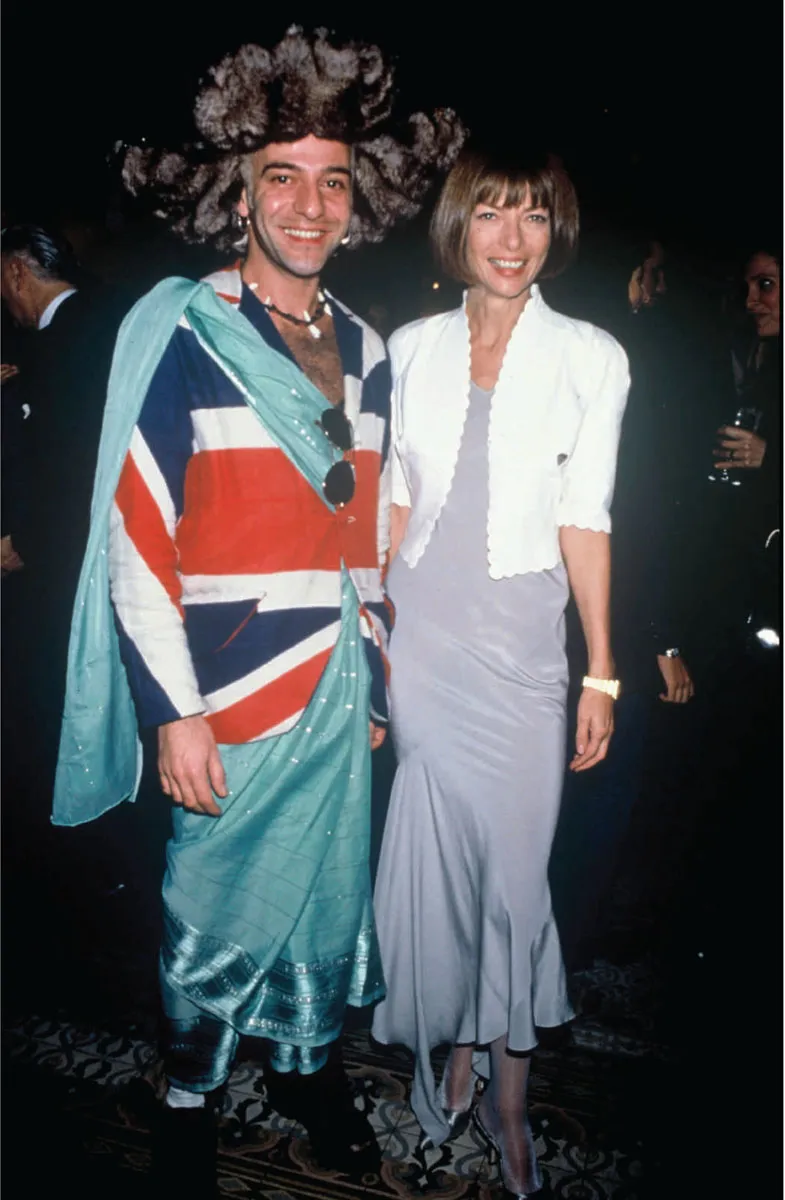
One example of a traditional fashion gatekeeper is Anna Wintour, the English editor of American Vogue since 1988. Through the years, she has worked closely to help young designers through the pages of Vogue and Council of Fashion Designers of America (CFDA). Interesting enough, Isabella Blow for a brief time was Wintour’s assistant before moving back to England. Photographed here in Paris with fashion designer John Galliano 1993. Wintour was the editor who first discovered Galliano when he first came onto the London fashion scene.
Fashion Week presentations (sometimes referred to as cat walks in Europe) are based in major world capitals for an exclusive, trade-only audience. These shows featured styles that were thematically aligned with the traditional seasons: resort, fall/winter, and spring/summer. Their primary purpose was to enable the media and consumers to preview a collection before its release for public purchase. Fashion editors gathered insight from shows to align with an editorial calendar in order to begin the storytelling process of the season. Buyers made their purchase decisions based on their interpretations of what they believed their target audience wanted. Retailers incorporated push marketing strategies into the promotional mix (commercials, visual merchandising, catalogs, magazine ...
Table of contents
- Cover
- Title Page
- CONTENTS
- Introduction
- PART 1 THE DIGITAL LANDSCAPE TRANSFORMS THE FASHION INDUSTRY
- PART 2 THE BUSINESS OF MARKETING FASHION
- Glossary
- Acknowledgments
- Picture credits
- eCopyright
Trusted by 375,005 students
Access to over 1.5 million titles for a fair monthly price.
Study more efficiently using our study tools.
Frequently asked questions
Yes, you can cancel anytime from the Subscription tab in your account settings on the Perlego website. Your subscription will stay active until the end of your current billing period. Learn how to cancel your subscription
No, books cannot be downloaded as external files, such as PDFs, for use outside of Perlego. However, you can download books within the Perlego app for offline reading on mobile or tablet. Learn how to download books offline
Perlego offers two plans: Essential and Complete
- Essential is ideal for learners and professionals who enjoy exploring a wide range of subjects. Access the Essential Library with 800,000+ trusted titles and best-sellers across business, personal growth, and the humanities. Includes unlimited reading time and Standard Read Aloud voice.
- Complete: Perfect for advanced learners and researchers needing full, unrestricted access. Unlock 1.5M+ books across hundreds of subjects, including academic and specialized titles. The Complete Plan also includes advanced features like Premium Read Aloud and Research Assistant.
We are an online textbook subscription service, where you can get access to an entire online library for less than the price of a single book per month. With over 1.5 million books across 990+ topics, we’ve got you covered! Learn about our mission
Look out for the read-aloud symbol on your next book to see if you can listen to it. The read-aloud tool reads text aloud for you, highlighting the text as it is being read. You can pause it, speed it up and slow it down. Learn more about Read Aloud
Yes! You can use the Perlego app on both iOS and Android devices to read anytime, anywhere — even offline. Perfect for commutes or when you’re on the go.
Please note we cannot support devices running on iOS 13 and Android 7 or earlier. Learn more about using the app
Please note we cannot support devices running on iOS 13 and Android 7 or earlier. Learn more about using the app
Yes, you can access Social Media for Fashion Marketing by Wendy K. Bendoni in PDF and/or ePUB format, as well as other popular books in Business & Fashion & Textile Industry. We have over 1.5 million books available in our catalogue for you to explore.