This lively textual symposium offers a collection of formative research on the culture of global psytrance (psychedelic trance). As the first book to address the diverse transnationalism of this contemporary electronic dance music phenomenon, the collection hosts interdisciplinary research addressing psytrance as a product of intersecting local and global trajectories. Contributing to theories of globalization, postmodernism, counterculture, youth subcultures, neotribes, the carnivalesque, music scenes and technologies, dance ritual and spirituality, chapters introduce psytrance in Goa, the UK, Israel, Japan, the US, Italy, Czech Republic, Portugal and Australia. As a global occurrence indebted to 1960s psychedelia, sharing music production technologies and DJ techniques with electronic dance music scenes, and harnessing the communication capabilities of the Internet, psytrance and its cultural implications are thoroughly discussed in this first scholarly volume of its kind.
- 270 pages
- English
- ePUB (mobile friendly)
- Available on iOS & Android
eBook - ePub
The Local Scenes and Global Culture of Psytrance
About this book
Information
Part I
Goa Trance
1
Goa is a State of Mind
On the Ephemerality of Psychedelic Social Emplacements
Luther Elliott
The many displaced, deterritorialized, and transient populations that constitute today’s ethnoscapes are engaged in the construction of locality, as a structure of feeling (Appadurai 1996: 199).
SUBCULTURAL DISLOCATIONS
For more than two years between 2001 and 2004, I conducted participant-observation research among Goa trance scenes in Northern New South Wales, Australia, New York City and several locations in India. A one-off trance festival outside Lusaka, Zambia, provided an opportunity to spend a month following a group of forty international travellers on an overland, trance-themed tour from Cape Town to Lusaka. A persistent theme throughout my ethnographic research was the foundational role of Goa, India, as an almost mythic place of origins and pilgrimage site for so many trance music enthusiasts with whom I have spoken throughout my research in these locations. It was not until the end of my research in 2004 that my partner and I visited Goa for a winter season. Despite having collected narrative accounts, photos, film and video materials of the fabled origin of psychedelic trance culture for several years prior, I was unprepared for the rush of cosmopolitan psychedelic sociality and Royal Enfield motorcycles that still defined the holiday season, nearly two decades after the alleged heyday of psychedelic electronica parties on Goa’s northern beaches.
In Chapora village, just inland along the bay from Disco Valley, in a modest villa rented for the season, a circle of Danish and German party-goers and seasonal residents screen an independent German documentary, Last Hippie Standing, on a laptop computer. The DVD case is passed around and the film’s subtitle, or epigram—“Goa is not a place. Goa is a state of mind!”—is submitted for group consideration, receiving hearty approval. Most of these travellers had first come to Goa in the 1990s and are in their late-twenties and early-thirties when I meet them. Despite their neophyte status in the complex social ecology of the village, they acknowledge the changes witnessed through previous years: the steady growth of new resorts, hotels, beach shacks and restaurants. On the whole, they
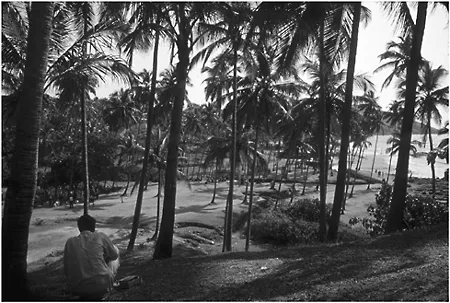
Figure 1.1 Disco Valley, Vagator Beach, Goa, India, January 2004. Photo by Luther Elliott.
remain committed to Goa and speak of their return the following year and of the intention among several to purchase a small inland Portuguese villa together. I struggle to make sense of their willingness to accept the statement that Goa is not, in all its complex geographical and social materiality, first and foremost, a place. And, further, one unlike any other. The young Dane who owns the movie and the computer speaks at some length later in the visit about the parties he organises in Copenhagen and also of his business ventures in Goa involving a gram of lysergic acid diethylamide (LSD) powder (approximately 10,000 standard doses) and his somewhat less-impressive stores of MDMA and mescaline, all brought from the Netherlands. When I inquire about the chief “export”—the coveted hand-rolled hashish or the grey market pharmaceuticals I have watched him stockpile piecemeal—he turns on me in anger, perhaps finally pushed to the point of frustration by the nosiness of the aspiring anthropologist he’s regrettably invited into his circle: “Don’t you get it? It’s not about that! If it’s all this import, export, business, business, you don’t know what is Goa. We told you, it’s consciousness, it’s a state of mind … not all this!”
David Harvey, one of the more widely read and cited of commentators on the era of post-Fordist “flexible” strategies in global capital, has offered some general observations on the plight of social movements whose inability to transcend space results in the commodification of identity and tradition. It is difficult, he opines, for place-bound identities “to maintain any sense of historical continuity in the face of all the flux and ephemerality of flexible accumulation” (Harvey 1989: 303). In considering Appadurai’s provocative suggestion that physical uprootedness from homelands— “deterritorialization” (pace Deleuze and Guattari 1987)—results in the production of locality as “structures of feeling” (Williams 1977: 128–135), this chapter aims to outline the flexible and ephemeral relationships to homelands that have defined countercultural production since the late-1960s. More specifically, Harvey’s broad assertions about the difficulties of maintaining space-bound social identifications in the era of post-Fordist accumulation strategies is assessed via two brief historical case studies in the rise and fall of alternative culture-making in San Francisco and the newly liberated Portuguese colony of Goa, India—easily the two most significant sites for the proliferation of international psytrance scenes.
PSYCHEDELIC PRECEDENTS: THE SUBCULTURAL LIFE-CYCLE OF HAIGHT–ASHBURY
For many nostalgic or critical commentators, the rise and fall of locations like Goa and Haight–Ashbury have turned on the performative efficacy of marketing and journalism neologisms for emergent subcultural and musical genres. A 1952 New York Times article, “This is the Beat Generation” by John Clellon Holmes, turned a Kerouac reference into an epithet for popular consumption. Unlike those of the preceding “Lost Generation”, who were “occupied with the loss of faith”, Holmes argued, the youth of the 1940s were “becoming more and more occupied with the need for it”. If generations could be defined in newspaper headlines, countercultures could be circumscribed by a neologism just as easily. The 1960s had more than its share to work with. Where “beats” had given way to “hippies”, sometimes seamlessly, as in the charismatic figure of Allen Ginsberg, it was in many ways psychiatrist Humphry Osmond’s “psychedelic” that proved to be the most enduring designator for the new countercultural generation, particularly in the hands of Harvard psychologist turned psychedelic proselytiser, Tim Leary, who, with colleagues, Metzner and Alpert, offered the first manual and guidebook to LSD use in 1964, with Psychedelic Experience: A Manual Based on the Tibetan Book of the Dead.
In 1965 the first mass protest against the Vietnam War brought Berkeley, California, to the fore as a hotbed of student-led communist agitation. Shortly thereafter, Ginsberg’s 20-point pamphlet poem, “How to Make a March/Spectacle”, appeared in an issue of Liberation, making explicit the aims and methods of a new brand of protest that would include loving entreaties to soldiers and police, music, dance, pantomime and the ever-present flowers (Ginsberg 1966). The years that followed made clearer the divergence of the hippies, centred in the Haight–Ashbury district of San Francisco, from the more militant student factions: Students for a Democratic Society (SDS) and the Berkeley Free Speech Movement, both of which associated with the British New Left and were likely to perceive flower-power as part of the “end-of ideology” cant circulated by chief hippie ideologue Norman Brown (see Roszak 1969).
If an ethos or ideology can be inferred from a reading list, the accounts of hippie literary predilections are worth briefly revisiting. One early journalist to interview many of the luminaries of Haight–Ashbury reported that the hippies had internalised the rhetoric of Marshall McLuhan and were committed to art forms requiring “total involvement” in the hope that the “cybernetic revolution” would make all men artists (Wolf 1968: xxix). A Luddite strain has always characterised American psychedelic countercultures, and McLuhan was just one of the diverse literary nodes in an informally canonised network of touchstones including Kahlil Gibran’s The Prophet, Ayn Rand’s Fountainhead, Heinlein’s Stranger in a Strange Land and Aldous Huxley’s mescaline-inspired Doors of Perception and psychedelic utopia novel, Island. Gary Snyder commented in a 1967 essay that those who could not travel to Asia but had great interests in its religious traditions got “great results” from LSD: the great texts of Hinduism and Buddhism suddenly became clear (cited in Fields 2002).
In Haight–Ashbury, the Avalon and the Fillmore ballrooms, the Oracle newspaper, the Psychedelic Shop, the I and Thou Café and the Diggers, (an artist and activist collective offering free food, clothing and ritual theatre), provided the musical, dramatic and social infrastructure necessary to galvanise the so-called hippie movement. Perhaps the greatest catalyst for the transformation to come, however, was the emerging festal form. In January of 1967, San Francisco’s Golden Gate Park hosted a demonstration by several tens of thousands. With performances by The Grateful Dead and Quicksilver Messenger Service, among others, the “Tribal Gathering for a Human Be-In” was radically different from the student demonstrations at Berkeley. Although the title “Be-In” evoked the civil rights movement’s “teach-ins” and “sit-ins”, it had clearly departed from the activist politics of the civil rights movement and the “Old Left”. The spirit of the event owed more to the dance-concert of the great San Francisco ballrooms or author Ken Kesey’s legendary Trips Festival or Acid Tests.
June of 1967 saw what was widely hailed as the first ever rock-and-roll festival. Held in the fishing village of Monterey, California, the Monterey Pop Festival launched the much publicised “summer of love” that followed (see Selvin 1992). Estimates put 200,000 spectators at the non-profit festival, itself equally successful on several fronts. Questions about the theft of the festival’s proceeds—earmarked for charity—later arose, but the complete lack of arrests and the generally peaceful atmosphere that prevailed are frequently cited as the primary indications of the event’s success. Behind the scenes, of course, success was measured in the signing of major record contracts by The Who, Janis Joplin, Jimi Hendrix and others who catalyzed the “San Francisco sound” for the music industry. Compared to this new formation of harder “psychedelic” rock that was to dominate the charts internationally in the years to come, McKenzie’s folk ballad, “San Francisco” (be sure to wear flowers in your hair), written by Phillips to promote the festival, became almost immediately a nostalgic signifier of an already fading social moment in which blues, folk and rock all shared in the vaunted psychedelic experience.
With the formula for the “revolutionary festival” in place and LSD’s mass production by underground chemist Owsley Stanley, the celebratory rituals involving nonviolent protest qua joyous celebration and pageantry were loosed upon the nation. Downtown Manhattan’s Tompkins Square Park emerged in mid-1967 as a place of assembly, and protests later that year were to display their debt to the Be-In and the ballroom dance-concert, as well as to Ginsberg’s flower-powered demonstrations.
In Haight–Ashbury that autumn, drug raids marked the end of the summer long love-in, prompting U.S. News and World Report (October 23) to ask whether “the whole hippie movement may turn out to have been just another fad” (cited in Wolf 1968: 268–269). Little more than two years after San Francisco newspaper journalists popularised the “hippie” epithet, the movement already appeared in need of a proper eulogy. The day the Psychedelic Shop in Haight–Ashbury closed its doors was marked by a funeral parade commemorating the “death of the Hippie”. The Diggers’s Free City street sheet from October 6, 1967, opened with the accusatory headline, “MEDIA CREATED THE HIPPIE WITH YOUR HUNGRY CONSENT”. Emmett Grogan, co-founder of the Diggers, would later comment: “It was the media coverage of the Human Be-In that destroyed the spirit of Haight–Ashbury. The publicity precipitated a massive statewide migration of America’s runaways, outcasts and outlaws, and with them the heavy drugs, speed especially. That was the beginning of the end” (cited in Law 1987: 57).
If Haight–Ashbury was a critical crossroads and an irrefutable place of origins, it was ultimately an expendable one. By the time the Woodstock festival was held, many insiders ceased to identify with the hippie “movement”, which increasingly appeared to early insiders as a co-opted semiotic cluster, a constellation of commodifiable catch-phrases, hem-lines and conventionalised understandings of what made rock–and-roll psychedelic. Yet, it is naïve to imagine that “hippie”, as an authentic set of cultural practices and orientations, died with the social infrastructure and integrity of Haight–Ashbury. What had clearly ended, however, was a period of intense culture-making during which experimentation in large-scale music events successfully resulted in a form of group participation that might easily transcend its attachments to particular places—here, the ballrooms, parks and a network of cafes, stores and local charities in San Francisco. While the trappings of the flower children were recycled as the latest youth trend, those with the means departed for destinations where ecstatic states of spiritual, artistic and sexual fulfilment could be experienced without the disruption of daily televised war coverage and prurient media attention. For Ginsberg, Leary, Metzer, Alpert, The Beatles and the countless international travellers who had in some way been touched by the events of the late-1960s, the obvious choice for such a departure was India.
SETTING THE STAGE IN GOA
As some of my interlocutors have pointed out, the “hippie trail” connecting sites across Europe, the Middle East and Asia had less to do with identifying as a hippie than it did with touring the regions in which cannabis production and/or consumption attracted a considerable traveller population. The most common itineraries took travellers to the Balearic Islands of Ibiza and Formantera or across the Mediterranean to Morocco, while the extended voyage went “via the Eastern Mediterranean to Iraq, Iran, Afghanistan and Nepal, and ultimately to India”. The more intrepid participants in this common rite of passage, cannabis historian Jonathon Green comments, “would go even further, via Burma and Thailand, eventually to wartorn Vietnam” (2002: 129).
What is clear, whether or not one wants to reproduce the connection between a mass-mediated identifier and the cultural practices it aims to represent, is that the often sa...
Table of contents
- Routledge Studies in Ethnomusicology
- Contents
- Figures
- Acknowledgments
- Psytrance
- Part I Goa Trance
- Part II Global Psytrance
- Part III Liminal Culture
- Contributors
- Index
Trusted by 375,005 students
Access to over 1.5 million titles for a fair monthly price.
Study more efficiently using our study tools.
Frequently asked questions
Yes, you can cancel anytime from the Subscription tab in your account settings on the Perlego website. Your subscription will stay active until the end of your current billing period. Learn how to cancel your subscription
No, books cannot be downloaded as external files, such as PDFs, for use outside of Perlego. However, you can download books within the Perlego app for offline reading on mobile or tablet. Learn how to download books offline
Perlego offers two plans: Essential and Complete
- Essential is ideal for learners and professionals who enjoy exploring a wide range of subjects. Access the Essential Library with 800,000+ trusted titles and best-sellers across business, personal growth, and the humanities. Includes unlimited reading time and Standard Read Aloud voice.
- Complete: Perfect for advanced learners and researchers needing full, unrestricted access. Unlock 1.5M+ books across hundreds of subjects, including academic and specialized titles. The Complete Plan also includes advanced features like Premium Read Aloud and Research Assistant.
We are an online textbook subscription service, where you can get access to an entire online library for less than the price of a single book per month. With over 1.5 million books across 990+ topics, we’ve got you covered! Learn about our mission
Look out for the read-aloud symbol on your next book to see if you can listen to it. The read-aloud tool reads text aloud for you, highlighting the text as it is being read. You can pause it, speed it up and slow it down. Learn more about Read Aloud
Yes! You can use the Perlego app on both iOS and Android devices to read anytime, anywhere — even offline. Perfect for commutes or when you’re on the go.
Please note we cannot support devices running on iOS 13 and Android 7 or earlier. Learn more about using the app
Please note we cannot support devices running on iOS 13 and Android 7 or earlier. Learn more about using the app
Yes, you can access The Local Scenes and Global Culture of Psytrance by Graham St John,Graham St. John in PDF and/or ePUB format, as well as other popular books in Media & Performing Arts & Ethnomusicology. We have over 1.5 million books available in our catalogue for you to explore.