PART ONE
Our Rebuilders
Getting Excited about Garbage
If I didn’t know better, I’d swear I was watching ESPN’s SportsCenter, with all the gyrations and exuberance of one of their data analysts. He was waving his hands around, with high energy in his voice. He must have been explaining the trajectory of a Sue Bird three-pointer. Or the geometry and foot speed of LeBron James running full court to impossibly block a shot in the closing seconds to help Cleveland secure its first NBA title.1 But in fact, his excitement was about . . . drum roll . . . the results of waste and recycling management in Phoenix, Arizona.
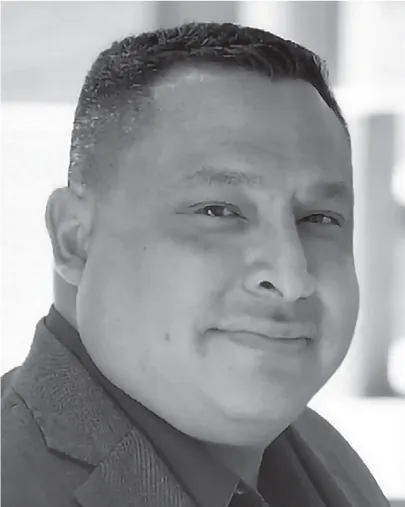
Felipe Moreno is the deputy director of Public Works for the City of Phoenix. More to the point, he is a leader of the people around him—his staff, the men and women who operate the garbage and recycling trucks. He couldn’t be the genuine, forward-looking leader he is without a passion for and a conviction about data.
In the last five years, Phoenix’s waste diversion rate jumped from 16 percent in 2014 to 34 percent in 2019. This is significant data, which Moreno likes to point out. Why? Because unlike many cities with mandates and legislation requiring waste diversion, Phoenix has always had a voluntary recycling and waste diversion program.
Public sector entities often find it very hard to show measurable impact. In the case of Phoenix, data has become a core part of telling its sustainability story—from routing efficiencies to waste tonnage and recycling challenges that lead to diversion solutions. Generally, citizens (i.e., voters) are constantly frustrated with the inefficiency and bureaucracy of their local and state governments (sometimes rightfully so). But Moreno can tell a clear data story. You can listen to him on a podcast featuring great business minds and thought leaders talking about his excitement for waste management!2
Moreno told me data isn’t just tactical, which seems obvious with numbers; sometimes it’s strategic. Ultimately, it’s a core tool of leadership. These are some of the tangible ways in which Moreno’s Data Conviction enables him to be a more effective leader:
He didn’t come up through the ranks as a garbage truck driver; he didn’t walk into his role with that street cred. Data is an indispensable part of how he establishes his leadership credibility “on the street” (literally).
It guides his decisions on the people he needs to hire, including some he calls “hybrid” management. They have to be able to translate from the data to human beings and back, constantly and effectively.
One of his leadership strategies is to be authentic and vulnerable about what he doesn’t know (because he didn’t drive a truck) but bring the incremental value of what he does know. There is a natural connection between his conviction about the data and his genuine authenticity. His leadership equation is data + authenticity = leadership.
One of the fascinating, unexpected parts of his leadership story is his background. He’s not a public works major or a policy wonk or a statistics nerd. Moreno is a social worker by education and by mindset. One of the qualities you will see across many of these Rebuilders is they often didn’t come up through the usual, traditional pathways. That different pathway is, in fact, a real strength that brings diversity and new perspectives to solving our challenges in the decade ahead.
Data, and leaders with conviction about it, has become a whole new platform for change in the nonprofit and public sectors, especially. The private sector has always had the one bottom line, net profit. The other two sectors haven’t had nearly that clarity, but now, by embracing data, they can take significant steps toward a stronger, more objective platform for community leadership.
Moreno has helped build a culture of data, along with the city manager, Ed Zuercher (who has his own data story for the whole city).3 A culture that doesn’t just embrace data but empowers people though the data. A culture that values data but doesn’t allow the numbers to dehumanize the work or the people. And a culture that doesn’t assume the way we’ve always done things in the past is the right way going forward.
Today, Moreno is doing what really great leaders do: expanding the leadership pool down through the organization, in part by creating the first apprenticeship program in the nation for municipal solid waste equipment operators (SWEO),4 that is, garbage truck drivers. Rebecca Estrada is one of seven apprentices who just graduated and says she feels like she’s breaking barriers. “I’m loving the challenge of driving around a big truck and serving our community,” she says. “I want to be an inspiration to other women and to my kids that we can do whatever we want to do.”
One of our subthemes about Rebuilders in the decade ahead is that we need leaders at all levels of organizations and communities, including in lots of unexpected and nontraditional places. The City of Phoenix now has more and more new leaders driving all over the streets of Phoenix every day on every block. They just happen to be garbage truck drivers, too.
From the Bridge Tower
A bridge tender sits in the tower alongside a drawbridge. There are four of them around my hometown of the last thirty years, Seattle. The bridge tender operates the bridge to ensure the safe passage of water traffic under, and vehicle traffic over, the bridge. There is nothing particularly omniscient about the bridge tenders’ perspectives, but they do see through a wide-angle lens on the comings and goings around that bridge.
When I first started working on this book in the summer of 2019, I took a wide-angle focus, looking for stories and best practices of economic and social change across all sectors, geographies, and demographics of America. As I was looking into those examples of positive change, against the backdrop of our megachallenges, my focus started to shift—not just looking at the facts and strategies about the change, but instead at the people and leaders behind those changes.
The conversations with those leaders making real change elucidated a definable, distinct set of traits that consistently showed up. My primary focus shifted toward the kind of leaders and leadership our nation needs to create that positive change. Simply put, I let the data and research, and especially what I learned from dozens of leaders, tell me what to focus on.
I had a preconceived notion of what I wanted to write about. Over time, I discovered what I should write about.
How and Whom I Studied
Five years ago, I wrote Can’t Not Do: The Compelling Social Drive That Changes Our World (Wiley).5 The hope was to provide a road map for citizens, philanthropists, and volunteers who wanted to make a bigger difference in their world and in their own lives.
This time I am trying to bring together what I’ve learned in thirty-five years working across all three sectors and offer a perspective and guideposts for leaders who know that a new form of leadership is needed. Throughout the last year of writing, there have been a lot of tables, Excel graphs, Venn diagrams, word clouds, and so on.
I studied dozens of leaders from all three sectors: private, public, and nonprofit. I looked at a broad range of industries and causes, and leaders with a diverse set of backgrounds and worldviews. I started with leaders I knew personally and did outreach through my network of trusted friends to add to the list.
I strove for a mix of people from each of the sectors, as well as different genders, ethnicities, and places in companies and communities—a mix like the collective profile of leaders America is absolutely going to need in the 2020s. The leaders I focused on meet the criteria below. Imperfect, but intentional. Subjective, but substantiated.
- They have achieved a level of measurable success or effectiveness. There is some objective, public measure by which one can ascertain effectiveness, which usually note in their stories.
- A majority of them have substantial experience in two, or all three, sectors of the American economy.
- Each clearly demonstrated and is an exemplar of a specific trait (or two) that fits the profile of a Rebuilder.
One of the interesting twists is where the lessons come from. For a long time now, sometimes correctly and sometimes arrogantly, the working assumption is that nonprofit leaders could learn from how private sector leaders work. Looking ahead, I think we’ve crossed over to a world where the leadership lessons from the nonprofit (and public) sector are equally as instructive to private sector leaders.
We just saw it above: the private sector has always had the one bottom line, the guidepost of net profit. The other two sectors haven’t had nearly that clarity. But now private sector leaders cannot, increasingly by their own choice, just look at net profit as the one indicator of success and call it a day (see the Profit and Purpose section in chapter 9). Leaders who know how to navigate greater ambiguity and complexity of goals become more and more valuable. Those leaders are out there. If the private sector is smart, they will start recruiting more of them now. Nonprofit and public sector leaders are used to the complexity of not having the clarity of one bottom line.
The learning is across and between all three sectors as never before. For a long time, nonprofits have had to work with the private sector for their financial and human capital and the public sector for its unique scale of resources. They know how to be bridge builders already. Now private sector leaders need to have just as much Cross-Sector Fluency. They can’t just stick their heads out of their for-profit silos once in a while for episodic interactions; they are in all three sectors constantly. And the public sector needs to learn how to effectively leverage and convene all three sectors together if they want to have a chance of realizing their civic aspirations.
Are Current Leadership Models Broken?
Rebuilders are leaders who don’t look and sound and act the same as we are used to seeing. Qualities like hyperauthenticity, an exceptional capacity for complexity, extensive cross-sector experience, plus others are what will define the leaders we need for our future.
Some leadership qualities are timeless, some are temporal. For example, The Ajax Dilemma by Paul Woodruff is about timeless qualities in leadership, going back to ancient Greece. Jim Collins does some of the best, intentional, deep work on Level 5 leaders in Good to Great. Bob Johansen’s Leadership Literacies posits combinations of disciplines, practices, and worldviews that will be needed to thrive in a volatile, uncertain, complex, and ambiguous (VUCA)6 world.
This isn’t about repudiating earlier leadership models, it’s about the future and what’s needed now. What I’m suggesting is that there are (1) timeless leadership qualities that get called on differently in a new age and (2) altogether new attributes that are more needed in this decade ahead. A different world takes different leaders with different traits.
Living Oliver Wendell Holmes’s Quote
When COVID hit and really sunk in across the world in March 2020, it was a month none of us will ever forget. One of the most important and complex events that followed in April was the distribution of $2.2 trillion in federal funds in a nanosecond (CARES Act). Critical, vital, and insanely complex. There had to have been tens of thousands of corporate lobbyists and special interests trying to both direct and obtain as much of that funding as possible.
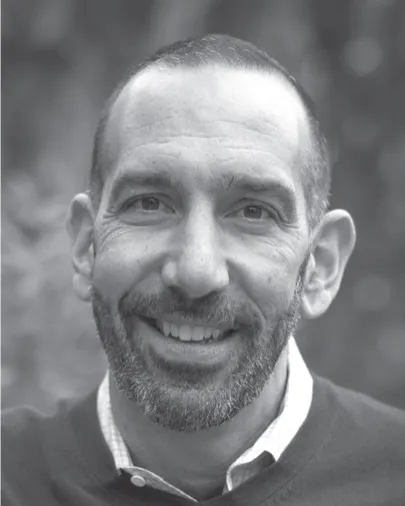
What if you were one of the much smaller number of leaders responsible for watching out for the nonprofit sector (which represents nearly 10 percent of the American workforce)? And you had exponentially fewer resources to invest in lobbying and advocacy, compared with corporate America? You were essentially trying to grab a few needles (i.e., resources) in a massive, $2 trillion haystack that was constantly moving. One of the key leaders for the sector was Dan Cardinali, CEO of the Independent Sector.7
Cardinali ...