![]()
Divine Holiness
Exodus 3:5, “Then he said, ‘Do not come near; take your sandals off your feet, for the place on which you are standing is holy ground.’”
Moses was confronted by a burning bush, a bush that did not burn. He heard his name called but was told not to draw near. He was told to take off his sandals, so he took off his sandals for the ground was holy. What was it that made the ground holy? Only ONE makes the ground holy. Only ONE makes anything and anyone holy. That ONE is not wholly man, but wholly GOD.
The priests were not to enter the wilderness sanctuary with shoes upon their feet. Particles of dust clinging to them would desecrate the holy place. They were to leave their sandals in the courtyard before entering the sanctuary. They were commanded to wash both their hands and their feet before ministering in the tabernacle. God’s presence in the wilderness tabernacle rendered it holy. Obedience, therefore, is a criterion for someone who wishes to enter God’s presence.
Preparing to Meet God
Exodus 19:10–11, “…the LORD said to Moses, ‘Go to the people and consecrate them today and tomorrow and let them wash their garments and be ready for the third day. For on the third day the LORD will come down on Mount Sinai in the sight of all the people.’”
The Hebrew word for holy is found in the Hebrew word for consecrate. When God tells the Israelites to “be holy for I am holy (Lev. 20:26), He is revealing to them and subsequently to us today, that to be holy as He is holy means He must be within each one.
Preparation for the appearing of the LORD involves outward ritual preparation which reflects inner conviction. Note the importance of sacred space, as God dwells within so the individual becomes holy and consecrated and thus can enter God’s presence as well. Hebrews 4:16 tells us to come boldly before the throne of grace. This is only possible when we consecrate ourselves and embrace the holiness of God. This will later become even more significant in the design of the tabernacle/temple. Because of the LORD’s presence, a mountain became holy (vv. 12–13)
Thus, was constantly taught the lesson that all defilement must be put away from those who would approach the presence of God.2
Joshua on Holy Ground
Joshua 5:13–15, “When Joshua was by Jericho, he lifted up his eyes and looked, and behold, a man was standing before him with his drawn sword in his hand. And Joshua went to him and said to him, ‘Are you for us, or for our adversaries?’ And he said, ‘No; but I am the commander of the army of the LORD. Now I have come.’ And Joshua fell on his face to the earth and worshiped and said to him, ‘What does my lord say to his servant?’ And the commander of the LORD’s army said to Joshua, ‘Take off your sandals from your feet, for the place where you are standing is holy.’ And Joshua did so.” (Emphasis mine.)
The man with the drawn sword was no ordinary man, but God Himself. Thus, the ground upon which Joshua was standing was considered holy. He called himself “commander of the Lord’s army.” The only other place where this same title is given is found in Daniel 8:11 translated as “Prince of the host.”
Joshua asked the obvious question. God responded by saying “no,” He was not the Commander for Israel; He was claiming to be Israel’s Commander!
Joshua, as the new commander of Israel, was preparing himself and his people to enter Canaan. As he studied the plans, God appeared to him to reassure him in his task and to provide additional information for their preparations.
The inhabitants of Canaan had been granted ample opportunity for repentance. Forty years before, the opening of the Red Sea and the judgments upon Egypt had testified to the supreme power of the God of Israel. And now the overthrow of the kings of Midian, of Gilead, and Bashan had further shown that Jehovah was above all gods. The holiness of His character and His abhorrence of impurity had been evidenced in the judgments visited upon Israel for their participation in the abominable rites of Baal Peor. All these events were known to the inhabitants of Jericho.3
The Sabbath – Holiness
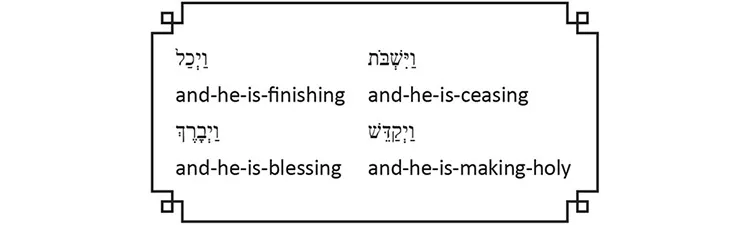
The very first reference of holiness we find is in Genesis 2:2–3, “And on the seventh day God finished his work that he had done, and he rested on the seventh day from all his work that he had done. So God blessed the seventh day and made it holy, because on it, God rested from all his work that he had done in creation.” (Emphasis mine.)
We often look at this passage to PROVE the Sabbath is not a Jewish Commandment. We forget with who we are dealing. It states God finished, God rested, God blessed, God made it HOLY. Why? Because He rested. Whenever, however, wherever God rests, it is holy.
Consider the burning bush. Consider Joshua’s confrontation with the Commander of the army of the Lord. Consider Nicodemus talking with Jesus. Consider the Samaritan woman at the well.
Yes, we must consider Jesus meeting us where we are, but we must also recognize a change is taking place. Unless we respond to that change, we will have negated the holiness of that time with God.
As the Israelites, for three days, were to consecrate themselves—wash their clothes, bathe, put on their best apparel—before approaching the throne of God, so today, who are we to neglect our duty in preparing to meet Him each Sabbath.
The Israelites were camped around the base of the Sinai; later, they would camp around the wilderness tabernacle. Both were to be a place of holiness, because God was there. Where God dwells, it is holy. This place was to be a place where the worshiper could come to commune with the one worshiped—God.
God blessed the Sabbath and made it holy for two reasons:
He desires community, He enjoys companionship, He craves relationship.
He has taken ownership of this one day, He has reserved title of this one day, He has acquired possession of this one day. He enjoys sharing this day with His guests.
We make appointments to see the doctor, to see the lawyer, to meet a friend at the restaurant. It would never occur to us to change the date and time of these appointments without prior knowledge on both parties. Why do we think we can change the day of worship to the Holy God for another day of our choosing?
Who are we to dare state, “If we worship God one day a week, we will be fine”? Some call worshiping God on His Sabbath as legalism. Guess what? He OWNS this day.
We own a piece of property, we invite friends and neighbors to visit. Why?
We crave companionship
We own this property and want to share its beauty with our guests.
John 3:16 says, “For God so loved the world, that He gave His only Son, that whoever believes in Him, should not perish but have eternal life.”
One and only—monogenēs. Mono: unique, one of a kind. There are billions of humans living on earth today. There is only one God-Man alive today and His name is Jesus. Jesus is not just a big deal, He is THE DEAL.
He heals by His touch, He restores by His Word, He enjoys His handiwork, He reveals His character to His creation, He makes holy wherever He rests.
Revelation 4:10–11, “the twenty-four elders fall down before Him who is seated on the throne and worship Him who lives forever and ever. They cast their crowns before the throne, saying, ‘...