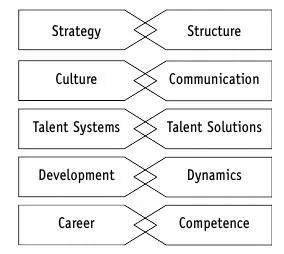
Traditional coaching methods have focused entirely on the individual--sometimes even at the expense of improving measurable business results for the company. Now, authors John Hoover and Paul J. Gorrell, both notable leaders and talent experts, show managers how they can use contextual coaching to ensure both individuals and organizations experience the highest probability for success. Contextual coaching uses a dual-focus systems approach to align coaching processes with the strategies, cultural imperatives, talent management systems, communication practices, and competency requirements of an entire organization. The Coaching Connection teaches readers how to apply this methodology by taking all of these factors into consideration within their own organizational context. When coaching initiatives are successful, individual and organizational interests become one. Including a 360-degree assessment covering the ten most essential skill sets of well-balanced and effective leaders, as well as systems for measuring and managing talent, The Coaching Connection helps companies improve both their people--and their bottom line results.
“Executive coaching is the most powerful tool we have to transform a good leader into a great one, and is one of the best investments we can make. A leader who doesn’t embrace coaching is a leader who’s likely reached his or her peak.”
—Mark Effron VP, Talent Management Avon Products
If you are a manager or executive who is responsible for the performance of others, one of the most critical functions you can perform on behalf of your organization is to provide the guidance, encouragement, and support to bring out the best that your people have to offer your organization and the customers you serve. Whether you are an experienced coach in the workplace or a manager who is in the process of developing or improving this invaluable individual- and organization-enhancing practice, coaching places you and the individual recipient (or small group of recipients) at the flashpoint where individuals and teams come face to face with their real potential.
Although coaching for executives and midlevel people has become increasingly popular, especially over the past twenty years, we still find it remarkable that many businesspeople have yet to be directly involved with business coaching, on either side of the equation. That means there is a huge growth opportunity for those who can produce the type of tremendous individual and organizational improvement that coaching is capable of yielding.
The Contextual Coaching model that you will become familiar with throughout this book is a balanced approach to developing a well-rounded leadership skill set to establish and maintain reasonable expectations among individuals, teams, and the leaders who represent the thinking and strategy of the organization. When expectations are reasonable, attainable, and worthwhile, people find it far easier to maintain their own equilibriums and to engage more consistently in positive and productive behavior.
Not only will this book be extremely helpful to you as a coach, but it can also help your coaching clients to understand and derive greater benefit from the process. Coaching is a dance of sorts between you and those you coach. However, that does not necessarily mean that the coach always leads.
Ginger Rogers, apparently tired of hearing endless accolades about her perennial dance partner, Fred Astaire, is said to have pointed out, “Anything he does, I do backwards and in high heels.” The coaching engagement is a relationship, primarily between two people or between a coach and a small group or team. Whereas the coach often leads, the one being coached is doing anything but moving backward. What is true for one is true for the other. The benefits of Contextual Coaching accrue to everyone, regardless of whether they are dancing forward, backward, to the right, or to the left. So read on, absorb, and learn, regardless of your role in the coaching engagement.
Coaching, as an enterprise-wide, organizational initiative, might have tapped you as a coach-at-large, a mentor, an onboarding specialist, or a career coach or put you in some other advisory or guidance role. Although you already coach your direct reports in various ways, if you are to craft an organization-wide culture of coaching, you’ll need to become part of a deliberate, methodical, systematic, and strategic application of coaching to do these and other functions:
Onboard a new team member.1
Address specific performance and productivity issues.
Improve a person’s habits.
Expand a person’s knowledge and skill set.
Help someone choose more productive activities in which to engage.
Develop leadership potential.
Prepare a high-potential person for promotion.
Prepare a high-potential person for succession.
Help people make domestic and international geographical transitions.
Help a colleague or direct report deal with stress and anxiety on the job.
Help a colleague or direct report find assistance with personal problems.
Help a person understand and put to good use personality assessment data.
Help people understand their 360-degree feedback and put it to good use.
Help people understand and better fulfill their roles in the big-picture strategy.
Help people get to the core of their dysfunctional attitudes and revise perceptions and expectations until those attitudes improve.
Other leading demands for coaching arise from a number of the other issues mentioned in the preceding list. Acceleration or developmental coaching is usually a matter of taking people from the productive place where they are and expanding their skill sets, developing more of their potential, strengthening their competencies, and increasing their capabilities. Acceleration or developmental business coaching makes something that is good even better.
A 2008 study conducted by the American Management Association (AMA) found that most coaching engagements are for acceleration purposes rather than remedial work. The study, “Coaching: A Global Study of Successful Practices,” surveyed more than 1,000 business leaders around the world and found increasing use of coaching as a means of improving individual productivity. Nearly 60 percent of North American companies use coaching for high potentials frequently or a great deal, and about 42 percent use coaching of executives to the same extent. These percentages were higher in the international sample. Only 37 percent of North American respondents and fewer than 30 percent of international respondents said they used coaching to help problem employees.
No matter what precipitates or drives the coaching engagement, the thing that makes the coaching contextual is the alignment between the design and execution of the coaching and the overarching strategy of the organization. Coaching in business environments is not about making a client feel good. We stipulate that a quality coaching engagement will more than likely leave everyone involved feeling better about themselves and what they do in the organization. However, the individual and the organization that pays for the coaching must both benefit for the engagement to be considered a true success.
An individual’s success in business begins with adding value to the organization. To coach your people without regard for the organization’s needs does a disservice to the individual by limiting the value he or she can add. Limiting the value an individual or team of individuals can add also diminishes their career potential. In any of these cases, the organization loses right along with the individual. When coaching clients get seriously better at what they do, both they and the organization win.
Keeping the Coach in Context
You will soon learn and understand how coaching people within the context of their working environments and their organizational cultures positions them and their organizations for the most positive outcomes. If performance or behavioral issues are in question, the modifications must also be in the context of organizational strategy to do the most good for the organization and your client’s career. If career acceleration is the goal, the coaching must always be done in the context of the organization’s needs, since career enhancement is inexorably tied to organizational success. Sometimes, business coaching is simply a matter of making periodic course corrections. As with performance improvement and career acceleration, course corrections must be calibrated to the flight plan and navigational markers of the organization.
For coaching to be most effective and to provide the best return on the coaching investment, regardless of the immediate rationale, every aspect of the coaching engagement must resonate with the grand organizational scheme. Organizations have mission statements that describe what they do and vision statements that describe where they want to grow. What organizations need to stay true to their mission and vision statements varies from organization to organization, depending upon their individual charters. Contextual Coaching can be described as aligning what people do best with what organizations need most. As a coach or a manager who coaches, you must always be sensitive to both sides of that equation.
When an organization embarks on creating and sustaining a coaching culture, such alignment is never left to chance. It is deliberate, intentional, and strategically planned. If your organization is adopting a coaching culture, the alignment between what your people do best with what your organization needs most is the big-picture agenda in which you are being asked to participate.
It is the perfect symbiotic relationship. Each one needs the other. In Contextual Coaching, the individual’s coaching is always in the context of the organization and the organization’s goals, needs, and/or strategic agenda. If the organization is not considered, you are talking about therapy, not coaching. The coaching culture you are engendering in your organization must first account for the context of the prevailing culture. It is only when an individual’s attitudes or behaviors are assessed against the context of the prevailing culture that you can measure gaps in performance or the potential for leadership development.
Helping the Organization Through Habits, Skills, and Activities
Besides generally educating and raising awareness, there are three primary categories within which people contribute to or detract from the success of the organization—three ways they enhance or inhibit the alignment between what individuals do best and what their organizations need most: habits, skills, and activities.
Habits
Habits are those things that people do repeatedly (good or bad, positive or negative, helpful or a hindrance) until they become second nature. As the saying goes: Good habits are hard to adopt and easy to abandon; bad habits are easy to adopt and hard to abandon. Unfortunately, we have not come across a magical solution to reverse this truth.
Habits play out unconsciously most of the time. Every one of us does any number of things unconsciously each day. How often have you stopped yourself or had a colleague stop you and ask, “What are you doing?” or “Why are you doing that?” without having a good answer? If this happens to you, it is probably because you are doing something out of unconscious routine that does not make sense in the moment or under the circumstances. You are so oblivious to your own actions at tha...
Table of contents
Cover Page
Title Page
Copyright Page
Dedication
Contents
Introduction
Chapter 1: A Coaching Culture
Chapter 2: The Basics of Contextual Coaching
Chapter 3: Area of Behavioral Focus: Strategy
Chapter 4: Area of Behavioral Focus: Structure
Chapter 5: Area of Behavioral Focus: Culture
Chapter 6: Area of Behavioral Focus: Communication
Chapter 7: Area of Behavioral Focus: Talent Systems
Chapter 8: Area of Behavioral Focus: Talent Solutions
Chapter 9: Area of Behavioral Focus: Development
Chapter 10: Area of Behavioral Focus: Team Dynamics
Chapter 11: Area of Behavioral Focus: Career
Chapter 12: Area of Behavioral Focus: Competence
Epilogue
Index
Trusted by 375,005 students
Access to over 1.5 million titles for a fair monthly price.
Study more efficiently using our study tools.
Frequently asked questions
Yes, you can cancel anytime from the Subscription tab in your account settings on the Perlego website. Your subscription will stay active until the end of your current billing period. Learn how to cancel your subscription
No, books cannot be downloaded as external files, such as PDFs, for use outside of Perlego. However, you can download books within the Perlego app for offline reading on mobile or tablet. Learn how to download books offline
Perlego offers two plans: Essential and Complete
Essential is ideal for learners and professionals who enjoy exploring a wide range of subjects. Access the Essential Library with 800,000+ trusted titles and best-sellers across business, personal growth, and the humanities. Includes unlimited reading time and Standard Read Aloud voice.
Complete: Perfect for advanced learners and researchers needing full, unrestricted access. Unlock 1.5M+ books across hundreds of subjects, including academic and specialized titles. The Complete Plan also includes advanced features like Premium Read Aloud and Research Assistant.
Both plans are available with monthly, semester, or annual billing cycles.
We are an online textbook subscription service, where you can get access to an entire online library for less than the price of a single book per month. With over 1.5 million books across 990+ topics, we’ve got you covered! Learn about our mission
Look out for the read-aloud symbol on your next book to see if you can listen to it. The read-aloud tool reads text aloud for you, highlighting the text as it is being read. You can pause it, speed it up and slow it down. Learn more about Read Aloud
Yes! You can use the Perlego app on both iOS and Android devices to read anytime, anywhere — even offline. Perfect for commutes or when you’re on the go. Please note we cannot support devices running on iOS 13 and Android 7 or earlier. Learn more about using the app
Yes, you can access The Coaching Connection by John Hoover,Paul Gorrell in PDF and/or ePUB format, as well as other popular books in Business & Business General. We have over 1.5 million books available in our catalogue for you to explore.