In this study, E. Frances King explores how people first learn to relate to the images and artefacts of religious belief within their domestic environments. As a sense of religious belonging is instilled on a daily basis in the home, it also becomes emotionally linked to family, community, and homeland, resulting in two different genealogies – one to do with faith and one to do with motherland – that become entangled.
- 204 pages
- English
- ePUB (mobile friendly)
- Available on iOS & Android
eBook - ePub
Material Religion and Popular Culture
About this book
Information
1 Material Religion and Identity
The objects and images of popular religion can offer an emotive outlet for those in search of a secure identity—a sense of who they are in an increasingly fragmented world. After the death of Pope John Paul II an English journalist wandered through the mourning crowds that had gathered outside the Vatican. He noted, with some puzzlement, the little shrines and national flags displayed by groups and individuals, and then he wrote, “I am beginning to see what is going on here. It is a matter of identity … here everyone wants you to know who they are, where they are from and what they believe”.1 As well as expressing their Catholic identity through pictures and shrines, the people in the crowds demonstrated their cultural or national identity through flags and other emblems of their home country. Again and again we see that, when large crowds come together on occasions like pilgrimage or commemorative ceremonies, they carry banners, pictures, and badges indicating nationality or religion. On the one hand these are the visible and tangible emblems of belonging to a particular group and, on the other hand, they are a public demonstration of affiliation, suggesting that there is both a need to belong, and a need to be seen to belong.
It is through material objects that people express their identity, affiliation, and how they choose to be seen by others. Yet, in terms of sociological significance, these popular choices are frequently overlooked (Dant 2005:11). The same applies to popular religious pictures and artifacts in terms of religious and aesthetic significance. Religious images can be considered banal, vulgar, and trivial but rarely is thought given to why they actually move people, inspire them, or motivate them to fury and destruction. Thousands, even millions, of people annually make their way to shrines where images are displayed and return home to share the souvenirs of their pilgrimage with their family and neighbors. Hundreds of thousands display badges, bracelets, hairstyles, clothes, medals, or tattoos that signify who they are, and what tradition they follow. Governments get involved in disputes over images and religious tokens; managements face strikes and walk-outs because of pictures that are provocative to one group or another; schools and courts can be closed because the images or artifacts of one group are offensive to another. Religious things matter to people and the reasons why this is so are considered in this chapter.
Each topic in the chapter is considered from a theoretical perspective that links to the overall theme of material religion and popular culture. A more detailed analysis of individual themes is offered in the chapters that follow, but here a number of theoretical strands are brought together to show the importance of the popular material culture of religion for the social construction of identity. The chapter begins by establishing the kind of popular items of religion that are the focus of the book and continues by considering how people encounter religious goods and habits in their homes. Throughout the chapter the religious motif of the cross, the most iconic symbol of Christianity, is called upon to help elucidate the themes and theories discussed.
RELIGION IN DOMESTIC SETTINGS
In engaging with the popular images and artifacts that people grow up with, buy, give to each other as gifts, and display in their homes, it is worth remembering that the etymological derivation of the word popular derives from populus—from the people, and what the people commonly do. Our interest lies in the popular use of religious goods in everyday life—how people first encounter them, what they do with them, how they learn to use them, and how they contribute to their feelings about themselves and their sense of belonging. We want to know the influences religious objects have on lives, how people learn to define themselves religiously by means of the religious goods they live with, and if these same religious goods influence their relationships with others.
In the context of this book, material religion2 is understood as being made up of both images and artifacts and it also embraces natural materials such as stones, water, oils, salts and foodstuff, and associated goods. It also takes into account the practices and rituals of domestic religious life and how these are supported by material items of religion. Figure 1.1, a picture taken in a bedroom in Ireland, shows some of the range of items that can form part of the popular religious culture of Catholicism. The statues include two of the same saint, St Martin de Porres; one of Our Lady; and another of the Sacred Heart of Jesus. There is also a candle with an embossed image of the grotto in Lourdes and a plastic bottle with a printed image that contains holy water from the pilgrimage shrine of Lourdes. Out of the range of the camera lens there are religious pictures and a crucifix on the wall, and rosary beads and prayer books lie on top of a locker beside the bed. The householder, who describes herself as a committed Catholic, has had these items in her home for many years and they are a familiar part of her everyday domestic life.
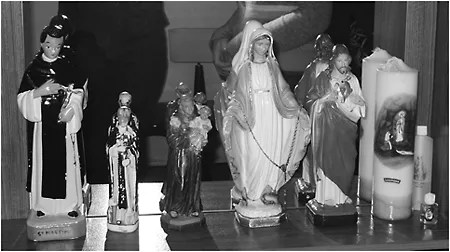
Figure 1.1 Statues in a bedroom. Photo by author.
As we can see from the photograph, images and artifacts are not easily distinguished—images can also be artifacts and artifacts quite frequently have images inscribed on them or are formed in the shape of images. In many Catholic shrines, for example, plastic bottles are sold in the shape of Mary with a little crown cap that serves as screw-off top. Other plastic bottles are imprinted with a picture of Mary, or of the sacred shrine. The blessed water from the shrine is often collected in a larger container and then the smaller bottles are filled to be given as gifts to friends and relatives. In this manner the pilgrim disperses the pilgrimage experience to others in a material way that involves a religious image, an artifact, and the holy water.
Within different religious traditions, and in the context of their homes and daily routines, millions of people become familiar with figurines, pictures, framed religious mottoes and injunctions, religious books and tracts, and other objects of their religious beliefs. Such goods can be described as “instruments of devotion”,3 because they actually are instrumental in helping people in their religious life through their association with everyday life. They are crowded into bedrooms and kitchens, worn as pins or necklaces, carried in purses and wallets, placed on the dashboards of cars, and given as gifts and to mark special occasions. As people learn to experience religion through practices in their home environment, they develop an embodied relationship with holy characters and devotional apparatus. For example, in many traditions it is made clear that you are entering or leaving a domestic religious world because of simple rituals. Catholics often hang a little font with a cross or sacred figure that contains holy (blessed) water at doorways; they dip their fingers into it and then bless themselves as they go in and out of their homes. Jews touch or kiss the mezuzah placed at the right-hand side of their front door. The Hindu women of Tamil Nadu draw a kolam, an elaborate design made with rice flour, on their front doorstep. Through such experiences grounded in the home and involving material goods religious habits are instilled early in childhood, often becoming habitual practices that continue into adulthood.
As Robert Wuthnow comments, accounts of spiritual journeys are rich with the material culture of religion and mention of things such as family Bibles, crucifixes, wall hangings, and pictures of Jesus, Mary, and other sacred personages: these objects appear to be retained in memory more vividly than creeds or theological teachings and adult spiritual practices are often based on early experiences even though they are reinterpreted in maturity (2001:318). Relationships with religious images have been aptly described by David Morgan as Visual Piety (1998). Familiarity and comfort with the image derives from childhood, and the domestic routines and rituals of lived religion provide the habits, attitudes, inclinations, and ideas that people come to associate with the their religious beliefs. Morgan points to the importance of everyday interactions relating to images for family memory and indicates that the process is ongoing and intergenerational when he writes “ … ritual is not only a discrete event often repeated, but a long process that connects one’s own childhood with the childhood of the next generation in the attempt to perpetuate the security and comfort of a remembered past” (1998:178).
In day-to-day life popular religious images and artifacts can be points of encounter that link generations. As we shall see in the next chapters the act of holding prayer leaflets and the daily ritual of saying her prayers offers a grandmother a sense of security and familiarity, through which she links the secular world of work and worries and the sacred world of prayers and divine intercession. When her grandchildren ask her to “say a prayer for me” as they do an examination or go for a job interview her confidence in her beliefs is reinforced. Always, when religious objects are displayed in the home, some kind of human interaction is involved and, at times, ritual actions are generated and layers of meaning added. In addition, some religious objects can become associated with cultural and historical references, acting as links to the past and sources of identification within a community with little thought of their implicit meanings, serving as vehicles for national identity as well as personal devotion. In Ireland the statue of Our Lady of Knock also carries the title “Queen of Ireland” and in Russia the “Virgin of Vladimir” is considered a religious and a national icon, with newspapers and television showing young conscripts lining up to kiss a replica held by an Orthodox priest (Howes 2007:26).
Mass-produced objects of religious devotionalism are amongst the lowliest, by status, of the cultural and artistic items in the home (Halle 1993:171). But any analysis of material culture, secular or religious, needs to consider the choices that people freely make because these choices are indications of the intellectual, moral, and cultural climate of the times we live in. Most people, setting up home, chose the objects that they want to share their living space. This choice is not like language, it is “another authentic voice” for the things that people chose to live with, and it speaks of what is most important to them and often has something to say about their aspirations and interests (Miller 2008:3). The images and objects of religion speak very loudly of belonging. People learn who they belong to in relation to family and place, and they generally learn religious beliefs and values within the context of the foundational narratives of their religious tradition. When religion is learned in the home the familiar emblems of religion are not just solely associated with religion, they may also become entangled with the values of community and culture.
The pictures and statues and some of the associated rituals that are discussed in this book are often considered as superstitious tools for the credulous. Yet any such understanding, as W. J. T. Mitchell points out, is grounded in a social construction of otherness (2005:19). If we are to be open to exploring the importance of the material religion of everyday life, then we have to accept that it is just as important to investigate the things that we may not understand and like, as well as those we thoroughly approve of.
HABITUS AND RELIGIOUS ARTIFACTS
How does material religion work upon our beliefs about who we are, where we belong, and the community to which we are bound? How does it infiltrate spiritual worlds, worlds that are, for the most part, striving towards the otherworldly? The work of Pierre Bourdieu (1990) on habitus is one of the most useful ways of understanding how religious habits and practices become ingrained. Habitus is a culturally specific way of doing, speaking, seeing, thinking, and categorizing. It is the way that we assimilate cultural categories and meanings, and fuse them into our sense of self so that we think and act in ways that reproduce these categories. These ways of behavior are so deeply embedded that they are taken for granted, shared understandings influencing how we perceive things and how we react and respond to situations. Closely woven principles are specific to certain social groups—for example those of class, gender, kin, or religion—each of which guides individuals towards a sense of belonging within that group. It is through a process of familiarity, rather than learning, that people enter into a world where “the grimace is more eloquent than the phrase” (Miller 1987:104–105).
Through the practices and visual stimuli of material religion we become bodily affirmed in our beliefs within our own particular habitus. To be born into a religious household is to grow into a particular kind of religious sensibility—to become grounded in tenets and beliefs, while also becoming familiar with religious artifacts and religious ways of behavior. Those born into Catholic homes become familiar with Catholic ways of being religious, as do Protestants in Protestant homes and Rastafarians in Rastafarian homes. Buddhists learn to act in a Buddhist way, Moslems in a way appropriate to Islam, and Hindus follow the traditions of a Hindu way of life. Religions are different and in their rituals, practices, and objects these differences are manifested. As religious values are passed between generations so too is the material culture of a domestic religious life—the statues, figurines, pictures, prayer beads, candles, and religious books—and all play a part in how individuals learn to become, and behave, in a particular “religious” way.
Religions may be striving towards transcendence but they are necessarily grounded in physical environments—in buildings such as churches, mosques, temples, and meeting houses, and in the landscape of shrines and the sites of pilgrimage. Devotional objects may derive from the links of a holy or sacred person and may be experienced in theological or devotional rituals in formal settings but, when they find a place within households, they become personalized and symbolic of shared family, communal, and religious belonging, the biographies of objects mingling with the biographies of the inhabitants of the home (Kopytoff 1986:66–7). The things of religion then become incorporated, because it is through bodily practices—the way we hold objects, smell them, and wear them—that we orientate our bodies towards things and places. “The body is the primary mediator of religious experience”, Colleen McDannell writes, and it seems that human beings cannot appropriate religious truths without bodily engagement (1995:14). The rituals of domestic life are influenced by the rituals of religious life and, as we shall see in later chapters, each impacts upon the other. Stephen Pattison, a practical theologian who is interested in the beliefs and practices that people live by on a daily basis, suggests that we need to re-look at the material world of belief; that, for too long, sight has been isolated but when people want to get a deeper experience of an artifact or object they tend to reach out to touch. As he points out, sensual perception is not the province of separate and individual senses, but a whole-body phenomenon involving hearing, touch, and all the other senses (2007:3).
For a practical understanding of how religious objects become embodied we can consider how two individuals who come from different generations, religious traditions, and cultural background use a religious artifact, the Christian cross, in their daily lives. Ben, who now lives in Ireland and is in his early thirties, was brought up within an Amish-Mennonite family in the United States. While he no longer follows that tradition he is still closely linked to his family in America and his early religious upbringing continues to have an influence on his life. Martin, in his sixties, was born in Ireland and brought up as a Catholic. He remains very committed to Catholicism and is involved in local church affairs. Both Martin and Ben make use of the cross in ways that reflect their early habitus.
Ben wears a ring with a cross design, Figure 1.2, and he says, “I have a real fondness for crosses … that ring is very special to me and I collect them over the years … almost everywhere I am going”. He likes to wear crosses around his neck and he describes in detail a favorite cross that his father bought for him in Mexico. Beneath the glass top of the coffee table in his Belfast apartment a large Bible with an embossed gold cross on the cover is plain to see. Martin is a member of a Catholic lay brotherhood called the Knights of Columbanus, and members of this fellowship are given a Penal Cross when they are first inaugurated to carry or wear around their necks.4 It is a small cross with the outline of the figure of Christ clear to see. The distinctive feature of Martin’s small cross is the short arms said to derive from the period in the eighteenth century when “penal laws” prohibited the public celebration of Mass in Ireland.5 To avoid detection, priests and laity were reputed to hide the small crosses in the sleeves of their garments. Reproductions of penal crosses are now sold as tourist memorabilia: historical and cultural connections are linked to their religious meaning. Martin always has the cross with him and he also carries, in the same small pouch, a rosary beads with a cross on the end that once belonged to his father.
When talking about their crosses both Ben and Martin refer to their family background and the religious beliefs they learned in childhood. In terms of intimacy, remembrance, and allegiance, the crosses they wear or carry have attachments for both. Wherever he goes Ben is wearing a cross and when he reaches for his Bible he is touching a cross—just as Martin touches and carries both the rosary and penal cross. Neither is doing so in an obvious or open way, nor would anyone encountering them be aware that they are, in their different ways, living out an embodied form of religious practice. Ben’s ring is a tactile reminder of a family and religious background in the United States, serving as a bridge between his present situation in Ireland and his ethnic and cultural identity and, for Martin, saying the rosary, using the beads, and kissing the cross are practices that are grounded in a family and community of a shared belief and cultural traditions. The crosses are tangible and embodied reminders of beliefs, family, and home. Differences arise, however, in the kind of crosses they prefer and their attitude towards them. Martin’s crosses both have depictions of the figure of Christ and he refers to his Protestant neighbors, remarking that he is aware that they would not like to see an image of the body of Christ on the cross, but that he, for his part, prefers to have an image. Ben, on the other hand, talks of his childhood “fear” of images and while he has no objection to looking at the crucified figure of Christ explains that his own preference is to wear a plain cross. This distinction between a plain cross and a cross wi...
Table of contents
- Cover Page
- Title Page
- Copyright Page
- List of Figures
- Preface
- Acknowledgments
- 1 Material Religion and Identity
- 2 Pictures and Presence
- 3 Stories, Artifacts, and the Making of Religious Memory
- 4 The Material Charisma of Shrines and Pilgrimage
- 5 Religion, Emblems of Identity, and Cultural Belonging
- 6 Material Religion in the Modern World
- Appendix One
- Appendix Two
- Notes
- Bibliography
Trusted by 375,005 students
Access to over 1.5 million titles for a fair monthly price.
Study more efficiently using our study tools.
Frequently asked questions
Yes, you can cancel anytime from the Subscription tab in your account settings on the Perlego website. Your subscription will stay active until the end of your current billing period. Learn how to cancel your subscription
No, books cannot be downloaded as external files, such as PDFs, for use outside of Perlego. However, you can download books within the Perlego app for offline reading on mobile or tablet. Learn how to download books offline
Perlego offers two plans: Essential and Complete
- Essential is ideal for learners and professionals who enjoy exploring a wide range of subjects. Access the Essential Library with 800,000+ trusted titles and best-sellers across business, personal growth, and the humanities. Includes unlimited reading time and Standard Read Aloud voice.
- Complete: Perfect for advanced learners and researchers needing full, unrestricted access. Unlock 1.5M+ books across hundreds of subjects, including academic and specialized titles. The Complete Plan also includes advanced features like Premium Read Aloud and Research Assistant.
We are an online textbook subscription service, where you can get access to an entire online library for less than the price of a single book per month. With over 1.5 million books across 990+ topics, we’ve got you covered! Learn about our mission
Look out for the read-aloud symbol on your next book to see if you can listen to it. The read-aloud tool reads text aloud for you, highlighting the text as it is being read. You can pause it, speed it up and slow it down. Learn more about Read Aloud
Yes! You can use the Perlego app on both iOS and Android devices to read anytime, anywhere — even offline. Perfect for commutes or when you’re on the go.
Please note we cannot support devices running on iOS 13 and Android 7 or earlier. Learn more about using the app
Please note we cannot support devices running on iOS 13 and Android 7 or earlier. Learn more about using the app
Yes, you can access Material Religion and Popular Culture by E. Frances King in PDF and/or ePUB format, as well as other popular books in Teología y religión & Religión. We have over 1.5 million books available in our catalogue for you to explore.