- 432 pages
- English
- ePUB (mobile friendly)
- Available on iOS & Android
eBook - ePub
Management Development Through Cultural Diversity
About this book
This stimulating, clearly written and well-structured text is a comprehensive introduction to the principles of management and organisational behaviour, as well as a corrective to the eurocentric bias of most management texts. It develops a trans-cultural perspective which draws on insights from across the world to examine different management styles, cultures and stages of business development.
Contents include:
* Orientation
* Primal Management - Western including America
* Rational Management - Northern including Scandinavia
* Developmental Management - Eastern including Japan
* Metaphysical Management - Southern including South Africa
* Developing yourself as a manager
Each section examines core management theory and literature, cultural orientation and related prominent theories. The numerous case studies use appropriate examples from a wide range of international organisations. The uniquely wide-ranging perspective make this a valuable text for all those interested in general management, international business, organisational behaviour and corporate strategy.
Part I
WHY? TOWARDS MASTERY—SETTING THE CONTEXT
1
DEVELOPING IN STAGES
From youth to maturity
Introduction
Global business development
The first of the four keys to mastery, individually and organizationally, is the capacity for cumulative development. Managers as individuals, organizations in part and as a whole, and even societies, can be seen to develop in stages. Such development, however, is by no means inevitable. To the extent that it does take place, each person or institution will undergo a succession of identity crises, as each evolves from youth through to maturity Apple Computers, for example, at the time of writing, is going through one such crisis, as are the Eastern European countries, as they emerge from communism towards a form of capitalism. In this chapter we shall be focusing on the developmental stages underlying the international economy as a whole, on the one hand, and the individual business, on the other. The development of yourself as a manager will be reviewed in each of the respective management domains.
Both individual businesses and the international economy develop cumulatively As this evolutionary succession takes place, there is a change in the nature and extent of differentiation and integration both within the enterprise and without. As a result, and should development ensue, a business’s or economy’s nature is progressively transformed. Such a progression takes place, moreover, through alternating processes of characteristically ‘east-west’ transition, or structure changing, and ‘north-south’ stabilization, or structure building. Specifically, then, and for example, whereas a successsful transition from the old world towards the new seems to have taken place in the Czech Republic, this is much less the case in Albania or Bulgaria.
Similarly, whereas Shell has historically succeeded in building a stable Anglo-Dutch organization and—to some extent—community the AngloGerman Rover/BMW organization is still in a process of being formed. I shall start with a developmental overview, before reviewing the macro and micro perspectives.
Youthful stage 1—economic /commercial—competition
Structure building—economic orientation
In the first developmental stage, spanning some two thousand years, business was conducted in small and isolated pockets within local regions across the globe. Contact between these regions was made through middlemen, that is through itinerant adventurers and traders. Such contact was restricted to individual and commercial dealings based on economic motives. Economic differentiation and integration was achieved through the free workings of the market-place. But trading was so limited and scattered that it hardly warranted the term international.
In fact, fully fledged international trade only began to take place in the nineteenth century, as economic and political motives began to merge. Economic trade and political ambitions intermingled as merchant adventurers such as Robert Clive of India and Cecil Rhodes in Africa, not to mention Thomas Gresham, made their weighty impact. Every time a new business or indeed social enterprise is created, such a youthful entity comes into being.
Structure changing—the emergence of cartels
International cartel arrangements, in the first half of this century, mark an extension of the in-between phase linking economic and organizational integration. This marks the transition from a vigorous and youthful international economy to a more cautious and adult one.
Adultlike stage 2—administrative /technical—coordination
Structure building—technological orientation
Once we enter into the second stage of business and economic development, ‘free’ international trade is transformed. It turns into systematically coordinated multinational organization. In other words, middlemen are replaced, at least in part, by a company’s own manufacturing and distribution units. Contact with indigenous peoples changes from one based on trade to another based on organization and management. Organizational differentiation and integration between parent and subsidiary, between home and host governments, now supersedes mere trading relationships. This has been very much the case in France, for example, where the administrative elite have been playing such coordinating roles for centuries.
Structure changing—towards interdependence
Between the second and third stages is another transitional period. The centrally directed multinational begins to lose its old controlling identity, by delegating power and authority. But it has not yet found a new role. While perhaps wishing its internationally based managers to be ‘citizens of the world’, 3M, for example, remains Minnesota Mining and Manufacturing. Such a company is yet to enter wholeheartedly into the third stage of its development. Conversely, we can see that British Telecom and British Airways, for example, with their cross-Atlantic mergers amongst others, are struggling to shed their old national identity.
Midlife stage 3—social/ecological—cooperation
Structure building—social orientation
In the third stage, multinational business is replaced by a transitional architecture. Wholly owned subsidiaries recede into the background and joint ventures become the norm. There have been a spate of joint ventures since the eighties, initially in the automobile and communications industries, and subsequently in finance and insurance. The increasing number of partnerships between small and large firms, such as IBM and Lotus, is another feature of this phase.
In fact, in this structure-building phase, cooperation replaces competition and coordination as the overriding business ethic. This is the case commercially, for example, for GEC/Alsthom, the Anglo-French engineering combine, and societally for Singapore’s Economic Development Board—as we shall note in chapter 2—vis-à-vis the multinational corporations operating in the country. Competition and coordination do not disappear, but they now play second fiddle. As a result, production-sharing arrangements become commonplace and private/public partnerships become the rule rather than the exception, especially in the Far East. Interdependent relationships therefore replace both independent and dependent ones. Therefore social differentiation and integration replaces its purely economic or technical counterpart, albeit within an ecological frame of reference. Hence the emergence of what American business consultant Jim Moore has termed an ‘age of business ecosystems’.1 Recognizing and relating to other people and things, socially and ecologically, as well as to both commercial and also organizational entities, as well as to different individuals and nationalities, becomes the greatest priority.
Structure changing—fusing together
In between the third and fourth phases there is a final transition, from the interweaving of different individuals and cultures to their genuine ‘interfusion’ into a global businessphere. Attention now shifts from the personal, social and economic development of particular individuals, organizations and nations to the transformation of the relations between them.
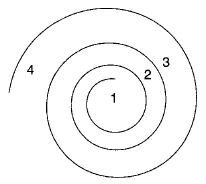
Figure 1.1 The cumulative development spiral
Mature stage 4—cultural/epistemological—co-creation
Structure building—cultural orientation
The fourth, and most rarely attained, stage of development is represented by the truly global, that is worldliwise, corporation. Such a company not only understands and accommodates the culture of different nations but also aims to enhance each one. It aims to achieve this through a process of business and cultural cocreation stimulated by a shared vision. As such a knowledge-creating global corporation, it will be engaged in cultural differentiation and integration. Its ultimate and transcendent mission is the advancement of utility, via knowledge creation, through the pursuit of truth, goodness or beauty.
Structure changing—the never-ending spiral
A global corporation is inevitably in a state of flux, moving to and fro within itself, in between both economic, organizational, social and cultural differentiation and also integration. For business is never finished. Mature enterprises, as part of their legacy, give rise to new business births which result in youthful organizations, and the cumulative process of development repeats itself, as in a never-ending spiral (see Figure 1.1). I now want to analyse, more closely, each stage of economic development in turn.
International economic development
Youth—the advent of economics—competition reigns
Structure changing—fostering international enterprise
THE ADVENT OF MATERIAL GAIN
Accounts of barter of goods or of services among different peoples can be traced back almost as far as the record of human history. International trade, however, involves economic exchange between different nations, and accounts of such begin only with the rise of the modern nation state. That rise was paralleled by a new attitude to material gain amongst the peoples of Western Europe.
It may strike one as odd that the idea of systematic material gain is a relatively modern one. We are inclined to believe that man is an essentially acquisitive creature. Yet the idea that each individual should constantly strive to better his or her material lot was quite foreign to the great lower and middle strata in Ancient Egypt, Greece or Rome. It was also largely absent from eastern civilization and had only a scattered application throughout the Renaissance and Reformation.
In fact in Shakespeare’s time, according to the American economist Robert Heilbronner, the object of life for the ordinary citizen was not to advance his or her lot, but to maintain it. Even for America’s pilgrim forefathers, Heilbronner says: ‘the idea that gain might be a tolerable—even a useful goal—in life, would have appeared nothing short of a doctrine of the devil’.2 The whole world, until the sixteenth and seventeenth centuries, could not even envisage the market system. For land, labour and capital did not yet exist. It had to be invented by Adam Smith and the world’s first political economists. Of course people were aware of the existence of soil, of human beings and of hand tools, but these had not yet become depersonalized economics entities.
THE PRINCIPLE OF COMPARATIVE ECONOMIC ADVANTAGE
Following in the wake of these inventions, including the concept of the marketplace, was the principle of ‘comparative advantage’, developed in England by the economist David Ricardo. According to this principle, which will be disputed in chapter 3, ‘If it takes two man days to produce a given quantity of cloth in Portugal, and one man a day to produce the same in England while it takes three man days to produce a given quantity of wine in England, and two man days in Portugal, why then Portugal should concentrate on producing wine and England on cloth’.3 In an age of production sharing, joint venturing, and complex crosslicensing agreements, it is amazing how little our ‘western’ economic theory—as will be revealed in the next chapter—has advanced since Ricardo’s law.
THE RISE OF THE MERCHANT ADVENTURERS
While Adam Smith and David Ricardo were developing their theories of free enterprise and of comparative advantage, the merchant adventurers were arriving on the international scene. The notion of economic gain was now entering the national agenda, most particularly in Western Europe.
Columbus, Cortés and Francis Drake were becoming not only national heroes, but also agents of economic progress. In the seventeenth and eighteenth centuries a new economic man was being thrust into the forefront. He became the stuff from which the tales of Kipling and Conrad were drawn. To start with the overriding emphasis was on gold, the emerging symbol of national power. But, by the eighteenth century, that emphasis was beginning to look a trifle naive. New schools of thought were growing up which focused on commerce as the great source of national vitality. The question to which Western European nations addressed themselves was no longer how to corner the gold market. They now looked for ways to create ever more wealth by assisting the rising class of merchant adventurers.
It was such adventurers as Robert Clive of India and Cecil Rhodes in Africa who carried out the English imperial mission. The mission was to acquire both territory and wealth for the home country Imperial expansion brought with it the massive exploitation of raw materials to feed the industrial revolutions in Europe and America. Gold and diamonds from South Africa, cotton from India and rubber from Malaysia fuelled Britain’s economic growth. In the nineteenth century most overseas business enterprises were run by venturesome entrepreneurs.
Structure building—the formation of international businesses
THE INNOVATIVE FORERUNNERS
The real forerunners of the international businesses were the scientifically based entrepreneurs who expanded out of their home base in the 1860s. One such entrepreneur was Frederick Bayer, who took a stake in an aniline plant in New York in 1865, two years after establishing his chemical plant near Cologne. Another was Alfred Nobel, the Swedish inventor of dynamite, whose company subsequently became part of ICI. In 1866 Nobel established an explosives plant in Hamburg.
Both Nobel and Bayer were pioneering innovators and entrepreneurs whose businesses were extensions of themselves. Yet they also created organizations that were to take on a life of their own. These were to become today’s multinationals. Organizational management and integration would then supersede entrepreneurialism and free international trade. In 1867 the US Singer sewing machinery company built its first overseas factory in Glasgow. Singer was the original company to manufacture and to mass-market a product in basically the same form across the world. It began to specialize, standardize, centralize and establish dependent relationships with its overseas operations. It had a strong claim to be regarded as the first truly international business. No more was the romance of the man abroad to fill the pages of many a Somerset Maugham saga. Technology had changed things; suddenly, there appeared the international company which employed him, the organization that we have come to term an international business.
BUSINESS GROWTH AND EXPANSION
By the end of the nineteenth century America had become quite prepared to challenge the older industries of Europe on its own territory. While international businesses had originated in Europe, they subsequently proliferated in America.
Each company that went in search of higher profits had its own particular reason for doing so. But there were a number of facts that influenced them all. Industrial enterprises were becoming larger, and mass production in response to mass markets was developing. The improvement in transport and communications drew the attention of manufacturers to foreign opportunities and made it possible for them to exercise control over foreign subsidiaries. They discovered that it could be cheaper to manufacture in a foreign country than to do so at home.
However, the most important reason for the growth of international companies in the last thirty years of the nineteenth century was the spread...
Table of contents
- Cover Page
- Title Page
- Copyright Page
- Illustrations
- Introduction
- Part I: Why? Towards Mastery—Setting the Context
- Part II: What? Global Management—Establishing the Content
- Part III: How? Managerial Metamorphosis—Transforming your Capabilities
- Notes
Trusted by 375,005 students
Access to over 1.5 million titles for a fair monthly price.
Study more efficiently using our study tools.
Frequently asked questions
Yes, you can cancel anytime from the Subscription tab in your account settings on the Perlego website. Your subscription will stay active until the end of your current billing period. Learn how to cancel your subscription
No, books cannot be downloaded as external files, such as PDFs, for use outside of Perlego. However, you can download books within the Perlego app for offline reading on mobile or tablet. Learn how to download books offline
Perlego offers two plans: Essential and Complete
- Essential is ideal for learners and professionals who enjoy exploring a wide range of subjects. Access the Essential Library with 800,000+ trusted titles and best-sellers across business, personal growth, and the humanities. Includes unlimited reading time and Standard Read Aloud voice.
- Complete: Perfect for advanced learners and researchers needing full, unrestricted access. Unlock 1.5M+ books across hundreds of subjects, including academic and specialized titles. The Complete Plan also includes advanced features like Premium Read Aloud and Research Assistant.
We are an online textbook subscription service, where you can get access to an entire online library for less than the price of a single book per month. With over 1.5 million books across 990+ topics, we’ve got you covered! Learn about our mission
Look out for the read-aloud symbol on your next book to see if you can listen to it. The read-aloud tool reads text aloud for you, highlighting the text as it is being read. You can pause it, speed it up and slow it down. Learn more about Read Aloud
Yes! You can use the Perlego app on both iOS and Android devices to read anytime, anywhere — even offline. Perfect for commutes or when you’re on the go.
Please note we cannot support devices running on iOS 13 and Android 7 or earlier. Learn more about using the app
Please note we cannot support devices running on iOS 13 and Android 7 or earlier. Learn more about using the app
Yes, you can access Management Development Through Cultural Diversity by Ronnie Lessem in PDF and/or ePUB format, as well as other popular books in Business & Business General. We have over 1.5 million books available in our catalogue for you to explore.