eBook - ePub
Indigenous Archaeologies
Decolonising Theory and Practice
- 432 pages
- English
- ePUB (mobile friendly)
- Available on iOS & Android
eBook - ePub
Indigenous Archaeologies
Decolonising Theory and Practice
About this book
With case studies from North America to Australia and South Africa and covering topics from archaeological ethics to the repatriation of human remains, this book charts the development of a new form of archaeology that is informed by indigenous values and agendas. This involves fundamental changes in archaeological theory and practice as well as substantive changes in the power relations between archaeologists and indigenous peoples. Questions concerning the development of ethical archaeological practices are at the heart of this process.
Information
Part I
Theoretical Foundations
Archaeology camp
HEATHER HARRIS
Drive, ferry, boat and walk
A long trip through space and time
To look into the distant past.
A long trip through space and time
To look into the distant past.
We arrive at last.
The sun is shining
The sky is blue
The water sparkles.
The bugs are bad.
Set up camp.
Crawl into our tent for a deserved rest.
The sun is shining
The sky is blue
The water sparkles.
The bugs are bad.
Set up camp.
Crawl into our tent for a deserved rest.
Awake to morning rain.
Gray and glowering sky.
Water choppy slate.
The bugs are really bad.
Persistent mosquitoes.
Vicious blackflies.
No-see-ems penetrating the impenetrable.
Earwigs crawl in everything.
Gray and glowering sky.
Water choppy slate.
The bugs are really bad.
Persistent mosquitoes.
Vicious blackflies.
No-see-ems penetrating the impenetrable.
Earwigs crawl in everything.
We know the past from stories elders tell
Of the flood 10,000 years ago.
And before.
When the world was not as it is now.
When Raven walked this shore.
And now we seek the record of that story laid in the ground
In stones rendered by our ancestors’ hands.
We seek the places where they camped so long ago
As we do today on this beach.
Will archaeologists 10,000 years from now find our camp?
Of the flood 10,000 years ago.
And before.
When the world was not as it is now.
When Raven walked this shore.
And now we seek the record of that story laid in the ground
In stones rendered by our ancestors’ hands.
We seek the places where they camped so long ago
As we do today on this beach.
Will archaeologists 10,000 years from now find our camp?
Will they know what we did here
As we presume to know what our ancestors did
In their camps we find?
Bugs try to chew my bones.
As we presume to know what our ancestors did
In their camps we find?
Bugs try to chew my bones.
Carefully we dig the earth
Carefully we screen the dirt
For evidence of our past
Bugs are a persistent theme.
Carefully we screen the dirt
For evidence of our past
Bugs are a persistent theme.
We find many small things
Relics of those ancient times
And sometimes we find vivid reminders of the past.
Biface and microblade
Carefully made by a craftsman of the distant time.
What did he think as he held this stone in his hand as I hold it now?
Did he think of the past as I do?
Did he imagine a present like this?
Did he think anyone would care about his broken and discarded tool?
Could he know it would tell his story in 10,000 years?
Relics of those ancient times
And sometimes we find vivid reminders of the past.
Biface and microblade
Carefully made by a craftsman of the distant time.
What did he think as he held this stone in his hand as I hold it now?
Did he think of the past as I do?
Did he imagine a present like this?
Did he think anyone would care about his broken and discarded tool?
Could he know it would tell his story in 10,000 years?
If I could have one wish
I would want to travel back
To meet the maker of this device
To find out if his life was as I imagined it.
I wonder if the bugs were as bad then as now?
I would want to travel back
To meet the maker of this device
To find out if his life was as I imagined it.
I wonder if the bugs were as bad then as now?
1
Decolonizing archaeological theory and practice
CLAIRE SMITH AND H.MARTIN WOBST
At heart, archaeology is a colonialist endeavour. It is based on, and generally perpetrates, the values of Western cultures. Privileging the material over the spiritual and the scientific over the religious, archaeological practice is solidly grounded in Western ways of knowing the world. At the beginning of the twenty-first century, it is a truism that ‘doing’ archaeology is a political act and archaeologists routinely recognize that many groups have rights and responsibilities in the themes, materials and locations that are studied. Nevertheless, while the way in which archaeology is practised is of great consequence to the world’s colonized peoples, the relationships between archaeologists and members of Indigenous groups continue to be unequal and asymmetrical. Potential for conflict is at the core of Indigenous1 archaeology, since this involves working with a living heritage in which other people have rights and responsibilities. That Indigenous groups have their own values and priorities immediately creates a working situation of complex interactions and potentially competing agendas. ‘Who has a right to control the past?’ is not just an academic question, but a practical reality that must be faced in the many day-to-day interactions between archaeologists and Indigenous peoples.
The World Archaeological Congress (WAC) has been immersed in debate about the politics of practice since the first Congress in Southampton, UK in 1986. The inherently political nature of archaeological practice is recognized in the second statute of the by-laws, which states that the Congress is based ‘on the explicit recognition of the historical and social role, and the political context, of archaeological inquiry, of archaeological organizations, and of archaeological interpretation’. The political nature of archaeological research influences field procedures and methods of analysis as well as the selection and presentation of results. In 1989, a WAC Inter-congress on ‘Archaeological Ethics and the Treatment of the Dead’ was held in Vermillion, South Dakota, USA. The key role played by WAC in this debate was evident at the 4th Congress in a symposium on ‘The Politics of Practice’, which forms the basis of this book, as well as in several symposia on related issues, including the repatriation of human remains, funerary objects and sacred objects. These discussions were refined and extended in the Executive Program Committee Session on Indigenous Archaeologies at the American Anthropological Association in San Francisco, 2000 (Figure 1.1).
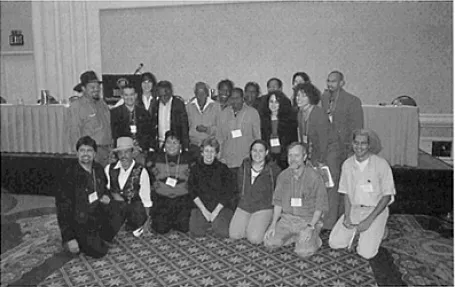
Figure 1.1 Participants in the Executive Program Committee Session on Indigenous Archaeologies at the American Anthropological Association in San Francisco, 2000
The debate over ‘who owns the past’ runs particularly ‘hot’ when it involves the cultural and intellectual property of Indigenous peoples. Indigenous critiques of archaeological practice have opened up the discipline in constructive directions. These critiques, like the earlier critiques of Marxists and feminists, today set new accents and directions for an archaeological practice that is politically aware of, sensitive to, and harmonious with, the goals of Indigenous peoples. The papers brought together for this volume demonstrate a fundamental re-thinking of archaeological theory and practice. Core issues include: who benefits from archaeological research? Do archaeologists have a right to control the pasts of others? Is the Western, scientific approach to archaeological theory and method necessarily the ‘best’ way of interpreting the past? What are the practical ramifications of archaeological research for the Indigenous peoples with whom they work, for whom the ‘artefacts’ of archaeology are a living heritage? How can archaeologists transform their theory and practice so that they cease doing damage to Indigenous peoples?
Archaeologists normally assume the answers to these kinds of questions. We often take it as self-evident that archaeology is useful, and that we have a responsibility, as well as a right, to control and create the pasts of others. It seems clear to us that this needs to be done and that it needs to be done in the scientific, rigorous manner that is archaeology. Rarely do we seriously consider non-Western approaches to caring for cultural heritage, or question the agendas that are furthered by our work and how that work can empower or disempower the people we work with.
More and more decisions that affect Indigenous peoples and their communities are made at the global level, far away from local realities. Yet often Indigenous peoples have neither voice nor representation in the global decision-making that affects their lives. Archaeologists have a responsibility to facilitate Indigenous voices, even in the presence of structural inequities in the distribution of assets such as education, land and finance; mechanisms that enable the voices of Indigenous peoples to be heard and inform decision-making at the global level. In some cases, it may be that Indigenous peoples have more in common with each other at a global level than they do with the other peoples who share the countries in which they live. A shift in mindset is the major precondition to the opening up of opportunities for Indigenous peoples, a shift in which archaeologists consider it normal and essential to be directly informed by and learn from the experiences of Indigenous men and women who will be affected or are expected to benefit from their actions. Changes in mindset are not easy to bring about, but can be facilitated through dialogue and working together.
This book is groundbreaking, most strikingly because it is the first volume on Indigenous archaeology that has more Indigenous than non-Indigenous authors. Traditionally, archaeology has been done ‘on’, not ‘by’, ‘for’ or ‘with’ Indigenous peoples. There are Indigenous peoples living in 72 countries world-wide and in all of these countries these groups are in disadvantaged positions in comparison to the dominant populations. Especially in developing countries, they are those people whose voices are the least likely to be heard in a global forum. There is an urgent need to facilitate the participation of Indigenous populations in international discussions; to strengthen their access to international professional networks; to integrate them into global alliances; and to help them benefit from regional and international collaboration. Through identifying Indigenous authors and developing a format that facilitates Indigenous voice, this book addresses a critical gap in the way that knowledge of Indigenous archaeology is disseminated.
No doubt influenced by a post-processual interest in the value of a range of speaking positions, our decision led to a difference in the shape of this volume, away from a purely academic structure to one that includes a variety of sources, including interviews, poems and visual pieces. This format allows an enhanced sense of place and provides room for a range of Indigenous expressions and perspectives on our topic. Moreover, the juxtapositions of these different forms of communication facilitate a more nuanced understanding of the issues under discussion, allowing readers to call on their intuitive skills as well as their reasoning. In this way, these topics become more accessible to the public as well as the Indigenous peoples whose cultural and intellectual property is the subject of research.
The authors contributing to this volume can be divided into three broad groups. The first of these is Indigenous cultural leaders. Their papers are based on interviews but instead of using these transcripts as a springboard for academic musings, here these voices have been presented largely verbatim, with minimal academic translation. This provides the reader with direct access to the opinions of these senior people, without having to peer through layers of academic interpretation. In these papers, the role of non- Indigenous co-authors has been to facilitate Indigenous voices and to frame them within an archaeological discourse. While it is important to access Indigenous voice at all levels, it is especially vital to obtain the views of Indigenous Elders, given that Indigenous systems of knowledge place power in their hands. However, publication of the voices of Indigenous Elders can be hampered by the difficulty of communicating ideas across cultures and, often, across languages. It is particularly hard to promote the voices of Indigenous Elders in those parts of the world where they speak the colonial language as only their second, third or fourth language. Some of the papers presented here demonstrate ways of overcoming these kinds of difficulties. The second group of authors is that of Indigenous scholars, well versed in both Indigenous and Western worldviews. Increasingly, research on Indigenous topics is being undertaken by Indigenous people. Indigenous researchers working in both the academy and Indigenous communities face great challenges, but have an unprecedented chance to generate something entirely new, that integrates both archaeological and Indigenous world views. The opportunities, contradictions and dilemmas inherent in their position are addressed in several of the papers presented here. The third group of authors in this book is the non-Indigenous archaeologists whose practice has been transformed through their contact with Indigenous peoples. These authors have divergent histories but are linked by a shared vision of an Indigenous archaeology that empowers Indigenous peoples.
THEORETICAL FOUNDATIONS
Part I of this book considers the theoretical underpinnings of archaeological practice. H.Martin Wobst addresses the biases inherent in the traditional practice of archaeology and outlines some of the changes that are necessary in its theory and method to liberate the discipline from these biases. He deconstructs the theoretical assumptions that have supported colonialist archaeology and argues for a broadening of archaeological theory to integrate material culture studies with fields of study that explicitly have been concerned with ‘non-material’ realms, such as historical linguistics, poetry, music, dance, oral histories and folklores. It is time to move beyond the colonial strategy of reducing the significance of Indigenous places to archaeological sites and artefacts as a way of circumscribing and containing Indigenous interests.
The importance of integrating Indigenous knowledge with archaeological practice is highlighted by several Indigenous scholars. Heather Harris’ paper examines misunderstandings between archaeologists and Indigenous peoples in terms of the differing worldviews and ways of knowing. She contends that a more holistic engagement encompassing oral histories, visual material and poetic text will produce a greater appreciation of the complexity of Indigenous cultures. Tara Million replaces the linear archaeological paradigm with a circular paradigm that allows her to integrate her Indigenous identity with her archaeological practice. Her paper describes how her archaeological practice has changed in response to her Indigenous understandings of animacy and circularity. Margaret Bruchac also argues for the inclusion of Indigenous knowledge, focusing her paper on the area of oral histories and the ways in which these histories relate to place. Using the looking glass of Pocumtuck and Abenaki stories from northeastern North America, she documents how such ‘intangibles’ importantly supplement more routine material evidence, such as habitations, burials, and nonperishable material artefacts. Similarly, George Nicholas considers how archaeological stories impact on the knowledge that Indigenous peoples may already possess, independent of archaeology, through oral history, worldview and other means. He questions the right of archaeologists to impose their ideas about the past on Indigenous peoples, many of whom are satisfied with their memory and knowledge of that past, and examines this in terms of contemporary archaeological practice in Canada. These papers are broadening the boundaries of contemporary archaeological practice.
RECLAIMING THE PAST
The need for Indigenous peoples to reclaim their pasts is the subject of Part II of this book. This is a theme that permeates most, if not all of the papers in this volume, with both local and global implications. Without doubt, the area of greatest contention and potential conflict is the treatment of the dead, and several papers and poems directly address this issue in terms of the repatriation of human remains. The chapter by Sally May, Donald Gumurdul, Jacob Manakgu, Gabriel Maralngurra and Wilfred Nawirridj documents the awakening in an Australian Aboriginal community, when its senior people become aware that human remains have been taken from them and placed into the Smithsonian Institution’s National Museum of Natural History, in Washington DC. As late as 1948 such remains were taken by scientific expeditions, in this case the American- Australian Scientific Expedition, co-sponsored by the Australian and American Federal governments and the National Geographic Society, without the informed consent2 of Aboriginal Elders. Now that they are aware of the deposition of these remains, the community wants them returned. The title of this paper, ‘You write it down and bring it back…that’s what we want,’ clearly signals the role that these Aboriginal people expect the researcher to take, working to help them reclaim their past.
Understanding the early interactions between Indigenous peoples and archaeologists is fundamental to reclaiming the past. Another paper which revisits the work of early expeditions and assesses their contemporary consequences is that by Catherine Carlson. Again, skeletal remains are at the heart of the matter. These early interactions are the focus of Carlson s paper on the Smithsonian Institution’s American Museum of Natural History’s Jesup Expedition, which carried out the first scientific archaeology in the Pacific Northwest region. Her review of archival letters from the field by Harlan I.Smith to Franz Boas reveals a very different picture of the research than that described in the publications. Whereas the published work describes and catalogues material culture and lifeways, the letters focus on the collection of human skeletal remains, and the c...
Table of contents
- Cover Page
- Title Page
- Copyright Page
- Figures
- Tables
- Contributors
- Foreword
- Acknowledgements
- Part I: Theoretical Foundations
- Part II: Reclaiming the Past
- Part III: Indigenous Voice and Identity
- Part IV: The ethics of archaeological practice
Trusted by 375,005 students
Access to over 1.5 million titles for a fair monthly price.
Study more efficiently using our study tools.
Frequently asked questions
Yes, you can cancel anytime from the Subscription tab in your account settings on the Perlego website. Your subscription will stay active until the end of your current billing period. Learn how to cancel your subscription
No, books cannot be downloaded as external files, such as PDFs, for use outside of Perlego. However, you can download books within the Perlego app for offline reading on mobile or tablet. Learn how to download books offline
Perlego offers two plans: Essential and Complete
- Essential is ideal for learners and professionals who enjoy exploring a wide range of subjects. Access the Essential Library with 800,000+ trusted titles and best-sellers across business, personal growth, and the humanities. Includes unlimited reading time and Standard Read Aloud voice.
- Complete: Perfect for advanced learners and researchers needing full, unrestricted access. Unlock 1.5M+ books across hundreds of subjects, including academic and specialized titles. The Complete Plan also includes advanced features like Premium Read Aloud and Research Assistant.
We are an online textbook subscription service, where you can get access to an entire online library for less than the price of a single book per month. With over 1.5 million books across 990+ topics, we’ve got you covered! Learn about our mission
Look out for the read-aloud symbol on your next book to see if you can listen to it. The read-aloud tool reads text aloud for you, highlighting the text as it is being read. You can pause it, speed it up and slow it down. Learn more about Read Aloud
Yes! You can use the Perlego app on both iOS and Android devices to read anytime, anywhere — even offline. Perfect for commutes or when you’re on the go.
Please note we cannot support devices running on iOS 13 and Android 7 or earlier. Learn more about using the app
Please note we cannot support devices running on iOS 13 and Android 7 or earlier. Learn more about using the app
Yes, you can access Indigenous Archaeologies by Claire Smith, H. Martin Wobst, Claire Smith,H. Martin Wobst in PDF and/or ePUB format, as well as other popular books in Social Sciences & Archaeology. We have over 1.5 million books available in our catalogue for you to explore.