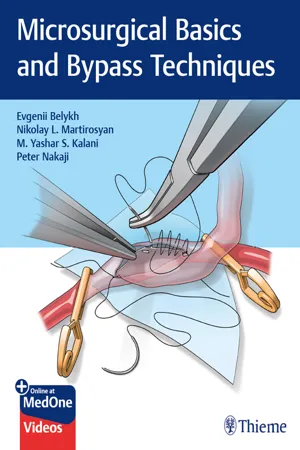
A step-by-step manual on fundamental microsurgical bypass techniques young neurosurgeons need to master!
All neurosurgeons must undergo rigorous training in the laboratory and practice bypass techniques repetitively before performing microneurosurgery on a patient. Microsurgical Basics and Bypass Techniques by Evgenii Belykh, Nikolay Martirosyan, M. Yashar S. Kalani, and Peter Nakaji is a comprehensive yet succinct manual on fundamental laboratory techniques rarely included in clinical textbooks. The resource simplifies repetitive microsurgical practice in the laboratory by providing a menu of diverse, progressively challenging exercises.
Step-by-step instructions accompanied by easy-to-understand illustrations, expert commentary, and videos effectively bridge the gap between laboratory practice and operating room performance. The book starts with an opening chapter on four founding principles of microsurgical practice inherited from great thinkers and concludes with a chapter featuring cerebrovascular bypass cases. Chapters 2-8 offer a complete one-week curriculum, with a different lab exercise each day, focused on learning basic microsurgery skills.
Key Features
- Twenty-six videos cover a wide array of topics – from diverse methods for holding instruments and suturing techniques – to end-to-end, end-to-side, and side-to-side anastomosis procedures
- High quality color illustrations clearly demonstrate basic techniques
- Practical laboratory exercises include how to organize a microsurgical laboratory, essential training and skills, basic arterial and deep-field anastomoses, kidney autotransplantation, supermicrosurgery, and aneurysm clipping
- Invaluable tips such as preventing bypass errors and applying laboratory skills to neurosurgical practice
This is an essential microsurgical learning and teaching guide for neurosurgical residents on how to perform basic bypass and anastomoses procedures step by step.
Part of the Fundamental Skills in Neurosurgery Series, Series Editors: Peter Nakaji, Vadim A. Byvaltsev, and Robert F. Spetzler.