eBook - ePub
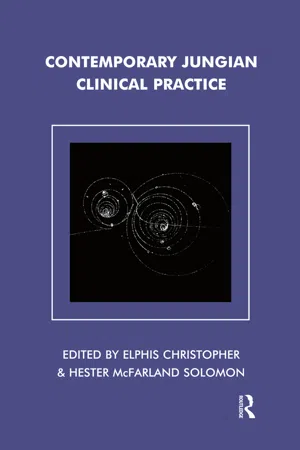
Contemporary Jungian Clinical Practice
- 372 pages
- English
- ePUB (mobile friendly)
- Available on iOS & Android
eBook - ePub
Contemporary Jungian Clinical Practice
About this book
This book on clinical practice gives information on actual clinical work, bearing witness to a way of working and being trained to work that is ethically healing of the psyches of suffering people and presenting the patients' material, unencumbered by excessive theorizing or technical language.
Information
Part I
Contemporary Jungian Clinical Practice
Introduction
Having co-edited a largely theoretical book on contemporary issues as addressed by practitioners steeped in Jungian thinking, Jungian Thought in the Modern World (Christopher & McFarland Solomon, 2000), it seemed appropriate to produce a book in which Jungian analysts and psychotherapists trained by the Jungian Section of the British Association of Psychotherapists (BAP) presented their clinical work. This would serve several purposes, not only to give moment to moment clinical accounts of work with individual patients in the consulting room, but also to illustrate the standard and depth expected of practitioners at different levels of clinical development from trainee to qualified and established members.
In the current climate of expectation of clinical accountability and of transparency for the claims of clinical competence and ongoing continuous professional development, we hoped that such a book would make a significant contribution in providing evidence of how professional Jungian members of the BAP are seeking to meet these concerns.
As this is a clinically based volume, it is appropriate to address related issues such as confidentiality, obtaining permission from the patient to publish their clinical material, disguising the patient’s identity without distorting the value of the clinical account, and the various ethical issues attached to these questions. Given this clinical emphasis, the authors were expected to deal with the question of consent to publish with their patients and in some cases supervisor, analyst or other colleagues, in the most appropriate way, such that they would avoid any imposition or abuse of the therapeutic relationship, including embarrassment, giving offence, or other negative consequences that would be detrimental to the ongoing treatment, the therapeutic relationship or the eventual outcome. In addition to seeking consent, the contributors had to consider such issues as how to ensure anonymity, patient disguise, the possibility of creating composite patients by weaving together relevant material from more than one patient, or using oneself as a patient. In the event, the contributors gave clinical accounts of individual patients, not of composites.
There were a number of potential contributors who were obliged, at various stages in writing their clinical accounts, to withdraw their proposed chapter. This was due to concerns about confidentiality, as well as about the adverse effects of seeking consent to publish, either because the therapy was ongoing and perhaps at a critical point, such that it might have been jeopardized by the therapist’s request, or because even though the treatment was finished, the therapist judged that such a request would have adverse effects on the former patient. Consent might have been obtained (as happened to one of us, Elphis Christopher), but a decision was taken not to publish because, on later reflection, the author considered that it would have a possible detrimental effect on the patient.
These considerations and concerns inevitably influence the kind of patients and the clinical problems that are written about and published. The effects of these such unavoidable restrictions on analytic theory building and the accumulation of clinical expertise through publication cannot be discounted. Moreover, by virtue of the very nature of clinical, depth psychological work, the question remains open whether it is ever possible to obtain truly informed consent, given the power imbalance inherent in the analytic and therapeutic relationship, the ongoing and ever-changing nature of the patient’s transference and its impact on the analyst’s counter-transference, and the possible and unforeseen consequences on the patient of publishing their clinical material. Nevertheless, as several of our authors have observed, seeking the patient’s permission to publish clinical material often provided a unique opportunity of reviewing the analytic work and of doing further valuable clinical work. At a more personal level, this experience enriched the therapists’ self understanding through the struggle with the various dimensions touched on by seeking permission from the patient.
As co-editors, we experienced a certain heaviness and tension in producing this volume in comparison to the more theoretical book Jungian Thought in the Modern World. The feelings seemed to reflect the tension of the opposites inherent in maintaining the central underlying ethical principle of doing no harm (nil nocere) while at the same time responding to the professional need to contribute to clinical knowledge and experience by encouraging practitioners to write about their clinical work. It is, perhaps, inevitable that this should be so, given the conflictual interests between the desire of the therapist to publish and the possible ambivalence of the patient towards such a venture. Rather as in supervision, when the experience of focusing on the patient becomes an experience of a “massa confusa” (Jung, C.W., 16, para. 387) from which a shape may eventually be discerned, we found ourselves, as the editors, both within the consulting room with the therapist and patient, engaged with the process of work, and also, at the same time, outside it attempting to arrive at an overview in order to assess that process. This was a parallel process to the very writing of clinical material itself, at the same time being engaged in the clinical encounter and yet distanced enough to be able to write about it in a coherent way, even if the writing was about tolerating states of incoherence.
Nevertheless, we remain convinced of the intrinsic value of the struggle to publish clinical accounts in the face of the above mentioned two apparently contradictory but equally valid ethical demands: firstly, to safeguard the patient’s interests at all times and to protect their confidentiality; and secondly, to respond to the needs of the profession, which as with any other healthcare or psychologically based profession, can only develop through ongoing clinical reflection.
The ethos of the training of the Jungian Analytic Section of the BAP is the expectation that the trainee psychotherapist will be qualified to work independently, in depth, with unconscious processes, by seeing the patient three or more times a week over several years. To this end, patients who are to be treated by trainees are assessed as to their suitability for this kind of treatment. It has become a truism that the types of psychological problems facing the would-be, as well as the qualified, therapist have more complex psychopathology than was perceived in the past, often exhibiting narcissistic, borderline or psychotic features. While adhering to the aim of training—that is that the therapist should be able to work independently—we would stress the importance of judging when the therapist needs consultation and further supervision on their work with patients. This capacity of the therapist to discern their need for further consultation has an ethical dimension with impact on clinical work.
In seeking intensive analytic psychotherapy, a potential patient will be motivated by a number of factors, such as a desire for self-knowledge, improvement in their interpersonal relationships and a greater capacity for self-expression. In assessing potential patients for their suitability for intensive analytic psychotherapy, the practitioner will bear in mind a number of factors. McDougall (1989) offers a useful depth psychological profile for treatment assessment that includes the potential patient’s awareness of their psychic suffering, their search for self knowledge, the implicit if not explicit understanding that they have an unconscious mind with motivations that might be at variance with conscious thoughts and wishes, and the assessor’s judgement that the potential patient has the psychological resources to bear the intensive analytic situation (tolerating the non-gratification of wishes and impulses).
We were impressed by our authors’ facility as practitioners to access and foster their patients’ capacities to activate their own self-healing. This follows Jung’s teleological understanding of the psyche’s resources for development and growth, while at the same time fully appreciating the antithetical forces for negativity and destruction that act as defences against the risks, suffering and sheer hard work involved in the analytic endeavour, including the unfolding and development of the analytic relationship. It is as if what is being assessed is the person’s potential to recover the lost or damaged parts of the self in order to give the self a second chance to develop and grow.
While the theoretical approach is Jungian, this has not imposed a restraint in utilizing psychoanalytic texts where these were appropriate. Jung’s unique contribution to psychological thinking and theory building was largely structured by his theory of the archetypes. These are immutable and powerful influences on the development of the psyche. Of particular relevance are the key concepts of the self, encompassing the conscious and unconscious totality of the psyche, with its need to fulfil itself, giving purpose and meaning to life; the ego, the “I” that faces the world but which is partly unconscious; the shadow, comprising those aspects or parts of ourselves which we do not like, and which we often unconsciously split off and project outside ourselves, and which has some equivalence to the Freudian repressed unconscious; the anima and animus (the contrasexual archetypes) and the Wise Old Man and the Great Mother, the internal conjoined or warring parental couple. Jung repeatedly stressed the importance of the teleological nature of the psyche that seeks to heal itself. Thus, neurosis is not seen as a condition that requires “curing”, but rather as drawing attention to a difficulty or complex that needs addressing in order for change to occur. It enables the person to work on the process of individuation, to be more of the person that he or she really is, and be more ready to fulfil their potential. This is an ongoing task throughout life that is never completed. All an individual’s potentials can never be fully realized. While the process of individuation goes on throughout life, it can get blocked and require therapeutic help. For this help to occur, the therapist has to be as much “in the therapy” as the patient.
Jung stressed the importance of therapy as an intersubjective, two-way process. His maxim “the doctor can have no influence unless he is influenced” (Jung, C.W., 16, para. 163) is reiterated in many of the chapters of this volume. Furthermore, the therapist takes on the suffering of the patient in a particular empathic and immediate way. There inevitably follows a shared unconscious identity, a “participation mystique”, whereby the patient’s unconscious processes can be better understood by the therapist. In psychoanalytic terms, this is referred to as projective identification whereby the patient projects parts of him/herself into the therapist and then identifies those parts as belonging to the therapist. The task of the therapist is to recognize that this is happening, often through vivid experience that requires rigorous self-examination in order to metabolize it. Through this activity, which is the essence of the analytic attitude, the analyst can achieve an understanding that it is a form of unconscious communication that needs to be acknowledged, worked on and transformed, in order to enable the patient to recognize it and accept him/herself in a healthier way. In psychoanalytic psychotherapy, James Fisher (2001) has described the therapists’ imaginative identification with the patient to convey the therapist’s capacity to receive the patient’s projections without the undue loss of the therapist’s self-reflective capacity.
Another form of communication is the clinical use of dreams. The manner in which our authors refer to the role of dreams in their clinical accounts led us to reflect on Jung’s understanding of dreams as a direct communication from the unconscious to the dreamer. Jung demonstrated the importance of dreams in each stage of a person’s life (Jung, 1963). In the context of the analytic treatment, the therapist bears witness to the meaning and value in the dreamers’ quest to address and resolve the worries that had brought them into analysis and so to create more freedom to fulfil themselves.
Part II, “Qualifying Papers for Associate Membership” offers four representative papers written as the final requirement for qualification as a Jungian analytic psychotherapist member of the Jungian Section of the BAP and Jungian analyst member of the International Association of Analytical Psychology. Training patients had to be seen for a minimum of three weekly sessions for a minimum of either two years (in the case of the first training patient) or for a minimum of eighteen months (in the case of the second training patient).
These papers reflect the struggles of the trainee to act as an effective clinical therapist while at the same time enduring the anxieties inherent in their own training status, the fact that they themselves are patients in their own analyses, and where sustaining recurrent periods of questioning and self-doubt are inevitable but alarming when experienced.
The first chapter “An oedipal struggle towards individuation” by Eleanor Cowen explores the struggle of a young man to move beyond the seductive comforts found in the first relationship with his mother in order to be able to establish later intimate relationships. The patient’s difficulties were reflected in the analytic relationship as described by the author.
“The search for emotional truth in a perverse scenario dominated by the trickster”, Marissa Dillon Weston’s account of the first two and a half years of intensive psychotherapy, considers the patient’s and therapist’s struggle to make a genuine contact and to recover emotional truth by working through a set of perverse defences. The archetypal theme of the “trickster” is used to illustrate destructive and creative processes in the individual, the family and the culture.
Birgit Heuer’s chapter “The deer behind the glass wall: on becoming human” gives an account of working with a borderline patient who could only make limited use of interpretation. She describes a process of incarnation unfolding both intrapsychically and within the growing transference relationship, as explored through the developmental theories of Winnicott, Bion and Fordham, while Jung’s and Hillman’s ideas are used to illuminate the process of incarnation from a transpersonal perspective. By combining a reductive and a synthetic perspective, she seeks to convey the complexity of the clinical process.
Jennifer Benwell describes in her chapter, “The processes of restoration in a deprived self”, the early stages of therapy with a patient who suffered from an impoverished sense of self, and how she gradually becomes more able to use the therapist as a source of nourishment. From initially feeling that she had control over her, the patient eventually experienced her as a benign environment rather than an impingement upon her internal world. The archetypal elements of her internal landscapes are shown to be mediated in the transference with a resultant lessening of her defences. There are the beginnings of a sense of an other from whom the patient can safely draw sustenance and with this an emergent sense of self.
The chapters included in Part III “In the Maelstrom and in the Doldrums” address intensive work over extended periods of time in the analytic consulting room. Here, the reader has an opportunity through clinical narratives to have a perspective on the experience of long term in depth clinical work. This includes both the maelstrom of the eruption of tumultuous unconscious contents and processes impacting on the therapeutic interchanges between analyst and patient and the doldrums of those periods of defensive and malignant stagnation when no movement seems possible and when the analysis may flounder. Here, Jung’s use of the alchemical images illustrates the vicissitudes experienced, evoking the various intrapsychic and shared intersubjective states upon which the authors reflect in their clinical writing.
In “Unlocking the Uroborus”, Marilyn Mathew describes the process of working with a young female artist suffering from a compulsive eating disorder. The concept of the Uroborus, the snake that eats its own tail in an eternal round, is explored as a powerful primitive defence employed by the patient against the terror of real relationship with an other. Sight is examined as a defence against seeing and the production of artwork is considered as an omnipotent creation of a world in one’s own image. The tension produced by the emergence of the transcendent function finally allows an alternative to uroboric experience to develop within the locus of artwork.
In her chapter “The elusive elixir: aspects of the feminine”, Margaret Hammond explores the growing internal differentiation of feminine imagery in a male patient. At the beginning of analysis, the feminine appeared as an all-embracing figure. Through events in the transference, which were illustrated in dreams by a number of archetypal scenes, a transformation took place which allowed for a growing capacity for separateness and relatedness. The evolution of the analytic container is discussed, as the infantile transference evolves to a position where the analysis acts as a container allowing the emergence of new patterns of relating.
Elizabeth Richardson considers, “In excretions and interpretations”, a clinical situation in which the analytic work suggested that the inability of the mother to contain and to understand her infant’s need to imagine may prevent the infant from moving on from a somatic to emotional experience. In later life, this can result in an inability to symbolize. The mother’s uterus is likened to the alchemical, well sealed vessel described by Jung. The “fluid” psychological space between analyst and patient is contrasted with the amniotic fluid in the intrauterine space which the developing foetus swallows, digests and excretes into. Actual contamination of this fluid space by meconium passed by a distressed infant is compared with symbolic contamination of the analytic space by the poisonous projections of the abandoning mother the patient has internalized.
Nathan Field’s chapter, “Psychotherapy as a two-way process”, offer...
Table of contents
- Cover
- Half Title
- Title
- Copyright
- CONTENTS
- ACKNOWLEDGEMENTS
- PERMISSIONS
- EDITORS’ NOTE
- FOREWORD
- CONTRIBUTORS
- PART I CONTEMPORARY JUNGIAN CLINICAL PRACTICE
- PART II QUALIFYING PAPERS FOR ASSOCIATE MEMBERSHIP
- PART III IN THE MAELSTROM AND IN THE DOLDRUMS: INTENSIVE WORK IN THE ANALYTIC CONSULTING ROOM
- PART IV REFLECTIONS: PERSPECTIVES ON ANALYTIC PRACTICE
- CITED WORKS OF JUNG
- INDEX
Trusted by 375,005 students
Access to over 1.5 million titles for a fair monthly price.
Study more efficiently using our study tools.
Frequently asked questions
Yes, you can cancel anytime from the Subscription tab in your account settings on the Perlego website. Your subscription will stay active until the end of your current billing period. Learn how to cancel your subscription
No, books cannot be downloaded as external files, such as PDFs, for use outside of Perlego. However, you can download books within the Perlego app for offline reading on mobile or tablet. Learn how to download books offline
Perlego offers two plans: Essential and Complete
- Essential is ideal for learners and professionals who enjoy exploring a wide range of subjects. Access the Essential Library with 800,000+ trusted titles and best-sellers across business, personal growth, and the humanities. Includes unlimited reading time and Standard Read Aloud voice.
- Complete: Perfect for advanced learners and researchers needing full, unrestricted access. Unlock 1.5M+ books across hundreds of subjects, including academic and specialized titles. The Complete Plan also includes advanced features like Premium Read Aloud and Research Assistant.
We are an online textbook subscription service, where you can get access to an entire online library for less than the price of a single book per month. With over 1.5 million books across 990+ topics, we’ve got you covered! Learn about our mission
Look out for the read-aloud symbol on your next book to see if you can listen to it. The read-aloud tool reads text aloud for you, highlighting the text as it is being read. You can pause it, speed it up and slow it down. Learn more about Read Aloud
Yes! You can use the Perlego app on both iOS and Android devices to read anytime, anywhere — even offline. Perfect for commutes or when you’re on the go.
Please note we cannot support devices running on iOS 13 and Android 7 or earlier. Learn more about using the app
Please note we cannot support devices running on iOS 13 and Android 7 or earlier. Learn more about using the app
Yes, you can access Contemporary Jungian Clinical Practice by Elphis Christopher, Hester McFarland Solomon, Elphis Christopher,Hester McFarland Solomon in PDF and/or ePUB format, as well as other popular books in Psychology & History & Theory in Psychology. We have over 1.5 million books available in our catalogue for you to explore.