- 240 pages
- English
- ePUB (mobile friendly)
- Available on iOS & Android
eBook - ePub
Wastewater and Biosolids Management, 2nd Edition
About this book
The second edition of Wastewater and Biosolids Management has 40% new material including a comprehensive study guide and one new chapter entitled 'The contribution of Decision Support System (DSS) to the approach of safe wastewater and biosolid reuse'. The study guide contains the title of the chapter, the purpose, the expected results, key concepts, study plan, additional bibliography, and a set of self-assessment exercises and activities.
The book covers a wide range of current, new and emerging topics in wastewater and biosolids. It addresses the theoretical and practical aspect of the reuse and looks to advance our knowledge on wastewater reuse and its application in agricultural production. The book aims to present existing modern information about wastewater reuse management based on earlier literature on the one hand and recent research developments, many of which have not so far been implemented into actual practice on the other. It combines the practical and theoretical knowledge about 'wastewater and biosolids management' and in this sense it is useful for researchers, students, academics as well as professionals.
Information
Subtopic
Applied SciencesIndex
Biological Sciences© IWA Publishing 2020. Ioannis K. Kalavrouziotis Wastewater and Biosolids Management DOI: 10.2166/9781789061666_0001
Chapter 1
Wastewater management in ancient times
Giusy Lofrano and Jeanette Brown
1Department of Chemistry and Biology “A. Zambelli”, University of Salerno, Via Giovanni Paolo II, 132, 84084 Fisciano (SA), Italy
2Department of Civil and Environmental Engineering, Manhattan College, Riverdale, NY
1.1 INTRODUCTION
Wastewater management in ancient civilization is a key theme for the development of technologies adapted to a specific area, especially where patrimonial landscape is considered as the determining factor for today’s cultural and socioeconomic life (Fardin et al. 2013). When considering wastewater management, what emerges is a long history associated with urban ecology and disposal of wastewater enmeshed with societal and cultural traditions (Lofrano & Brown, 2010). According to the principle “the solution to pollution is dilution”, dispersion has been the dominant strategy for wastewater management through the ages, but not the solution for protection of the environment and public health. Unfortunately, that policy continues to be practiced in many developing countries to this day (Lofrano et al. 2008; Libralato et al. 2009; Lofrano et al. 2015). Modern humans dwelled on earth for over 200,000 years, most of that time as hunter-gatherers, and with ever increasing populations (Vuorinen, 2007, 2010). The first human communities were scattered over wide areas and waste produced by them was returned to land and decomposed using natural cycles. It was only during the last 9000 to 10,000 years they discovered how to grow agricultural crops and tame animals. This was a new era probably started in the hills to the north of Mesopotamia. From there, the agricultural revolution spread to south Hellas, Sicily, and to the rest of Europe and of course to the east (e.g. Indus Valley) (Angelakis & Zheng, 2015). Because of these changes, there was a greater production of waste and waste products and thus, ecological impacts.
Until the birth of the first advanced civilization, disposal of human excreta was managed through holes in the ground, covered after use as explained by the Mosaic Law of Sanitation (Deuteronomy, Chapter 23). But as society advanced so had the concept of waste management, for example, there is evidence that the oldest known wastewater drainage was in the Neolithic Age (ca. 10,000–3000 BC) around 6500 BC in El Kowm (or Al Kawm), located between the Euphrates River and the city of Palmyra in Syria (Cauvin et al. 1990). However, that was an exception and most civilizations had no systems of waste disposal. Because of the lack of any kind of records, it is practically impossible to evaluate the health impact of these disposal practices on ancient populations. It is, however, quite safe to conclude that urban centres had serious public health problems due to a lack of management of their wastewater (Vuorinen, 2007; Larsen, 2008).
The self-depurative capacity of water bodies enabled tolerating the discharge of wastewater directly to bodies of water and, as an industrial society developed, industrial wastes as well. Nowadays, water bodies are protected preventing further degradation of their environmental quality since there is a greater understanding of how the self-depurative capacity was compromised by prolonged massive discharges, as, for example, in the case of the River Thames (London, UK) (Halliday, 1999; Arienzo et al. 2001; Vita-Finzi, 2012). The complex network of interactions that binds surface water and groundwater suggests that poor river quality can affect human health and the environment due to the presence of substances and microorganisms with potentially (eco-)toxic effects, thereby leading to the loss of biodiversity and impacting human health (Motta et al. 2008; Montuori et al. 2012; Albanese et al. 2013).
Although the importance of proper sanitation for the protection of public health was not understood by modern cities until the 19th century (Brown, 2005; Vuorinen et al. 2007; Cooper, 2007), many ancient civilizations did realize the implications of poor wastewater management and did provide some management especially for manure disposal. It is well documented that most of the technological developments relevant to the conveyance of wastewater are not the achievements of present-day engineers, but date more than five thousand years ago to the prehistoric world (Angelakis & Zheng, 2015). Unfortunately, discussions about sewers and primitive treatment is omitted from archaeology and historical research and, thus, forgotten. Now it is important to recover that information from the past to ensure a sustainable future. Therefore, the aim of this chapter is to reveal and describe cultural heritage in various regions of the world, and give a clear understanding of their wastewater management, which contributed to the development of the existing treatment technologies. This chapter has been organized according to the four main geographical areas associated with ancient civilisations: Middle East and India, China, Africa, and the Mediterranean. It is important to note that in the ancient world, wastewater was not separated from stormwater or rainwater drainage so the term “wastewater” used in this chapter includes stormwater/rainwater drainage combined with sanitary waste.
1.2 MIDDLE EAST AND INDIA
Historical records show that the Mesopotamian Empire (3500–2500 BC) was the first civilization to formally address sanitation problems arising from community living. In the ruins of Ur and Babylonia, there are remains of homes which were connected to a drainage system to carry away wastes (Jones, 1967) as well as latrines leading to cesspits. Unfortunately, although this sophisticated system existed, most people in Babylon did not have access to this system and threw debris including garbage and excrement on to the unpaved streets which were periodically covered with clay, eventually raising the street levels to the extent that stairs had to be built down into houses (Cooper, 2007). In some of the larger homes of Babylon, people squatted over an opening in the floor of a small interior room. The wastes fell through the opening into a perforated cesspool located under the house. Those cesspools were often made of baked perforated clay rings, ranging in size from 45 to 70 cm in diameter, stacked atop each other. Smaller homes often had smaller cesspools (45 cm diameter); larger homes had larger diameter cesspools (Schladweiler, 2002). Other great civilizations such as the Minoans and an unknown civilization located on modern-day Crete and the Indus valley respectively, flourished during the Bronze Age (approximately, 3200–1200 BC).
The Indus Valley was also far advanced in wastewater management; having a sophisticated and technologically advanced urban culture (Pathak, 2001). Even as early as 2500 BCE, the region of Harappa and Mohenjo-Daro included the world’s first urban sanitation systems as did the recently discovered region of Rakhigarhi (Webester, 1962). The Indus civilizations implemented a complex and centralized wastewater management system, including lavatories, and drainage and sewerage systems (Jansen, 1989; Kenoyer, 1991). The channels were either excavated into the ground or constructed above ground of burnt brick (see Figures 1.1 and 1.2).
However the practice of “open squatting” was frowned upon (Avvannavar & Mani, 2008) and only a few houses had toilet facilities. These toilets were of two types: made of earthenware bricks with a seat; or a simple hole in the floor. The domestic outlet, from toilets and bath platforms, was connected to street drains through a pipe network, or to soak-pits (Jansen, 1989; Wright, 2010), probably which were thereafter dumped in a specific place, as it has been hypothesized for solid waste (Jansen, 1989). Wastewater was not permitted to flow directly to the street sewers without first undergoing some treatment. In this system, wastewater passed through tapered terra-cotta pipes into a small sump. Solids settled and accumulated in the sump, while the liquids overflowed into drainage canals in the street when the sump was about 75% full. The drainage canals could be covered by bricks and cut stones, which likely were removed during maintenance and cleaning activities (Wolfe, 1999), most likely was the first attempt at treatment on record. Canals were built with the necessary slope to transport the water into the river Indus (Wiessmann et al. 2007). Following the Harappa model, in Jorwe, in present day Maharashtra, the drainage system was implemented from 1375–1050 BC (Kirk, 1975). In the 3rd century BC at Taxila, domestic wastewater was canalized out from the houses through earthenware drainpipes into soak-pits (Singh, 2008). In the antique Delhi, during the 3rd century BC, the same kind of system was used: drains, which are still visible in todays Purana Qila, canalized wastewater into ‘wells, which may have functioned as soak-pits’ (Singh, 2006). Later (around 500 BC), Ujjain’s ‘drainage system included soak-pits built of pottery-ring or pierced pots (Kirk, 1975).
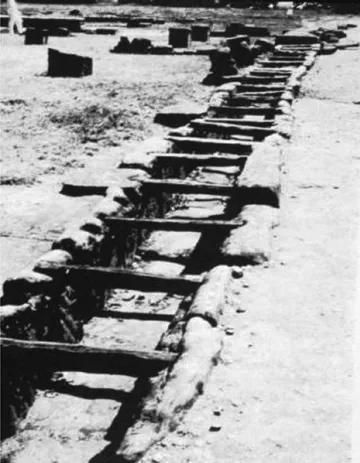
Figure 1.1 Picture of Mohenjo-Daro excavated sewer channel (Hodge, 1992).
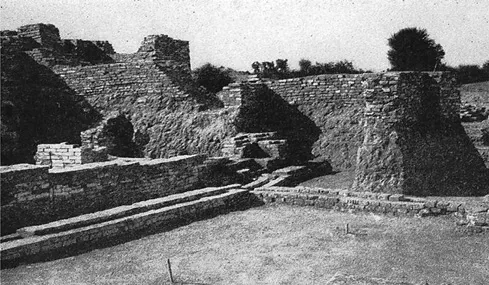
Figure 1.2 Picture of Harappan above ground sewer channel constructed of burnt brick (Kirby et al. 1956).
1.3 CHINA
China has a long hist...
Table of contents
- Cover
- Half Title
- Title Page
- Copyright Page
- Contents
- About the Editor
- Preface
- A Foreword by Prof. James Oster
- A Foreword by Prof. Asher Brenner
- A Foreword by Prof. Heidrun Steinmetz
- Chapter 1: Wastewater management in ancient times
- Chapter 2: Wastewater management: introduction to new technologies
- Chapter 3: Novel biological processes for nutrient removal and energy recovery from wastewater
- Chapter 4: Managing reuse of treated wastewater and bio solids for improved water use, energy generation and environmental control
- Chapter 5: Removal of pharmaceuticals and personal care products in constructed wetland systems for wastewater treatment and management
- Chapter 6: Heavy metal interactions under the effect of the wastewater and sludge reuse in agriculture
- Chapter 7: Microplastics and synthetic fibers in treated wastewater and sludge
- Chapter 8: Wastewater reuse: uptake of contaminants of emerging concern by crops
- Chapter 9: Biosolids composting and soil applications
- Chapter 10: Anaerobic digestion and energy recovery from wastewater sludge
- Chapter 11: Advanced oxidation processes for wastewater treatment
- Chapter 12: Existence of organic micropollutants in the environment due to wastewater reuse and biosolids application
- Chapter 13: The contribution of Decision Support System (DSS) to the approach of the safe wastewater and biosolid reuse
- Index
- Study Guide
Trusted by 375,005 students
Access to over 1.5 million titles for a fair monthly price.
Study more efficiently using our study tools.
Frequently asked questions
Yes, you can cancel anytime from the Subscription tab in your account settings on the Perlego website. Your subscription will stay active until the end of your current billing period. Learn how to cancel your subscription
No, books cannot be downloaded as external files, such as PDFs, for use outside of Perlego. However, you can download books within the Perlego app for offline reading on mobile or tablet. Learn how to download books offline
Perlego offers two plans: Essential and Complete
- Essential is ideal for learners and professionals who enjoy exploring a wide range of subjects. Access the Essential Library with 800,000+ trusted titles and best-sellers across business, personal growth, and the humanities. Includes unlimited reading time and Standard Read Aloud voice.
- Complete: Perfect for advanced learners and researchers needing full, unrestricted access. Unlock 1.5M+ books across hundreds of subjects, including academic and specialized titles. The Complete Plan also includes advanced features like Premium Read Aloud and Research Assistant.
We are an online textbook subscription service, where you can get access to an entire online library for less than the price of a single book per month. With over 1.5 million books across 990+ topics, we’ve got you covered! Learn about our mission
Look out for the read-aloud symbol on your next book to see if you can listen to it. The read-aloud tool reads text aloud for you, highlighting the text as it is being read. You can pause it, speed it up and slow it down. Learn more about Read Aloud
Yes! You can use the Perlego app on both iOS and Android devices to read anytime, anywhere — even offline. Perfect for commutes or when you’re on the go.
Please note we cannot support devices running on iOS 13 and Android 7 or earlier. Learn more about using the app
Please note we cannot support devices running on iOS 13 and Android 7 or earlier. Learn more about using the app
Yes, you can access Wastewater and Biosolids Management, 2nd Edition by Ioannis K. Kalavrouziotis in PDF and/or ePUB format, as well as other popular books in Biological Sciences & Applied Sciences. We have over 1.5 million books available in our catalogue for you to explore.