- 208 pages
- English
- ePUB (mobile friendly)
- Available on iOS & Android
eBook - ePub
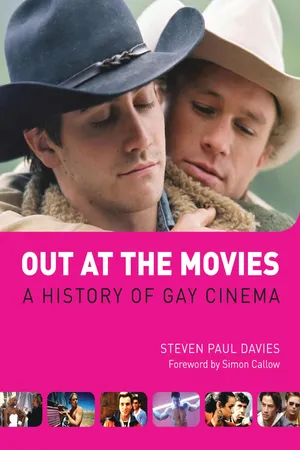
Out at the Movies
About this book
Over the decades, gay cinema has reflected the community's journey from persecution to emancipation to acceptance. Politicised dramas like Victim in the 60s, The Naked Civil Servant in the 70s, and the AIDS cinema of the 80s have given way in recent years to films which celebrate a vast array of gay life-styles. Gay films have undergone a major shift, from the fringe to the mainstream and the 2005 Academy Awards were dubbed ' the Gay Oscars' with gongs going to Brokeback Mountain, Capote and Transamerica. Producers began clamouring to back gay-themed movies, including I Love You Philip Morris with Jim Carey and Ewan McGregor, and Gus Van Sant's Milk, starring Sean Penn as Harvey Milk, the first prominent American political figure to be elected to office on an openly gay ticket back in the 70s. So loved was he that his brutal and homophobic assassination by ex-policeman Daniel White sparked the biggest riots in gay history. Out at the Movies looks back, decade by decade, at the history of gay cinema, celebrating the films which have defined the genre. Indie films, the avant-garde, sex on screen, bad guys, lesbian lovers, transgender films, camp comedies, musicals and gay rom-coms -- all are featured here. As well as highloighting the key movements and triumphs in gay cinema, the author includes information on gay filmmakers and actors, and their influence within the industry. Interspersed throughout are some of the most iconic scenes from gay cinema and the most memorable dialogue.
Information
Subtopic
Film & Video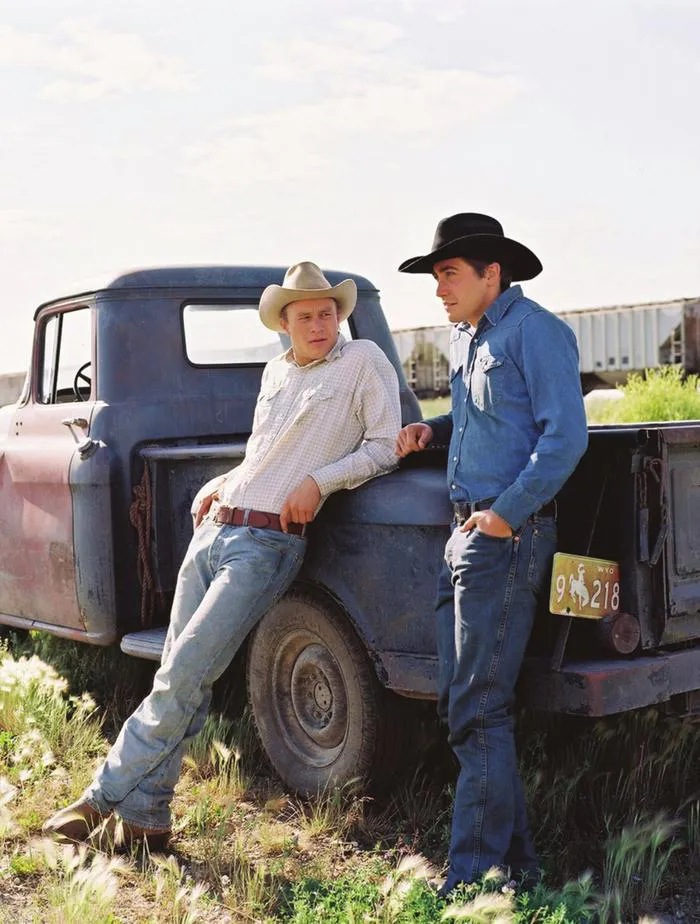
Heath Ledger and Jake Gyllenhaal in Brokeback Mountain
HOLLYWOOD GOES GAY – 2000s
Although the 1990s ended on a high note with quality films such as Gods and Monsters (1998) and Beefcake (1998), they were still released amongst a host of dubious sit-com-style gay comedies. Unfortunately, early into the new millennium, many gay filmmakers were still partying like it was 1999, and along came a load more ‘heartwarming’ gay-life-is-a-blast pics.
The decade began with The Broken Hearts Club (2000), another sunny light comedy about a group of guys who were all friends and just happened to be gay. Marketed as a ‘gay Big Chill’ or a ‘gay Diner’, it was clear from the outset that originality would not be its selling point. It was, however, talked up at Sundance because of the way the film apparently played down gay ‘issues’. And there were lots more equal-opportunity offenders early on in the decade.
All Over the Guy (2001) was one dreadful entry in the glut of gay romantic comedies. Under One Roof (2001) was another, but with a more erotic slant, that revolved around a Chinese-American mama’s boy who wants ‘to dip his chopstick in the rice bowl’ of a lanky Indiana slacker boy. Police Academy-star Steve Guttenberg appeared in the long-awaited but disappointing film adaptation of gay writer James Kirkwood’s dark comedy, P.S. Your Cat is Dead (2002), while ageing British actor Roger Moore popped up in another American gay-themed ‘comedy’, Boat Trip (2002), playing a flamboyant gay man who propositions Cuba Gooding Jr and Horatio Sanz, two straight men looking for romance who are mistakenly booked on to a gay cruise. Talking about the movie, Moore recently admitted: ‘I sort of went back into the closet to do it. Half the actors I’ve worked with have been gay while pretending that they weren’t – so I imagined I was them.’
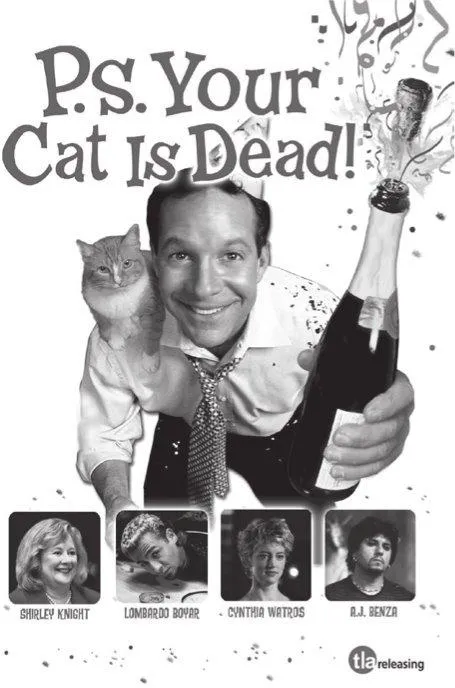
Nevertheless, we all know subtle and sensitive films about sexual politics are not usually made in Hollywood and Boat Trip was the usual garish, often offensive, adult comedy. The negativity is pretty constant, with gay men portrayed in the usual, stereotypical manner, and we see a variety of cross-dressers, old queens, men in dog collars, and Gooding mincing about, screeching noisily and donning drag for the cabaret; all of which only feeds into the film’s underlying homophobia.
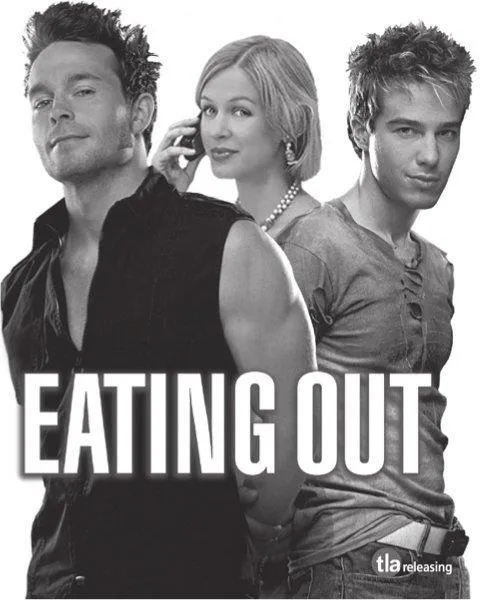
Friends and Family (2002) was another one-joke comedy, although not as negative as Boat Trip, about a gay couple who are also working as hit men for the Mafia. Then came the soap-opera schlock of 200 American (2003), about an advertising executive who falls for a hustler, and Danny in the Sky (2003), yet another eye-candy comedy that boasts a story about a pretty boy who wants to be a model and escape from his gay dad, only to end up a stripper at gay club. A year later came Eating Out (2004), a ‘screwball comedy’ about a hunky straight guy pretending he’s gay to get a date with a woman who only likes to hang out with gay men. The twisted, reunion rom-com Adam & Steve (2006) followed, and then came Another Gay Movie (2006), a spoof about four high-school graduates’ mission to lose their anal virginity any way they can. A kind of gay American Pie or Porky’s, it featured all the toilet humour and crass behaviour to boot. Very un-PC, with pure, unadulterated, in-your-face gay jokes from start to finish, it was popular because of its raunchy scenes and gorgeous cast.
More recently, 2007 saw the release of Adam Sandler’s comedy film, I Now Pronounce You Chuck and Larry, the latest in this long line of gay-themed ‘wacky’ mainstream comedies, about two, semi-homophobic firefighters pretending to be a gay couple to receive partnership benefits. A massive international hit, in the US the film knocked Harry Potter and the Order of the Phoenix from the number-one spot at the box office. But the movie is packed full of the usual Adam Sandler, Wedding Crasher-type fat jokes and crass comedy.
Sandler’s co-star Kevin James defended the film, telling WENN: ‘We screened it for gay-rights group GLAAD (the Gay & Lesbian Alliance Against Defamation) because we certainly didn’t want to offend anybody in any way.
The main reason of this movie is really just to make people laugh and that’s all we wanted to do. These guys are idiots in a way. They learn tolerance, what it’s about, and what happens when they have to pretend to be this way. That’s basically it, but we’re certainly not trying to tell people how to live their lives in any way, shape, or form.’
In reality, people should expect crass and offensive comedy from Sandler. Quite simply, it’s what he does. After delivering 90 minutes of gay stereotypes, I Now Pronounce You Chuck and Larry tries to turn itself around into a full defence of gay rights and an applause of gay culture by the end, even boasting appearances by Lance Bass and Richard Chamberlain, but by this point it’s all far too late. The film spends too much time revelling in the prejudice and ignorance of its small-minded characters, and the closing scenes in support of gay rights are simply designed to undermine much of the preceading homophobic bigotry and offer the film moral redemption.
Whatever the case, to rain on Sandler’s parade, the makers of Chuck and Larry were accused of plagiarism by the producers of Australian film Strange Bedfellows (2004), who thought the plot of Chuck and Larry was all too familiar. Shana Levine, one of the producers of the Aussie film, said legal action was being considered after expert analysis of the two scripts found striking similarities. Strange Bedfellows, starring Paul ‘Crocodile Dundee’ Hogan and Michael Caton, was a comedy about a widowed businessman who weds his widowed friend in order to take advantage of new tax breaks. It was certainly very similar and had the same matey vibe running throughout, the same rather corny, clichéd comedy and the same warm undercurrent, which crept up on the audience at the end.
By the end of 2007, it was quite satisfying to hear the nominations for the worst films of the year announced. Not surprisingly, Chuck and Larry made it to the Golden Raspberry Awards shortlist, nominated in eight categories including Worst Film and Worst Actor (Adam Sandler).
But away from these inconsequential fluffy movies, some filmmakers were getting down to the nitty-gritty. As the new millennium lit the horizon in a glow of possibility, more subtle, cutting-edge works began to emerge. Everything from Punks (2000), Patrick-Ian Polk’s comedy of life among African-American gay men; Before Night Falls (2000), Julian Schnabel’s biopic of the late gay Cuban author Reinaldo Arenas; Curtis Hanson’s Wonder Boys (2000), with Robert Downey Jr bedding Tobey Maguire; By Hook Or By Crook (2001), Harry Dodge and Silas Howard’s lesbian/transgender buddy film; and Moises Kaufman’s The Laramie Project (2001) which recounted the horrific 1998 bashing death of young gay man Matthew Shepard in the small Wyoming community, dubbed the ‘hate capital of America.’
In fact, The Laramie Project was particularly groundbreaking in its style, mixing real news reports with actors portraying friends, family, cops, killers and other Laramie residents in their own words. Kaufman’s film followed Matthew’s visit to a local bar, his kidnap and beating, the discovery of him tied to a fence, his death and funeral, and the trial of his killers. It was a harrowing, moving and hugely important monument to a dark day in recent history that we should never forget.
Michael Cuesta’s L.I.E. was another quality release. An unsensationalised drama of intergenerational gay love, it emerged a critical winner at Sundance in 2001. The film had Brian Cox in the role of Big John Harrigan, a guy who feels the love that dares not speak its name, but expresses it by seeking out adolescents and bringing them back to his pad. But John is an even-tempered, funny, robust old man who actually listens to the kids’ problems (as opposed to their parents and friends, who are too caught up in the high-wire act of their own confused lives). He’ll have sex-for-pay with them only after an elaborate courtship, charming them with temptations from the grown-up world. Undoubtedly a powerful, intensely moving drama, Brian Cox, speaking on its release, was right to be proud to be part of it: ‘It’s a rites-of-passage story that any 15-year-old would identify with,’ he explained. ‘It’s about sexual awakening and whether one is gay or straight. This film is meant to unsettle and, I think, that is what drama at its best does. At its best, it throws questions at you. At its best, it puts things into the ring for debate. That’s why I am very proud of this film.’
Based on a play by Daniel Reitz, Urbania (2000) was another gay-interest gem discovered at Sundance. Jon Shear’s dark psychological thriller had a wonderful sense of style and toyed with audience expectations, treading the thin and often ambiguous line between the real and imagined. The main storyline centres on Charlie (Dan Futterman), a gay man who has recently suffered through the traumatic end to a meaningful relationship. Charlie pines for his ex, making rambling, pleading phone calls to answering machines and languishing in his now-too-big bed, his hand lingering on the empty pillow beside him. He roams the rainy downtown streets encountering urban legends come to life everywhere, from the lady who microwaves her poodle to the man who gets a nasty surprise the morning after a one-night-stand. In Urbania, it’s difficult to tell the truth from sorrowful, wishful-thinking fantasy. And that’s probably the point.
Big Eden (2000) wasn’t anywhere near as dark as Urbania but it attracted as much attention, winning the audience awards at just about every gay and lesbian film festival there is. Thomas Bezucha’s film cast Arye Gross as Henry, an artist living in New York but still carrying a torch for the guy he had a crush on in high school. When his grandfather has a stroke, Henry returns to his Montana hometown, Big Eden, where he rediscovers friends he hasn’t seen in years. His high-school crush has since married, had children and divorced – and seems ready to take ...
Table of contents
- Cover
- Title Page
- Table of Contents
- ACKNOWLEDGEMENTS
- FOREWORD BY SIMON CALLOW
- INTRODUCTION
- IN THE CLOSET – PRE-60s
- VICTIMS, VILLAINS AND SISSIES – THE 60s
- POST-STONEWALL CINEMA – THE 70s
- THE INDIE YEARS – THE 80s
- LIFE AFTER AIDS – THE 90s
- HOLLYWOOD GOES GAY – 2000s
- AND THE WINNER IS... THE GAY OSCARS
- Copyright
Trusted by 375,005 students
Access to over 1.5 million titles for a fair monthly price.
Study more efficiently using our study tools.
Frequently asked questions
Yes, you can cancel anytime from the Subscription tab in your account settings on the Perlego website. Your subscription will stay active until the end of your current billing period. Learn how to cancel your subscription
No, books cannot be downloaded as external files, such as PDFs, for use outside of Perlego. However, you can download books within the Perlego app for offline reading on mobile or tablet. Learn how to download books offline
Perlego offers two plans: Essential and Complete
- Essential is ideal for learners and professionals who enjoy exploring a wide range of subjects. Access the Essential Library with 800,000+ trusted titles and best-sellers across business, personal growth, and the humanities. Includes unlimited reading time and Standard Read Aloud voice.
- Complete: Perfect for advanced learners and researchers needing full, unrestricted access. Unlock 1.5M+ books across hundreds of subjects, including academic and specialized titles. The Complete Plan also includes advanced features like Premium Read Aloud and Research Assistant.
We are an online textbook subscription service, where you can get access to an entire online library for less than the price of a single book per month. With over 1.5 million books across 990+ topics, we’ve got you covered! Learn about our mission
Look out for the read-aloud symbol on your next book to see if you can listen to it. The read-aloud tool reads text aloud for you, highlighting the text as it is being read. You can pause it, speed it up and slow it down. Learn more about Read Aloud
Yes! You can use the Perlego app on both iOS and Android devices to read anytime, anywhere — even offline. Perfect for commutes or when you’re on the go.
Please note we cannot support devices running on iOS 13 and Android 7 or earlier. Learn more about using the app
Please note we cannot support devices running on iOS 13 and Android 7 or earlier. Learn more about using the app
Yes, you can access Out at the Movies by Steven Paul Davies in PDF and/or ePUB format, as well as other popular books in Media & Performing Arts & Film & Video. We have over 1.5 million books available in our catalogue for you to explore.