- 420 pages
- English
- ePUB (mobile friendly)
- Available on iOS & Android
eBook - ePub
Integrated Construction Information
About this book
The construction industry is an information-intensive sector and low levels of productivity are often blamed on inadequate integration of information. This book shows how the different types and sources of information can be integrated to benefit individual construction projects, construction companies and in the construction industry at world-wide level.
Information
PART ONE
What is Integration and Why is it Important?
Part One contains five chapters which collectively address the issues of what is meant by integration and why it is important. This is vital context for the more detailed technical issues that are raised by chapters in the later parts.
Chapter 1 is a combined effort by Betts at Salford, Fischer at Stanford and Koskela at VTT in Finland. In itself, a contribution by three authors from leading centres in different parts of the world illustrates the way research in this field is progressing with international collaboration assuming ever greater importance. This chapter raises the issues of the purpose and definition of integrated construction information.
The purpose of integration is discussed in the context of emerging production management and business philosophies such as lean production and strategic IT exploitation. Both of these potentially provide new business change environments in which information integration will be encouraged. The definition of integrated construction information is then discussed through considering questions such as why, who, where, how and when integration will be realized. Alternative answers to those questions are put forward as potential points on a map of the integrated construction information field. This map can be used as a means for relating the contributions of all the other chapters in the book, as has been attempted in the Editorial Overview.
Chapter 2 by Fischer and Breuer both of Stanford, extends some of these issues further by attempting to define a whole range of managerial and organizational issues that impose upon information integration. These are then used by the authors as a framework for evaluating some of the technical efforts towards integration that have been made by the Center for Integrated Facilities Engineering (CIFE) at Stanford.
Chapter 3 extends our definition and understanding of information integration by focusing on the issue of data transfer. Here Thorpe relates data transfer technologies to a discussion of integration in the context of a four-stage model of how IT is exploited within organizations. The parallels to this model of UK construction experience are discussed, and the significance of data transfer technologies as construction companies enter the mature stage of IT exploitation is addressed.
Chapter 4 continues the debate of what integration is and why it is important by considering some different views. The fact that this chapter from Vincent is by a practitioner rather than an academic makes the viewpoint particularly valuable, given the focus of this part is on organizational and managerial issues.
The other important dimension that Vincent’s chapter introduces is a human one and this is very much continued by Powell and Newland. Their chapter extends the definition of the integration problem by focusing on integration of interaction and sharing of meaning and understanding of information. Chapter 5 clearly shows that integrated information systems in construction will need to take note of the considerable variation in the way that information must be presented in order to be adequately received and thus for effective communication to have taken place. They are dealing with the integration of values.
These five chapters define what integration means from alternative viewpoints and establish why it is important from managerial, organizational, practical and human perspectives. It provides a broad conceptual framework by which to consider the past, present and future attempts at achieving integration that are covered in the next three parts.
CHAPTER 1
The purpose and definition of integration
Martin Betts, Department of Surveying, University of Salford, Salford, M5 4WT, UK
Martin A.Fischer, Center for Integrated Facility Engineering, Stanford University, Stanford, CA, 94305 4020, USA
Lauri Koskela, Laboratory for Urban Planning and Building Design, VTT, PO Box 209, SF-02151 Espoo, Finland
1.1
INTRODUCTION
A problem with technology research generally and construction IT research in particular, is that researchers have rarely seen their projects in the light of the way they can be applied in practice, i.e. most integration research provides a technology push by developing a new technology and trying to push it onto an application. The purpose of integration research in a practical sense is often ill defined and how well the proposed solution helps to overcome a practical problem, or how easily the solution can be organizationally exploited in the evolving construction context, is seldom tested. Thus, integration research has produced many solutions looking for real world problems. An alternative approach to technology push as a model for innovation that has gained much acceptance in management disciplines, is to follow research and development in support of a strategy pull. That is, for seeing what the evolving business needs are and then developing a solution to the business problem.
A number of writers have commented on how IT can be exploited by companies to exploit strategic purposes including Porter and Millar (1985), Earl (1989) and Daniels (1991). Earl, in particular, stresses the need for the ‘technology strategy connection’ to be made and advocates the use of planning frameworks to assist in this. A combination of technology push and strategy pull is likely to offer the best promise for successful implementation and application of computer-integrated construction (CIC).
In addition, while the achievement of CIC is recognized by some as a process of continuing improvements, most research projects are isolated short-term efforts. This temporal fragmentation has led to many ideas that have been developed to the prototype level but that have typically been abandoned before being tested in a practical context. These prototypes are seldom picked up and built upon by others.
Furthermore, researchers generally bemoan the lack of standardization in the Architect Engineer Constructor industry, but have themselves done little to agree on a standard terminology or objective for integration research. For example, there exists no generally accepted definition of the word integration in the context of CIC. Fischer (1989) defined integration as ‘the continuous interdisciplinary sharing of data, knowledge, and goals among project participants’. Is this definition acceptable or appropriate for us all in our different contexts? There are likely to be many different definitions of integration which currently implicitly underpin our research efforts. Yet integration, with computers or otherwise, is not an intrinsic goal of benefit to construction organizations. It should be motivated by the specific improvement needs of the construction process or the business strategies of the participating firms.
What then, are the appropriate goals to be used in connection with improvement of construction processes? This chapter argues for a new, alternative view of CIC based on several recent approaches stressing process improvement and business strategy. After discussing these new views generally, the implications of them for CIC are analysed. The way that this is done is by posing the question ‘why should we pursue integrated construction information?’
In many ways this question arises from taking a systems approach in construction as advocated by Armstrong (1985), who suggests that we should only move to the fourth stage of a systems approach, to operational programs, after having:
- stated our ultimate objectives,
- identified our indicators of success and
- considered the alternative strategies for realizing them.
The argument here is that much of the CIC research is preoccupied with the implementation of operational programs. There is a need to shed light on the other three stages of a systems approach and this chapter will begin to do this.
1.2
WHY SHOULD WE PURSUE CIC?
This question may equate with the systems approach activity of identifying our ultimate objectives. The answer may appear to be obvious and related to the productivity and fragmentation issues raised. But in itself this is too simplistic a view and a deeper justification is required in the light of developments in management thinking. This is particularly so given that CIC, as a concept, originates as a parallel of CIM, which is applied extensively in manufacturing but usually in the context of different production management and corporate planning frameworks. For a justification for CIC then, some discussion of the recent developments in new production philosophies, competitive strategy and strategic IT planning are appropriate. These reflect part of the body of theory of organizational behaviour that we have seldom applied to our CIC research. They are increasingly being used as a justification for technological innovation in other sectors.
1.2.1
The new production philosophy
Since the end of the 1970s, many new approaches to production management have emerged within the manufacturing sectors. These include just in time (JIT) materials management, total quality management (TQM), time-based competition, value-based management, process redesign, lean production, world class manufacturing and concurrent engineering. Their significance for construction has been analysed by Koskela (1992) who found that many of the approaches view a common core from different angles. This common core is based on a conceptualization of production activities with the angle determined by the design and control principles emphasized. For instance, JIT materials management aims to eliminate wait times in the management of deliveries, production layouts and storage, whereas TQM aims to eliminate errors and related rework. Both apply to flows of work, material or information.
The sum of these different management advances is a new production philosophy. Regardless of what term is used to name it, it is the emerging mainstream approach practised, at least partially but increasingly, by major manufacturing companies in America, Europe and East Asia (Womack et al., 1990).
The core of this new production philosophy is the observation that there are two types of activities in all production systems: conversions and flows. While all activities incur cost and time, only conversion activities add value to the material or piece of information being transformed into a product. Thus, the improvement of non-value-adding flow activities (inspection, waiting, moving) should aim to reduce or eliminate them, whereas conversion, or value-adding activities should be made more efficient. In design, control and improvement of production systems, both aspects have to be considered. Traditional managerial principles have considered only conversions, or all activities have been treated as though they were value-adding conversions. This distinction may seem slight but within manufacturing has been found to be of great consequence in effective production management in general and the successful implementation of CIM in particular. In some cases it has led to changes in business performance and strategy that has been of major significance to nations. Our argument here is that such a management approach may become of prime concern to the way construction is managed in the future in which case this issue would become a prime determinant of why we would aim for integrated construction information.
We can illustrate the basis of the new production philosophy and our current preoccupation with conversion activities in construction with a simple example drawn from Koskela and Betts (1993). This assumes a sequence of activities at the production stage of construction design to consist of those shown in Figure 1.1. First it has to be noted that the conventional description methods, such as generic flow-charting (used in Figure 1.1), do not show attributes of flow processes important to the new production philosophy such as waste (for example, amount of rework due to errors or omissions). Taking the preparation of the brief (Activity 1) as an example, making the brief is a value-adding activity. The needs of the owner do not exist explicitly, but have to be established and stated. On the other hand, any requirement which is missed in the beginning but occurs later in the process, is costly and produces waste. Thus, a systematized analysis of needs is extremely important; however, our conventional description methods do not suggest this in any way. The significance of avoiding having to restate needs is missing.
Second, value-adding and non-value-adding activities have not usually been distinguished, as they are in Figure 1.1. The exchange of files (Activities 5 and 6) provide an example. These are non-value-adding activities which should be reduced or eliminated. If we are aiming only to increase the efficiency of these then our research may be misguided. However, this is the goal which has been primarily adopted in much integrated construction information research. To what extent does it apply to other projects reported in this book?
This is obviously a very simplified example at a general level; as an example, it serves to illustrate the concepts of the new production philosophy. For a practical process improvement study involving CIC, the analysis should be taken to much more detail.
1.2.2
Strategic IT planning
In parallel with the emergence of the new production philosophy, a second major area of development in management thinking has been the concern with business strategy. Dominant in developments in competitive strategy and strategic planning in the 1980s was the work of Porter, whose advancement of a five forces model for analysing industry profitability potential, value chain for exploring competitive advantage and advocation of alternative competitive strategies have all been popularly adopted. More recently, Porter’s work in the competitive advantage of national industry segments has resulted in a diamond of four interrelated components of a competitive environment which has been applied to the construction professions by Betts and Ofori (1994).
Other strategy writers have also recently advocated other business planning techniques such as benchmarking (The Economist, 1991) and the core competences approach (Prahalad and Hamel, 1990). The former is also seen as one of the principles of flow process design in the new production philosophy, illustrating the link between these two emerging management approaches. Core competences address the production and process issues more directly by looking to identify a basic production skill which can be applied broadly to out-compete rivals for whom that basic skill is not available. Their significance to our discussions here may lie in whether a technical ability in integrated construction information could result in a core competence that a construction organization would use as a strategic weapon. These strategic planning techniques and their relevance to construction enterprises have been discussed in detail by Betts and Ofori (1992).
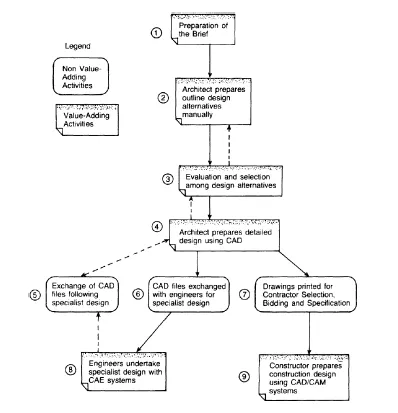
Figure 1.1 Construction design: an example of conventional analysis
In addition to the techniques of strategic planning, there have been other advances in techniques for identifying strategic information systems (Earl, 1989). Many of these techniques pose s...
Table of contents
- Cover Page
- Title Page
- Copyright Page
- Contributors
- Foreword
- The Field of Integrated Construction Information: An Editorial Overview
- PART ONE: What is Integration and Why is it Important?
- PART TWO: The History of Construction Integration
- PART THREE: Product Modeling
- PART FOUR: Process and Information Modelling
- PART FIVE: Applications of Integration
Trusted by 375,005 students
Access to over 1.5 million titles for a fair monthly price.
Study more efficiently using our study tools.
Frequently asked questions
Yes, you can cancel anytime from the Subscription tab in your account settings on the Perlego website. Your subscription will stay active until the end of your current billing period. Learn how to cancel your subscription
No, books cannot be downloaded as external files, such as PDFs, for use outside of Perlego. However, you can download books within the Perlego app for offline reading on mobile or tablet. Learn how to download books offline
Perlego offers two plans: Essential and Complete
- Essential is ideal for learners and professionals who enjoy exploring a wide range of subjects. Access the Essential Library with 800,000+ trusted titles and best-sellers across business, personal growth, and the humanities. Includes unlimited reading time and Standard Read Aloud voice.
- Complete: Perfect for advanced learners and researchers needing full, unrestricted access. Unlock 1.5M+ books across hundreds of subjects, including academic and specialized titles. The Complete Plan also includes advanced features like Premium Read Aloud and Research Assistant.
We are an online textbook subscription service, where you can get access to an entire online library for less than the price of a single book per month. With over 1.5 million books across 990+ topics, we’ve got you covered! Learn about our mission
Look out for the read-aloud symbol on your next book to see if you can listen to it. The read-aloud tool reads text aloud for you, highlighting the text as it is being read. You can pause it, speed it up and slow it down. Learn more about Read Aloud
Yes! You can use the Perlego app on both iOS and Android devices to read anytime, anywhere — even offline. Perfect for commutes or when you’re on the go.
Please note we cannot support devices running on iOS 13 and Android 7 or earlier. Learn more about using the app
Please note we cannot support devices running on iOS 13 and Android 7 or earlier. Learn more about using the app
Yes, you can access Integrated Construction Information by M. Betts,P.S. Brandon,Martin Betts Nfa in PDF and/or ePUB format, as well as other popular books in Technology & Engineering & Construction & Architectural Engineering. We have over 1.5 million books available in our catalogue for you to explore.