- 424 pages
- English
- ePUB (mobile friendly)
- Available on iOS & Android
eBook - ePub
About this book
With the availability of advanced technologies, digital systems, and communications, portable instruments are rapidly evolving from simple, stand alone, low-accuracy measuring instruments to complex multifunctional, network integrated, high-performance digital devices with advanced interface capabilities. The relatively brief treatments these instr
Information
1
Measurements, Instrumentation, and Electronic Portable Instruments
1.1 Fundamentals of Measurements
Measurement is a process of gathering information from the physical world and comparing it with agreed standards. Measurement is carried out with instruments that are designed and manufactured to fulfill given specifications.
Instruments are man-made devices that are designed to maintain prescribed relationships between the parameters being measured and the physical variables under investigation. The physical parameter under investigation is known as the measurand. Sensors and transducers are the most basic and primary elements that respond to physical variations to produce an output. The relation between sensor signal and physical variations can be expressed in the form of transfer functions. The transfer function may be linear or nonlinear. A linear relationship is governed by the equation

where y is the electric signal from the sensor, x is the physical stimulus, a isthe intercept that is the output signal for a zero input signal, and b is theslope, also known as the sensitivity.
The output y may be in amplitude, frequency, phase, or other properties, depending on the characteristics of a particular sensor. The nonlinear transfer functions can be logarithmic, exponential or in other forms, such as a power function. In many applications, a nonlinear sensor may function linearly over a limited range.
The energy output from the sensor is usually supplied to a transducer, which converts energy from one form to another. Therefore, a transducer is a device capable of transferring energy between two physical systems.
For a specific application, a diverse range of sensors and transducers may be available to meet the measurement requirements of a particular physical system. Correct sensors must always be selected, and appropriate signal processing must be employed to retrieve the required information, which can be directly related to the physical variable. Also, after having generated the signals by a sensor, the type of signal processing to be implemented depends on the information required from it.

FIGURE 1.1 Essential components of an instrument.
Instruments are applied for information gathering about the physical variable. Once the information is obtained, it can be processed, interpreted, generalized, or reorganized. Appropriately designed tests and experiments may be necessary for information gathering. Tests can be done by humans or machines in an automatic or semiautomatic manner. Tests and experiments generally are conceived, planned, performed, and repeated until full confidence is acquired in the results. Applications of instruments range from laboratory conditions to arduous environments, such as inside nuclear reactors or remote locations, e.g., satellite systems and spaceships. Many manufacturers are producing a large range of instruments in order to meet diverse ranges of measurements with extensive degrees of complexity and broad application requirements.
The functionality of an instrument can be broken into smaller elements, as illustrated in Figure 1.1. All instruments have some or all of these functional blocks. In general, if the behavior of the physical system under investigation is known, its performance can be monitored and assessed by means of suitable methods of sensing, signal conditioning, and termination.
In the last 10 years or so, due to rapid progress in integrated circuit (IC) technology and availability of low-cost analog and digital components and microprocessors, considerable advancements have taken place in measurements, instruments, and instrumentation systems. This progress equally reflects on electronic portable instruments. Performance of electronic portable instruments has improved significantly by the availability of on-line and off-line backed analysis, enhanced signal processing techniques, agreed local and international standards, and, most importantly, progress in communications technology, which addresses particularly the needs of distributed instrumentation systems.
1.2 Units and Standards
Standards for the fundamental units, such as length, time, weight, temperature, and electrical quantities, were developed a long time ago. These standards enable consistency in measurements irrespective of time and place all over the world. The standard physical entities for length and weight (the meter and the kilogram) are kept in the International Bureau of Weights and Measures in Serves, France. Nevertheless, apart from the physically existing standard meter, in 1983, the meter was defined as the length of path traveled by light in vacuum in 1/299,792,458 of a second. Currently this is adopted as the standard meter.
TABLE 1.1 Basic SI Units
The standard unit of time is the second, which is established in terms of known oscillation frequencies of certain devices, such as the radiation of the cesium-133 atom. The standards of electrical quantities are derived from mechanical units of force, mass, length, and time. Temperature standards are established as international scale by taking 11 primary fixed points of temperature. Historically, many different units are involved in different places of the world or even within the same country; the relationships between different units are defined in fixed terms. For example, 1 lb=453.59237 g.
Based on these standards, primary international units, Système International d’Unités (SI), are established for mass, length, time, electric current, luminous intensity, and temperature, as illustrated in Table 1.1. From these units, SI units of all physical quantities can be derived, as exemplified in Table 1.2. The standard multiplier prefixes are illustrated in Table 1.3.
In addition to primary international standards of units, standard instruments are available. These instruments have stable and precisely defined characteristics that are used as a reference for other instruments performing the same function. Hence, the performance of an instrument can always be cross-checked against a known device. At the worldwide level, checking is done by using an international network of national and international laboratories, such as the National Bureau of Standards (NBS), the National Physical Laboratory (NPL), or the Physikalisch-Technische Bundesanstalt (PTB) of Germany. A treaty between the world's national laboratories regulates the international activity and coordinates development, acceptance, and intercomparisons. Standards are kept in four stages:
The international standards represent certain units of measurement with maximum accuracy possible within today’s available technology.
TABLE 1.2 Fundamental, Supplementary, and Derived Units
TABLE 1 .3 Decimal Multiples
These standards are under the responsibility of an international advisory committee and are not available to ordinary users for comparison or calibration purposes.
The primary standards are the national standards maintained by national laboratories in different parts of the world for verification of secondary standards. These standards are independently calibrated by absolute measurements that are periodically made against the international standards. The primary standards are compared against each other.
The secondary standards are maintained in the laboratories of industry and other organizations. They are periodically checked against primary standards and certified.
The working standards are used to calibrate general laboratory and field instruments.
Another type of standards is published and maintained by organizations such as the Institution of Electrical and Electronics Engineers (IEEE), the International Organization for Standardization (ISO), etc. These standards cover test procedures, safety rules, definitions, nomenclature, various guidelines, and so on. The IEEE standards are adopted by many organizations around the world. Many nations also have their own standards for tests, instrument usage procedures, health and safety rules, and the like.
1.3 General Concepts on Instruments
Instruments are designed on the basis of existing knowledge about a physical process or from the structured understanding of the process. Ideas conceived about an instrument are translated into hardware or software that can perform well within the expected specifications and standards so that they can easily be accepted with confidence by the end users.
In the wake of a rapidly progressing technology, instruments are upgraded often to meet the changing and expanding demand of the market. As the conventional instruments are upgraded by the use of new technologies, more and more portable instruments are introduced that can fulfill similar or even better functions as the conventional instruments.
Usually, the design of an instrument requires many multidisciplinary activities. Depending on the complexity, it may take many years to produce an instrument for a relatively short commercial lifetime. In the design and production of instruments, one must consider factors such as simplicity, appearance, ease and flexibility of use, maintenance requirements, lower production costs, lead time to the product, and positioning strategy in the marketplace with respect to the competitors who can offer similar products with comparable performances. In this respect, electronic portable instruments are rapidly replacing many types of fixed or bench-top instruments.
While designing and producing instruments, firms consider many factors, including sound business plans, suitable infrastructure, plant setup, appropriate equipment for production, understanding of technological changes, skilled and trained personnel, adequate finances, marketing and distribution channels, and so on. A clear understanding and careful analysis of the worldwide trends in instrument and instrumentation systems help considerably in the successful acceptance of new products. It is important to choose the right products that are likely to be in demand in the years to come. This concern is particularly important for portable instruments since many of them are newly emerging in the wake of advanced technology. Here entrepreneurial management skills may play a very important role.
The design process of an instrument itself may follow well-ordered procedures, starting from conception of a feasible idea to successful marketing. In the design stages, engineers seek a global perspective solution to the problem in hand, evaluate numerous parameters, determine priorities, synthesize solutions, and determine the effective methods. The process may further be broken down into smaller tasks, such as identifying specifications, developing possible solutions for these specifications, modeling, prototyping, installing and testing, making modifications, manufacturing, planning, marketing and distribution, evaluating customer feedback, and making design and technological improvements as a result of this feedback. Figure 1.2 illustrates the basic steps for the design and marketing of an instrument. Each one of these steps can be viewed in detail in the form of subtasks. For example, many different specifications may be considered for a particular product. These specifications include but are not limited to operational requirements, functional and technological requirements, quality, installation and maintenance, documentation and servicing, and acceptance level determination by the customers.
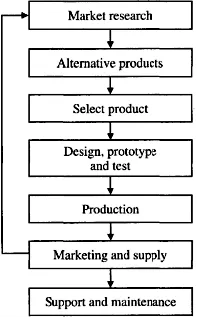
FIGURE 1.2 Simplified production process of portable instruments.
In the design and development of electronic portable instruments different approaches may be adapted. For example, for a handheld altimeter for skydivers one emphasizes reliability and precision, whereas for a bathroom scale durability may be the main issue. Nevertheless, all approaches must have good foundations of responsibility, ethics, integrity, and harmonious teamwork. This approach must be consistent during the product life cycle in that issues such as product functionality, safety, reliability, maintainability, and utility can continuously be improved from the experience gained.
In recent years, in the instrument manufacturing industry, computers have been used extensively in forms of computer-aided design (CAD), automated testing, simulation, circuit analysis and design, and many other applications. Computers en...
Table of contents
- Cover Page
- Title Page
- Copyright Page
- Dedication
- Preface
- Acknowledgments
- The Author
- Abbreviations
- 1: Measurements, Instrumentation, and Electronic Portable Instruments
- 2: Sensors, Transducers, and Electronic Portable Instruments
- 3: Digital Aspects: Hardware, Software, and Electronic Portable Instruments
- 4: Design and Construction of Electronic Portable Instruments
- 5: Examples and Applications of Portable Instruments
- 6: Conclusions and Future Directions
- Bibliography
Trusted by 375,005 students
Access to over 1.5 million titles for a fair monthly price.
Study more efficiently using our study tools.
Frequently asked questions
Yes, you can cancel anytime from the Subscription tab in your account settings on the Perlego website. Your subscription will stay active until the end of your current billing period. Learn how to cancel your subscription
No, books cannot be downloaded as external files, such as PDFs, for use outside of Perlego. However, you can download books within the Perlego app for offline reading on mobile or tablet. Learn how to download books offline
Perlego offers two plans: Essential and Complete
- Essential is ideal for learners and professionals who enjoy exploring a wide range of subjects. Access the Essential Library with 800,000+ trusted titles and best-sellers across business, personal growth, and the humanities. Includes unlimited reading time and Standard Read Aloud voice.
- Complete: Perfect for advanced learners and researchers needing full, unrestricted access. Unlock 1.5M+ books across hundreds of subjects, including academic and specialized titles. The Complete Plan also includes advanced features like Premium Read Aloud and Research Assistant.
We are an online textbook subscription service, where you can get access to an entire online library for less than the price of a single book per month. With over 1.5 million books across 990+ topics, we’ve got you covered! Learn about our mission
Look out for the read-aloud symbol on your next book to see if you can listen to it. The read-aloud tool reads text aloud for you, highlighting the text as it is being read. You can pause it, speed it up and slow it down. Learn more about Read Aloud
Yes! You can use the Perlego app on both iOS and Android devices to read anytime, anywhere — even offline. Perfect for commutes or when you’re on the go.
Please note we cannot support devices running on iOS 13 and Android 7 or earlier. Learn more about using the app
Please note we cannot support devices running on iOS 13 and Android 7 or earlier. Learn more about using the app
Yes, you can access Electronic Portable Instruments by Halit Eren in PDF and/or ePUB format, as well as other popular books in Technology & Engineering & Electrical Engineering & Telecommunications. We have over 1.5 million books available in our catalogue for you to explore.